Vivo just dropped its most ambitious camera phone yet, and the verdict is in. The Vivo X300 Ultra steals the crown as the top photography flagship of 2026, beating even its own Pro sibling. But scratch the surface and a few painful weaknesses appear, putting its $2,000 price tag under serious heat. Here is what every buyer needs to know before swiping that card.
Why The Vivo X300 Ultra Just Became The Phone To Beat
Vivo officially launched the X300 Ultra in China on March 30, 2026, before rolling it out globally in mid-April and landing in India on May 6, 2026. The phone scored a very good 89% rating in detailed lab testing, replacing the X300 Pro as the new benchmark for mobile photography.
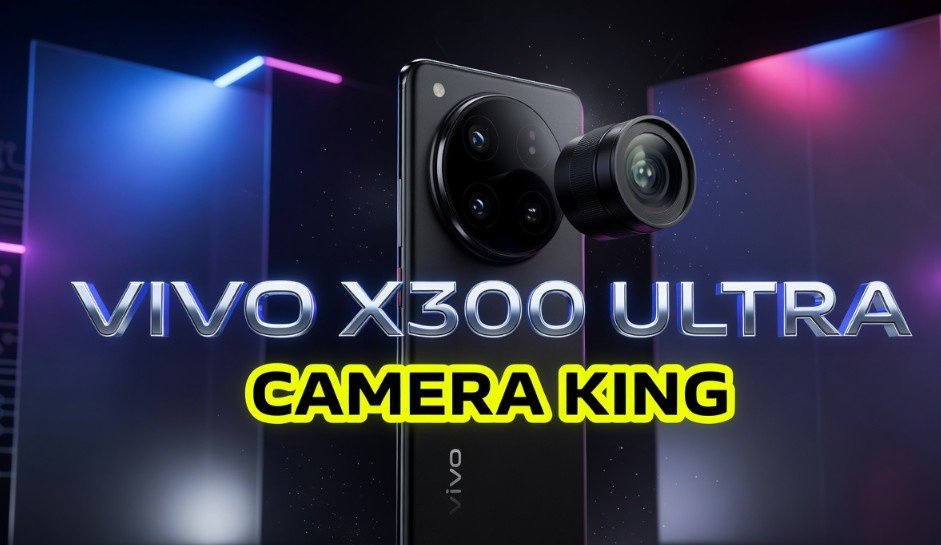
The headline act is the ZEISS Master Lenses Collection. Vivo paired three Triple Prime focal lengths at 14mm, 35mm, and 85mm, giving photographers a kit that feels straight out of a pro studio.
It uses a 200MP Sony LYT-901 main sensor, the largest 200MP unit ever fitted into a smartphone at 1/1.12 inches. The 200MP periscope telephoto and a 50MP ultrawide round off the trio, all with optical image stabilization.
The Specs Sheet That Reads Like A Wishlist
Under the hood, the X300 Ultra runs on the Qualcomm Snapdragon 8 Elite Gen 5 with the Adreno 840 GPU. Storage tops out at 1TB with 16GB of RAM, and the device supports Wi-Fi 7 plus full 5G.
- Display: 6.82 inch AMOLED, 144Hz refresh rate, peak brightness rated among the brightest of 2026
- Battery: 6,600 mAh with 100W wired and 40W wireless charging
- Build: IP68 and IP69 certified, weighing 232g or 237g depending on variant
- Video: 4K 120fps 10-bit Log recording with Dolby Vision support
- Software: OriginOS based on Android 16
The phone also accepts the new 400mm equivalent ZEISS Telephoto Extender Gen 2 Ultra, an external lens that pushes reach far beyond what any phone has done before.
The Cracks Vivo Did Not Want You To Notice
Here is where things get interesting. Despite the brand new color sensor, color reproduction shows surprisingly large weaknesses in side by side tests. Skin tones and warm light scenes occasionally swing off balance, something even the older Pro model handled better.
Thermals are the second concern. The back panel hit 54.8°C on the top and 51.3°C on the bottom during stress tests, with pronounced throttling kicking in during gaming sessions.
“The uncompromising equipment with three extra large image sensors seems to have come at a price due to the ongoing DRAM crisis.”
That trade off shows. The stereo speakers sound clean in the mid range but distort in the highs. Vivo also quietly dropped the dedicated camera button found on the Pro version, a strange call for a phone built around photography.
How It Stacks Up Against Galaxy S26 Ultra And Find X9 Ultra
The 2026 flagship fight is brutal. The Galaxy S26 Ultra leans on refinement and long term software updates, the Oppo Find X9 Ultra brings five rear cameras and a massive 7,025 mAh silicon carbon battery, and the Vivo X300 Ultra doubles down on sensor size and lens quality.
| Feature | Vivo X300 Ultra | Galaxy S26 Ultra | Find X9 Ultra |
|---|---|---|---|
| Main Sensor | 200MP Sony LYT 901 | 200MP | 200MP Hasselblad |
| Battery | 6,600 mAh | 5,000 mAh class | 7,025 mAh |
| Wired Charging | 100W | 45W | 80W |
| Weight | 232g | 214g | 230g |
| Chipset | Snapdragon 8 Elite Gen 5 | Snapdragon 8 Elite Gen 5 | Snapdragon 8 Elite Gen 5 |
Apart from the camera department, reviewers note the X300 Ultra trails its rivals in heat control and audio. Samsung still owns the long term software game, while Oppo wins on raw battery endurance.
Price, Availability And Who Should Actually Buy It
Pricing puts the X300 Ultra firmly in the premium bracket. India gets the 16GB plus 512GB model at INR 1,59,999, with a Photography Kit bundle that includes the 400mm and 200mm ZEISS extenders priced at INR 2,09,999. The European version costs €1,999 for the 16GB plus 1TB variant.
Pros vs Cons at a glance:
| Pros | Cons |
|---|---|
| Class leading camera hardware | Color science feels inconsistent |
| Bright, smooth 144Hz display | Heavy heat and visible throttling |
| Huge 6,600 mAh battery, fast 100W charging | Speakers distort at high volume |
| IP68 plus IP69 dust and water rating | No dedicated camera button |
| Optional ZEISS external lenses | Heavy at 237g for daily use |
If you shoot photos and video for a living, this is the phone of the year. Casual buyers chasing the best all rounder might still find the Galaxy S26 Ultra or Find X9 Ultra a smarter, more balanced choice.
The Vivo X300 Ultra is a love letter to mobile photography lovers, a phone that pushes sensor science and lens design to places no rival has dared. Yet its small but real stumbles remind us that even the most beautiful cameras live inside a smartphone that still has to handle heat, sound, and daily life. What do you think, is the X300 Ultra worth the premium over the Galaxy S26 Ultra? Drop your thoughts in the comments and share this review with your photography friends using #VivoX300Ultra.