Federal appellate judges spent 75 minutes Tuesday pressing Colorado lawyers on a practical nightmare: how out-of-state state-chartered banks would track every borrower’s location and apply a 21 percent interest ceiling only to Coloradans. Chief Judge Jerome A. Holmes opened by quoting the American Bankers Association’s warning of an unworkable patchwork, and the questions never softened.
The en banc hearing before the U.S. Court of Appeals for the Tenth Circuit revived a statutory fight that first flared more than four decades ago, when Congress let states walk away from federal interest-rate preemption and most of them later walked back.
The 1980 bargain most states walked away from
Congress passed the Depository Institutions Deregulation and Monetary Control Act in 1980 to give state-chartered banks rate parity with national banks. Section 521 lets a state bank charge the higher of its home-state ceiling or a federal discount-plus-one rate, and to export that rate to borrowers in other states. Section 525 lets any state opt out of that preemption for “loans made in” the state.
A CRS breakdown of Sections 521 and 525 notes the language was meant to preserve competitive equality inside the dual banking system. In the early 1980s roughly seven states plus Puerto Rico exercised the opt-out. Iowa stayed out. Massachusetts, North Carolina, Wisconsin, Maine, Nebraska and an earlier Colorado version all repealed theirs within two decades. Bankers and legislators said the ceilings made it harder for their own state-chartered institutions to compete with national banks that could still export higher rates.
The bargain was simple on paper. State banks got the same export power national banks already enjoyed, and states kept a safety valve if the politics at home turned against high rates. In practice the safety valve proved costly for the very banks it was meant to protect. Once a state opted out, its own chartered institutions lost the ability to match national-bank pricing on interstate loans, and legislators heard about it.
By the 2000s the tool sat mostly unused. Digital lending and bank-fintech partnerships then made the old language suddenly valuable again to consumer advocates who wanted to stop high-rate “rent-a-bank” programs.
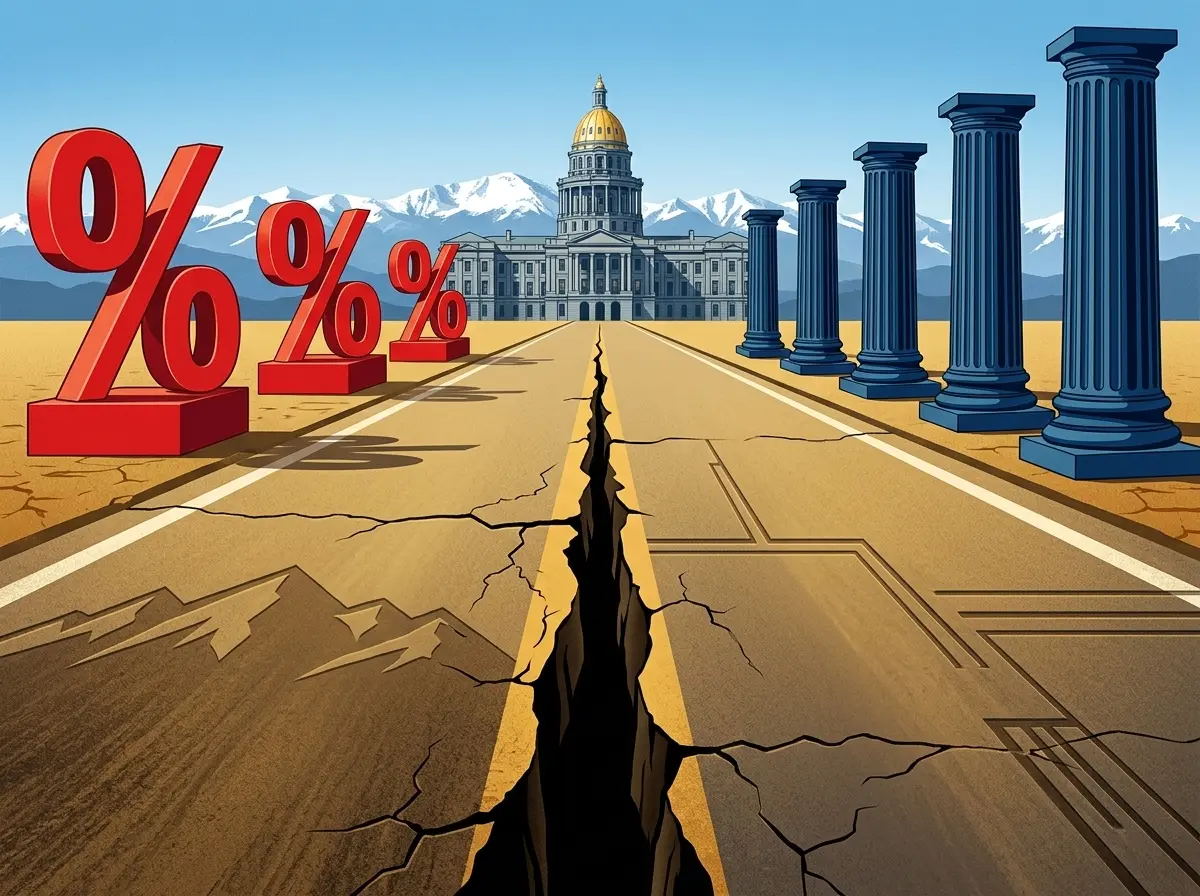
Colorado’s second attempt and the numbers that matter
Colorado House Bill 23-1229 as enacted revived the opt-out in 2023. Signed June 5 that year, the key provisions took effect July 1, 2024. The state said its Uniform Consumer Credit Code ceilings, often 21 percent for supervised loans and certain open-end credit, would now apply to consumer loans made to Colorado residents by any state-chartered bank, wherever chartered.
National banks remain untouched; they export rates under the National Bank Act with no equivalent state opt-out. That asymmetry is the heart of the industry’s competitive-parity argument.
| Jurisdiction | Opt-out status | Notes |
|---|---|---|
| Iowa | Continuous since 1980 | Never repealed; limited enforcement historically |
| Puerto Rico | Long-standing | Remains active |
| Colorado | 2023 revival (HB 23-1229) | Earlier 1981 opt-out repealed 1994 |
| Oregon | 2026 enactment | Already facing industry suit |
| Massachusetts, N.C., Wisconsin et al. | Repealed 1980s-1990s | Cited competitiveness |
Only a handful of jurisdictions now keep the tool live. Oregon joined the list this year and immediately drew a parallel challenge.
Colorado’s revival is therefore less a brand-new experiment than a return to a path the state already tried and abandoned. The 1994 repeal followed the same competitiveness complaints now echoing from industry briefs. What changed is the market around the statute, not the statute’s basic design.
What the judges kept asking on Tuesday
The National Association of Industrial Bankers and allied trade groups sued Colorado Attorney General Phil Weiser in 2024. A district judge issued a preliminary injunction, accepting the banks’ reading that a loan is “made” where the lender sits and performs non-ministerial acts. A three-judge panel reversed 2-1 in November 2025, holding that “loans made in such State” covers loans where either lender or borrower is located. The full court vacated that panel opinion in April 2026 and set the en banc argument.
Holmes, a Republican appointee, zeroed in on the unworkable morass described by the ABA. How would banks apply “a multitude of varying interest rates” and “figure out where borrowers are”? He asked whether Congress in 1980 could have anticipated that result.
Judge Carolyn McHugh, a Democratic appointee, told Colorado’s deputy solicitor general Russell Johnson that his three-step compliance process was hard to follow. Judge Veronica Rossman, who had dissented from the panel majority, walked through travel and digital-signing hypotheticals. “What you’re saying is you would negotiate the terms based on something you don’t know yet, which is where the borrower is going to be located when they sign the agreement. That doesn’t make much sense to me,” she said.
David Gossett, arguing for the industrial bankers, put the industry position in one sentence: banks make loans where the bank is located; the borrower’s location is irrelevant.
Usury laws are among the oldest and most fundamental forms of consumer protection. For centuries, states have used interest-rate limits to protect borrowers from loans that exploit financial distress rather than relieve it.
Katelin Shaw Kaiser, policy counsel at the Center for Responsible Lending, wrote that in an amicus brief. Consumer groups frame the case as the last real check on rent-a-bank partnerships that pair high-cost lenders with out-of-state state banks to export rates that would be illegal under Colorado law alone.
The bench’s focus stayed practical. Location tracking, multi-state rate grids, and the moment a digital signature locks in terms dominated the colloquy. Statutory text still decides the case, but the judges kept testing that text against how loans actually close in 2026.
Who gains and who loses under each reading
- National banks stay free to export home-state rates either way. A Colorado win would actually reduce competition from state-chartered rivals, giving national banks more pricing room with riskier Colorado borrowers.
- Out-of-state state-chartered banks and their fintech partners lose the ability to export higher rates into Colorado if the state prevails. Many industrial banks and bank-as-a-service programs would reprice or exit.
- Colorado-chartered banks face the mirror problem if other states copy the opt-out: their own export business shrinks.
- High-rate specialty lenders lose a structural workaround. Advocates say that is the point; bankers say credit simply disappears for thinner-file borrowers.
- Ordinary Colorado borrowers get a hard 21 percent ceiling on many products from state banks, but may face tighter underwriting or fewer offers once lenders recalculate risk.
Frank Pignanelli, executive director of the National Association of Industrial Banks, called the Colorado law “an existential threat to the dual banking system” before the hearing. The core complaint is that states cannot selectively disable the rate export that keeps state banks competitive with national ones.
Under Colorado’s reading, the dual system tilts toward national charters for any lender that wants a single nationwide rate card. Under the banks’ reading, Section 525 shrinks to a narrow home-state rule and loses force against cross-border digital originations. Either way, charter choice becomes a rate choice.
Rent-a-bank arrangements sit in the middle of the fight
Judges asked about the partnerships even though the statutory question is narrower. In a classic rent-a-bank structure a nonbank lender markets and services loans while a state-chartered bank in a permissive state appears as the formal lender, exporting that state’s rate (or the federal fallback) into a stricter state. Colorado’s opt-out was written expressly to close that channel for its residents.
Similar efforts appear elsewhere. Estonia once faced explosive growth in high-cost online lending and responded with public naming and regulatory pressure that forced many operators to rebuild or leave, a path documented in coverage of Estonia’s public campaign against loan sharks. U.S. consumer groups see DIDMCA opt-outs as a domestic parallel; banking groups see a direct hit on charter value and interstate credit markets.
The partnerships explain why a once-obscure 1980 opt-out now draws en banc attention. Without a bank partner able to export a permissive rate, many high-cost models cannot clear state usury caps on their own. That is why consumer advocates treat Section 525 as leverage, and why industry briefs treat Colorado’s revival as a charter-value problem rather than a routine compliance update.
How the lawsuit climbed to the full court
The path from filing to Tuesday’s argument was short by appellate standards and already produced conflicting readings of the same four words in Section 525.
- 2024 – Trade groups sued Attorney General Phil Weiser; a district judge granted a preliminary injunction on the banks’ “made where the lender sits” theory.
- November 2025 – A three-judge panel reversed 2-1, holding that “loans made in such State” reaches loans where either lender or borrower is located.
- April 2026 – The full Tenth Circuit vacated the panel opinion and set the case for en banc argument.
- Tuesday’s hearing – Eleven active judges heard 75 minutes of argument centered on tracking, rate patchworks, and digital-signing logistics.
That sequence left the panel’s borrower-or-lender test without precedential force inside the circuit while the en banc court writes on a clean slate. It also put the practical compliance questions, not only the 1980 text, at the center of oral argument.
Other states and Congress are already moving
Oregon enacted its own opt-out in 2026 and is already in litigation. Rhode Island has considered similar bills. At the same time, legislation in the 119th Congress, the American Lending Fairness Act, would repeal Section 525 entirely or limit opt-outs to loans made by a state’s own chartered banks. That bill tracks the dissent’s competitive-parity logic.
Banks themselves are operating under other pressures. Funding costs and deposit competition have already forced many institutions to rethink pricing, a squeeze examined in reporting on banks already juggling funding and deposit costs. Layering state-by-state rate maps on top of that environment is the practical harm the ABA and the bench kept circling.
If Colorado’s model spreads and survives review, multi-state lenders face a map of ceilings that turns on borrower residence rather than charter home. If the American Lending Fairness Act or a bank-friendly judgment prevails, Section 525 returns to the margins it occupied for most of the past two decades. Parallel tracks in Salem, Providence, and Congress mean the Tenth Circuit will not have the last structural word even if it has the next one.
What a patchwork rate map would demand
Holmes’s questions sketched the compliance burden industry briefs describe. A lender originating online would need to know which applicants count as Coloradans, lock the 21 percent ceiling to those accounts, and still export higher home-state or federal fallback rates to everyone else. Travelers, dual residents, and last-minute signature locations turn that sorting into a moving target, the problem Judge Rossman pressed with her hypotheticals.
Colorado’s counsel offered a three-step process; Judge McHugh found it hard to follow. That exchange captured the case’s real-world hinge. The statute’s phrase “loans made in” must mean something administrable, or the opt-out becomes either a paper tiger or a trap for ordinary origination systems.
National banks avoid the exercise entirely under the National Bank Act. State-chartered competitors do not, which is why competitive parity keeps surfacing even when the statutory question is only the scope of Section 525. The dual banking system’s rate equality promise frays at exactly this point.
The Tenth Circuit has 11 active judges (six Democratic appointees, five Republican, one seat pending). A decision could come within months. Whatever the outcome, the hearing made one historical point plain: the opt-out tool Congress wrote in 1980 was tested, mostly discarded when it hurt home-state banks, and is now being tested again in a fully digital lending market that the original drafters never saw.