Veteran Tamil filmmaker Bharathiraja, the director whose 1977 debut 16 Vayathinile moved Tamil cinema out of the studio and into the fields of rural Tamil Nadu, died on Wednesday at the age of 84. The director had been hospitalised in Chennai in late 2025 for breathing-related complications and had been unwell for some time. Tamil Nadu’s government announced full state honours for the funeral. His death drew tributes from across India’s film industry and political class, according to the detailed obituary of the director’s death.
Actor Rajinikanth, whose own screen career took shape in that 1977 debut, attended the funeral and became emotional while speaking to reporters. The final rites were held on Thursday at his farmhouse in his native Theni district. The industry lost a director widely credited with reshaping how Tamil cinema portrayed village life.
The Director Who Took Tamil Cinema Out of the Studio
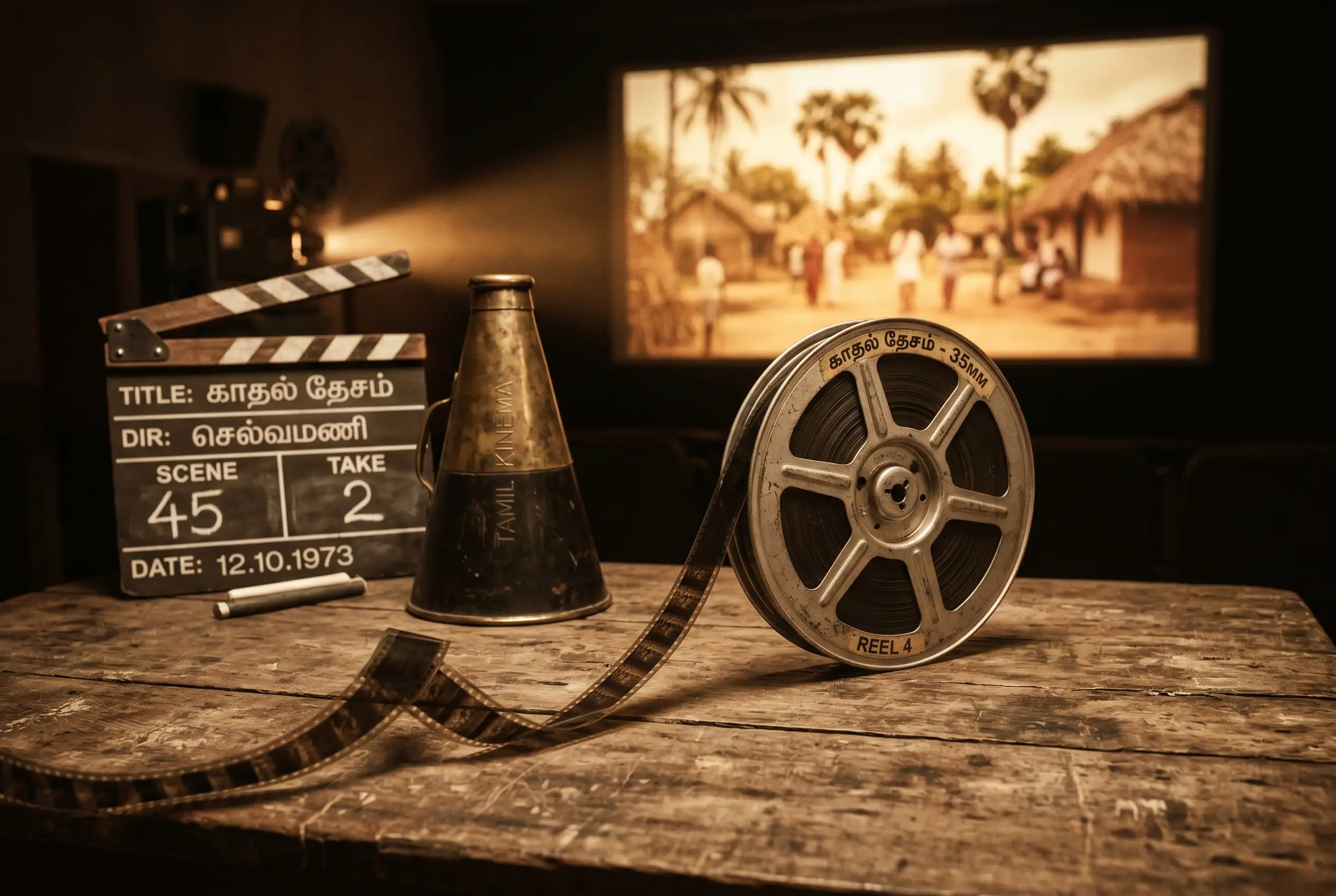
Bharathiraja built a career spanning nearly five decades, helming more than 40 feature films across Tamil, Telugu and Hindi. The throughline of that body of work was a single, stubborn bet: Tamil cinema did not need studio sets to be either popular or artful. During a period when most Tamil films were built on backlots, he insisted on shooting in real villages, and the rural locations themselves became the grammar of his storytelling. He was fondly called Iyakkunar Imayam, a phrase that translates as the pinnacle among directors.
His 1977 debut 16 Vayathinile, which starred Kamal Haasan, Sridevi and a young Rajinikanth, made that bet pay off commercially. The Times of India traced the filmmaker’s career and Padma Shri recognition, describing the film as a landmark success that remains one of Tamil cinema’s finest achievements. Bharathiraja went on to direct films that addressed female infanticide, caste discrimination and interfaith relationships, themes that ran through rural life in Tamil Nadu.
Landmark Films That Earned National Honours
Three of his films brought him National Film Awards. Muthal Mariyathai (1985) won the National Film Award for Best Feature Film in Tamil, anchored by a celebrated performance from thespian Sivaji Ganesan. Karuththamma (1994) addressed female infanticide and won the National Award for Family Welfare. Kadal Pookkal (2001) earned the National Film Award for Best Screenplay.
| Figure | Detail |
|---|---|
| 84 | Age at death |
| 1977 | Year of debut 16 Vayathinile |
| 40+ | Feature films directed across Tamil, Telugu and Hindi |
| 6 | National Film Awards |
| 4 | Filmfare Awards South |
| 6 | Tamil Nadu State Film Awards |
| 1 | Padma Shri |
Muthal Mariyathai drew on Fyodor Dostoevsky’s late-life love for Anna Snitkina, 25 years his junior, with Sivaji Ganesan and Radha in the lead roles. His awards haul extended well beyond these three, totalling six National Film Awards, four Filmfare Awards South, six Tamil Nadu State Film Awards and a Nandi Award, alongside a Padma Shri from the Government of India.
Bharathiraja’s range extended beyond rural drama. Sigappu Rojakkal (1978) was a sophisticated psychological thriller about a serial killer, a deliberate break from the rural mould he had built with his debut. Vedham Pudhithu and Alaigal Oivathillai explored caste and religious divisions through personal stories. Kizhakke Pogum Rail (1978), his second directorial, addressed caste discrimination and the treatment of women, and it is the film in which Radikaa Sarathkumar made her acting debut. His final acting performances included a role in the Mohanlal starrer Thudarum.
The Star-Maker’s ‘R’ Roster
Bharathiraja ran a one-man talent factory. He had a habit of rechristening his female leads with names beginning with the letter R, and the resulting roster of Radikaa, Revathi, Radha, Ranjitha and Rekha reads like a directory of Tamil cinema’s leading women of the 1980s and 1990s. The Hindu’s obituary noted that he also introduced male actors who would go on to major careers, including Karthik, Pandian, Chandrasekar, Napoleon and Janakaraj.
Many of the actors he introduced went on to direct films of their own. The assistant directors who passed through his sets in the late 1970s and 1980s, including Bakkiyaraj and Manivannan, emerged as successful filmmakers and actors. He launched lyricist Vairamuthu with Nizhalgal, and through the same film introduced actor Nizhalgal Ravi. His collaborations with composer Ilaiyaraaja, with whom he had grown up in Theni, produced some of Tamil cinema’s most memorable soundtracks. His opening greeting, “Yen Iniya Tamil Makkale,” delivered in his distinctive voice, became a signature across decades of public appearances.
- Radikaa Sarathkumar
- Revathi
- Radha
- Ranjitha
- Rekha
Tributes Pour in From Three Generations of Tamil Cinema
The tributes that arrived in the hours after his death read like a roll call of Tamil cinema itself. Radikaa Sarathkumar, whose career began in his 1978 film Kizhakke Pogum Rail, wrote on Instagram: “Two people shaped me into who I am. One was my mother; the other was my guru, Bharathiraja sir.” Rajinikanth, whose own screen career took shape in Bharathiraja’s debut, attended the funeral and became emotional while speaking to reporters. Sivakumar, the veteran actor, paid tribute in The Hindu Newspaper, calling the director one of Tamil cinema’s greatest filmmakers. Actor-politician Joseph Vijay also attended the funeral.
The passing of Thiru Bharathiraja Ji is very saddening. He was a towering figure of the cinema world whose works transformed Tamil cinema. Particularly noteworthy was his portrayal of rural life. My thoughts are with his family and admirers in this hour of grief. Om Shanti.
Prime Minister Narendra Modi posted the condolence on X on June 11, calling Bharathiraja a towering figure of the cinema world whose works transformed Tamil cinema. S.S. Rajamouli described him as a true pioneer with raw and uncompromising storytelling. Film producer Boney Kapoor said the director had transformed Indian cinema with his authentic portrayal of rural life, powerful storytelling and unforgettable characters.
Other political and industry figures also weighed in. Andhra Pradesh Chief Minister N. Chandrababu Naidu said Bharathiraja had gifted memorable films to both the Telugu and Tamil film industries, calling his death an irreparable loss. Director Pa Ranjith said Bharathiraja had changed the direction and language of Tamil cinema and elevated the lives of ordinary people using the art form. Telangana Chief Minister A. Revanth Reddy commended the director for helming numerous diverse and message-oriented films across various languages. The Hindu compiled the full list of tributes and state funeral details.
State Honours in Theni, the Director’s Hometown
Tamil Nadu Chief Minister C. Joseph Vijay said the state government would accord full state honours for the director’s funeral, according to the chief minister’s state honours announcement. The Tamil Film Active Producers Association had urged the state to extend the honour, citing Bharathiraja’s role as the association’s founder. The Tamil Nadu Television Digital and OTT Producers Association announced a 12-hour suspension of all television shoots from 6 a.m. on June 11 as a mark of respect. The final rites were held at his farmhouse at Ghat Road in Theni district on Thursday, with the body laid to rest following public homage at 3 p.m.
Born Chinnasami in what is now Theni district, Bharathiraja had stayed close to his hometown through his life. He formed his earliest bond with composer Ilaiyaraaja and Ilaiyaraaja’s brother Gangai Amaran while working as a health inspector and running measles prevention campaigns. The three would later collaborate on some of Tamil cinema’s most celebrated soundtracks, with Ilaiyaraaja composing the music for many of Bharathiraja’s films. Theni District Collector R. Vaithinathan laid a wreath at the farmhouse on behalf of the Government of Tamil Nadu.
Former Chief Minister O. Paneerselvam, Naam Tamilar Party leader Seeman, actor Vadivelu and poet Vairamuthu were among those who paid homage. DMK MP Kanimozhi visited the director’s residence to pay her tributes. Members of the FEFSI union and the Tamil Film Active Producers Association also gathered to pay their last respects.
A Final Year Marked by Loss
Bharathiraja’s death came around a year after another blow. His son, actor-director Manoj Bharathiraja, died in 2025 of a cardiac arrest at the age of 48. Manoj had followed his father into the film industry and was introduced to cinema through the 1995 film Taj Mahal. In the months leading up to his death, photographs of Bharathiraja undergoing treatment had circulated online, prompting concern among fans.
Bharathiraja is survived by his wife, Chandraleela, whom he married in 1974, and their daughter, Janani Bharathiraja. The void left by his death will be felt most directly by that family, but the industry’s response suggests the loss runs wider. Three generations of Tamil cinema turned out in Theni on Thursday, and the public homage at his farmhouse drew film personalities, political leaders and fans in numbers that officials said required extensive security, crowd control and logistical coordination.
Frequently Asked Questions
When did Bharathiraja die and what was the cause?
Bharathiraja died on Wednesday, June 10, 2026, at the age of 84, following prolonged health issues. The director had been hospitalised in Chennai in late 2025 for breathing-related complications and had been unwell for some time.
What was Bharathiraja’s most influential film?
His 1977 debut 16 Vayathinile, which starred Kamal Haasan, Sridevi and Rajinikanth, is widely regarded as the work that moved Tamil cinema out of studio-bound productions and into real rural locations. Muthal Mariyathai (1985) and Karuththamma (1994) are also among his most celebrated works.
Where was Bharathiraja’s funeral held?
His final rites were held with full state honours on Thursday, June 11, 2026, at his farmhouse at Ghat Road in his native Theni district, Tamil Nadu. Tamil Nadu Chief Minister C. Joseph Vijay announced the state honours.
Who attended Bharathiraja’s funeral?
Rajinikanth, actor-politician Joseph Vijay, DMK MP Kanimozhi and other film and political figures attended. Tributes also came from Prime Minister Narendra Modi, S.S. Rajamouli, Boney Kapoor, Pa Ranjith and Telangana Chief Minister A. Revanth Reddy.
What awards did Bharathiraja win?
He won six National Film Awards, four Filmfare Awards South, six Tamil Nadu State Film Awards and a Nandi Award. He was also awarded the Padma Shri by the Government of India.