The film of Rubendra Govender’s 2008 novel Sugar Cane Boy premieres on July 2 at Suncoast CineCentre in Durban, then opens in South African cinemas on July 10. The adaptation is a deliberate step away from the classroom: Govender taught from 1989 until 2022, and the Sugar Cane Boy shoot is the first feature to carry his name as both screenwriter and director.
The film is the public face of a bet he has been making for years. The novel was published in 2008, the screenplay has been in development since at least late 2022, and the release has been carried on personal resources, family labour and a single creative partnership with a KwaZulu-Natal farmer. The cast draws from the community the story portrays, and the soundtrack includes a song performed by his late wife.
A Teacher Walks Away From the Classroom
Rubendra Govender was still a full-time teacher when he decided his 2008 novel Sugar Cane Boy belonged on screen. He taught from 1989 until 2022, a run that took him from a 1983 matric at Avoca Secondary School to a Bachelor of paedagogics in science (botany) at the University of Durban-Westville, now UKZN, and a B.Ed Honours in language development from Unisa. The film adaptation is the first project of a career he built in the classroom.
“Education and storytelling have always been closely connected in my life,” Govender said. He tied that connection to the years he spent in front of classes: “I taught from 1989 until 2022, while continuing to write throughout. Teaching kept me closely connected to language, young people, and the lived realities of South African communities.” Govender’s biography and writing career include a featured spot at the 2009 Words on Water literature festival in India, hosted by the Indian government. His two published novels, Sugar Cane Boy and The English Major’s Daughter (2012), are the spine of his bibliography, and both have a presence in academic library systems in the US and Europe. The first became a prescribed school setwork in South Africa.
The change in career came with a cost. “I stepped away from full-time teaching before retirement age and redirected my time, energy and resources into film-making,” Govender said. He called that “a significant personal sacrifice, made in the belief that this story needed to be told with honesty and care.” The shift runs from a 1989 classroom posting to a self-financed feature shoot in KwaZulu-Natal. “This endeavour will now mark a significant transition in his career: from teacher to film-maker,” he said.
The 2008 Novel That Set the Bet in Motion
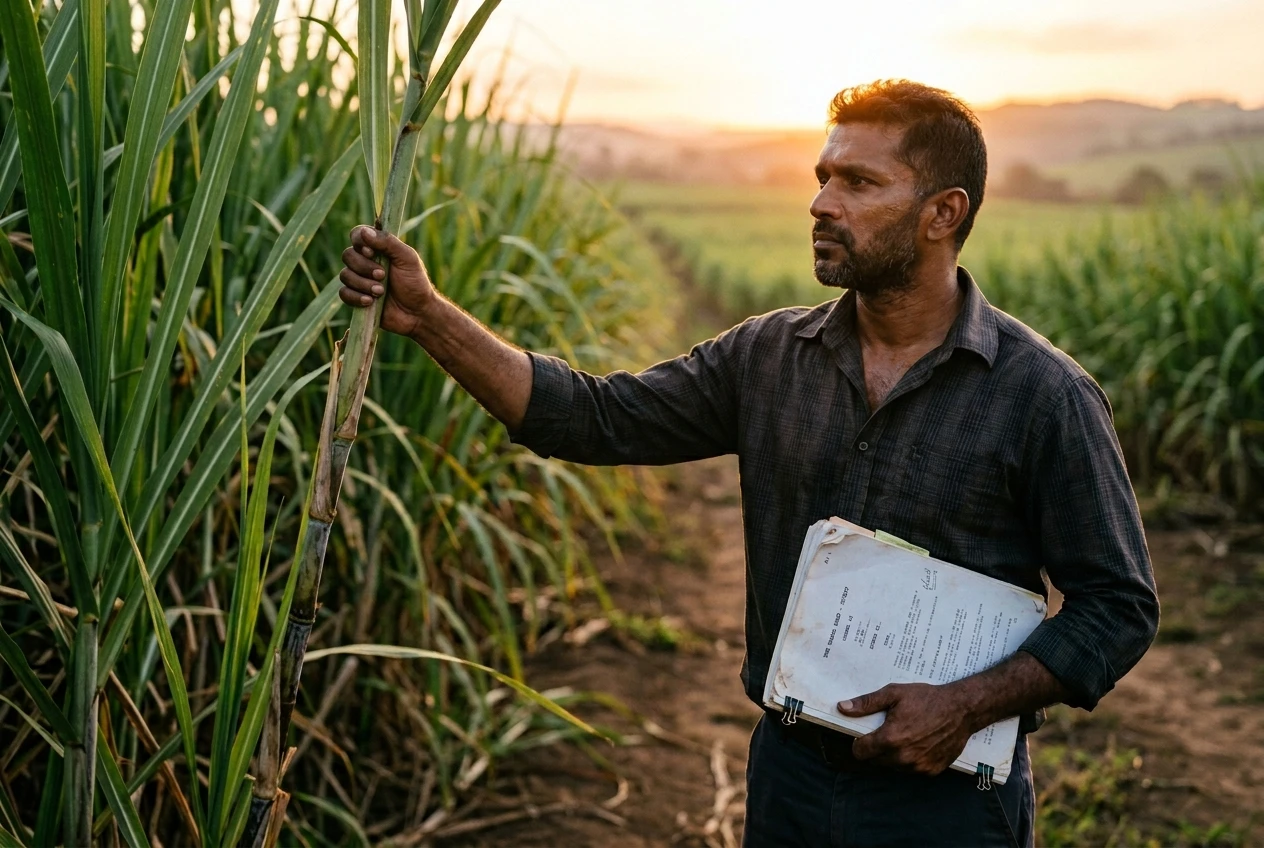
The bet starts with a novel. The novel’s themes, setting and reception are rooted in five years of writing and editing, during which Govender transformed his own memories into a fictionalised account of life on Inanda’s sugar cane farms. The story follows the friendship of Soya Sivaramen, an Indian boy, and Boniwe Mkhize, an African boy, as they grow up on the same plantation. The narrative stretches from the early 1970s into the late 1990s, and sits inside the pressures of apartheid South Africa. The pair meet prejudice inside their own communities as much as outside them, and the friendship is the spine of the book. Govender calls the result “a human story about dignity, friendship and coexistence, rooted in the lived experience of Indian farming communities.”
The book has travelled further than its author expected. It became a prescribed school setwork in South Africa, selected as an English set-work for grades 8, 9 and 10 at several leading secondary schools in Durban, and sits in WorldCat-linked academic library systems in the US and Europe. A 2022 Post profile of Govender reported that 17,000 copies were sold in South Africa, the most of any local book at the time. The novel also made Govender a featured author at the 2009 Words on Water literature festival in India. His second novel, The English Major’s Daughter, was published in 2012 by Bambata Publishing, the same Durban house that issued Sugar Cane Boy.
- 2008: Novel published
- 2008-2014: Local best-selling run in South Africa
- 17,000+ copies: Sold in South Africa, per a 2022 Post profile
- Grades 8, 9, 10: Set-work at several leading secondary schools in Durban
- 2009: Featured author at the Words on Water festival hosted by the Indian government
An Inanda Childhood Refracted Through Film
The Inanda of Sugar Cane Boy is the Inanda of Govender’s own childhood. He grew up inside the SS Govender family, one of the three largest pioneer farming families of South Indian descent in South Africa. “The sugar industry is part of my personal and cultural inheritance,” he said. The story is set around Groenberg Farm in Inanda, a landscape he returns to in the film.
The screenplay reaches further back than the novel. “The story draws heavily from memories of the 1960s, 1970s and early 1980s,” Govender said, decades before the book would find an audience. The script sits inside the historical moment: the Indian farming community of the KwaZulu-Natal North Coast was already several generations deep by then, descended from indentured labourers shipped into the Natal Colony from 1860 onwards. The novel traces how those families and their African neighbours built lives across cultural lines under apartheid. For the film, Govender drew on that arc and on the community memory around him.
His parents sit at the centre of that memory. “My mother, Maliga Govender, and my late father, Bala Govender, instilled in me a deep respect for farming communities and the belief that dignity belongs to all people, regardless of background,” he said. He calls that belief “the emotional centre of this film.”
The shoot stayed in KwaZulu-Natal. Filming took place across the province, with key farm sequences captured at Nohari Farms in Isenembe on the North Coast. The script calls for the same cane fields and farmsteads that shaped Govender’s memory, and the production used them. Many of those involved in the film, he said, “have direct links to the world it portrays, which contributes to its grounded authenticity.” The producer is also a North Coast farmer: Nohari’s stake in Isenembe and his stake in the film are part of the same project.
A Cast Drawn From the Story’s Own Backyard
The casting leans on the same community the story portrays. Younger Soya Sivaramen is played by Ruhaan Singh, a Grade 12 student at Verulam Secondary School, while the adult Soya is played by Keval Maharaj of uMhlanga. Boniwe Mkhize is played by Alwande Ndlovu of Inanda, who “matriculated from Avoca Secondary School last year,” per the report in The Post. Govender himself plays Soya’s father, Deena Sivaramen, layering the role of patriarch on top of his screenwriting and directing duties.
The rest of the named ensemble is a mix of emerging and experienced performers, in Govender’s words. Arona Khemraj, who also produced the film, is in the cast, alongside Rushil Juglall and Usha Khan. Tansen Nepaul produced the theme music. Behind the camera, the family structure around the shoot mirrors the family structure in the story: Nohari served as executive producer, and Govender’s son, Seyuran, is a co-producer. The cast and crew are drawn from the KwaZulu-Natal communities the novel describes.
The Late Wife’s Final Recording Lives Inside the Film
The film carries an inheritance that goes beyond the screenplay. Chadati Jawani, the dance number, was performed by Govender’s late wife, Umita Kalyan, and will be released as her final recorded work. The decision to put her recording on the soundtrack sits alongside the rest of the production: a self-financed feature built on family, community and personal history. Govender calls the project “a story built on persistence, memory and responsibility to the communities and histories it reflects.”
The decision to make the film at all came with a personal cost that went beyond money. “Independent film-making presented significant challenges, particularly in securing funding and investor support,” Govender said. The project was carried by an investment and creative partnership with Dolanand “Soncy” Nohari, a North Coast farmer. “I personally committed my own resources at critical stages to ensure continuity and completion of the film. It was a significant personal investment in both the work’s survival and integrity.” Nohari’s stake in Isenembe and his stake in the film are part of the same project, he said.
For me, the most meaningful aspect of this reach is not commercial success, but the continued presence of these stories in classrooms and academic spaces beyond South Africa.
Rubendra Govender, the writer and director of the Sugar Cane Boy film, in remarks reported by The Post. The film’s reach now extends beyond the book to the screen, with the late wife’s song as part of the soundtrack. Nohari served as the executive producer, and Govender’s son, Seyuran, is a co-producer. The film is meant to contribute, in Govender’s words, to “South African storytelling and cultural preservation.”
Durban Premiere, Countrywide Release
Sugar Cane Boy premieres on July 2 at Suncoast CineCentre in Durban, then opens in South African cinemas on July 10. The release closes a production arc that began in late 2022, when production started on November 25, according to a Post profile from December of that year. The Post reported at the time that the film would “be released in cinemas in mid-2023 in Durban.” Govender says the production faced “significant challenges, particularly in securing funding and investor support,” and the schedule reflects the difficulty of independent filmmaking. The partnership with Nohari provided “synergy rather than a purely financial arrangement.” The two dates are the result of a project that has been carried on personal resources, family labour and a single creative partner.
The film’s release comes as a deliberate move by Govender to honour a community and a memory. He says Sugar Cane Boy is “built on persistence, memory and responsibility to the communities and histories it reflects.” The work arrives on South African screens with its central lesson intact: dignity is a right for all people, regardless of background, the value Govender credits to his parents. The dates are confirmed in the announcement that includes Govender on adapting his 2008 novel for cinema. The release is, in the author’s framing, the end of a project that began with a novel and a 1983 school year in Inanda.
Frequently Asked Questions
When and where is the Sugar Cane Boy world premiere?
The Sugar Cane Boy world premiere is scheduled for July 2 at Suncoast CineCentre in Durban. The world premiere is followed by a national release on July 10.
When does Sugar Cane Boy open in South African cinemas?
The film opens in South African cinemas on July 10. The Post’s announcement confirmed the date for the national rollout.
Who stars in the Sugar Cane Boy film?
Ruhaan Singh plays the younger Soya Sivaramen, with Keval Maharaj as the adult version and Alwande Ndlovu as Boniwe Mkhize. The ensemble also includes producer Arona Khemraj, Rushil Juglall and Usha Khan, with Govender himself taking the role of Soya’s father, Deena Sivaramen.
What is the source material for the Sugar Cane Boy film?
The film adapts Govender’s 2008 novel of the same name, a story of friendship between Soya Sivaramen and Boniwe Mkhize on Inanda’s sugar cane farms during apartheid South Africa. More than 17,000 copies of the novel sold in South Africa between 2008 and 2014, according to a 2022 Post profile of the author.
Who directed the Sugar Cane Boy film?
Rubendra Govender directed the film, marking his feature directorial debut while also adapting the screenplay and playing Soya’s father. The shoot took place at Nohari Farms in Isenembe on KwaZulu-Natal’s North Coast.