Apple’s WWDC 2026 keynote put iOS 27 on stage on June 8, and the first thing the company did was name every iPhone that will run it. The list of iOS 27 supported iPhones starts with the iPhone 11 from 2019, and it doesn’t drop a single iPhone that was on the iOS 26 list. That alone would have been the story, until Craig Federighi explained what Apple had also done to those older devices.
Apple’s full WWDC 2026 press release, published the same day, lists the iPhone 11 Pro Max as the test device for iOS 27’s headline performance gains. The company measured apps launching up to 30 percent faster, photos loading up to 70 percent faster, and AirDrop transfers up to 80 percent faster on that seven-year-old phone. Those numbers would have been a stretch on a 2024 flagship. The work was anchored in a CPU scheduler optimization Apple said it had engineered to run on devices going all the way back to the iPhone 11.
iOS 27 Reaches the iPhone 11, and Apple Says It’s Industry-Leading
Apple’s compatibility message landed inside a longer WWDC 2026 segment on platform performance. Federighi walked through a new CPU scheduler the company had optimized for older iPhones, and then named the devices that would benefit from it. The list included every iPhone Apple has sold since 2019.
This continues our industry-leading support and means iOS 27 is available to more users than any iOS release ever.
Craig Federighi, Apple’s senior vice president of Software Engineering, said this on stage at the WWDC 2026 keynote on June 8, in a sequence that ran through the new OS’s performance improvements, the design changes to Liquid Glass, and the new Apple Intelligence features. The live coverage of the keynote has the full transcript. Apple’s full WWDC 2026 press release, published the same day, backs the keynote with a footnote: the company measured its headline performance gains on an iPhone 11 Pro Max. Federighi also told the audience Apple had engineered a new CPU scheduler and then brought it to “older models all the way back to iPhone 11.”
A CPU scheduler is the part of the operating system that decides which process gets which slice of the phone’s processor. Apple has backported a CPU scheduler optimization to the iPhone 11 specifically, the oldest device on the iOS 27 list. The work is the kind of plumbing that usually ships to new hardware and never gets sent back to older models. Apple’s press release pairs the backport with a set of performance numbers, putting the iPhone 11 Pro Max on the same chart as the iPhone 17 Pro Max. The reported gains show what the backport means in numbers on a seven-year-old device.
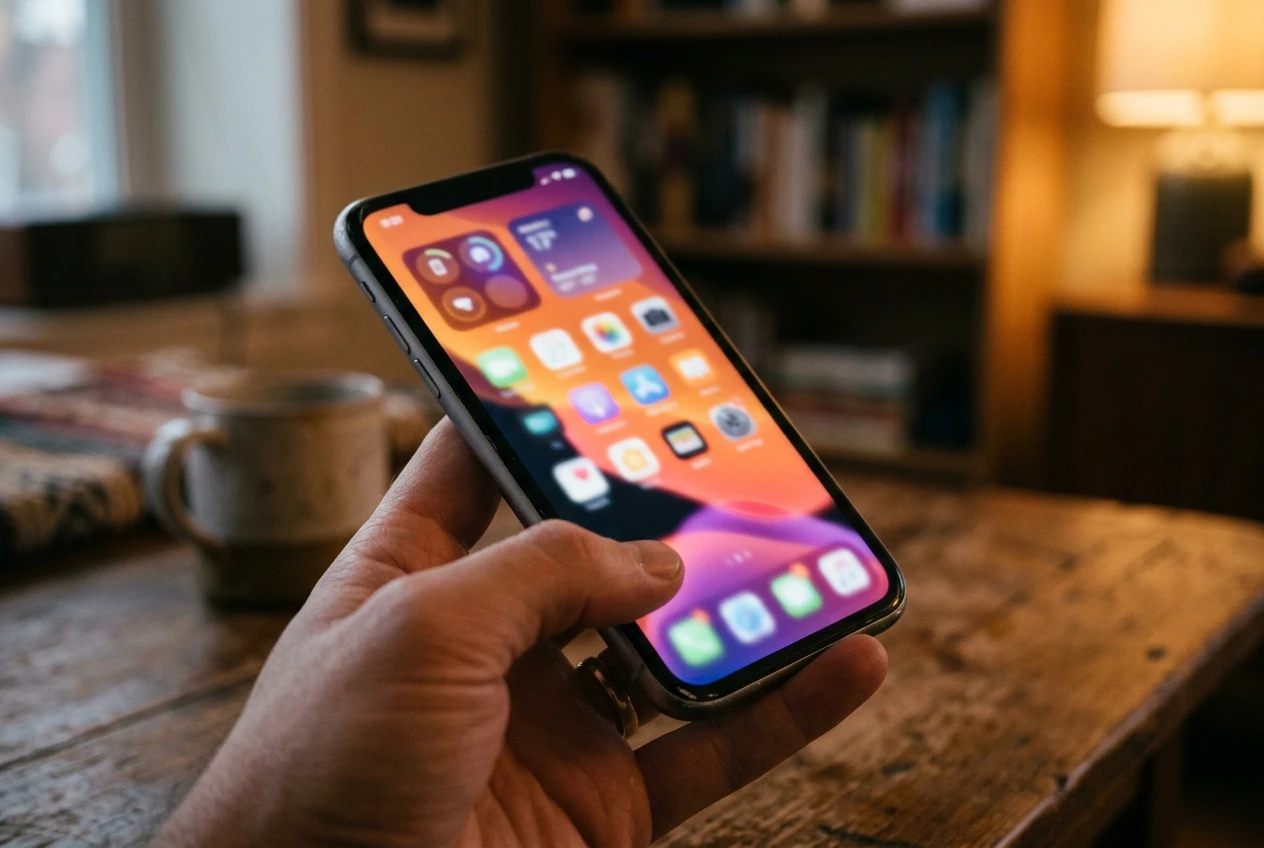
The Speed Bump Apple Measured on a Seven-Year-Old Phone
Apple’s iOS 27 press release runs through the test conditions in a footnote at the bottom of the page. The company ran the benchmarks on an iPhone 11 Pro Max running iOS 26.4.2, paired with a prerelease build of iOS 27. The same footnote states the testing was conducted between April and May 2026. The iPhone 11 Pro Max is the oldest iPhone in Apple’s current lineup, and Apple chose it as the test device for the new OS’s biggest claims.
The figures Apple reported on the test device break down as follows. Each one came from the same April-May 2026 testing run on the iPhone 11 Pro Max. Apple attributed the gains to a combination of UI, foundation, and scheduler work across the OS.
- Apps launch up to 30 percent faster than on iOS 26, per Apple’s April-May 2026 testing on an iPhone 11 Pro Max
- Photos load up to 70 percent faster after being taken, per Apple
- AirDrop transfers run up to 80 percent faster, per Apple
- iPad file browsing and transfers to external drives run up to 5x faster on iPadOS 27, per Apple
Two of those four figures, the 30 percent app-launch gain and the 80 percent AirDrop gain, are the kind of improvements that usually only show up when the hardware changes. Apple is reporting them on the original iPhone 11 hardware, not on a newer chip. The third figure, the 70 percent photo load, depends on a reworked search index that Apple said it rebuilt across Spotlight, Photos, and Mail. The fourth, the 5x file-browsing speed on iPad, is for iPadOS 27 and only applies to browsing and transferring items from an iPad’s Files app to an external drive.
Older iPhones are about to run the new software with measurable headroom. On the Android side of the same conversation, the delivery is more cautious.
The Seven-Year Promises on the Android Side
On paper, the Android side is closing the gap. Google announced in October 2023 that the Pixel 8 and Pixel 8 Pro would receive seven years of software support, including Android OS upgrades, security updates, and Pixel Drops. Samsung, the largest Android manufacturer by volume, has committed to a shorter but still multi-year window of OS upgrades and security patches for its Galaxy flagships.
The table below sets out the two largest Android update commitments next to the iPhone 11’s iOS 27 support. Each row is the company’s own language on how long the device will get updates. Google’s headline figure is the seven-year support window for the Pixel 8 and newer, which includes Android version upgrades, security patches, and Pixel Drops in the same envelope. Samsung’s flagship commitment is shorter, at up to four generations of One UI and Android OS upgrades, with security updates running for up to five years on select models, per the 2022 commitment to four Android OS upgrades.
| Manufacturer | OS upgrades | Security updates | Source |
|---|---|---|---|
| Google (Pixel 8 and newer) | 7 years of Android OS upgrades (includes Pixel Drops) | 7 years | Google’s October 2023 blog post |
| Google (Pixel 6, 7, and Fold) | 5 years of Android OS upgrades (includes Pixel Drops) | 5 years | Google Pixel support page |
| Samsung (select flagships, including Galaxy S, Z, Tab S, and A series) | Up to 4 generations of One UI and Android OS upgrades | Up to 5 years | Samsung’s 2022 newsroom announcement |
The headline numbers have moved closer to Apple’s, even though Apple still does not publish a year count. Apple’s WWDC 2026 compatibility list puts the iPhone 11, a 2019 device, on the same iOS 27 update as the iPhone 17 Pro Max. The iPhone 11 is a 2019 device, and the Pixel 8’s seven-year commitment was announced in October 2023 and runs into 2030. The two phones are now in the same conversation about how long a phone can be expected to last. Apple’s silence on the number has long been the company’s most reliable tell that the support will outlast the warranty.
Why Apple Still Beats the Pledge on Delivery
The year count, though, is only half the story. Google’s own Pixel support page on update timing describes how the updates actually arrive: “Updates roll out gradually, and are dependent on carrier and device. It may take a few weeks for the update to arrive on your device.” The wording sits on the same page that lists the seven-year commitment.
- Google’s own support page: “Updates roll out gradually, and are dependent on carrier and device.”
- Samsung: rollouts vary by device model, region, and carrier, with the major OS upgrade typically rolling out weeks after the upstream Android release.
- Some carriers hold major Android updates for additional testing before approving them for their network.
Each of those steps adds a delay between the moment Google ships a new Android release and the moment the user installs it. Apple’s release schedule, by contrast, has one decision-maker: Apple. The company said iOS 27 will be available as a free software update this fall, with a public beta next month through the Apple Beta Software Program. The build comes from Apple directly, and Apple controls when the release goes live.
Apple Treated Its Other Devices the Same Way
Apple’s WWDC 2026 press release confirmed at the same event that the same compatibility line runs across iPadOS 27, macOS 27, watchOS 27, and visionOS 27. All five platforms are listed in the same package of “more responsive, reliable, and delightful” software updates. The same release schedule applies across the lineup: developer betas the day of the keynote, public betas the following month, and public releases this fall.
That parallel treatment isn’t accidental. Apple designs the hardware and the software for every device it sells. So the company can decide on a single day that an iPad, a Mac, an Apple Watch, and a Vision Pro will all move forward to a new OS together. The result is the kind of update symmetry that no Android manufacturer can match. No Android manufacturer controls the full stack of devices Apple does.
Apple’s own support pages still don’t publish a years-of-support number for any of those platforms. That silence has long been the company’s most reliable tell that the support will outlast the warranty. The proof arrives this fall, when iOS 27, iPadOS 27, macOS 27, watchOS 27, and visionOS 27 all ship as free software updates at the same time. The same divide shows up on the hardware side, where a recent Pixel 10 Pro XL and iPhone 17 spec breakdown lays out how the two phones are being designed around two very different update commitments.
Frequently Asked Questions
Which iPhones will run iOS 27?
Every iPhone that can run iOS 26, including the iPhone 11, 11 Pro, 11 Pro Max, the iPhone 12 through iPhone 17 lineups, the iPhone Air, the iPhone 16e and 17e, and the iPhone SE (2nd generation and later). Apple confirmed the list at the WWDC 2026 keynote on June 8, 2026.
When is iOS 27 coming out?
Apple said iOS 27 will be released this fall, with a public beta next month through the Apple Beta Software Program. The public release typically follows Apple’s annual iPhone event in September or October.
How long will my iPhone 11 keep getting updates?
Apple does not publish a years-of-support number for the iPhone. The iPhone 11 from 2019 has been on the iOS compatibility list since launch, and Apple confirmed at WWDC 2026 that it stays on for iOS 27.
Will iOS 27 actually run faster on the iPhone 11?
Apple said yes. The company tested iOS 27 on an iPhone 11 Pro Max running iOS 26.4.2 and measured app launches up to 30 percent faster, photos loading up to 70 percent faster, and AirDrop transfers up to 80 percent faster, gains Apple attributes in part to a CPU scheduler optimization backported to older devices.