The International Olympic Committee provisionally lifted the Russian Olympic Committee’s suspension on Tuesday, clearing the way for Russian athletes to compete in many international events including LA28 Olympic qualifiers. The decision ends a ban imposed in October 2023 for the ROC’s recognition of regional Olympic councils in Russian-occupied parts of Ukraine. The IOC has not yet decided whether Russia can display its flag, colors or anthem at the Games.
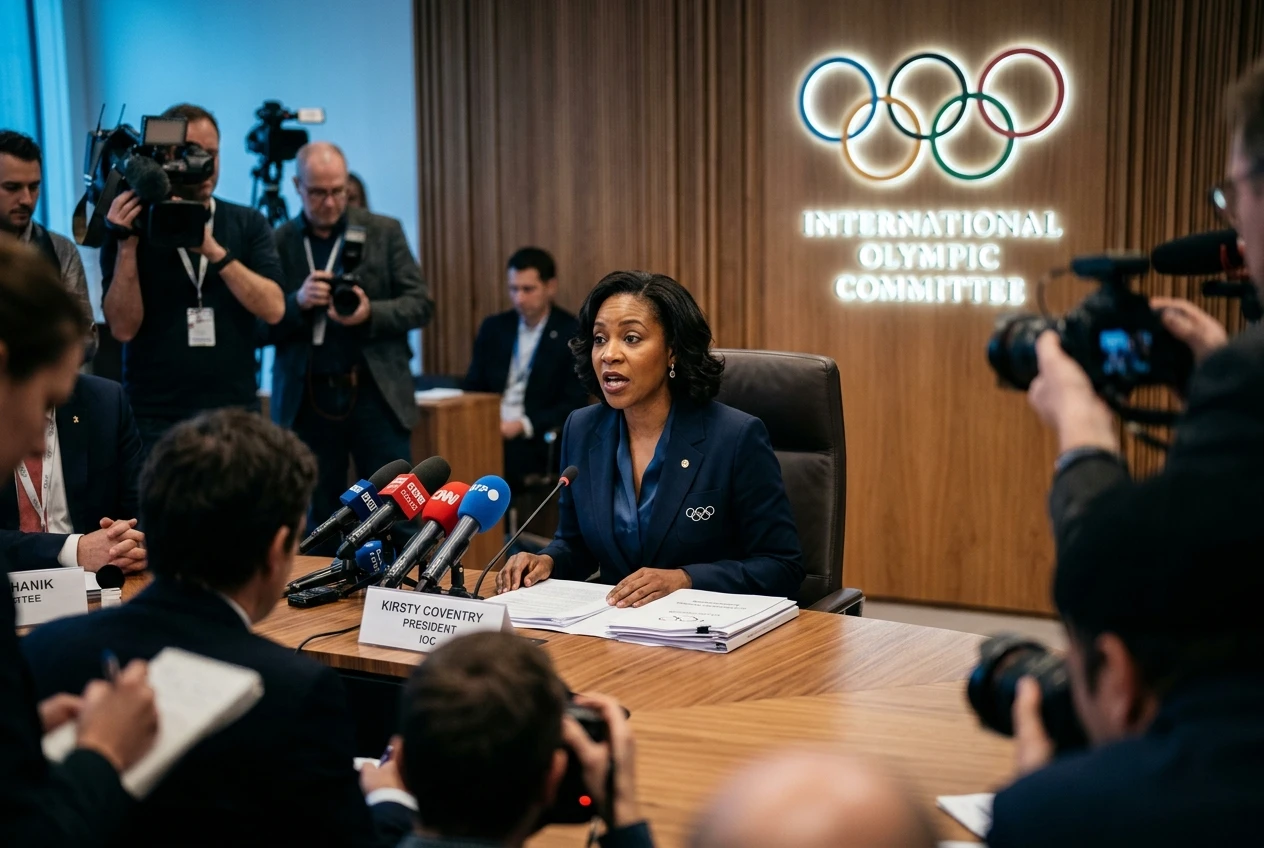
IOC President Kirsty Coventry framed the move as one designed to spare athletes the cost of their government’s actions, a position that drew immediate criticism from Ukrainian athletes and the Ukrainian foreign ministry. The vote came one week after World Athletics, the governing body for track and field, reaffirmed its own separate ban on Russian and Belarusian athletes. Coventry said the IOC ‘stands in solidarity with the Olympic community of Ukraine’ and will continue to support it, while insisting that athletes should not pay the price for the actions of their governments. The decision marks the IOC’s latest step toward Russia’s reintegration after asking federations in December to readmit Russian and Belarusian youth athletes under the age of 23.
What the IOC Decided on Tuesday
The IOC executive board voted on Tuesday to provisionally lift the suspension of the Russian Olympic Committee, marking a significant step toward Russia’s reintegration ahead of the Los Angeles 2028 Games. The original suspension, imposed in October 2023, had been triggered by the ROC’s recognition of regional Olympic councils in Luhansk, Donetsk, Kherson and Zaporizhzhia, four territories occupied by Russian forces. The IOC said at the time that the recognition violated the Olympic Charter and the territorial integrity of Ukraine’s Olympic Committee.
The provisional lift allows Russian athletes to take part in many international competitions, including LA28 Olympic qualifiers, a step detailed in the IOC’s Tuesday decision to provisionally lift the Russian Olympic Committee’s suspension. The ROC confirmed it does not, and will not, conduct any activities in those territories, the IOC said, and the executive board will continue to monitor the situation and reserves the right to take further measures. Coventry, asked about the IOC’s reasoning, said the body’s position was that athletes should not be held responsible for the actions of their governments. ‘We made it clear that all athletes had the possibility to compete at the Olympic Games,’ she said.
Speaking at a press conference, Coventry said the IOC does not condone ‘any wars, including this one’ and will continue to support Ukraine. ‘But I don’t believe athletes should pay the price,’ she said. The IOC also confirmed it will continue to not organize IOC events in Russia or invite Russian government or state officials to its events.
Russia Welcomes the Move
Moscow read the decision as a turning point. Russian sports minister Mikhail Degtyarev said the IOC’s move should clear the way for a full return of Russian athletes to the international sporting stage. ‘Our country’s return to the Olympic family is a green light for international federations to reinstate all our athletes,’ Degtyarev said. The IOC’s Tuesday action followed a December request from the body urging federations to readmit Russian and Belarusian youth athletes under the age of 23.
Russian athletes have been competing under constrained conditions for years, a posture that has limited both numbers and visibility on the medal podium. Russian athletes competed as neutrals at the 2024 Paris Olympics and at the 2026 Milano Cortina Winter Games, with flags, anthems and state colors removed from their appearances under the Individual Neutral Athlete framework.
- 32 athletes from Russia and Belarus at the 2024 Paris Olympics, competing as approved neutrals
- 5 medals won by those 32 athletes combined
- More than 300 athletes on Russia’s 2021 Tokyo Olympic team
- 71 medals won by Russia at the 2021 Tokyo Olympics
- Russian athletes competed as neutrals at the 2026 Milano Cortina Winter Games
Russia also pushed for the return of full national symbols at the Games. The IOC has not decided whether Russia can display its flag, colors or anthem, leaving that decision for a later point. Degtyarev framed the IOC’s position as a defense of Olympic neutrality, writing on Telegram that ‘the Olympic movement must remain free from politics.’ Russian President Vladimir Putin received the country’s national paralympic team at the Kremlin in March, after athletes were allowed to compete under the Russian flag for the first time since 2014 at the Milano Cortina 2026 Winter Paralympics.
Ukraine Calls It ‘Absolutely Shameful’
The reaction in Kyiv was sharp. Ukraine’s foreign ministry called the decision ‘troubling’ and urged countries hosting competitions to uphold a ban on Russian state symbols. Ukrainian skeleton racer Vladyslav Heraskevych, who was disqualified from the 2026 Winter Olympics over a helmet carrying a message about Ukraine, told reporters the IOC’s decision was ‘absolutely shameful.’ Heraskevych expanded on the criticism to the BBC, calling the move ‘a huge injustice’ and saying ‘it feels like the IOC are leaving us behind.’
Athlete-led advocacy group Global Athlete and FairSport issued a joint statement calling the decision ‘a fundamental departure from the principles of Olympism.’ The groups argued that the IOC had ‘chosen to rewrite, to lower’ its own standards for stakeholder accountability, citing both the ongoing war and Russia’s history of state-sponsored doping. Their earlier open letter to the IOC and international federations had already demanded increased sanctions on Russia rather than a relaxation.
Russia’s flag had already returned to one Olympic podium this year. Russian athletes were allowed to compete under their national flag at the Milano Cortina 2026 Winter Paralympics in March, the first time since 2014.
Other Olympic sports had already moved further down that path. World Aquatics lifted restrictions on senior Russian and Belarusian athletes in April, allowing them to compete under their national flags, anthems and uniforms in international events. Ukrainian athletes have staged visible protests, including gymnasts and tennis players protesting as Russian symbols returned to international sport. The IOC’s larger decision now formalizes a process that began months earlier.
A Patchwork Is Already Forming
Track and field is the most prominent holdout. The World Athletics Council reaffirmed its decision to exclude Russian and Belarusian athletes from international competition at its meeting on July 1 and 2, four years after first imposing sanctions over the invasion of Ukraine. The federation had already rejected an IOC recommendation in May to lift a ban on Belarusian athletes competing under their own flag.
The Council have been methodical in reviewing the sanctions imposed on Russia and Belarus and in identifying a conditional pathway back into international competition. We presented options for the Council to consider on this matter; however, the original decision remains on the sanctions that protect the integrity and fairness of our competitions, with no tangible movement towards peace negotiations having materialized.
Sebastian Coe, president of World Athletics, made the comments in a press release after the 241st Council meeting. The body’s ban has been in place since March 2022, when the World Athletics Council imposed sanctions on the Russian and Belarusian member federations. European Athletics followed suit on the same evening and has maintained its position since. Coventry, asked whether the IOC’s decision could lead to fragmented participation ahead of the LA Olympics, said the body did not foresee a patchwork.
‘We don’t foresee any patchwork,’ she said at the press conference. The reality on the ground already looks different: World Aquatics lifted restrictions in April, and World Athletics extended its own ban five days before the IOC vote. Olympic qualifying events have already taken place for some sports, with most kicking off their qualifiers later in 2026 and 2027.
| Body | Status of Russian and Belarusian athletes (July 2026) |
|---|---|
| World Athletics | Excluded from international competition; ban extended at the July 1-2 council meeting |
| European Athletics | Excluded from European events; position maintained since March 2022 |
| World Aquatics | Allowed under national flag and anthem; restrictions lifted in April |
| FIFA | Russia ban under analysis; no decision announced |
| IOC (overall) | Provisionally reinstated; flag and anthem decision still pending |
The Doping History Russia Still Carries
The return comes against the backdrop of one of the most damaging doping scandals in Olympic history. Russia has been under scrutiny since a 2015 World Anti-Doping Agency-commissioned report found evidence of systematic doping in Russian athletics. Investigators later found that a state-sponsored cover-up operated around the 2014 Sochi Winter Olympics. World Athletics voted to end its eight-year doping ban on the Russian Athletics Federation in 2023, but the separate ban over the invasion of Ukraine has kept Russian athletes out of its events.
The IOC addressed the doping question on Tuesday as part of its decision. Russian athletes returning to international competition must give multiple doping controls and be part of a recognized testing program, per the IOC’s Tuesday statement, a measure designed to address what the body called ‘the lack of confidence in the global sporting community relating to the return of Russian athletes.’ The IOC’s full list of conditions includes meeting all relevant anti-doping requirements, with adequate testing ensured before LA28.
Russia was barred from competing under its flag at several subsequent Games, with many athletes admitted only as neutrals. WADA imposed a four-year ban in 2019 after Moscow was found to have manipulated laboratory data, a sanction later cut to two years by the Court of Arbitration for Sport. Russian officials have repeatedly denied the existence of a state-backed doping program. The doping scrutiny now layered onto Russia’s return follows years of unresolved allegations about the country’s testing apparatus.
The IOC did not specify how many controls would be required of returning Russian athletes. ‘We ask to ensure that adequate testing is done on Russian athletes coming into the LA28 Games,’ Coventry said. The IOC’s Tuesday statement also left in place its prohibition on organizing events in Russia or inviting Russian state officials, a position unchanged since the 2023 suspension.
How This Lands at LA28
The IOC’s Tuesday statement signals a clear runway toward LA28. Coventry described the IOC’s intent in Olympic-speak terms, saying it had ‘made it clear that all athletes had the possibility to compete at the Olympic Games.’ Olympic qualifying events have already taken place for some sports, with most kicking off their qualifiers later in 2026 and 2027. The next Olympic competition on the calendar is the 2026 Youth Summer Games in Dakar, Senegal, opening October 31.
Russia has said it plans to participate in qualifiers. Degtyarev said Russia planned to take part in qualifying events for the 2028 Olympics, and the ROC confirmed it will not conduct activities in the four occupied territories named in the 2023 suspension. The IOC reserved the right to take further measures against the ROC if that position shifts. The provisional nature of the reinstatement, and the flag decision still to come, leave the full picture for Los Angeles unsettled. Russian athletes will now compete in international events with a status that varies by federation, a patchwork the IOC says it does not foresee but that has already begun to take shape.
Frequently Asked Questions
When did the IOC lift the Russian Olympic Committee’s suspension?
The IOC executive board voted to provisionally lift the suspension on Tuesday, July 7, 2026. The decision was announced by IOC President Kirsty Coventry at a press conference in Lausanne.
Why was Russia suspended from the Olympics in the first place?
The IOC suspended the ROC in October 2023 after the committee recognized regional Olympic councils in Luhansk, Donetsk, Kherson and Zaporizhzhia, four regions occupied by Russian forces since the 2022 invasion. The IOC said at the time that the recognition violated the Olympic Charter.
Can Russia use its flag and anthem at the 2028 Los Angeles Games?
Not yet. The IOC lifted the suspension on Tuesday but said it has not decided whether Russia can display its flag, colors or have its anthem played at the Games. That decision will come at a later point, the IOC said.
Which federations still ban Russian and Belarusian athletes?
World Athletics reaffirmed its ban at its council meeting on July 1 and 2, 2026, with president Sebastian Coe saying there had been ‘no tangible movement towards peace negotiations.’ European Athletics has maintained its ban since March 2022. World Aquatics lifted restrictions in April, and FIFA is still analyzing its next steps.