Gross non-performing assets at India’s scheduled commercial banks fell to 1.73% as of March 2026, down from 2.75% two years earlier, the Ministry of Finance told the Rajya Sabha, the upper house of India’s Parliament, on Tuesday. Public sector banks, private lenders and foreign banks all posted sharp declines in bad loans over the past five years.
Buried in the same government reply is one line moving the other way. Small Finance Banks, the licensed lenders created specifically to reach small businesses and low-income borrowers, saw their non-performing assets climb, not fall, over the identical stretch. It is the only lender category in the government’s own table where the number got worse.
Bad Loans Fall to 1.73%, Government Tells Rajya Sabha
According to data the Ministry of Finance placed before Parliament, NPAs of Public Sector Banks (PSBs) declined from Rs 6.16 lakh crore as of March 31, 2021, to Rs 2.45 lakh crore (about $25.4 billion) as of March 31, 2026, a drop of roughly three-fifths. Private banks went from Rs 2.02 lakh crore to Rs 1.26 lakh crore over the same period, and foreign banks fell from Rs 10,199 crore to Rs 3,990 crore.
Urban Cooperative Banks also improved, with NPAs down from Rs 37,993 crore to Rs 21,769 crore. The table below lays out the full picture the government submitted.
| Lender Category | NPAs, March 2021 | NPAs, March 2026 | Direction |
|---|---|---|---|
| Public Sector Banks | Rs 6.16 lakh crore | Rs 2.45 lakh crore | Down about 60% |
| Private Sector Banks | Rs 2.02 lakh crore | Rs 1.26 lakh crore | Down about 38% |
| Foreign Banks | Rs 10,199 crore | Rs 3,990 crore | Down about 61% |
| Small Finance Banks | Rs 5,971 crore | Rs 10,448 crore | Up about 75% |
| Urban Cooperative Banks | Rs 37,993 crore | Rs 21,769 crore | Down about 43% |
The system-wide 1.73% figure sits just below the 1.8% multi-decadal low that the Reserve Bank of India’s own Financial Stability Report published in June put on the same March 2026 date. The small gap likely reflects different reporting bases rather than any real disagreement about direction.
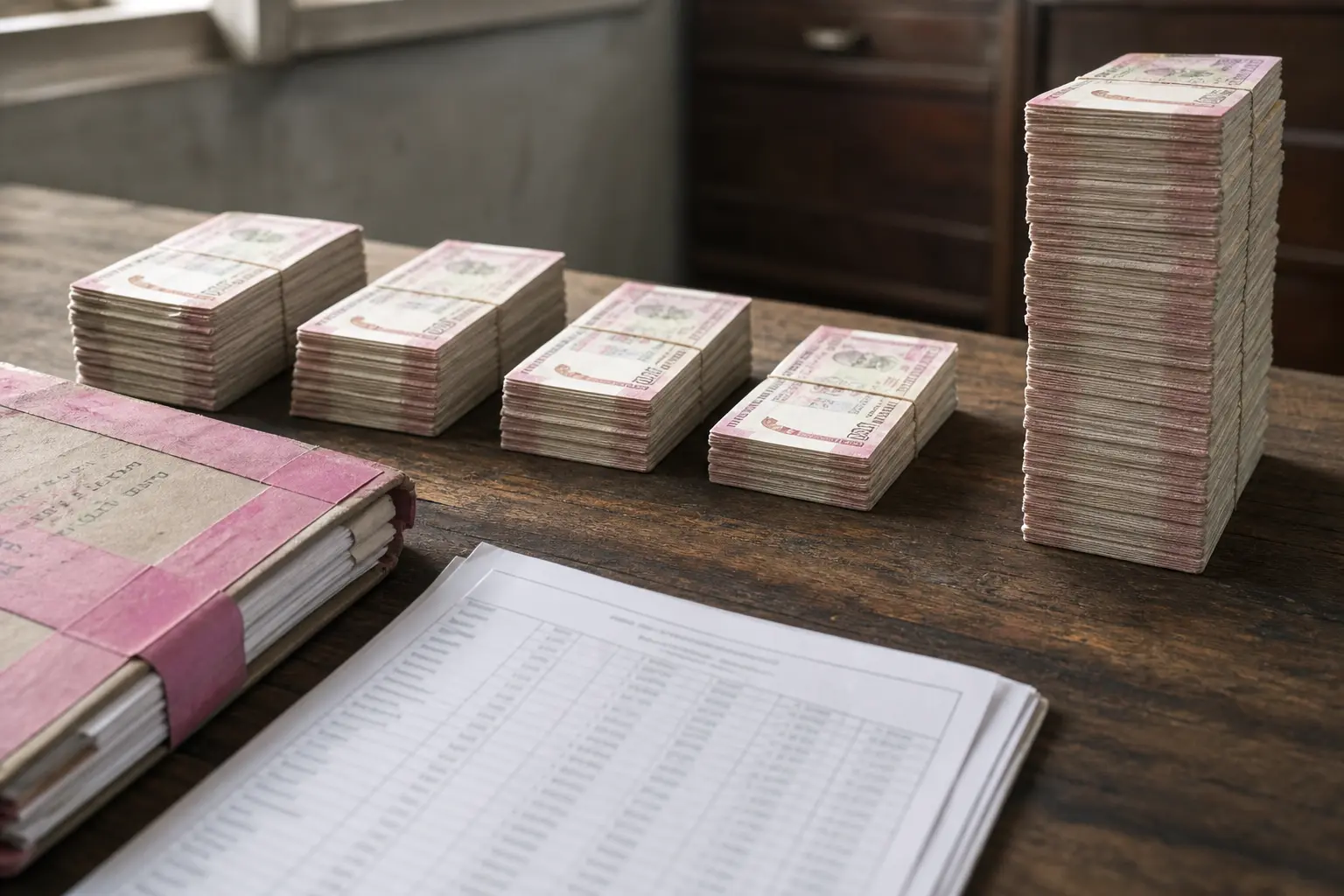
One Row in the Government’s Own Table Moves the Other Way
Small Finance Banks (SFBs, a category of RBI-licensed lender created in 2015 to expand banking access for underserved borrowers) are a small slice of India’s banking system by size. But their bad-loan trajectory runs opposite to everyone else’s.
Their NPAs rose from Rs 5,971 crore in March 2021 to Rs 10,448 crore in March 2026, an increase of nearly three-quarters in rupee terms. Every other lender category the government listed, PSBs, private banks, foreign banks and urban cooperative banks, shrank its bad-loan pile over the same five years.
The Microfinance Hangover Behind the Small Finance Number
The divergence traces back to a stress cycle that hit small-ticket, collateral-free lending hard starting in 2024. Most Small Finance Banks lean heavily on microfinance and unsecured retail loans, the same segment that regulators flagged repeatedly as over-leveraged borrowers took on multiple loans from different lenders at once.
- 2.6% to 6.9%, the jump in ESAF Small Finance Bank’s gross NPA ratio between September 2023 and September 2024, as its bad loans more than tripled in rupee terms in a single year.
- 2.0%, the share of small finance banks’ microfinance loans that were 31 to 180 days overdue as of March 2026, according to the RBI’s Financial Stability Report, second only to banks’ broader microfinance book at 2.5%.
- 45.5% of GDP, the level Indian household debt had reached by September 2025, per Reserve Bank data.
- 58.4%, the share of non-housing retail loans in total household borrowing as of March 2026, reflecting a shift toward consumption debt over asset-backed loans like mortgages.
Ratings agencies were tracking the strain well before it showed up in Parliament’s numbers. Manushree Saggar, a sector head at ICRA covering financial sector ratings, said in January that rising fund and credit costs, driven largely by microfinance delinquencies, would keep pressuring small finance banks’ profitability through the following two quarters.
Why Do Small Finance Banks Carry More Risk Than Big Banks?
Small finance banks were built to serve borrowers that priority-sector lending targets and that larger banks often avoid: microfinance groups, small traders and first-time borrowers with thin credit histories. That mandate means smaller loan tickets, less collateral and portfolios that move first when household budgets tighten, which is what regulators say has played out since 2024.
It is not the only pocket of stress hiding behind a clean headline number. The RBI’s Financial Stability Report found agriculture continued to carry the highest gross NPA ratio of any sector, at 5.1%, and accounted for the largest single share of scheduled commercial banks’ bad loans, at 37.2%, as of March 2026. The report also flagged nascent stress specifically in micro enterprises even as the broader MSME loan book stayed healthy.
Borrowers behind both categories carry more liability than headline write-off numbers suggest. The government clarified to the Rajya Sabha that NPAs are closed only when banks receive full recovery or reach a compromise settlement under RBI guidelines. A loan write-off is simply an accounting step banks use to clean up their balance sheets. It does not cancel what the borrower owes; banks continue pursuing recovery even after an account is written off.
The 4Rs That Rebuilt Bank Balance Sheets
The scale of the PSB turnaround did not happen by accident. It traces back to the RBI’s 2015 Asset Quality Review, which forced banks to recognize hidden stress rather than roll it forward through repeated restructuring. The government followed with what it called a four-part strategy: recognition, resolution, recapitalization and reform.
This continuous decline in gross NPAs of SCBs, including PSBs, has led to reduced provisioning by them, which in turn has improved their profitability thereby causing positive impact on the business growth. It also indicates that the asset quality as well as underwriting has improved in PSBs supported by a strong balance sheet and sustained profitability.
Pankaj Chaudhary, Minister of State for Finance, gave that account to Parliament earlier this year describing the improvement recorded through September 2025. The tools behind it now form a standing recovery apparatus:
- The Insolvency and Bankruptcy Code, which reset the relationship between defaulting borrowers and creditors and barred wilful defaulters from buying back their own companies.
- Amendments to the SARFAESI Act and the Recovery of Debt and Bankruptcy Act, giving lenders faster legal routes to seize and sell collateral.
- Early Warning Systems built into public sector banks to flag stress before an account turns bad.
- Dedicated Stressed Asset Management Verticals inside PSBs, staffed specifically to chase recovery on troubled accounts.
- RBI’s Prudential Framework for Resolution of Stressed Assets, which rewards lenders for adopting resolution plans early rather than waiting.
Public sector lenders have also pooled their recovery efforts, an approach visible in the unified platform PSU banks launched for retail and MSME debt recovery, which lets banks share data on defaulting borrowers across institutions instead of chasing them separately.
Cooperative Lenders Get Their Own Rulebook
Urban Cooperative Banks cut their bad-loan pile from Rs 37,993 crore to Rs 21,769 crore over the same five years, but the government is still rewriting the rules underneath them. Amendments introduced in 2023 for Multi-State Cooperative Societies added a Cooperative Ombudsman to handle member grievances, Information Officers to improve transparency, and mandatory concurrent audits for societies with turnover or deposits above Rs 500 crore.
Those changes sit alongside a broader push, detailed in measures the RBI and government have rolled out for cooperative banks, to modernize a segment that has historically operated with lighter oversight than commercial banks.
Profits Rise, but the Funding Math Is Shifting
Cleaner balance sheets have paid off for lenders in the near term. Lower provisioning against bad loans has freed up capital and lifted profitability across the sector, based on the government’s own account to Parliament. Scheduled commercial banks’ capital adequacy ratio stood at 17.7% and their core capital buffer at 15.3% as of March 2026, both multi-decade highs, according to the RBI’s Financial Stability Report.
That strength is not evenly distributed. Small finance banks face rising funding costs just as their microfinance books remain shaky, a squeeze industry analysts expect to keep pressuring margins even as the broader system celebrates record-low bad debt. Some of that same margin pressure is spreading further up the food chain, a trend covered in warnings that Indian banks’ profit margins face a squeeze ahead as deposit costs rise faster than loan yields.
Gold-backed lending adds another variable. Outstanding gold loans have grown at a compound annual rate of 42.4% since March 2024, the RBI noted, a category that stays well covered only as long as gold prices hold up. A sharp correction would test that cushion quickly. For now, the government’s table shows a banking system in genuinely better shape than at any point in years, with one row still worth watching closely.
Frequently Asked Questions
What is the difference between gross NPA and net NPA?
Gross NPA is the total value of loans a bank has classified as non-performing before subtracting any provisions it has already set aside. Net NPA subtracts those provisions, showing what the bank would actually lose if every bad loan went completely unrecovered. India’s net NPA ratio has fallen even faster than the gross figure in recent years as banks built bigger provision cushions.
If a bank writes off a loan, does the borrower stop owing the money?
No. A write-off is an internal accounting entry that lets a bank remove a bad loan from its active balance sheet, but the government has confirmed it does not cancel the borrower’s legal liability. Banks can and do continue recovery action, including through courts or asset seizure, on loans that have already been written off.
What exactly is a Small Finance Bank?
A Small Finance Bank is a category of bank the RBI began licensing in 2015 specifically to extend savings and credit to sections of the population that traditional banks often underserve, including small businesses, marginal farmers and microfinance borrowers. They operate under the same regulatory umbrella as commercial banks but with a mandate weighted toward financial inclusion.
How does the Insolvency and Bankruptcy Code help banks recover bad loans?
The code lets creditors, including banks, push a defaulting company into a time-bound resolution process that strips control from its existing promoters. It also bars wilful defaulters from bidding to reacquire their own companies during that process, a change designed to stop repeat offenders from gaming loan recoveries.
Can an account already tagged as an NPA be reclassified as standard again?
Yes, if a borrower clears the overdue amount in full or a bank approves a restructuring or compromise settlement under RBI guidelines, the account can be upgraded out of NPA status. Banks generally require a sustained track record of on-time payments after resolution before making that reclassification.