Googlebook is Google’s answer to the Chromebook problem: a laptop line due in fall 2026 that puts Gemini Intelligence, Android phone apps and file access, and premium partner hardware ahead of the old browser-first bargain. Google has not killed ChromeOS, but it has shown where its laptop ambition now sits.
For 15 years, the Chromebook sold restraint. Fast boot, simple management, cheap hardware, and the browser as the main computer were enough for schools and casual users. The Googlebook pitch admits that the center of laptop computing has moved from a browser tab to an assistant that watches the whole screen.
The Browser Computer Hit Its Ceiling
Google’s first Chromebook pitch was sharp because the old PC felt heavy. In a 2011 Chromebook launch post from Google, Linus Upson, vice president of engineering, and Sundar Pichai, then senior vice president for Chrome, described the first Samsung and Acer models as computers where email opened in seconds, updates happened automatically, and the Chrome browser sat at the core.
That solved a real problem. A school district did not need a full Windows image for Google Docs, Gmail, classroom portals, video lessons, and tests. A parent did not need to pay MacBook money for homework and YouTube. ChromeOS made the computer feel like an appliance, and that was the point.
The trouble is that the winning idea aged into a constraint. Artificial intelligence (AI, software that can perform tasks that usually require human judgment) is becoming part of the PC purchase, not just an app a user opens. Gartner, a technology research firm, forecast that AI PCs will reach 55 percent of the total PC market in 2026. A browser-first machine can add AI buttons. It has a harder time feeling like the whole laptop was built around them.
Googlebook Moves the Center to Gemini
Google’s own language makes the pivot plain. In its Googlebook announcement for Gemini Intelligence, the company says it is moving from an operating system to an intelligence system and combining Android, ChromeOS, Google Play, and Gemini into a new laptop category.
The feature that carries the message is Magic Pointer. Instead of treating Gemini as a sidebar or chat box, Google puts it on the cursor. Wiggle the pointer, select an object, point at a date, or combine images, and Gemini is supposed to offer the next action without making the user switch context.
- Fall 2026 is the public launch window on Google’s Googlebook site.
- Five PC makers, Acer, ASUS, Dell, HP, and Lenovo, are listed as first hardware partners.
- Android 17 or above is required for the phone-linked features on Google’s product page.
- One cursor gesture is the hook Google wants buyers to remember.
That is why this feels bigger than a Chromebook Plus refresh. Mind Cron’s earlier look at Googlebook’s multi-chip hardware bet focused on the silicon fight. The software bet may be harder: Google has to make a laptop feel native to Gemini without making every click feel watched.
Android Fixes the App Problem ChromeOS Could Only Patch
ChromeOS spent years stretching past the browser. Android apps came to Chromebooks. Linux tools arrived for developers. Steam reached beta on supported machines. Those moves made Chromebooks more capable, but each addition also reminded users that the platform began somewhere narrower.
Googlebook starts from the other side. Google’s product page says Magic Pointer can ask, compare, or create with Gemini, Create My Widget can build a widget by asking, Cast My Apps can open phone apps on the laptop without installs, and Quick Access can make phone files appear as if they live on the laptop.
That phone link matters because Android is Google’s largest installed base. The Chromebook trained users to live in Google’s web services. Googlebook tries to turn the Android phone into the laptop’s companion device, file source, app source, and identity layer. Mind Cron’s coverage of Gemini Intelligence taking over Android showed the same pattern on phones: Google is making the assistant part of the operating flow rather than another app icon.
There is a catch. The more useful the phone and laptop become together, the more the buyer needs to live inside Google’s account, app, and AI systems. That is convenient for Android loyalists. It is a reason for caution for people who liked Chromebooks because they were simple, cheap, and easy to wipe.
The Three Google Laptop Lanes
The cleanest way to understand Google’s laptop shift is to stop treating Chromebook, Chromebook Plus, and Googlebook as one ladder. They serve different buyers, even if their names sound related.
| Line | Core Pitch | AI Surface | Best Fit |
|---|---|---|---|
| Chromebook | Low cost, browser-first computing with managed updates | Mostly added through ChromeOS and Google apps | Schools, basic home use, shared devices |
| Chromebook Plus | Better minimum hardware and built-in Google AI features, with models starting at $350 | Gemini on the shelf, Help Me Write, Magic Editor, and related tools | Students, families, light work, budget buyers who want better screens and memory |
| Googlebook | Premium laptop category built around Gemini and Android phone continuity | Magic Pointer, Create My Widget, Cast My Apps, and Quick Access | Android users who want a laptop that behaves more like their phone and assistant |
Google already put AI into Chromebook Plus. In a Chromebook Plus Gemini feature rollout, John Maletis, vice president for ChromeOS at Google, described Help Me Write, Magic Editor, Gemini access, and a 12-month Google One AI Premium offer for new buyers.
Googlebook is more ambitious because the assistive layer is part of the category pitch. If Chromebook Plus is the better Chromebook, Googlebook is the attempt to make Android’s software model credible on a laptop.
Schools Keep the Old Chromebook Promise
The most important buyer group in this story may be the one least likely to buy the first Googlebooks. Schools made Chromebooks normal because the devices were cheap, manageable, and good enough. Google cannot casually break that base without hurting the product that gave it a laptop market in the first place.
Support policy backs that up. Google’s ChromeOS automatic update policy says ChromeOS devices receive 10 years of updates from the platform release date, with dates published for approved devices. Automatic Update Expiration (AUE, Google’s device support deadline) still matters for administrators, but the policy is built for long fleet life.
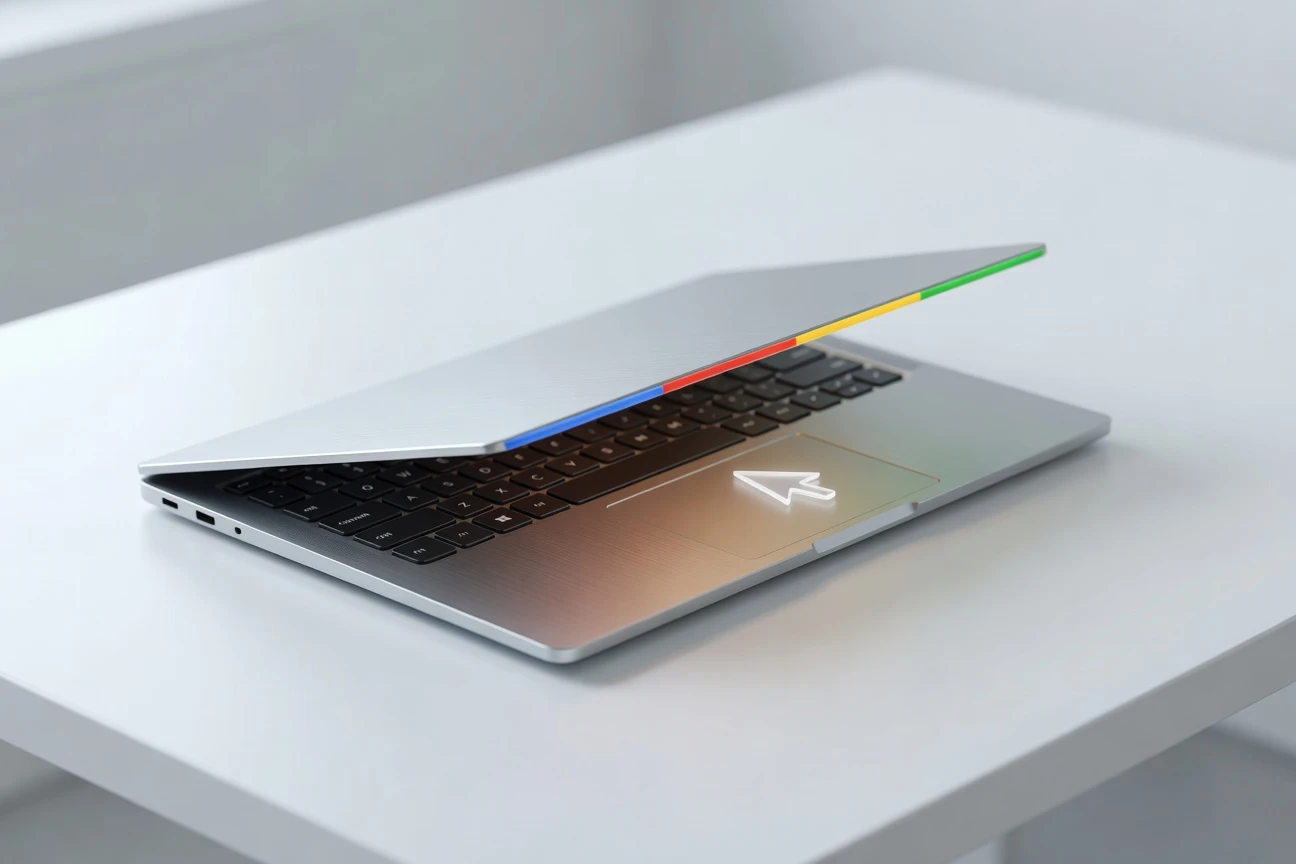
That makes Googlebook a premium push before it is an education replacement. A school that needs thousands of rugged, low-cost laptops will not care much about a glowing lid bar or a cursor that calls Gemini. It will care about management tools, repair costs, keyboard durability, replacement chargers, test software, and whether students can get through a day without a support ticket.
So the phrase Google ditched the Chromebook needs a careful reading. Google is not walking away from the installed base. It is moving the innovation budget and the marketing glow toward a new kind of Android laptop.
The Buyer Risk Sits in the Missing Specs
Google has shown the story before it has shown the hard buying sheet. As of May 23, 2026, Google has not published final pricing, battery claims, processor-by-model details, memory tiers, repair terms, or a full policy guide for managed deployments. That leaves a lot of room between a strong demo and a smart purchase.
The unanswered questions are practical, not philosophical:
- Price floor: if the first models land far above Chromebook Plus, schools and budget buyers will stay where they are.
- Local AI limits: buyers need to know which Gemini features run on the device and which require a cloud connection.
- Offline behavior: a laptop still has to work on weak Wi-Fi, airplanes, and hotel networks.
- Admin controls: businesses and schools will need clear switches for Magic Pointer, phone casting, file access, and data sharing.
- App quality: Android phone apps on a laptop screen need more than compatibility. They need layouts that feel built for keyboard, mouse, and trackpad.
Those caveats do not make Googlebook a bad idea. They explain why Google needed something beyond another Chromebook badge. If the first models arrive with premium hardware, clean controls, and a useful Magic Pointer, the old browser computer starts to look like a brilliant first draft. If pricing and privacy controls disappoint, ChromeOS will look less like the past and more like the safer buy.
Frequently Asked Questions
Is Google Killing the Chromebook?
No, Google has not said it is killing the Chromebook. ChromeOS devices still have a published update policy, and Chromebook Plus remains a current product line with Google AI features.
When Will Googlebook Be Released?
Google says Googlebook is coming in fall 2026. The company has opened a notification page, but final model prices and retail dates have not been published.
What Makes Googlebook Different From Chromebook Plus?
Googlebook is built around Gemini Intelligence, Magic Pointer, Android phone app casting, and phone file access. Chromebook Plus is still a ChromeOS laptop line with added Google AI features and stronger minimum hardware.
Will Googlebook Need an Android Phone?
An Android phone is not presented as mandatory for the laptop itself, but Google’s phone-linked features require setup and a phone running Android 17 or above.
Should Students Wait for Googlebook?
Most students should wait for prices and model details before deciding. Chromebook Plus remains the clearer budget option today, while Googlebook is aimed at buyers who want a premium Android and Gemini laptop.
Will Existing Chromebooks Get Googlebook Features?
Google has not announced a broad upgrade path from current Chromebooks to the Googlebook software experience. Existing devices should be judged by their ChromeOS update schedule and current feature support.