Three senior technology executives were commissioned into the U.S. Army Reserve’s Detachment 201 on June 10, 2026, as lieutenant colonels in a small unit the service has built to bring Silicon Valley’s senior ranks into uniform. The new arrivals, Dane Knecht of Cloudflare, Sam Pullara of Sutter Hill Ventures, and Serkan Piantino, a co-founder of Facebook AI Research, joined the Executive Innovation Corps in a ceremony at Joint Base Myer-Henderson Hall, Virginia. The unit now has seven officers.
Detachment 201’s name is a reference to an HTTP status code, and the program sits inside the Army’s broader Transformation Initiative. The service unveiled the unit a year ago, when it commissioned its first four members from Palantir, Meta, and OpenAI, and has spent the year since arguing that private-sector talent is the shortest path to modernize for a wartime environment defined by drones, software, and contested supply chains. Critics inside the Pentagon and on Capitol Hill have warned that the same executives, who hold senior roles at companies that sell to the military, are being handed formal influence over the procurement decisions their employers stand to benefit from. The Army says its ethics framework, the Joint Ethics Regulation and mandatory recusal, keeps the line clear.
A Second Cohort, and a Faster Pipeline
The three new officers were the first arrivals since the Army overhauled the pipeline that places highly skilled civilians directly into the officer corps. The service said it cut the onboarding timeline from “more than 18 months to approximately six months.” The change is the bureaucratic answer to a problem the Army has been candid about: it cannot keep up with private-sector hiring for the technical skills it needs.
Knecht is the chief technology officer of Cloudflare, a content-delivery and security company that has sold services to the Defense Department. Pullara is the managing director and chief technology officer of Sutter Hill Ventures, a Palo Alto investment firm. Piantino co-founded Facebook’s AI research arm and most recently served as vice president of products at Reddit. None had military backgrounds before the commission. All three now hold the rank of lieutenant colonel, a senior rank that in conventional Army formations takes most officers more than a decade to reach, and they were admitted through a “direct commission” reserved for fields where civilian credentials translate directly to military need. The Army’s spokespeople have pointed to the long-standing direct-commission pipeline for medical providers, chaplains, and veterinarians, who enter at a slightly more senior rank after their own version of boot camp.
Detachment 201’s own version skips the boot camp, in keeping with the program design. Members are reservists, can work remotely, and must complete a minimum of 112 hours of service annually, according to a Business Insider report. The Army did not detail the training the new officers completed before being commissioned, and a spokesperson did not respond to questions on the subject.
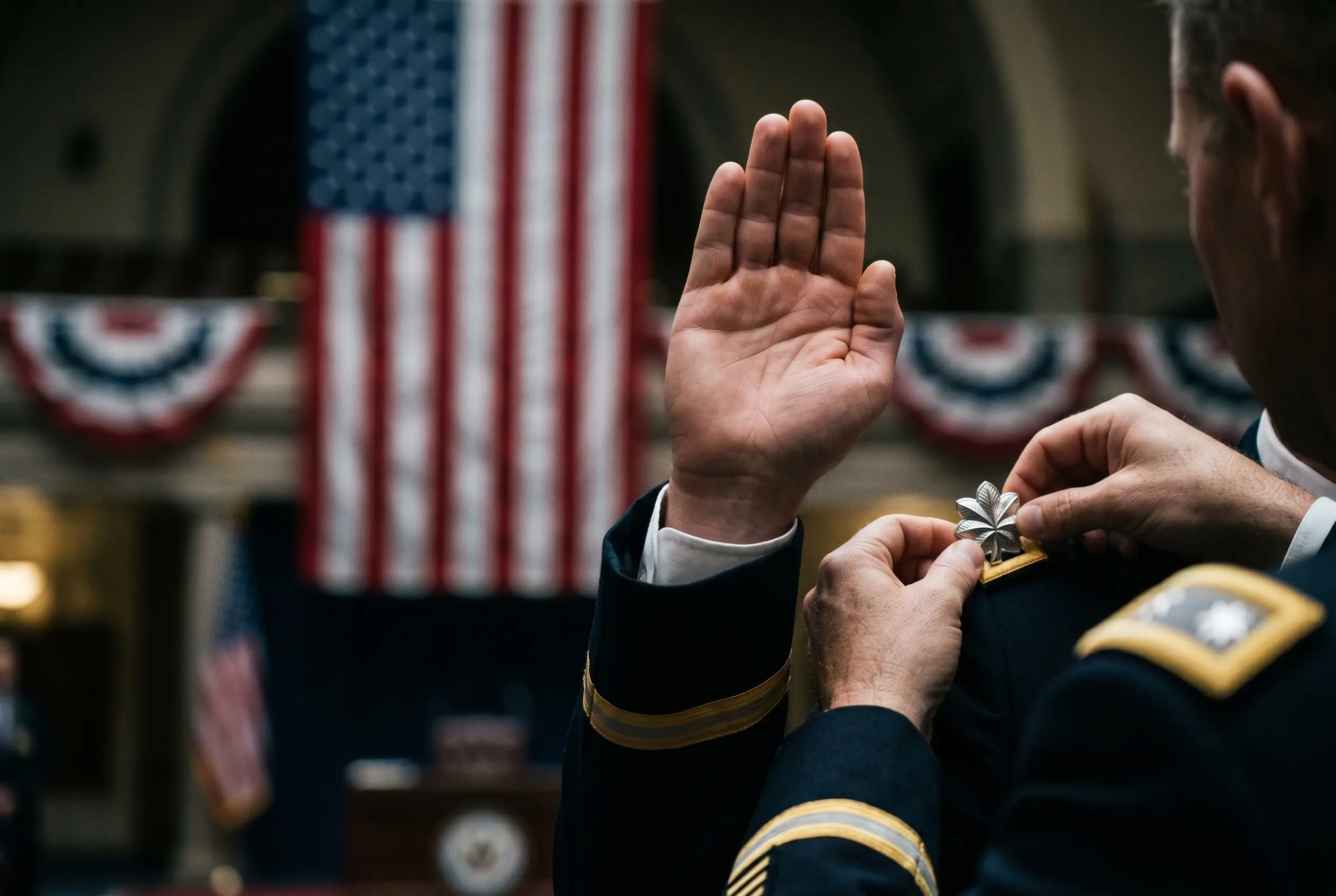
The Seven Officers Behind the Unit
Detachment 201 now has seven senior officers, all of them lieutenant colonels, all of them drawn from the executive ranks of major technology companies or the venture firms that fund them. The inaugural cohort, sworn in on June 13, 2025, brought four: Shyam Sankar, the chief technology officer of Palantir; Andrew “Boz” Bosworth, the chief technology officer of Meta; Kevin Weil, the former chief product officer of OpenAI; and Bob McGrew, the former chief research officer of OpenAI and a current advisor at Thinking Machines Lab. The second cohort, sworn in on June 10, 2026, added Knecht, Pullara, and Piantino. Seven is a small unit. The Army has not said whether a third cohort is planned, but the service has framed the program as a pilot intended to scale. The setup is in the the Army’s announcement of the second cohort, which also names the first cohort’s members.
The roster, with the day jobs each officer leaves on the shelf when called up:
| Cohort | Officer | Employer | Role |
|---|---|---|---|
| 1 (June 13, 2025) | Shyam Sankar | Palantir | Chief technology officer |
| 1 (June 13, 2025) | Andrew Bosworth | Meta | Chief technology officer |
| 1 (June 13, 2025) | Kevin Weil | OpenAI (former) | Former chief product officer |
| 1 (June 13, 2025) | Bob McGrew | Thinking Machines Lab; OpenAI (former) | Advisor; former chief research officer |
| 2 (June 10, 2026) | Dane Knecht | Cloudflare | Chief technology officer |
| 2 (June 10, 2026) | Sam Pullara | Sutter Hill Ventures | Managing director and chief technology officer |
| 2 (June 10, 2026) | Serkan Piantino | Facebook AI Research (co-founder); Reddit (former) | Co-founder; former vice president of products |
Where the Advice Lands
The four areas Detachment 201’s work has touched are not abstractions. They are the four stress points the Army itself has identified as decisive in the next fight: munitions supply chain data analysis, investments in the Organic Industrial Base, strategies for autonomous systems, and counter-drone technologies. The Army’s June announcement of the second cohort said the first cohort “provided strategic counsel” on those initiatives and “influenced” them, without detailing the influence. Army Chief Technology Officer Dr. Alex Miller, in an interview with DefenseScoop, was more specific. He said the first cohort was embedded with operational units, in uniform and not in their civilian capacity, to learn the problems and propose solutions.
Among the projects Miller named: software developers deployed to the 4th Infantry Division, one of the Army’s de facto tech testbed units; identification of critical munition supply chains aimed at cutting manufacturing cycles; and translation of commercial autonomy work from self-driving cars into aerial and maritime robots. The pilots are small in headcount but targeted at bottlenecks the Pentagon has flagged in its own reviews.
The second-order picture is plain. The four work areas are also four procurement categories. Munitions supply chains, organic industrial base investments, autonomous systems, and counter-drone platforms are all categories the Army spends billions on and all categories in which the employers of Detachment 201’s officers are also vendors, partners, or potential bidders. The Army says Detachment 201 officers are barred from the vendor selection process, citing a “clear functional separation of duties,” and that the unit’s work on those four areas is at the strategic advisory level rather than the procurement level. Critics have said the line is hard to police in practice.
The work the unit is being asked to do, in the Army’s framing, is the kind that bends the institution before any single contract is awarded.
The Army’s most pressing technology challenges in AI, cyber defense, and large-scale distributed systems require leaders who can evaluate a technical architecture in the morning and advise a general in the afternoon.
That is Sam Pullara, managing director and chief technology officer of Sutter Hill Ventures, in the Army’s June 2026 release.
The Guardrails and Their Limits
The ethics framework the Army has described is layered. Spokesperson Lt. Col. Orlandon Howard, in a statement to DefenseScoop, said the new officers are governed by the Joint Ethics Regulation, with mandatory confidential financial disclosures on the OGE Form 450, annual ethics training, and a legal review of each work assignment. “Recusal from any matter affecting the financial interests of members of Detachment 201 is mandatory,” Howard said. The Army has also said the officers are barred from the vendor selection process for any contract touching their employers’ financial interests. The framework exists; the Army is candid that it has to be policed through disclosures and reviews, not through job descriptions alone.
Miller used Sankar as the worked example. Sankar, the Palantir CTO, “cannot deal with any program AI, anything in his reserve capacity, but he has been very helpful on talent management at the Army level,” Miller said in a January interview with DefenseScoop. The example illustrates both the principle and the limit. The same officer whose company holds a $759 million Army contract for AI development can advise the Army on talent management in the same domain. The boundary is a personal one, kept by the individual officer and the legal review, not a structural one. The Army says the guardrails are tight. Skeptics inside the building have said the guardrails depend on the honesty of the people inside them.
Military.com, which reported on the rollout of the first cohort, found “virtually no systemic oversight” on the conflict-of-interest question, citing interviews with “nearly two dozen” Army and Pentagon officials, defense analysts, and Capitol Hill aides. The same officials broadly supported the concept of bringing high-end civilian talent into uniform. The same officials described the rollout as a “self-inflicted optics nightmare.”
What the Critics Are Saying Inside the Building
The Military.com reporting, published in June 2025, is the most detailed public accounting of the internal reaction to Detachment 201 to date. The publication spoke with “nearly two dozen” Army and Pentagon officials, from midgrade officers to senior brass, as well as defense analysts and Capitol Hill aides, on the condition of anonymity. Across the board, the sources said, there was strong support for the concept of pulling high-end civilian tech talent into uniform, particularly in a bureaucracy often faulted for its glacial pace of change. The same sources, nearly all of them, raised red flags about the rollout. The officials described it as a “self-inflicted optics nightmare,” and warned that any future Pentagon deals involving the executives’ companies could be tainted by perceptions of favoritism.
The financial stakes sit plainly on the public record. Sankar, the first Palantir officer, sold Palantir stock worth $367.9 million last year, according to Military.com, and has made numerous other multimillion-dollar deals. Palantir holds a $759 million Army contract for AI development. OpenAI, where Weil and McGrew most recently worked, announced a $200 million defense contract within days of Bosworth’s swearing-in. Meta, Bosworth’s employer, announced a deal with the defense technology company Anduril to pursue military contracts involving artificial intelligence and augmented reality just before Bosworth was sworn in. The four are not the only companies whose executives have joined; the seven-officer roster reads like a map of the same firms that have spent the last two years building defense lines of business. Sankar has pledged to donate all of his reserve pay, which Military.com reported would amount to roughly $10,000 a year, to Army Emergency Relief.
- 7 officers now in Detachment 201
- ~6 months from more than 18 months: the new direct-commissioning timeline
- $367.9M: Sankar’s Palantir stock sales in the year before his commission
- $759M: Palantir’s Army AI contract
- $200M: OpenAI’s defense contract announced at the time of Bosworth’s swearing-in
Katherine Kuzminski, a national security personnel expert at the Center for a New American Security, told Military.com she saw long-term promise in the program. “If we end up in a war in an Indo-Pacific conflict, we’re going to need to tap more people like this,” she said. The same sources who backed the concept also noted that the optics around the rollout, not the program’s substance, were what made the conflict-of-interest question a hard one to answer.
Why the Army Pressed Ahead
The Army has framed Detachment 201 as part of a larger effort it calls the Army Transformation Initiative, an overhaul the service says is meant to make the force “leaner, smarter, and more lethal.” Sankar, in an essay in The Free Press on the day of his own commission, framed the program in longer historical terms. The current arrangement, he wrote, is the Army’s effort to revive the World War II “dollar-a-year men,” the industrial executives who took commissions to rebuild the arsenal of democracy. The Executive Innovation Corps sits inside the chief of staff’s office, under General Randy George. The case Sankar made in the essay: the same people who led the consumer-tech revolution need to be in the rooms where the next war is being planned, or the United States will lose the same industrial edge it lost in the late twentieth century. His own Sankar’s op-ed on why he joined traces that argument in full.
The pressure is concrete. Business Insider reported that the war in Iran has strained U.S. munitions stockpiles, and the rise of drones has made counter-drone technology a top Pentagon priority. The service has said Detachment 201’s work on munitions supply chain data analysis and counter-drone strategies is meant to address those pressure points. The transformation initiative is the larger umbrella; Det 201 is one of the levers. The service’s case for the program, from the the Army’s launch of the unit last year, is that the technology cycle has outrun the institution’s normal recruiting.
Whether the program scales into a third cohort and beyond is an open question the Army has not answered. The ethics framework, the procurement separations, and the small size of the unit so far are all in motion at once. The seven officers now in the unit are also, for the moment, the only public test of whether the framework holds.
Frequently Asked Questions
A reader’s first questions, after the news of the second commission, are practical ones. Here is what is known, sourced from the Army’s announcements, the service’s spokespeople, and the reporting on the first cohort.
What is Detachment 201?
Detachment 201, formally the Executive Innovation Corps, is a specialized Army Reserve unit designed to bring private-sector technology executives into uniform as senior advisors. Its name is a reference to an HTTP status code, the 201 Created response. The unit operates under the broader Army Transformation Initiative, which the service says is meant to make the force “leaner, smarter, and more lethal.” Members are reservists, can work remotely, and are required to complete a minimum of 112 hours of service annually, according to a Business Insider report.
How were the seven officers commissioned?
All seven entered the Army Reserve at the rank of lieutenant colonel through a process called a direct commission, the same path used for medical providers, chaplains, and veterinarians. In regular formations, lieutenant colonel is a senior rank that takes most officers more than a decade to reach, and is often the minimum rank needed to get into the room at the Pentagon. The Army streamlined its direct commissioning pipeline, reducing the onboarding timeline from “more than 18 months to approximately six months,” to compete more effectively with the private sector for technical talent.
What has the first cohort done in its first year?
The first cohort spent the year embedded with operational units, in uniform, according to Army CTO Dr. Alex Miller. Miller said the officers helped develop the deployment of software developers to operational units, including the 4th Infantry Division. They identified critical munition supply chains to reduce manufacturing cycles. They translated commercial autonomy work from self-driving cars into aerial and maritime robots. Sankar has spent much of his reserve time on talent management at the Army level, in keeping with the Palantir-related recusal Miller has described.
What are the conflict-of-interest rules?
The Army says the officers are governed by a multi-layered ethics framework under the Joint Ethics Regulation, with mandatory confidential financial disclosures on the OGE Form 450, annual ethics training, and a legal review of each work assignment. Recusal from any matter affecting the financial interests of the officers or their employers is mandatory. Military.com, reporting on the first cohort, said there is “virtually no systemic oversight” on the conflict-of-interest question, a characterization the Army has disputed.