
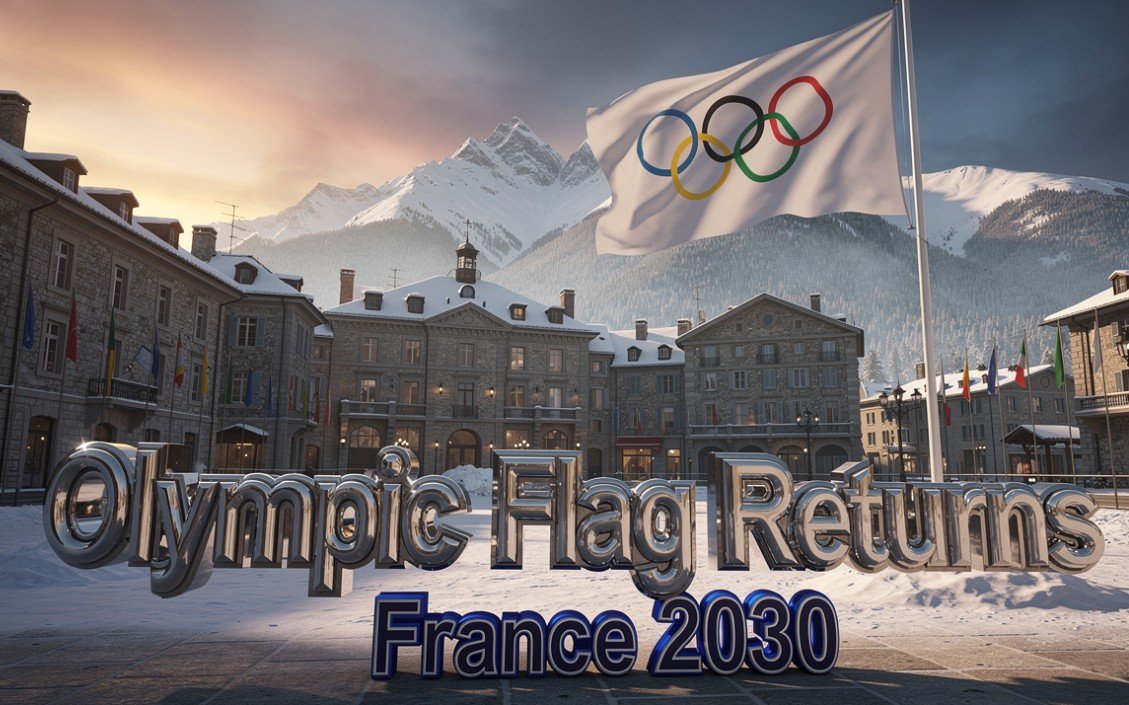
France marked a powerful symbolic moment this week as the Olympic flag returned to French soil, signaling the official start of preparations for the 2030 Winter Olympics in the French Alps. Thousands gathered in Albertville, the site of France’s last Winter Games of 1992, to witness a celebration filled with national pride, historical reflection, and rising anticipation for the next chapter in Olympic history. This event not only honors France’s rich Olympic legacy but also highlights the immense task ahead as the globe watches the buildup to 2030 unfold.
Historic Return of the Olympic Flag
On Monday, French officials and citizens welcomed back the Olympic flag during a special ceremony in Albertville. Less than two years after the 2024 Paris Summer Olympics, France is already turning its focus to the next global stage, this time in winter sport. The handover came straight from the closing ceremony of the 2026 Winter Olympics in Milano‑Cortina, where regional leaders Fabrice Pannekoucke of Auvergne‑Rhône‑Alpes and Renaud Muselier of Provence‑Alpes‑Côte d’Azur formally received the flag.
The arrival of the flag in Albertville was met with cheers from a large crowd, reflecting both local and national excitement. Albertville is deeply symbolic for French winter sport, as it hosted the 1992 Games, which were remembered for iconic sporting moments and strong French performances.
Fabrice Pannekoucke, speaking during the celebration, described the moment as part of a “momentum building up to the 2030 Games,” reminding attendees that France’s Olympic history has deep roots in the same alpine region.
A Record Medal Haul and Growing Confidence
The return of the Olympic flag arrives on the heels of an unforgettable performance by the French team at the 2026 Milano‑Cortina Winter Olympics. France earned its best Winter Olympics medal tally ever, with 23 medals including eight golds, placing sixth overall in the medal standings.
Among the standout moments were victories in biathlon and ice dancing, which helped fuel national celebration and pride. French biathlon star Oceane Michelon, who won Olympic gold in the mass start event, expressed happiness at sharing her success with fans back home.
These results not only energized the celebration but also underscored the strength of France’s winter sport programs—critical momentum as the country prepares to host athletes from around the world in 2030.
Planning and Challenges Ahead for 2030
While the ceremony was festive, it also served as a reminder of the work that lies ahead. France will host the Winter Olympics from February 1 to 17, 2030, with the French Alps serving as the focal point. Events are planned across multiple Alpine areas, including Haute‑Savoie, Savoie, Briançon, and Nice, aiming to bring sport to diverse parts of the region.
Organizers have pledged to follow a model similar to Milano‑Cortina by prioritizing existing and temporary facilities to reduce new construction and environmental impact. About 93 percent of venues are expected to reuse existing infrastructure, a strategy that aligns with the International Olympic Committee’s sustainability goals.
Despite these plans, the road ahead is not without its challenges. Recent reports have highlighted internal turmoil within the 2030 organising committee, including leadership disagreements and resignations that have raised concerns over governance and planning efficiency. These tensions have drawn public scrutiny and emphasize the need for strong administrative focus as the event approaches.
French Prime Minister Sébstien Lecornu has publicly urged organisers to “stay focused and rise above predictions of failure,” reflecting the national importance of delivering a memorable and well‑executed Games.
Community Response and Public Opinion
The arrival of the Olympic flag and related celebrations have been inspiring for many residents and Olympic supporters. Thousands attended festivities that included tributes to historic French Winter Games and celebrations of current athletic achievements. The event in Albertville featured parades, music, and shared pride in France’s sporting heritage.
At the same time, not all responses have been uniformly positive. In Albertville and surrounding areas, some citizens and local groups protested against the direction of the 2030 Winter Olympics preparations, citing concerns over environmental risk, economic costs, and a lack of broader consultation with residents. These critics argue that more dialogue is needed between organisers and local communities who will live with the legacy of the Games.
This mixture of enthusiasm and scrutiny illustrates how the Olympics remain both a source of national aspiration and a catalyst for civic conversation.
Looking Forward to a French Alpine Winter Festival
With four years to go until the Games open in 2030, France has entered a critical phase of preparation that will shape both sporting competition and national legacy. The handover of the Olympic flag marks the official start of this journey, and for many athletes, officials, and citizens, it represents an invitation to look forward with pride.
The 2030 Winter Olympics will be France’s fourth time hosting the Winter Games, following Chamonix 1924, Grenoble 1968, and Albertville 1992. Each of these editions holds a place in France’s Olympic story, and 2030 promises to add a new chapter that celebrates sport, community, and international unity on snow‑covered stages.