Forward-facing sonar is rewriting the day on the lake, and the sport is fighting over what it means. The technology mounts to a trolling motor and shows anglers a real-time picture of the fish below the boat, with surveys in Minnesota finding about 30% of anglers now use it, and as high as 63% on one lake last fall. A full setup runs about $2,500, which is enough to keep the cost, the ethics, and the conservation question in an unusually loud loop on social media.
Tens of millions of Americans fish recreationally each year, according to the Associated Press, and few recent tools have stirred that many people. An AP report from Bismarck dated June 14, 2026, traced the fight through podcasts, online fishing forums, trade shows, and tournament Facebook pages, with critics calling the screen-first approach a turn away from the sport and defenders calling it a smarter way to spend the hours they have. Early research is starting to complicate both sides: the most-feared outcome, that the technology is emptying lakes, is not what the data shows.
How Forward-Facing Sonar Works in the Boat
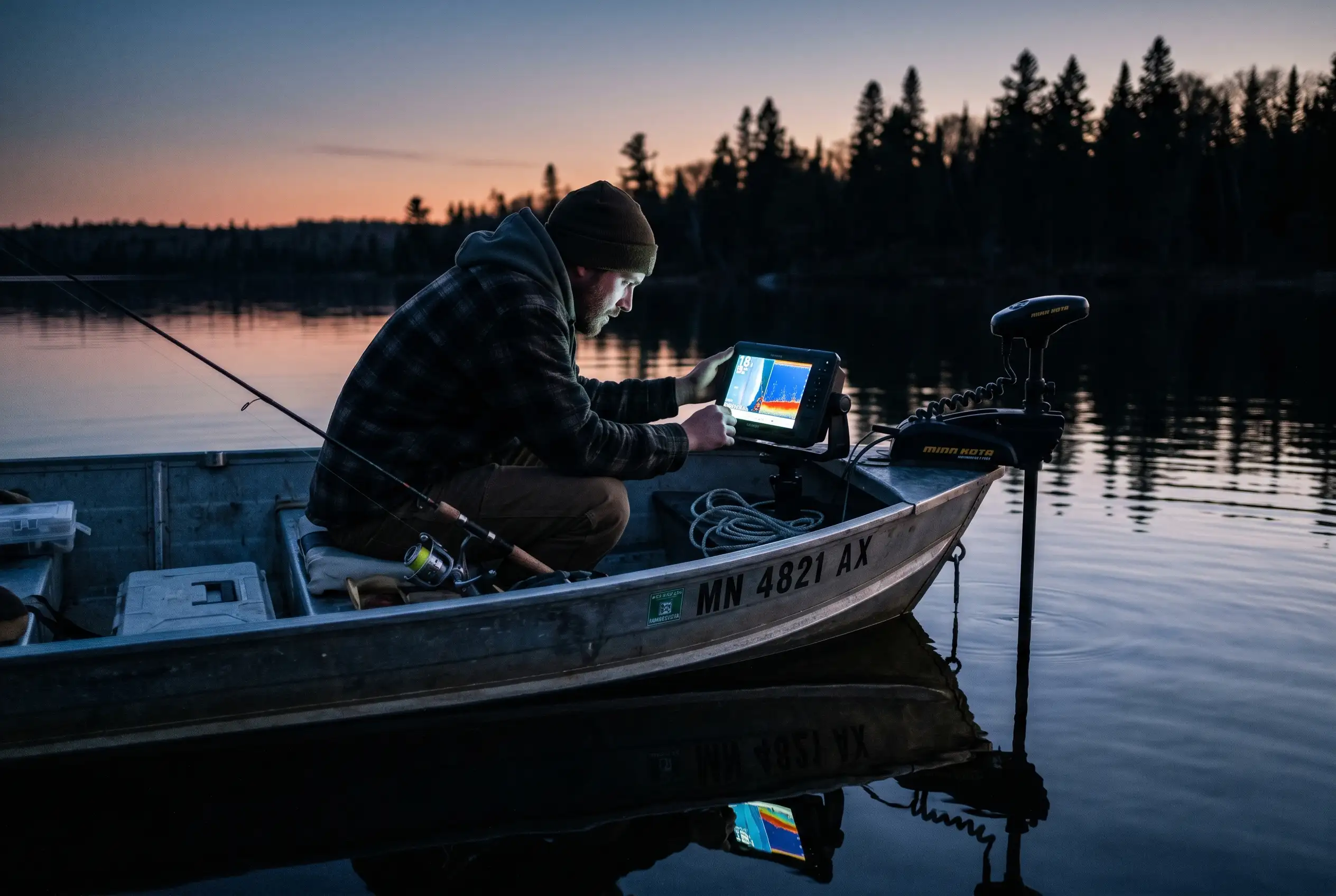
Fish-finding sonar has been around for years. The new part is forward-facing sonar, which sends sound frequencies out from the bow or stern and converts them into a live picture on a screen. Earlier products only marked where fish were. The current generation shows them in real time and, in some setups, lets the angler watch their own lure in the water column.
“With forward-facing sonar, you can attach it to a trolling motor and you can look around the water under you and you could find exactly, pinpoint where that fish exactly is at any given time,” said Dave Dunn, a sales executive at Garmin, the maker of the LiveScope live sonar line. Dunn notes the equipment, which costs about $2,500 for a full setup, enables anglers to see their lures and cast directly to fish. It has a learning curve, and anglers wiring other screens into their boats can sort the network side with a guide to linking a smartphone to boat navigation.
For Minnesota angler Terry Rehm, the appeal is time. Rehm said he doesn’t get a lot of lake time due to his work and kids’ schedules, and forward-facing sonar ensures he makes good use of the hours he has. “It’s just nice to be able to hone in on them a little quicker and find them quicker and catch more fish when I’m out here,” he said.
A Sport Divided, and Going Personal
That promise is exactly what critics say is wrong with the new generation of fishing. Gary Korsgaden, who has written about the sport for decades, told the AP that the technology is changing what people are after on the water. “I think the unfortunate reality is fishing has gotten to be more about, shall we say, success or numbers or quantity, that type of thing, instead of the actual enjoyment of the engagement and making decisions on your own,” Korsgaden said.
Walleye Alliance spokesperson Nate Blasing said the debate now spills out across Facebook groups, podcasts, online forums, trade shows, and tournaments. “It’s much like politics now. It tends to get personal. You can agree to disagree,” Blasing said. The argument is being fought in places that did not exist a decade ago, and critics and fishing writers alike have been removed from private Facebook groups for even raising the topic, per Korsgaden.
The argument has moved past the dock. The new screens keep selling, the surveys keep climbing, and the share of Minnesota anglers using the technology is running around 30% statewide. The science is the one thread both sides are still pulling on.
- About 30% of Minnesota anglers use forward-facing sonar in statewide surveys
- 63% on one Minnesota lake last fall, per the Walleye Alliance
- About $2,500 for a full Garmin live sonar setup
- 4,000+ on-the-water interviews from 2021 to 2023 found 67% of Minnesota anglers support a walleye bag limit cut
The Science Says the Catch Isn’t Higher
The fear that has driven a lot of the argument is overfishing. A controlled study in Wisconsin last year put that fear to a partial test. Two teams of anglers fished for smallmouth bass, one with forward-facing sonar and one without, and halfway through the summer the teams switched.
What Greg Sass and his team found surprised them. The team without the technology had higher catch rates, and the sonar team spent more time searching for fish before they ever started fishing. The result ran against the chatter at local bait shops, said Sass, fisheries research team leader with the Wisconsin Department of Natural Resources’ Office of Applied Science.
Sass said he is reluctant to apply the study to all fish species and water bodies, but the findings “would be counterintuitive to what I’m hearing in the bait shops or from other people that are on both sides of the fence with technology.” More studies are ahead, including for the muskie, a prized predator fish, and the question of whether the same pattern holds in other waters is open.
Minnesota’s DNR has run a parallel analysis. Eric Sanft, a fisheries specialist for the Minnesota Department of Natural Resources, said an analysis of lakes across the state didn’t find “negative impacts” from the use of forward-facing sonar in fishing. Surveys by wildlife officers in Minnesota found people using forward-facing sonar ended up catching similar numbers and varieties of fish as anglers who cast their lines the old-fashioned way. The next studies, including the muskie work in Wisconsin, will set the new baseline.
| Measurement | Team with forward-facing sonar | Team without |
|---|---|---|
| Catch rate | Lower | Higher |
| Average fish length | Slightly longer | Shorter |
| How time was spent | More time searching for fish | More time actively fishing |
Minnesota Proposes a Walleye Cut, With Caveats
The Minnesota Department of Natural Resources has proposed reducing the statewide walleye daily and possession limit from six fish to four, the first change to that rule since 1956. The agency’s walleye limit reduction proposal calls the cut “a management response to help preserve Minnesota’s great walleye fishing.” If enacted in the 2026 rulemaking, the new limit would take effect on March 1, 2027, with only one walleye longer than 20 inches allowed in possession. The proposal is open to public input as the rulemaking moves through the year.
Marc Bacigalupi, a regional fisheries supervisor for the Minnesota Department of Natural Resources, told the AP that sonar is only part of the picture. “To some degree, it can get scapegoated a little bit, and people’s perceptions of what other people are doing is often different than what the reality is,” Bacigalupi said. The DNR’s own framing lists other pressures alongside the technology.
The DNR’s own framing lists other pressures alongside the technology. According to the agency, the proposal also reflects peer-reviewed studies on climate and invasive species, an ice fishing boom of more than 3 million hours on Mille Lacs Lake and Lake of the Woods in the winter of 2019, social media hot spots that pull crowds of mobile anglers, and lower bag limits in surrounding states and provinces. Forward-facing sonar is one of five factors on the agency’s list.
- Climate change and invasive species documented in peer-reviewed walleye studies
- An ice fishing boom measured at 3 million hours on Mille Lacs Lake and Lake of the Woods in the winter of 2019
- Advances in fish-finding electronics, including forward-facing sonar
- Social media hot spots that pull crowds of mobile anglers to a single lake
- Lower walleye limits already in place in bordering states and provinces
Anglers Who Say the Tech Brings Them Back to the Water
For Daren Schneider, a lifelong angler from Bismarck, North Dakota, the screen has changed what he thought he knew about walleye. He used to believe the fish needed to be caught on or near the lake bottom. After watching on sonar, he found “they do all kinds of things that you never thought a walleye would do.”
A photo that ran with the AP report shows Rehm in his boat on May 23, 2026, in Nowthen, Minnesota, pointing at his forward-looking sonar screen. His pitch is straightforward: less time hunting, more time catching, on the days his calendar allows. Schneider and Rehm are both saying the screens put more anglers on the water, not fewer.
He frames fishing as memory-making first and catching second. In his telling, the screen brings more people to the water, not fewer. Critics and defenders end up arguing about what fishing is for, and Schneider’s side of that argument sits in his own words.
Fishing isn’t necessarily about catching fish and getting your limit or whatever. It’s about being out there and making memories, and if it’s making memories with forward-facing sonar, why is that such a bad thing?
More Studies, Tighter Rules, Louder Debate
Wisconsin’s muskie study is one of several in the pipeline, and Minnesota’s walleye limit proposal is working through a 2026 rulemaking cycle. Tournament circuits are also moving, with the Bassmaster Elite Series 2026 FFS limits set by a coin flip after anglers voted for the cap. Facebook groups for competitive anglers have already pushed critics out for raising the topic, per Korsgaden.
The list of things being measured keeps growing, and so does the list of stakeholders. Backers say the screens save time and may make them better students of the fish. Critics, including Korsgaden, say the screens shift fishing from “the actual enjoyment of the engagement and making decisions on your own” toward “success or numbers or quantity.”
Frequently Asked Questions
What is forward-facing sonar?
Forward-facing sonar is a type of fish-finding electronics that mounts to a boat’s trolling motor or bow and uses sound frequencies to render a real-time picture of fish, structure, and the angler’s own lure on a screen. Earlier sonar models only marked where fish were. Current systems let anglers watch them move.
How much does a forward-facing sonar setup cost?
Garmin sales executive Dave Dunn told the AP that a full setup runs about $2,500. Garmin’s LiveScope line is one product in this category, with bundles that pair a transducer, sonar black box, and trolling motor mount.
Is forward-facing sonar banned in tournaments?
The picture is mixed. The Bassmaster Elite Series limited the use of forward-facing sonar to up to five of nine regular-season tournaments in 2026, decided by a coin flip after anglers voted for the cap. Other organizations have moved further. Most recreational use remains legal in Minnesota and other states, though the Minnesota DNR has proposed a new walleye limit that takes other fish-finding advances into account.
Are fish populations being damaged by forward-facing sonar?
Early research has not found an overfishing signal. A Wisconsin controlled study on smallmouth bass found the team without forward-facing sonar had higher catch rates. Minnesota DNR analyses did not find “negative impacts” from the use of forward-facing sonar on the state’s lakes. DNR wildlife officer surveys found sonar users caught similar numbers and varieties of fish as anglers fishing the old-fashioned way.
Why is Minnesota cutting its walleye limit from six to four?
The Minnesota DNR says the change responds to several factors, including peer-reviewed studies on climate and invasive species, an ice fishing boom on Mille Lacs Lake and Lake of the Woods, social media hot spots that pull crowds of mobile anglers, and lower walleye limits in surrounding states. Advances in fish-finding electronics, including forward-facing sonar, are listed alongside those other pressures. If the rule is enacted in the 2026 rulemaking, the new limit would take effect on March 1, 2027.