The federal government stopped subsidizing electric vehicle purchases on September 30, 2025. For anyone running a business out of a spare bedroom or a garage, that single date matters more than any horsepower spec or charging network map.
A new tax break arrived in its place: an above-the-line deduction worth up to $10,000 a year in car loan interest. It sounds like a win for anyone financing a vehicle. Read past the headline number, though, and it quietly excludes the exact vehicles a home-based business owner is most likely to buy, the ones used for work.
The $7,500 Credit Is Already History
The old incentive was simple math. Buyers of new EVs could claim up to $7,500 off their federal tax bill. Used EV buyers could claim up to $4,000. Both credits ended for any purchase made after September 30, 2025, under the One Big Beautiful Bill Act (OBBBA), the tax and spending law President Trump signed on July 4, 2025.
- $7,500 new-EV credit and $4,000 used-EV credit both ended for purchases made after September 30, 2025.
- $1,000 home charging equipment credit disappears next, for installs placed in service after June 30, 2026.
- $10,000 is the new annual cap on the OBBBA’s car loan interest deduction, personal-use vehicles only.
- 100% bonus depreciation is back, permanently, for vehicles placed in service after January 19, 2025.
Automakers saw the deadline coming and said so out loud. Tesla urged shoppers to “YOLO” an EV purchase before the cutoff, acknowledging how little runway was left. To actually claim the old credit on a 2025 return, a buyer needed a binding contract and a payment, even a small down payment or a trade-in, completed by that date. Signing a purchase agreement alone didn’t count.
Washington’s New $10,000 Break Skips Business Vehicles
The OBBBA didn’t just remove a subsidy. It added one. For loans that originated after December 31, 2024, taxpayers can now deduct up to $10,000 a year in car loan interest through 2028. It’s an above-the-line deduction, meaning it applies whether someone itemizes or takes the standard deduction.
- New vehicle only, not a used car or one “new to you.”
- Final assembly in the United States, verified through the VIN or the sticker inside the driver’s door.
- Personal use only, since commercial, fleet, and most business use disqualifies it.
- Under 14,000 pounds gross vehicle weight, secured by a first lien on the car.
- Income phase-out starting around $100,000 modified adjusted gross income for single filers, $200,000 for joint filers.
Read past the headline number and the exclusions pile up fast. Proposed IRS regulations state that vehicles used for commercial, fleet, or business purposes generally don’t qualify, aside from an employee’s own commute. A home-based business owner financing an EV specifically to make deliveries or drive to client meetings sits outside the deduction the whole country has been talking about since last summer.
Depreciation Quietly Became the Better Deal
Business vehicles didn’t get left out of the OBBBA’s generosity. They got the opposite treatment. The law permanently restored 100% bonus depreciation for vehicles placed in service after January 19, 2025. A business can write off the business-use share of an EV’s cost in the year it’s bought instead of spreading it over five or six years.
Section 179 offers a second route with its own math. The overall cap sits at $2.5 million for 2025, adjusted to $2.56 million for 2026, and it phases out once a business places more than $4 million (about $4.09 million in 2026) of equipment in service in a year. Passenger vehicles run into separate luxury-auto limits, unless they clear a specific weight threshold.
- GVWR, or Gross Vehicle Weight Rating, is the manufacturer’s stated maximum loaded weight, found on a sticker inside the driver’s door. It decides whether a vehicle counts as a passenger car or a heavy SUV or truck for tax purposes.
Cross that threshold and the math changes. Heavy SUVs and trucks, defined by weight rather than sticker price, escape the passenger-car depreciation caps entirely. Section 179 still limits the write-off on these vehicles to $31,300 for 2025 and $32,000 for 2026, but bonus depreciation carries no comparable ceiling for a heavy vehicle used more than half the time for business. A home-based contractor replacing a work truck with an electric one, the kind of owner covered in this site’s guide to starting a home skilled trades business, has far more room here than a sedan buyer will ever see.
The Cents-Per-Mile Math Changed Twice This Year
Mileage trackers had to update their spreadsheets twice in 2026. The raised the business rate to 72.5 cents a mile starting January 1, up from 70 cents in 2025. Citing a jump in fuel prices, it raised the rate again to 76 cents per mile starting July 1, the first midyear change since 2022. A separate IRS notice also caps 2026 vehicle value at $61,700 for reimbursement plans that use a cents-per-mile calculation.
The rate applies the same way whether a vehicle runs on gasoline, diesel, or electricity. An EV’s lower running cost doesn’t earn it a higher per-mile rate, and it doesn’t earn a lower one either. For an owner charging at home for a few dollars a month instead of filling a tank, the standard mileage method can end up covering more than the EV actually costs to run, which is exactly why it’s worth comparing against actual expenses before locking in a method.
| Method | What It Covers | 2026 Figure | Best Fit |
|---|---|---|---|
| Standard mileage rate | Fuel, depreciation, maintenance, and insurance bundled into one per-mile rate | 72.5 cents Jan to June, 76 cents July to Dec | Lower-cost EVs, high mileage, simple records |
| Actual expenses plus bonus depreciation | Real costs plus a first-year write-off of the business-use share of the car’s cost | 100% for vehicles placed in service after Jan 19, 2025 | Pricier EVs bought mostly for business |
| Section 179, heavy SUVs and trucks | Upfront expensing capped specifically for heavier passenger vehicles | $31,300 cap for 2025, $32,000 for 2026 | Vehicles between 6,000 and 14,000 lbs GVWR |
| New car loan interest deduction | Above-the-line write-off of loan interest, personal use only | Up to $10,000 a year through 2028 | Personal vehicles kept off the business books |
Does Business Use Have to Be Exclusive?
No. A vehicle used for both business errands and personal life can still qualify for mileage deductions, actual expenses, or Section 179 and bonus depreciation. The accelerated methods just require the business share to clear 50 percent, and the deduction shrinks in direct proportion to whatever share is personal.
That threshold is the detail most generic advice skips. It’s not enough to own an EV and run a business from home. The IRS wants the business share of driving to genuinely exceed half of total use before the bigger depreciation methods apply at all, and it wants that share backed by a mileage log, not a guess. A home-based business already juggles enough year-round paperwork, from picking among 2026 health insurance options to quarterly estimated payments, without adding vehicle math built on memory instead of records.
Mistakes That Can Cost You the Deduction
A few mistakes show up again and again. Claiming loan interest on a leased EV is one. Interest folded into a lease payment doesn’t qualify for the new deduction at all. Only interest on an actual purchase loan does.
Skipping the VIN is another. Anyone claiming the car loan interest deduction has to report the vehicle’s VIN on their return every year they claim it, and a missing field can hold up a refund.
Assuming a midsize electric SUV automatically clears the heavy-vehicle weight threshold is a third. Gross vehicle weight, not a car’s size or price, decides whether the bigger depreciation rules apply, and that number lives on a sticker inside the driver’s door, not on the window sticker most buyers actually read.
The phases out at a 20% rate above $100,000 in income, another detail that trips up owners who assume the deduction is all or nothing. It fades gradually instead of cutting off at a cliff.
Frequently Asked Questions
What If I Ordered My EV Before the Credit Ended but It Hasn’t Arrived Yet?
Delivery date doesn’t matter under IRS guidance. What matters is whether a binding contract was signed and a payment, even a small down payment or a trade-in, changed hands on or before September 30, 2025. A signed purchase agreement without a payment attached doesn’t count, so hold on to dealership paperwork showing the date money moved, not just the date the vehicle showed up in the driveway.
Does a Plug-In Hybrid Get the Same Tax Treatment as a Full EV?
Yes. The 2026 IRS mileage rates apply identically to fully electric, hybrid, gasoline, and diesel vehicles, and the bonus depreciation and Section 179 rules for business vehicles don’t distinguish by fuel type either. What matters for tax purposes is business-use share and vehicle weight, not what’s under the hood.
Can I Claim the Loan Interest Deduction and Business Mileage on the Same EV?
It’s unresolved. The proposed regulations exclude vehicles used for commercial, fleet, or business purposes from the personal loan interest deduction, but they don’t fully spell out how a vehicle with mixed personal and business trips gets treated. Tax professionals are telling clients to expect more guidance before the rules are finalized.
How Much of the 2026 Mileage Rate Counts as Depreciation?
The IRS treats 35 cents of every business mile driven in 2026 as depreciation, built into the flat per-mile rate. That figure matters later if a business switches from the standard mileage method to actual expenses, since it reduces the vehicle’s remaining depreciable basis.
Does the Home EV Charger Tax Credit Still Exist in 2026?
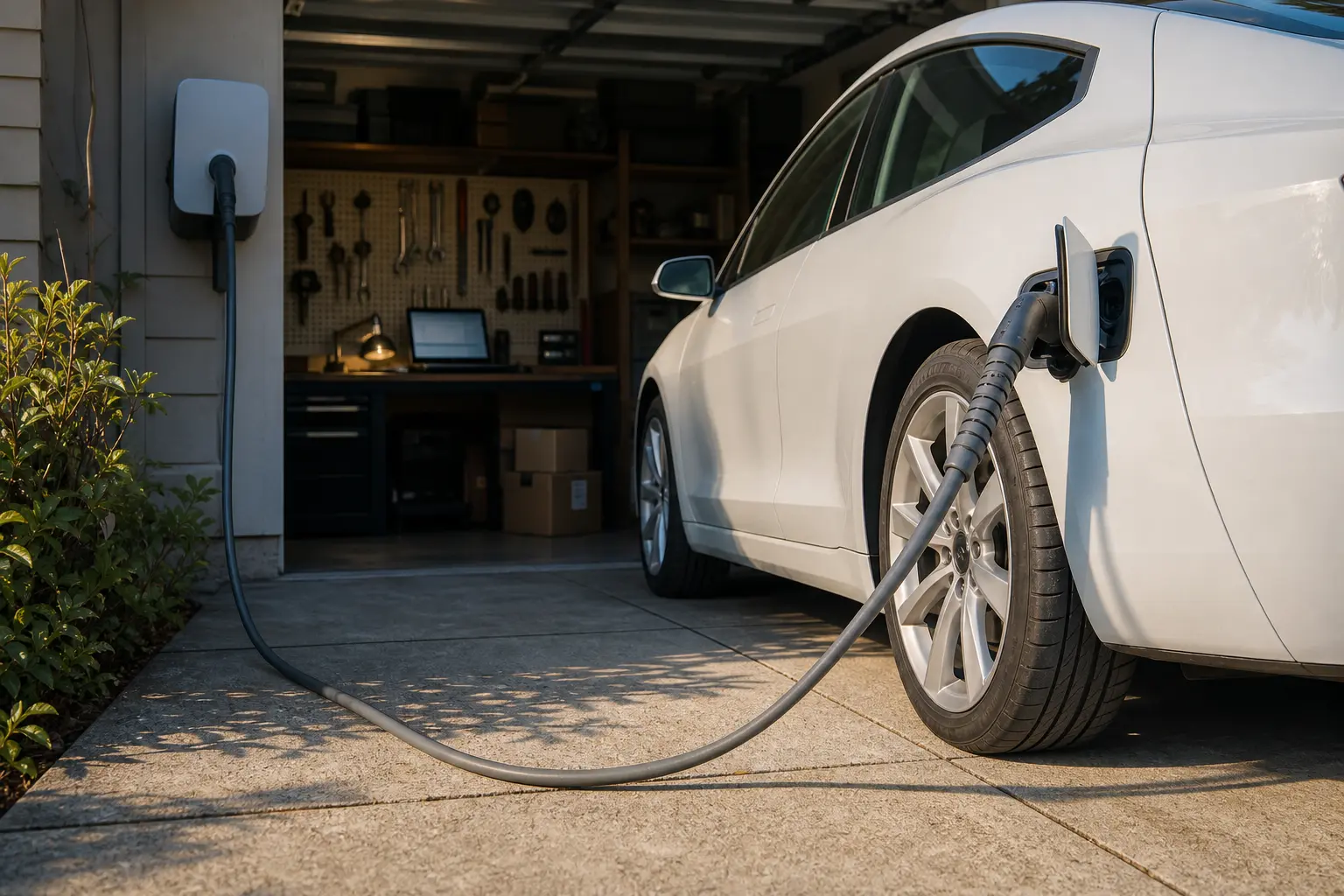
For a few more months. The credit covering up to $1,000, or 30 percent of hardware and installation costs, whichever is less, is still available, but only for chargers placed in service on or before June 30, 2026. After that date, installing a charger comes with no federal offset at all.
Does a Heavier Work Van Get a Different Mileage Rate Than a Compact EV Car?
No. The 72.5 cent and 76 cent 2026 rates apply the same way regardless of a vehicle’s size or weight class, since the standard mileage rate reflects average fleet costs rather than one vehicle’s actual expenses. Weight only starts to matter if the owner chooses Section 179 or bonus depreciation instead of mileage.
Disclaimer: This article covers a fast-changing area of federal tax law and is general information, not personalized tax or legal advice; figures reflect rules in effect as of July 2026, and a licensed tax professional should review any specific vehicle purchase before it’s claimed on a return.