European Aquatics will pay for independent water testing and cover medical bills for any athlete sickened by the Seine River, the federation confirmed two days before its European Championships open in Paris. The commitment follows a closed door meeting between federation leadership and Kristóf Rasovszky, the Hungarian swimmer who won Olympic gold in the men’s 10km open water race, held in that same river two years ago.
The guarantees sound reassuring. Read against three straight years of test results, they also confirm that the water behind the 2024 Games still has not been fully tamed.
The Four Commitments European Aquatics Just Made
European Aquatics President António Silva and Sports Director Apostolos Tsagkarakis sat down with Rasovszky, who serves as the federation’s Athletes’ Committee representative, to hear concerns raised on behalf of open water and high diving competitors. Afterward, the federation said it “welcomed the feedback and proposals presented by the athletes’ representative” and agreed to four specific steps.
- Protocol compliance: strictly follow the health and safety procedures and contingency plans the Paris organizing committee already presented to athletes, team leaders and coaches during online briefings.
- Independent testing: athletes may hire their own water quality analysis provider to check European Aquatics’ data, with the bill covered by the federation.
- New taskforce: a dedicated group will recommend changes to existing and future athlete health and safety regulations.
- Medical reimbursement: European Aquatics will cover reasonable medical costs for any athlete whose illness is reasonably traced to competing in the Seine during the 2026 Championships or official training days.
Three of those commitments are procedural. The fourth commitment goes further than the others.
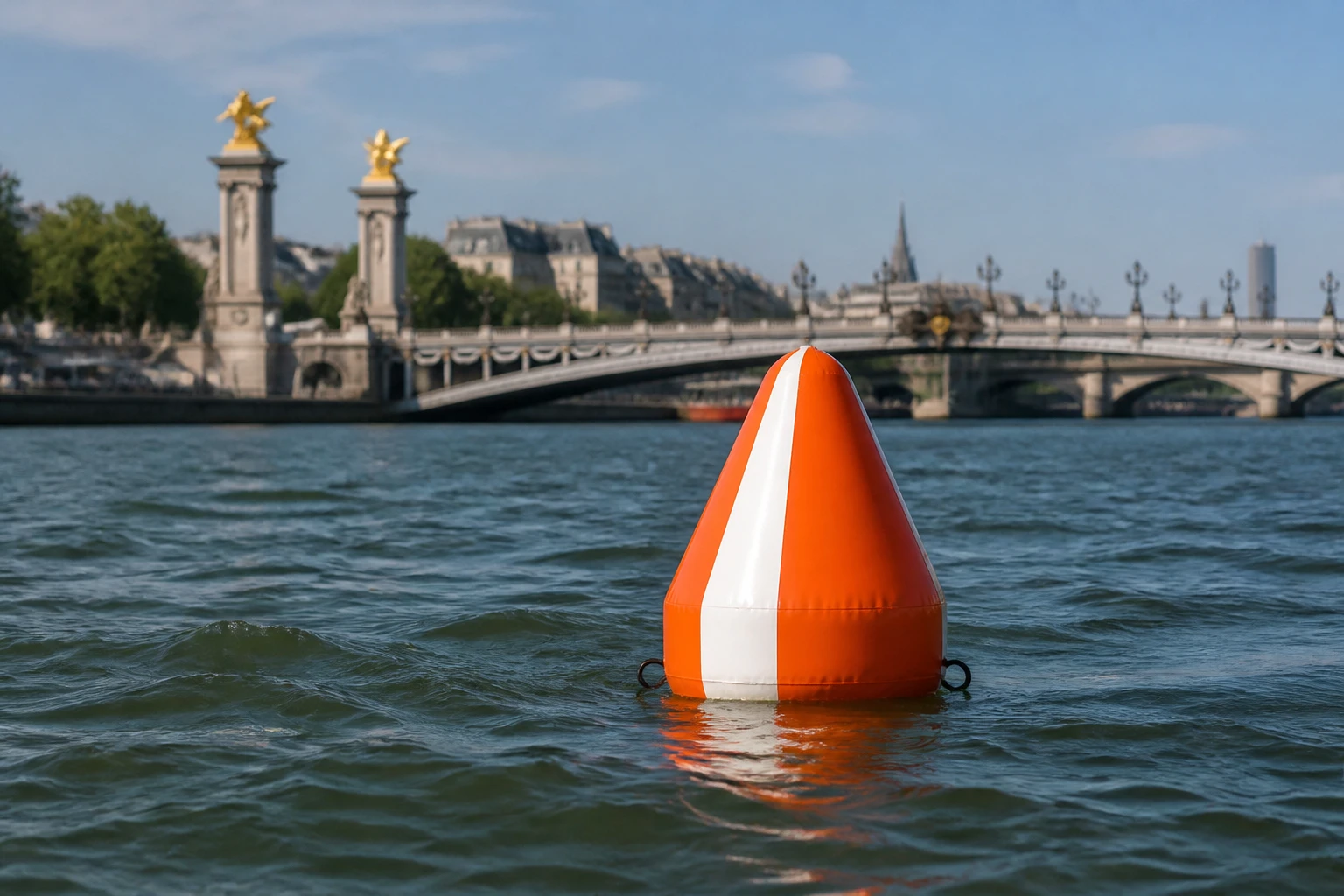
A Reimbursement Clause That Concedes the Risk
That fourth item says European Aquatics will reimburse reasonable medical expenses for any athlete whose illness qualified personnel reasonably determine was caused by swimming or high diving in the Seine. The value of any payout has to be agreed with the federation in advance, under medical guidance, before treatment even starts.
Paris spent about €1.4 billion, roughly $1.6 billion, rebuilding sewer infrastructure and adding a rainwater storage basin near the Austerlitz train station so the Seine would be clean enough to host swimmers, Bloomberg reported. The tension between that investment and this new clause is real enough that it became the subject of a peer reviewed ethics analysis in Public Health Reviews, titled “Olympic Glory Vs. Athlete Safety: Ethical Lessons From the Seine Water Quality Controversy.”
Three Summers of Failed Tests
The pattern goes back further than the 2024 Games. Canceled events and failed tests over three straight years explain why athletes wanted guarantees in writing rather than in a briefing room.
- August 2023: A World Aquatics Open Water Swimming World Cup test event on the Seine is canceled after heavy rainfall pushes bacteria levels too high to compete.
- Early June 2024: With the Olympics less than two months away, testing finds E. coli levels more than three times the maximum allowed for open water competition.
- Late June 2024: A fresh round of testing, taken after major rainfall sends untreated sewage into the river, finds E. coli at ten times the acceptable limit.
- August 2024: Bacteria readings force a one day delay to the men’s Olympic triathlon, and Belgium withdraws from the mixed relay after triathlete Claire Michel falls ill following her swim leg.
Real time sensors that track bacteria levels along the Seine feed much of the data both the city and European Aquatics rely on today.
Triathletes Already Tested That Guarantee
Swimming and high diving are not the only sports carrying this risk. Triathlon’s swim leg used the same river at the same Games, under a different governing body, and it produced the clearest human cost so far.
Belgian triathlete Claire Michel competed in the individual women’s triathlon, which included a Seine swim, days before the mixed relay. She fell ill afterward with three days of vomiting and diarrhea serious enough to require treatment at the Olympic village’s Polyclinic, and Belgium withdrew its team from the mixed relay because she could not compete. Blood tests later pointed to a virus rather than E. coli, Michel and Belgian officials said, though the exact cause was never fully settled.
The men’s triathlon itself was delayed a full day after race morning bacteria readings came back too high, before triathletes finally dove in a day behind schedule. A delay followed by an illness whose cause could not be pinned on the water with certainty is exactly the scenario the new reimbursement clause is built around. It requires an illness to be “reasonably determined” to have come from Seine participation before European Aquatics pays out, language that anticipates the same ambiguity that surrounded Michel’s case.
Why Does Rasovszky Have a Seat at the Table?
Kristóf Rasovszky is not a random pick for this conversation. The Hungarian swimmer won Olympic gold in the men’s 10km open water race, held in the Seine itself, at the Paris 2024 Games, then was voted European Aquatics’ top male open water swimmer for 2024. As the federation’s Athletes’ Committee representative, he is negotiating conditions for a competition he has already won in the exact water in question.
That standing shapes what he was able to extract. Athletes now get the right to hire their own water testing provider, at European Aquatics’ expense, specifically to check the federation’s own numbers against an outside source.
Only 18 of 31 Days Cleared Last July
The most recent public data available comes from the river’s first full season as a public swimming spot, and it shows why the independent testing option matters.
| Measure | July 2024 (Olympics) | July 2025 (Public Season) |
|---|---|---|
| Days water cleared for swimming | 6 of 9 tested days | 18 of 31 tested days |
| Public access to the river | Athletes and officials only | Three sites open to the public |
| Independent testing for competitors | Not offered | Offered, paid by European Aquatics for 2026 |
Paris opened three public riverbank sites in the summer of 2025, the first legal swimming in the Seine since 1923, CNN reported. City workers test for E. coli and enterococci each morning and post a red or green flag. In July 2025, the flag was red on 13 of the month’s 31 days, more than four days in ten. The EU’s environment agency tracks bathing water compliance across the continent each summer in its annual bathing water quality report, the same broad framework behind how Paris grades the Seine day to day.
What Happens if Tuesday’s Test Comes Back Red
European Aquatics said its new taskforce will recommend amendments to existing and future athlete health and safety rules, though the federation has not set a date for its first findings. The clock on this year’s competition is shorter than that.
The European Championships open July 31 in Paris. Open water swimming does not start until August 4, when the men’s 10km begins a program that also includes the 5km, a 3km knockout round, and the mixed relay closing on August 8, per the federation’s published day by day schedule. High diving, held from a platform over the river, falls under the same water quality concerns.
If a morning reading comes back red that week, organizers have precedent to lean on: delay the race, as they did in 2024, or activate the contingency plans already briefed to athletes, team leaders and coaches. Open water swimming begins August 4 with the men’s 10km, the same event and the same river where Rasovszky became Olympic champion two years ago, only now with a price tag attached if the water makes someone sick.
Frequently Asked Questions
Is the Seine River Open for Public Swimming in 2026?
Yes. Paris opened three designated public swimming sites along the Seine in summer 2025, the first time swimming in the river had been legal since 1923, and the sites have continued operating into 2026. City workers test the water daily and close sites for a day or two when bacteria readings turn unsafe, typically after heavy rain.
What Is the Open Water Schedule at the 2026 European Championships?
Open water swimming runs August 4 to 8 in the Seine, opening with the men’s 10km, followed by the 5km, a rest day, a 3km knockout format, and the mixed relay closing the program on August 8, according to European Aquatics’ published schedule.
What Are E. Coli and Enterococci, and Why Do They Matter for the Seine?
Both are bacteria strains found in human and animal waste, and health authorities measure their concentration in river water as a proxy for sewage contamination. High readings, especially after heavy rain overwhelms the sewer system, triggered the pre Olympic alarms in 2024 and the red flag closures in 2025.
Does the Seine Water Quality Agreement Also Cover Triathlon?
Not directly. Triathlon’s swim leg in the Seine falls under World Triathlon, a separate governing body from European Aquatics, even though both sports share the same river and the same contamination risks. World Triathlon managed its own test cancellations and race day bacteria concerns during the 2024 Games, independent of the agreement Rasovszky negotiated for swimming and high diving.