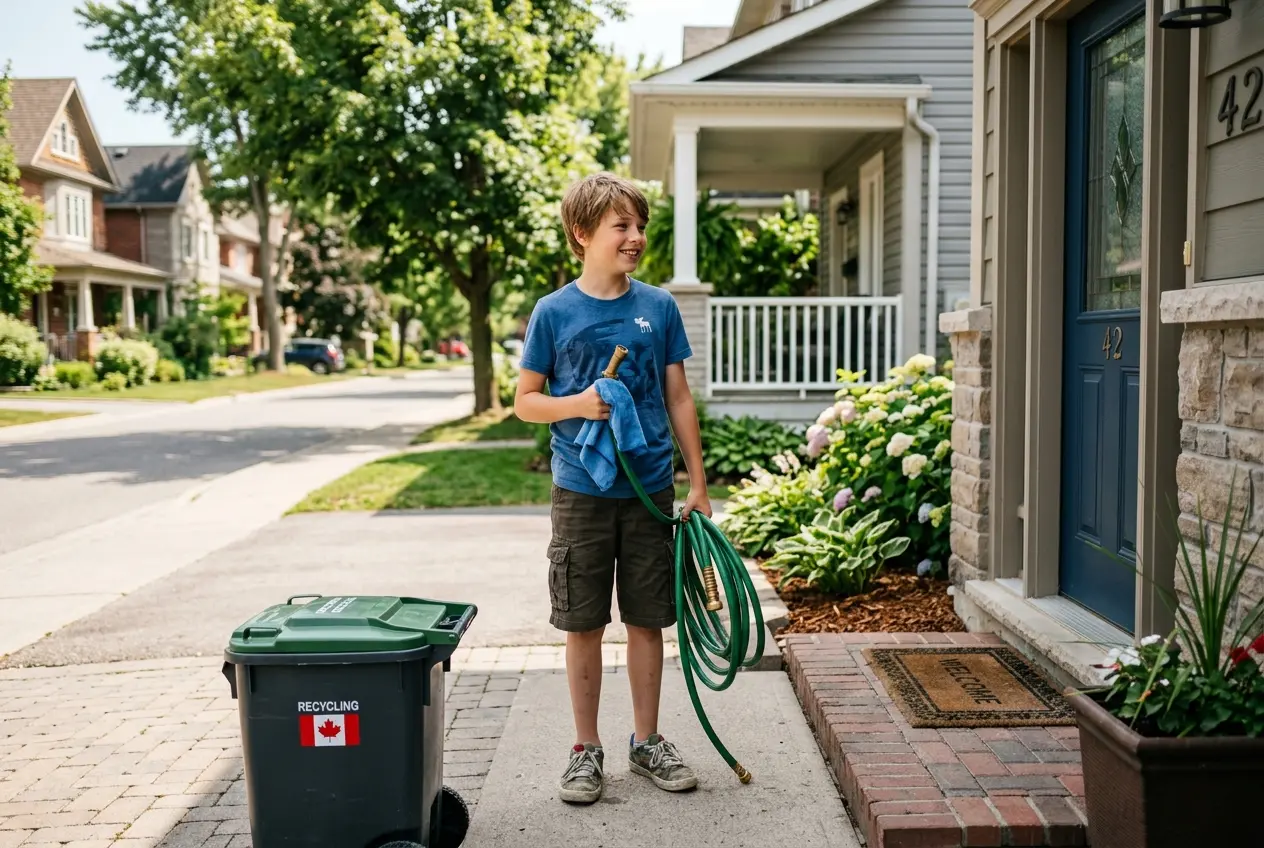
An 11-year-old in York, Canada has turned a neighbourly chore into a CA$10-a-bin cleaning service, Your Bin Cleaning, that pulled more than 2.7M views on a single Instagram reel. His account has gathered about 53,000 followers. The footage shows the daily routine of walking up driveways, knocking on doors, and washing wheelie bins with a pressure washer, and it sits inside a wider teen entrepreneurship trend in which most young people say they have an idea but rarely know where to start.
Ashton, a sixth grader, began by wheeling a few neighbours’ bins to the kerb on collection day. He then noticed how dirty they were. He settled on a CA$10 fee after asking customers what they would pay, and now films every door knock, including the rejections. Bin cleaning does not work through a Canadian winter, and he plans to swap the pressure washer for a snow shovel and leaf blower when the temperature drops.
From One Favour to 53,000 Followers
Ashton’s parents had been talking with him about how he could help people and earn money, according to a Forbes contributor who covers youth entrepreneurship. He first offered to take out a few neighbours’ bins on collection day and bring them back after pickup. They agreed. Looking at the grimy plastic afterwards, he worked out that people might pay to have them cleaned.
He asked the families he already helped if they wanted their bins washed periodically, then went door to door to find new ones, his mother told Upworthy. His mother suggested filming the door-knocks, and the clips took off. One reel of him working down the street has been watched more than 2.7M times. His account on Instagram has gathered about 53,000 followers. In Sarah Hernholm’s reading of the story for Forbes, the route from one kerbside favour to a viral account took a single Canadian summer.
Hernholm, who founded WIT (Whatever It Takes) more than 15 years ago to teach tweens and teens how to launch real businesses, treats Ashton’s story as a model for what youth entrepreneurship looks like when it starts small. “He just started by taking trash bins to the curb,” she wrote in a June 26, 2026 Forbes piece. “Getting that first yes in a Canadian suburb turned into a bin-cleaning business, 53,000 followers, and a reel with 2.7 million views.” Her four-part breakdown of what young founders can learn from the routine is captured in Hernholm’s four lessons in youth entrepreneurship.
The kit Antonio supplied covers more than bins:
- A 100-foot extension cord
- A 50-foot hose
- Microfiber cloths
- A respirator
- Safety goggles
- A scrub brush
- A rake
- A dump cart
- An electric pressure washer
- A leaf blower
- A push lawn mower
The CA$10 Pitch and the Door-to-Door Routine
The CA$10 flat fee is the spine of the pitch. Ashton arrived at that number by asking customers what they would pay, and he works the price into the first sentence at every front door. When someone says no, he hands over a flyer so they can call later.
His videos do not hide the rejections. They show a young founder walking back down a driveway, flyer in pocket, and moving on to the next house. The approach has won him loyal customers in York and a steady drip of new followers online. In the comments on his door-knock reels, viewers have focused on his persistence, expressing surprise at how often people turn down a CA$10 clean.
Don’t take the no’s personally, and the first no is the hardest.
Ashton, the 11-year-old founder of Your Bin Cleaning, told Upworthy.
His mother told Upworthy that the response to the door-knock videos has been “unbelievable” and credited the social media moment to a single suggestion she made at the kitchen table. “I suggested that people may enjoy his interactions with potential customers and maybe he should film as he goes door to door,” she said. “We posted on Instagram and the response has been unbelievable.” The Canadian boy behind Your Bin Cleaning frames his door-knock routine as a working case study in how a sixth grader can run a real sales operation. That piece notes he pitches in person and treats every no as the first step toward a future yes.
Antonio Calls Ashton’s CA$10 Rate a Killer Deal
Ashton has since gained a mentor in Antonio of Aqua Stop Waterproofing and Construction. Antonio watched the door-knock videos and stepped in with the tools a real cleaning operation needs. Hernholm put it plainly when she wrote that Ashton did not need a product, a patent, or a platform to begin.
“He needed a hose,” she wrote. Antonio supplied that and a lot more: an electric pressure washer, a 50-foot hose, a 100-foot extension cord, microfiber cloths, a respirator, safety goggles, a scrub brush, a rake, a dump cart, a leaf blower, and a push lawn mower, according to Ashton’s door-knock videos and the kit Antonio gave him. The mentor also set a quiet price benchmark on camera, saying he would gladly pay CA$100 to have his own bins washed. He called Ashton’s CA$10 rate a “killer deal” and described the young founder’s approach to rejection as Tyson-like.
“Rejection isn’t always the easiest to take on the chin,” Antonio said in the same video, “and this kid’s like Tyson.” He added that Ashton hands every rejected homeowner a flyer and invites them to call if they change their mind, the kind of follow-up a much older sales operation might envy. The kit has also set up the next phase of the business without a separate purchase.
The Teen Entrepreneurship Trend Ashton Sits Inside
Ashton’s door-to-door routine sits inside a much wider pattern that researchers have been tracking for years. Junior Achievement reported that 69% of teenagers say they have a business idea but do not know how to start, a finding the youth education group first published in its 2018 survey with EY and still cites today. Hernholm quoted the same figure in her Forbes piece on Ashton and used it to argue that the gap sits in the first step. That gap is exactly what Ashton’s kerbside favour appears to have closed.
A separate Junior Achievement report put the share of entrepreneurship-minded teens who lean toward service businesses, such as lawn care or childcare, at 12%, the kind of work where the need is visible and the barrier to entry is low. Bin cleaning fits that category down to the equipment list. Hernholm makes the same point in her own write-up when she notes that Ashton needed only a hose, not a patent or a platform.
The interest is not limited to North America. The Global Entrepreneurship Monitor found that young people are 1.6 times as likely as adults to say they want to start a business, based on its research across five world regions. The same body of work found that youth ventures are less likely to survive their first few years, and that most are one-person operations. The GEM 2023 to 2024 US report, summarized by Babson College, shows just how concentrated that activity is in the youngest adult cohort: 24% of 18-to-24-year-olds surveyed are currently entrepreneurs and 21% intend to start a business in the next three years.
The 2018 teen survey on business ideas polled 1,000 US teens aged 13 to 17, with results carrying a margin of plus or minus 3.1 percentage points. The 2023 to 2024 US report on 18-to-24-year-old founders describes the 18-to-24 age group as the one driving the rise in total early-stage entrepreneurial activity in the United States. Ashton, at 11, is below both surveys’ age ranges, but the gap they describe, between having an idea and knowing how to start, is the same one Your Bin Cleaning appears to have closed.
- 69% share of US teens who say they have a business idea but do not know how to start. Source: Junior Achievement / EY survey (2018).
- 12% share of entrepreneurship-minded teens drawn to service businesses such as lawn care or childcare. Source: Junior Achievement report.
- 1.6 times how much more likely young people are than adults to say they want to start a business. Source: Global Entrepreneurship Monitor.
- 24% share of 18-to-24-year-olds who say they are currently entrepreneurs. Source: GEM 2023 to 2024 US report.
- 21% share of 18-to-24-year-olds who intend to start a business in the next three years. Source: GEM 2023 to 2024 US report.
Why Bin Cleaning Stops at the First Snowfall
The first hard limit on Your Bin Cleaning is the Canadian climate. A pressure washer on a wheelie bin does not work well below freezing, and a Canadian winter shuts the business down for the season. Ashton is already planning around that gap.
His family is looking at snow clearing and lawn care in the warmer months, and much of the equipment he already owns, including the leaf blower and the push lawn mower, fits the next phase. He has said in interviews that he likes the door-to-door routine as much as the cleaning. “I like going door to door and talking to people,” Ashton told Hernholm. “I also enjoy reading the kind comments from people all around the world.”
His mother has said he plans to carry the business beyond a single summer, and the kit from Antonio is built to outlast the bins. A reel with 2.7M views comes and goes; the door-to-door habit is what he wants to keep. Hernholm, who has worked with teen founders for more than 15 years, frames Ashton’s next move the same way she framed his first, as another question worth answering in person.
Frequently Asked Questions
How much does Ashton’s bin cleaning service charge per bin?
Your Bin Cleaning charges a flat CA$10 (about US$7 or £6) per wheelie bin. Ashton arrived at that price by asking customers what they would pay, according to the IBTimes write-up.
Where is Your Bin Cleaning based?
Your Bin Cleaning operates in York, Canada. The business runs out of Ashton’s neighbourhood, where he walks door to door with his pressure washer and hose.
Who is Antonio, the mentor who gave Ashton the pressure washer?
Antonio runs Aqua Stop Waterproofing and Construction. He supplied Ashton with a kit that included an electric pressure washer, a 50-foot hose, a leaf blower, and other tools, and said on video he would gladly pay CA$100 to have his own bins washed.
How big has Your Bin Cleaning’s Instagram following grown?
The account has gathered about 53,000 followers, and one reel of Ashton working down the street has been watched more than 2.7M times, according to the IBTimes write-up.
Why did Ashton start cleaning bins?
He began by wheeling a few neighbours’ bins to the kerb on collection day and bringing them back afterwards, then noticed how dirty the bins were. He asked those neighbours if they would pay to have them cleaned periodically, then went door to door offering the service to other households.