An Israeli drone fired two missiles into a motorcycle in Gaza City’s Tal al-Hawa neighborhood on Monday, killing 28-year-old Osama Naim Shamlakh and wounding nine people nearby. He was one of at least three Palestinians killed and 15 wounded across the Gaza Strip that day, all under the Gaza ceasefire that has technically held since October. Israeli forces have struck the territory on 246 of the truce’s first 273 days, according to an Al Jazeera tally of Gaza health ministry reports.
The strikes themselves keep making headlines one at a time. Harder to see in any single day’s casualty count is the map underneath it: Israeli-held ground inside Gaza has grown from roughly half the strip in October toward 70 percent today, expanding in the same nine months the ceasefire was supposed to be winding the war down.
Nine Months of ‘Ceasefire,’ Measured in Violations
Gaza’s Ministry of Health says Israeli attacks since the October 10 ceasefire have killed 1,108 Palestinians and wounded 3,578 more. That toll sits on top of a much larger one. The ministry’s cumulative count for the whole war, dating to October 2023, has passed 73,000 dead.
The Gaza Government Media Office puts the number of individual ceasefire violations at 3,465 between October 10, 2025, and June 29, 2026: air strikes, artillery fire and direct shootings. A breakdown of the truce’s first six months shows where those violations concentrated.
| Violation Type | Recorded Incidents (Oct 10, 2025 to Apr 14, 2026) |
|---|---|
| Direct shootings at civilians | 921 |
| Raids beyond the Yellow Line | 97 |
| Bombing and shelling | 1,109 |
| Property demolitions | 273 |
The figures come from Gaza’s Government Media Office. Independent verification of each incident is limited, though the broad trend lines up with United Nations casualty tracking over the same stretch. In November, weeks after the deal took hold, UN-appointed human rights experts warned governments that violations were already unraveling the fragile truce. Little has changed since.
What Is Gaza’s ‘Yellow Line,’ and Why Does It Keep Moving?
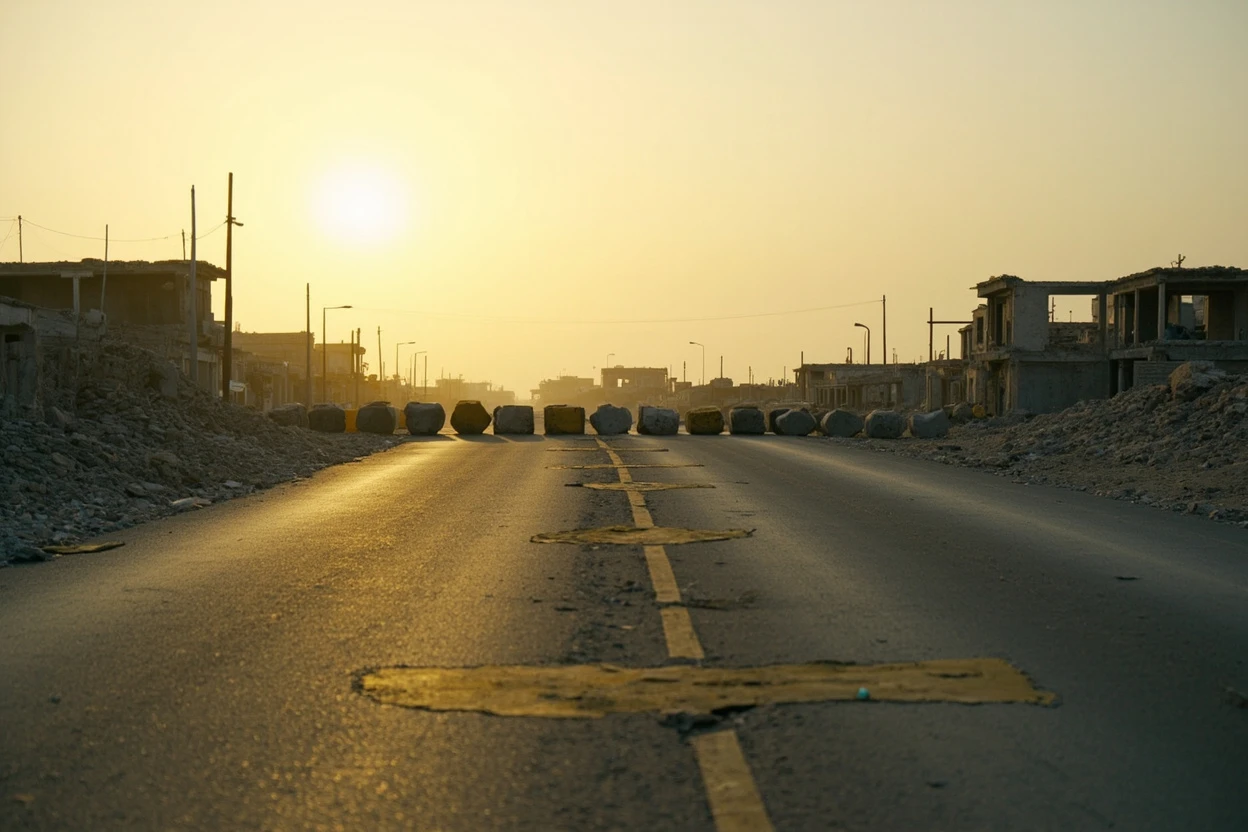
The Yellow Line is the informal boundary Israeli forces drew under the ceasefire deal, marking how far east Israeli troops would pull back inside Gaza. It was never meant to be permanent. Israel controlled roughly half the strip when the truce began in October, and it hasn’t stayed there since.
By this week, concrete blocks marking Israeli-controlled territory had moved to within roughly 200 metres of Salah al-Din Street in Gaza City’s Shujayea neighborhood, the strip’s main north-south road, raising fears that Palestinians using it could be fired on. Israel’s military says the line now covers about 58 percent of Gaza. A separate review of satellite imagery and military statements, published July 10, put the real figure closer to 70 percent, matching Prime Minister Benjamin Netanyahu’s own account of where the expansion is headed. Even Israeli officials don’t fully agree on how much ground the line already covers.
Israeli rights group Gisha, which tracks movement restrictions in and out of Gaza, has documented a second, further boundary behind the Yellow Line: an Orange Line marking where troops are meant to pull back to under a fuller ceasefire that hasn’t arrived. Its mapping of the shifting military boundary shows both lines have moved in only one direction since October.
The Civilians Caught Behind a Moving Boundary
Monday’s violence wasn’t confined to Tal al-Hawa. Medical sources described a string of separate strikes across the territory within hours of each other:
- An Israeli air raid hit a tent sheltering displaced families in the al-Mawasi area of Khan Younis; the wounded were taken to Nasser Hospital.
- A strike hit a vehicle on al-Rashid Street in the central town of az-Zawayda, with casualties sent to Al-Aqsa Martyrs Hospital in Deir el-Balah.
- A young man was wounded when a strike hit an apartment in the Maghazi refugee camp.
- Israeli military vehicles fired toward homes east of the Bureij refugee camp and near the Halawa displacement camp in eastern Jabalia, though no casualties were reported there.
A separate strike hit a police post near the at-Twam roundabout in northwest Gaza City, wounding four officers. One of them, 36-year-old Thaer Ramzi Fayyad, later died of his injuries, the Anadolu news agency reported. Basic facts about the day’s toll were still settling hours later.
What’s confirmed:
- Osama Naim Shamlakh, 28, died in the Tal al-Hawa drone strike.
- Thaer Ramzi Fayyad, 36, a police officer, died of wounds from the at-Twam roundabout strike.
- Nine other people were wounded in the Tal al-Hawa attack alone.
What’s unconfirmed:
- The identity of the third person killed Monday.
- The full extent of injuries from the al-Mawasi tent strike and the az-Zawayda vehicle strike.
The danger compounds near the Yellow Line itself. The United Nations human rights office says Israeli forces have killed roughly 200 Palestinians near the shifting demarcation lines since October, with recorded deaths there rising more than a quarter between January and April alone. Aid access hasn’t kept pace either: only 55,539 of the 156,000 trucks allocated under the ceasefire had entered Gaza by June 20, about 36 percent, and the United Nations Relief and Works Agency (UNRWA), which serves Palestinian refugees, details continuing shortages in its latest situation report on fuel and medicine shortages. World Central Kitchen, the aid group whose driver Ahmad Nasser Saleem was killed in an Israeli strike on one of its marked vehicles, said “humanitarian aid deliveries should never be a target.”
‘We Need to Stop Using This Term’
Even some of the soldiers holding the Yellow Line don’t believe the ceasefire deserves the name.
We need to stop using this term.
An Israeli soldier gave that assessment to The Associated Press, one of several rare firsthand accounts describing near-daily contact with Palestinians who stray close to the line, contact that often ends in gunfire. Netanyahu has offered a different framing, describing the military’s expanding footprint as a step-by-step effort to surround Hamas from every side, and has downplayed the announcement of the ceasefire’s next phase as merely a “declarative move.”
His stated aim has been narrower than full reoccupation throughout: Netanyahu has said the goal is to free Gaza from Hamas, not to hold it long-term. Hamas rejects the sequencing behind that plan. The group wants a full Israeli withdrawal, reopened crossings and reconstruction funding before any weapons talks begin, according to PBS NewsHour.
Global Attention Has Drifted, Pressure Campaigns Haven’t
International coverage of Gaza thinned noticeably through the first half of 2026, as the Israel-Iran confrontation pulled global attention toward a different front even while conditions inside Gaza stayed the same or worsened. Engagement with Gaza-related content on social media fell alongside it.
Reporting from inside Gaza has also gotten more dangerous, which narrows what reaches the outside world regardless of who’s watching. Five Al Jazeera journalists were killed in a single Israeli strike earlier this year, part of a toll press-freedom groups say has thinned the ranks of reporters able to document what’s happening on the ground.
Formal pressure campaigns keep multiplying regardless. A group of Italian coaches petitioned FIFA and UEFA to suspend Israel from international competition over the war’s conduct in Gaza. None of it has changed the trajectory on the ground.
Why the Ceasefire’s Second Phase Is Stuck
The truce runs on a 20-point framework the Trump administration brokered last year, laid out in the Council on Foreign Relations’ point-by-point breakdown of the deal. Its first phase, built around hostage and prisoner exchanges, is largely complete. Its second phase, covering Hamas’s disarmament and a transition to postwar governance, hasn’t started.
Israel says withdrawal from the rest of Gaza depends on Hamas giving up its weapons first. Hamas wants the opposite order. Regional analysts consider a full collapse unlikely; the more probable path is a long stalemate, with partial humanitarian steps possible while the core disagreement stays frozen.
No timeline has been set for handing Gaza’s governance to a Palestinian technocratic committee, and the international stabilization force envisioned under the plan hasn’t materialized. The United Nations estimates reconstruction will cost more than $50 billion and take years, with little of that money pledged so far.
Nine months in, the pattern holds: strikes almost every day, and a boundary line that keeps moving while the ceasefire’s second phase waits to begin.
Frequently Asked Questions
How Is the Yellow Line Actually Marked on the Ground?
Inconsistently. Some stretches are lined with painted markers, concrete blocks or barrels; others carry no visible marking at all. Palestinians in border-adjacent neighborhoods say they’ve learned the line’s rough location mostly by where strikes and gunfire have already happened, not by any posted signage.
How Does the Ceasefire Death Toll Compare With the War’s Overall Toll?
The 1,108 people Gaza’s Ministry of Health says have died since October 10 sit on top of a far larger total. The ministry’s cumulative count for the war since October 2023 topped 73,000 deaths as of early July 2026, including roughly 21,500 children.
Why Hasn’t Hamas Disarmed Under the Ceasefire?
Disarmament is the centerpiece of the deal’s still-unstarted second phase. Phase one, the hostage and prisoner exchange, is the only part both sides agree is finished. Hamas wants a full Israeli withdrawal, reopened crossings and reconstruction funding before any weapons talks begin.
Is Humanitarian Aid Reaching Gaza Under the Ceasefire?
Only partially. Aid monitors estimate roughly 77 percent of Gaza’s population still faces acute food insecurity, and truck deliveries have run well below what the ceasefire promised: just 36 percent of the aid trucks allocated through June 20 actually entered the strip.
Could the Ceasefire Collapse Entirely?
Analysts consider a full collapse unlikely. The more probable path is a long stalemate: continued low-intensity violence and stalled talks, without a formal return to full-scale war, unless outside pressure on either side shifts significantly.