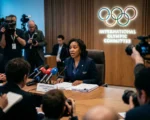
The International Olympic Committee on Tuesday provisionally lifted the suspension of the Russian Olympic Committee, ending a ban that began in October 2023 after Moscow absorbed sports bodies from occupied Ukrainian regions. The decision was announced after the IOC’s Legal Affairs Commission found that the ROC no longer carries those regional councils as members and has committed not to operate in those territories. Russian athletes will now be eligible to return to competition under the ROC banner, though the IOC has yet to decide on the flag, anthem and colors at the 2028 Los Angeles Olympics. The IOC stressed that the move does not change its condemnation of Russia’s invasion of Ukraine and is conditioned on continued monitoring of the ROC’s behavior. Russian Sports Minister Mikhail Degtyarev called it “a green light for international federations to reinstate all our athletes.”
The IOC’s Reinstatement Decision
The IOC’s executive board voted Tuesday to provisionally lift the ROC’s suspension, citing compliance with the conditions the body had set when it imposed the ban in October 2023. The decision followed a review by the IOC’s Legal Affairs Commission, which found that the ROC had removed the four disputed regional sports organizations from its membership and confirmed it would not conduct activities in those territories. The reinstatement is provisional, with the IOC reserving the right to act further if conditions are broken.
The committee’s Tuesday communications paired the reinstatement with two open questions: whether Russian athletes will compete under their own flag and anthem at the 2028 LA Olympics, and whether Russian Anti-Doping Agency oversight is sufficient at international events. The IOC will not organize events in Russia or invite Russian government or state officials to IOC events, the body’s statement said. It also noted that its earlier recommendations restricting Russian participation at specific Games, in place since 2022 and 2023, are “no longer in effect.”
Why the ROC Was Suspended in 2023
The ROC was suspended on October 12, 2023, weeks after Moscow unilaterally added four regional sports councils to its membership, per the IOC’s October 2023 suspension notice. The four bodies sit in Donetsk, Luhansk, Kherson and Zaporizhzhia, Ukrainian regions Russia claims to have annexed but which sit under Ukraine’s internationally recognized borders. The IOC ruled that bringing them under the ROC violated the Olympic Charter by infringing on the territorial integrity of Ukraine’s National Olympic Committee. The suspension stripped the ROC of its status as a National Olympic Committee and cut off its IOC funding.
Moscow rejected the ruling as “counterproductive” and “politically motivated” at the time. The ROC said the move “secures de jure what was done de facto back in February 2022,” referring to the broader exclusion of Russian athletes by international federations after the invasion. It argued that athletes should not be punished for the actions of their governments. That defense did not land.
During the suspension, Russian athletes continued to compete at major events. They appeared as neutrals at the Paris 2024 Olympics and at the Milano Cortina 2026 Winter Games, including a final sanctioned-era appearance for Russian backstroke champion Evgeny Rylov, who retired after years of competing under restrictions. The IOC’s earlier recommendations, issued in 2023, restricted which of them could participate, but did not block their presence entirely.
How the ROC Earned the Reversal
The IOC tied the provisional lifting to two conditions the ROC met, in language from its Tuesday statement on the reinstatement. First, the committee removed the four regional sports councils from its membership. Second, the ROC “confirmed that it does not, and will not, conduct any activities in these territories.” The Legal Affairs Commission’s review found compliance on both fronts.
The decision itself came from the IOC’s executive board, with the Legal Affairs Commission providing the underlying analysis. The IOC’s Tuesday statement noted the EB “will continue to closely monitor the situation relating to any ROC activities in those territories, and reserves the right to take any further measures if deemed necessary.” That conditional language signals the reinstatement is reversible if the ROC drifts back toward the disputed territories.
The timeline stretches across more than three years of freezes and partial reopenings. The IOC initially recommended in March 2023 that federations allow Russian and Belarusian athletes to return as neutrals, in individual events and without flag, emblem or anthem. After the ROC’s October 2023 ban, neutral participation continued but on tightened terms. The IOC’s Tuesday announcement came as a reversal of that earlier tightening.
Russian athletes now face a different set of rules: fewer IOC-imposed restrictions, more federation-level decisions, and a doping gate administered by the International Testing Agency.
Key Moments in the ROC’s Three-Year Suspension
- February 2022: Russia invades Ukraine. The IOC moves to ban Russia and Belarus from international sports events.
- March 2023: IOC recommends federations allow Russian and Belarusian athletes to return as neutrals, in individual events without flag or anthem.
- October 5, 2023: ROC unilaterally adds regional sports councils from Donetsk, Kherson, Luhansk and Zaporizhzhia to its membership.
- October 12, 2023: IOC suspends the ROC, citing a violation of the Olympic Charter’s territorial integrity clause.
- July 2026: IOC provisionally lifts the ROC suspension after the Legal Affairs Commission finds compliance on the membership and territorial-conduct conditions.
Coventry’s Athlete-First Argument
IOC President Kirsty Coventry defended the reinstatement at a press conference Tuesday, framing it in athlete terms rather than geopolitical ones. “We made it clear that all athletes had the possibility to compete at the Olympic Games,” she said. “This is what this decision speaks to. It allows Russian athletes to take part in sports competitions. We thought it was really important for athletes to have that possibility.” She added that the IOC’s neutrality bylaw, recently strengthened, gives the body room to judge who enters.
“It was very clear when we strengthened our neutrality bylaw that selection would not be based only on sports performance, but also ability to serve as role models,” Coventry said, insisting the IOC would “continue to closely monitor Russia.” Moscow reacted within hours, with Sports Minister Degtyarev telling reporters, “Our country’s return to the Olympic family is a green light for international federations to reinstate all our athletes.”
We made it clear that all athletes had the possibility to compete at the Olympic Games. This is what this decision speaks to. It allows Russian athletes to take part in sports competitions. We thought it was really important for athletes to have that possibility.
Athletes Return Under a Doping Gate
With the ROC’s suspension lifted, Russian athletes can now compete under the committee’s banner at international events, a status they have not held since October 2023. The change applies to most competitions outside the IOC’s own Games, including the Dolomiti Valtellina 2028 Winter Youth Olympics, where qualification is already underway. Each international federation will set its own terms for participation on a case-by-case basis.
One cross-cutting gate remains: anti-doping. Russian athletes must be part of an anti-doping programme overseen by the International Testing Agency before they can compete.
The doping layer sits on top of a long-standing regulatory question. Russia’s anti-doping agency, RUSADA, has been considered non-compliant by WADA at various points since the 2015 state-doping scandal. If RUSADA remains non-compliant ahead of the LA28 Games, the IOC said, the ITA will independently oversee testing for all qualified Russian athletes. The IOC also said any Russian athlete selected for the Olympics must, under the Olympic Charter, be assessed on more than sporting performance, including the “ability to serve as role models who respect, uphold and promote a peaceful society through sport.”
The Flag Question for LA28
The IOC on Tuesday left the flag, anthem and colors decision for a later stage. Russian athletes may now compete under the committee’s banner at international events, but whether they will march to the Russian tricolor and anthem at LA28 remains unresolved. The IOC said it would not organize Olympic events in Russia or invite Russian government or state officials to its events.
For other international competitions, the decision on the Russian flag and on hosting events in Russia is left to the respective international federations and event organizers, in line with the IOC’s longstanding deference to individual sports. The IOC’s executive board also said it would continue to support Ukrainian athletes through funding, training, travel, accommodation and equipment, programmes the body credits with helping Ukrainian competitors reach both the Paris 2024 and Milano Cortina 2026 Games.
| Area | Before July 2026 | After July 2026 |
|---|---|---|
| ROC status as National Olympic Committee | Suspended since October 2023 | Provisionally reinstated |
| Russian athletes at the Olympics | Competed as neutrals (AIN) | Eligible to compete under ROC banner |
| Flag and anthem at the 2028 LA Games | No IOC ruling | Still no IOC ruling |
| IOC-organized events in Russia | None held | Still prohibited |
| Anti-doping pathway to LA28 | Variable, dependent on WADA status | ITA-handled if RUSADA non-compliant |
Where the Olympic Family Stands Now
The provisional lifting comes against a backdrop of doping turmoil that has trailed Russian sport for more than a decade. The IOC in March 2023 recommended that sports federations allow Russian and Belarusian athletes to return as neutrals “with no flag, emblem or anthem,” a step that created the framework under which Russians competed at Paris and Milano Cortina. Russia’s broader isolation began after Moscow invaded Ukraine in February 2022.
The IOC said it would continue to support Ukrainian athletes through a Solidarity Fund for Ukraine, providing travel support, training facilities, accommodation, equipment and uniforms. The body credited those programmes with helping Ukraine reach both Paris 2024 and Milano Cortina 2026. Ukrainian athletes and teams have competed at every Olympic Games since the invasion, with the IOC’s assistance cushioning wartime logistics.
Russian athletes have not competed under their own flag or anthem at an Olympic Games since the 2014 Sochi Winter Olympics, after the country’s athletics federation was suspended in 2015 over evidence of systematic state-sponsored doping. A World Anti-Doping Agency-imposed four-year ban in 2019, later cut to two years by the Court of Arbitration for Sport, kept the country out of competing under its flag at several subsequent Games. The IOC’s Tuesday decision also sits alongside a separate May 2026 step: the lifting of recommended restrictions on Belarusian athletes’ participation, taken by the IOC Executive Board earlier this summer. The IOC Session in June 2026 voted to reinforce the Fundamental Principles of Olympism and their application in the Olympic Charter, a backdrop the body cited in explaining Tuesday’s reversal.
“The IOC has to navigate the complex realities and consequences of the current geopolitical context,” the IOC statement said, in a passage explaining the rationale. “Amidst growing global instability and conflict, the IOC must uphold its mission to preserve a values-based and truly global sporting platform.” Tuesday’s reinstatement, with its open flag question and its anti-doping gate, is the IOC’s bid to do exactly that for the LA28 cycle.
Frequently Asked Questions
Why was the Russian Olympic Committee suspended in 2023?
The IOC suspended the ROC on October 12, 2023, weeks after the committee unilaterally added regional sports councils from Donetsk, Kherson, Luhansk and Zaporizhzhia to its membership. The IOC ruled that the move violated the Olympic Charter’s recognition of Ukraine’s National Olympic Committee, breaching territorial integrity. The suspension stripped the ROC of its IOC funding and barred it from operating as a National Olympic Committee.
What did the ROC change to get the suspension lifted?
The IOC on Tuesday lifted the suspension after its Legal Affairs Commission found that the ROC no longer carries the four regional sports councils as members. The ROC also confirmed that it does not, and will not, conduct any activities in those territories, in the IOC’s words. The IOC’s executive board said it would continue to closely monitor ROC behavior in those regions. The reinstatement is provisional, leaving room for further measures if compliance slips. Russian Sports Minister Mikhail Degtyarev framed it as a return to the international sporting stage.
Will Russian athletes compete under the Russian flag at the 2028 Los Angeles Olympics?
The IOC has not yet decided whether Russian athletes will compete under the Russian flag, anthem or other national symbols at the 2028 Los Angeles Olympic Games. The decision is expected at a later stage, the IOC’s Tuesday statement said. Outside the Olympics, decisions on the Russian flag at international events will be left to individual international federations and event organizers. For now, Russian athletes are eligible to compete under the ROC banner, with anti-doping and Olympic Charter gates still in place.
Does the IOC’s decision change its stance on Russia’s invasion of Ukraine?
No. The IOC said Tuesday that its position on Russia’s invasion of Ukraine has not changed and that it continues to condemn the war. The body said it remains committed to supporting Ukraine’s Olympic community. The reinstatement of the ROC is conditional on continued compliance with the body’s territorial-integrity terms.