Twenty baby banks across the West Midlands distributed 860,000 donated items to 8,000 families and 12,000 children last year, quietly absorbing the cost-of-living pressures reshaping life for families with infants. The figures come from the Baby Bank Alliance, the national body that coordinates more than 400 similar charities and publishes annual data on the scale of need. Nationally, the alliance reported, baby banks supported 210,000 families and 400,000 children in 2025, an 11% rise on the year before. The West Midlands breakdown, published this week, sits inside that national picture.
The West Midlands sits inside a region the End Child Poverty coalition says carries Britain’s highest child poverty rate, at 36% after housing costs, just over one in three children. Five Birmingham and Black Country constituencies post child poverty rates above 50%, with Birmingham Ladywood the single highest in the country, at 62%. The volume of infant supplies the West Midlands baby banks now move is the public face of that deeper picture.
Eight Thousand West Midlands Families Relied on Baby Banks Last Year
Twenty baby banks operate across the West Midlands, supporting 8,000 families and 12,000 children with donated supplies in 2025, according to the West Midlands baby bank figures published this week. The figures, drawn from the Baby Bank Alliance’s 2025 annual dataset, were published at a regional level and are the first such West Midlands breakdown the alliance has shared publicly. The cross-cutting network of small, volunteer-run charities now hands out more donated items than many local authority welfare programmes once did.
Nationally, the alliance’s 2025 dataset shows 210,000 families and 400,000 children were supported by its network, an average of 1,096 children each day. Alliance chair Sophie Livingstone, who also runs the London baby bank network Little Village, has attributed the rise to systemic pressures, not one-off shocks. About 75% of the families supported by alliance members point to unsuitable or insecure housing as the key pressure, the alliance’s own figures show. The West Midlands sits inside that national picture, with the region’s 20 baby banks handling 860,000 donated items last year.
It is the latest in a series of annual increases dating back to 2021, when the cost-of-living crisis first sharpened the gap between incomes and the cost of keeping a young child. The donation breakdown now shows where the strain is concentrated.
West Midlands baby banks at a glance:
- 400,000 children supported by baby banks across the UK in 2025
- 11% year-on-year rise in children supported nationally
- Bathing and changing essentials formed 58% of items distributed regionally
- Five Birmingham and Black Country constituencies post child poverty rates above 50%
- Two-child benefit limit abolished earlier this year
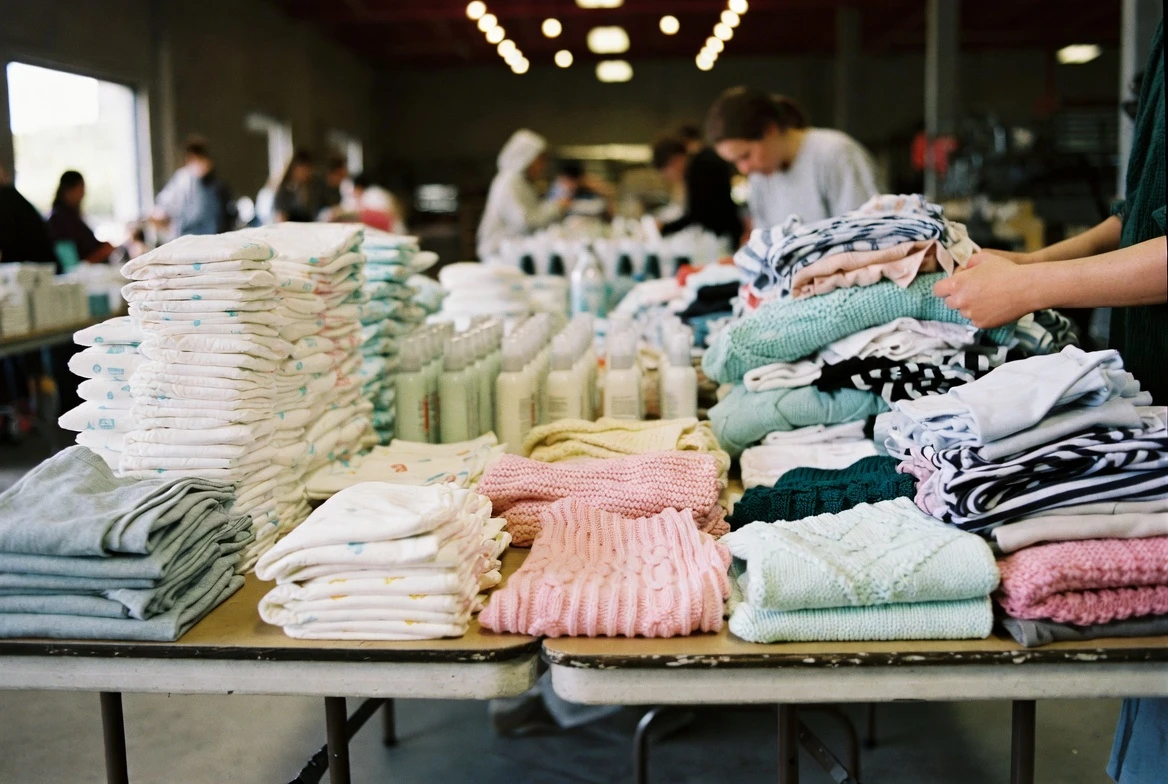
Bathing Supplies Filled the Majority of Donated Items
Of the 860,000 donated items that passed through the West Midlands network in 2025, the dominant need was for very young children. 58% were classed as bathing and changing essentials, a category that includes nappies, wipes, and infant toiletries, totalling 498,800 items. Birmingham has been heavily impacted by the cost-of-living crisis, BirminghamLive reported, with many residents across the city dealing with poverty every day. Baby banks are voluntary organisations that provide donated clothing, footwear, and other supplies to families who need them most. The West Midlands figures were published as part of the alliance’s wider national report.
The next largest portion was clothing and footwear, with 283,800 items distributed to families. Six per cent of items went to learning supplies, two per cent to sleep equipment, and one per cent each to feeding supplies and a catch-all “remaining items” category. The pattern of bathing and clothing dominating is consistent with what staff at individual baby banks describe anecdotally: families most often arrive without the consumables a baby needs to stay clean and warm. The 20-bank West Midlands network handles volumes that would have been considered unusual a decade ago.
- Bathing and changing essentials: 498,800 items, including nappies, wipes, and infant toiletries, the largest category at 58% of the regional total
- Clothing and footwear: 283,800 items, the next largest category
- Learning supplies: 6% of items distributed
- Sleep equipment: 2% of items distributed
- Feeding supplies: 1% of items, with a further 1% in remaining categories
Why Baby Bank Demand Has Climbed Every Year Since 2021
Baby bank demand has climbed every year since 2021, when the cost-of-living crisis first sharpened the gap between incomes and the cost of keeping a young child. The Baby Bank Alliance recorded an 11% year-on-year rise in children supported by its network in 2025, taking the national total to 400,000, as the national baby bank data published earlier this year showed. Sophie Livingstone called the trajectory “pretty damning” and attributed it to structural pressures, not one-off shocks.
What families ask for has shifted alongside the rise. About 26% more tubs of baby formula were handed out by baby banks in 2025 than in 2024, and the number of cots and beds given to families rose steeply, the alliance reported. Livingstone, who runs the Little Village network in London, said her organisation rarely has enough beds and rarely has enough large nappy sizes. She linked the larger-nappy gap to families living in cramped temporary accommodation, where potty training tends to take longer. The West Midlands figures mirror that national drift at the consumables level.
The pressure on families has multiple sources, not a single one. The alliance cites work and housing insecurity, rising energy and food bills, and unaffordable childcare as the drivers families most often report.
The shape of family poverty in Britain changed in a quiet way during the first half of the decade. Earlier this year, the government abolished the two-child benefit limit, which had restricted universal credit support for a family’s first two children only. The change was welcomed by anti-poverty campaigners, who had argued the cap was strongly correlated with constituency-level child poverty. The End Child Poverty coalition, drawing on Loughborough University analysis, found the policy was the most correlated single factor with local child poverty rates in 2023/24, the period covered in its latest dataset. The cross-government child poverty strategy, announced by Labour on entering government in summer 2024, has become the central policy response.
The Region Carries Britain’s Heaviest Child Poverty Load
The West Midlands has the highest child poverty rate of any UK region, at 36% after housing costs, just over one in three children, according to the constituency-level child poverty data published in 2025. Birmingham constituencies dominate the highest-ranked list, with the city home to six of the ten most deprived seats in the country.
The gap between Birmingham and the rest of the UK is unusually wide. Birmingham Ladywood is the single most deprived constituency, at 62% child poverty after housing costs. Five other seats sit above 50%: Birmingham Hodge Hill (55%), Birmingham Perry Barr (52%), Birmingham Yardley (51%), Walsall and Bloxwich (51%), and Birmingham Hall Green and Moseley (50%). Constituencies in the Northern regions of England and Wales also post rates above 50%, but Birmingham accounts for the upper range. The Scottish Child Payment, a devolved policy that is not available in England, contributes to lower rates in Scotland, where around a third of constituencies have a child poverty rate of 25% or more.
Inside that pattern, demand for baby bank supplies is heavily concentrated. The coalition’s analysis found that constituency-level child poverty rates correlate directly with the share of children affected by the two-child limit, providing further evidence that the policy was a major driver. The West Midlands baby bank network, with its 20 active charities and 860,000 donated items in 2025, sits geographically and demographically exactly where the regional chart is at its darkest.
| Indicator | West Midlands | United Kingdom |
|---|---|---|
| Baby banks operating in the area | 20 | 400+ |
| Families supported by baby banks (2025) | 8,000 | 210,000 |
| Children supported by baby banks (2025) | 12,000 | 400,000 |
| Region-wide child poverty rate (after housing costs) | 36% (highest) | 31% |
Charities Are Calling on Government to Step In
Charities alone cannot continue to absorb the impact of child poverty on this scale, the Baby Bank Alliance has said. The West Midlands network of 20 baby banks is part of the system the alliance says is reaching the limit of what donations can cover.
Sophie Livingstone, the alliance’s chair, said families are needing help for “systemic reasons, not because there’s a one-off shock to their lives.” She has called on the government to pull on “some big levers to make life for all families in this country livable,” pointing specifically to work and housing insecurity, rising energy and food bills, and unaffordable childcare. The alliance’s internal review, drawn from the Baby Bank Alliance’s national impact data, suggests baby banks are now functioning as the backstop for a welfare system that has fallen short on housing and the cost of formula. The West Midlands network fits the same pattern, with the same pressures showing up at its intake desk. The alliance launched in 2023 and now has more than 240 member organisations contributing data each year.
Livingstone said families her network supports often arrive with problems that donating supplies cannot reach. “We often have families needing us to replace all their children’s clothes because they’ve been rotted by mould,” she said. Donating clothes does not fix the mould or rodent infestations in the homes children return to, she added. The West Midlands network, Livingstone said, sees the same housing pressures showing up at its intake desk as Little Village does in London.
We know families are struggling more than ever with work and housing insecurity, rising energy and food bills, and unaffordable childcare. Baby banks are doing everything they can to provide a crucial safety net and stop families from falling through the cracks, but charities alone cannot continue to absorb the impact of child poverty on this scale. It’s time the government took the impact of poverty in children’s early years more seriously.
Livingstone described baby banks as “an incredible community effort.” The alliance has pointed to the lifting of the two-child benefit limit, free school meal expansion to all families on universal credit, and a wider investment in social housing as its main policy asks. The cross-government child poverty strategy, created by Labour on entering office in summer 2024, is the formal vehicle for that wider policy response.
Scrapping the Two-Child Benefit Limit, the First Lever
The two-child benefit limit, which restricted universal credit support for a family’s first two children only, was abolished by the government earlier this year. Until the change took effect, families with three or more children could not claim universal credit or child tax credit for a third child and beyond, with limited exemptions. The limit had become a focal point of UK poverty research, with the End Child Poverty coalition finding it was strongly correlated with constituency-level poverty rates. The Labour government that took office in summer 2024 had made lifting the limit a stated commitment from its early months. The abolition ranks as the alliance’s clearest recent policy win, and its baseline demand for what comes next.
Livingstone, the alliance chair, said the limit’s abolition must be only a starting point, and that further action was needed on housing, energy, and childcare. The coalition’s wider policy asks include free school meal expansion to all families on universal credit and a sustained investment in social housing. The next concrete test of that agenda will be the child poverty strategy, now in formal development by the cross-government task force Labour created on taking office.