Meta licensed face recognition for its smart glasses from a Denver-based company that sells surveillance software to the US military. Meta then deleted the dormant code from its companion app on June 5.
The arrangement, first reported by the license and code review that surfaced the deal, is the first known business relationship between Meta and Rank One Computing, a defense contractor whose long-range algorithms have been used by US Special Operations Command.
The License Wired Found
Wired obtained the software license, which is dated and issued to Meta by Rank One Computing, the Denver firm whose tools are used by the US Marshals Service and the Naval Criminal Investigative Service. The license authorizes Meta to use Rank One’s face-recognition engine alongside its liveness detection, a tool that checks whether a camera is looking at a real person rather than a photo, video, or mask. Wired describes the document as the first known evidence of a business relationship between Meta and Rank One.
The license supports up to 10 million facial templates, a scale that points well beyond a small pilot program. Remnants of the integration, including routines that load the Rank One license and initialize its software, were still present in a version of the Meta AI app that shipped to consumers this month, though dormant. Meta declined to answer Wired’s questions about why it licensed the technology, when the relationship began, or whether it is still active. Rank One, for its part, declined to comment for the story.
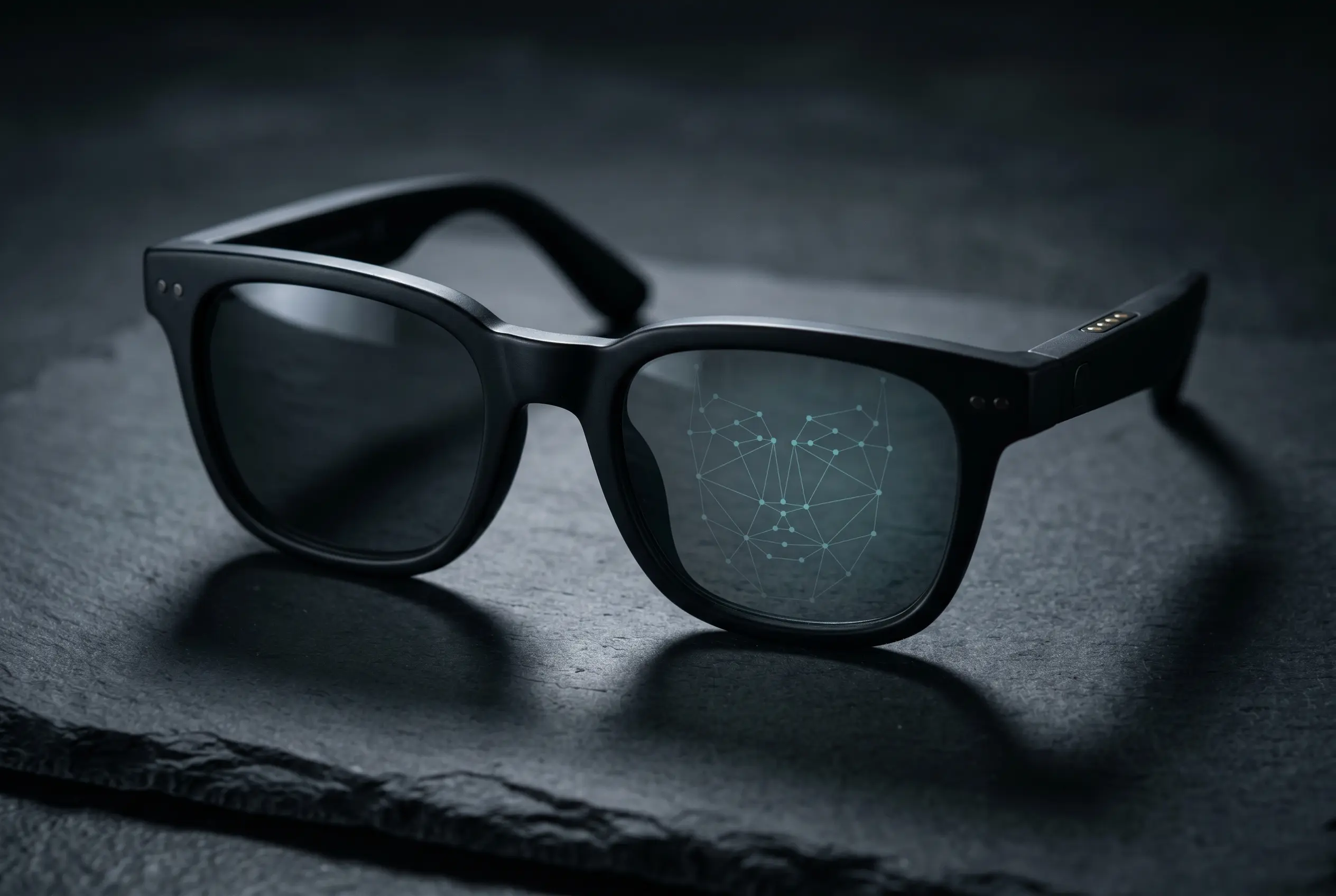
The Company Wired Traced It Back To
Rank One Computing was founded in 2015 by engineers who had built face-recognition systems at Noblis, a nonprofit research institute whose work has included evaluating algorithms for a US intelligence research agency. The company completed its listing on the Nasdaq in February 2026, pricing 4 million shares at $6 each to raise $24 million, per Rank One’s February 2026 Nasdaq debut and $24 million raise. CEO B. Scott Swann previously ran the FBI division that operates the bureau’s biometric databases, the same network that holds fingerprints, iris scans, and face images of American arrestees and civil employees.
Rank One’s leadership reads like a federal personnel file. The company’s board includes a former CIA deputy director for science and technology, a former head of the FBI’s science and technology branch, and a former Pentagon official who stood up a multibillion-dollar special-capabilities office, according to Wired. Roughly 80 percent of Rank One’s revenue comes from government customers, including the Department of the Navy and the Department of the Army. The long-range face recognition the company developed under a US Special Operations Command research contract can identify a face from as far as 1 kilometer away, the company has said.
The firm’s tools are already in regular use in the United States. The US Marshals Service has used a biometric identification kit built on Rank One’s technology since 2021 to confirm prisoners’ identities without fingerprinting them during transport. In West Virginia, dozens of schools have used the software to screen faces at their entrances against the state’s sex-offender registry, the company’s CEO said in 2024.
Inside the Pentagon-to-Consumer Pipeline
The Meta license is the first publicly known commercial deal between the two companies, but it sits inside a much older pattern. Rank One’s face-recognition algorithm already reaches police departments, federal agencies, and school districts through resale partners such as DataWorks Plus and LexisNexis. The same engine that runs the Marshals Service prisoner kit and the Navy’s ROC Watch video tool would, on paper, also power a consumer pair of smart glasses. Wired described the arrangement as a sign of how thin the line has grown between the surveillance technology sold to law enforcement and the military and the consumer products sold to everyone else.
The US Marshals Service, the Naval Criminal Investigative Service, and the West Virginia school entry checks all run on the same Rank One code that Meta was testing. Police departments across the country use Rank One’s algorithms too, embedded in tools they buy from other vendors. The Department of the Navy and the Department of the Army have also held contracts with the company. The table below lays out where Rank One’s face-recognition technology is already in service, based on Wired’s reporting.
| Customer | Application |
|---|---|
| US Marshals Service | Biometric identification kit for prisoner transport since 2021 |
| Naval Criminal Investigative Service | ROC Watch video analysis tool |
| US Special Operations Command | Long-range face recognition research contract (range: 1 km) |
| West Virginia schools | Face screening against the state sex-offender registry |
| LexisNexis and DataWorks Plus | Police face-search products, including against FBI image galleries |
| Meta (proposed consumer use) | Smart glasses companion app |
What the App Actually Shipped
The Meta AI app, the companion software that runs on phones paired with Meta’s Ray-Ban and Oakley smart glasses, has been downloaded to more than 50 million phones. The dormant code reviewed by Wired sat in a test version of that app that shipped to consumers this month, alongside Meta’s own in-house face-recognition system, internally called NameTag.
Neither the Rank One routines nor NameTag were ever active for users, according to Wired. The company has previously described NameTag as a way for wearers of smart glasses to identify people in the room and pull up information about them via Meta’s assistant. Wired’s review of the latest version of the app found that Meta had removed both the Rank One-related components and the NameTag system on June 5. The deletion came one day after the outlet revealed that Meta had quietly built NameTag into the app in the first place.
The Electronic Frontier Foundation, which reviewed the dormant code through static analysis, said the app’s June 5 update scrubbed the face-recognition technology, the code meant to trigger “Person recognized” alerts, and the machine learning models and databases designed to detect, digitize, and store biometric signatures. EFF called the code’s quiet removal a partial win but warned it is not a permanent change of heart. Meta previously killed an earlier face-recognition system in 2021, the EFF noted, and stopped only after facing legal and financial consequences.
The full sequence runs tight. Wired published its first report on the NameTag system. Meta deleted both the in-house system and the Rank One integration from the app the following day. The Rank One license itself, according to Wired, remains active. Meta has not said whether it plans to bring NameTag back in the future or what it did with any data it may have already collected during internal testing. EFF said the company has refused to answer those questions, a stance confirmed in static analysis that confirmed the dormant code had been removed from the latest build.
What NIST Already Knows
Like other face-recognition systems, Rank One’s algorithm does not perform equally across demographic groups. In testing by the National Institute of Standards and Technology, a version of the company’s algorithm produced false matches at sharply different rates depending on a person’s sex and country of birth, which NIST uses as a proxy for race. Error rates were lowest for people born in Eastern Europe and tended to run higher for women than for men.
NIST testing is the closest thing to a public benchmark for commercial face recognition in the United States, and the demographic gaps it flags have shown up across the industry, including in the UK, where forces have lobbied to keep a facial recognition system with documented bias against women, young people, and ethnic minorities. The implication for Meta’s prototype is the same one police and federal customers have been weighing for years. Wired framed it as the same algorithms serving both surveillance and consumer markets, and a system with known demographic gaps is not a neutral one when it reaches a consumer device. Wired’s reporting did not detail what consumer-facing application Meta had in mind, and Meta declined to specify.
Why the Regulatory Picture Is Thin
There are few national rules governing face recognition in the United States. Many states require police to obtain a warrant before accessing such data, and more are folding biometric protections into general consumer-privacy laws each year, Eric Null, director of the Privacy and Data Project at the Center for Democracy and Technology, told Wired.
Federal law has not caught up with the technology. The closest the country has to a sector-wide biometric privacy law is Illinois’s Biometric Information Privacy Act, which allows private suits and has produced the bulk of the country’s face-recognition settlements. Several states, including Texas and Washington, have similar statutes, though the federal landscape remains scattered.
False matches are not abstract: in the UK, a man misidentified by face recognition is now suing the Metropolitan Police over the encounter. The most recent federal movement is the American Privacy Rights Act, which would create a national floor for biometric data, but it has not passed. Until something does, consumer face recognition in the United States is governed by a patchwork of state laws and the goodwill of the companies building it. Wired reported that Meta executives went on the defensive after the disclosure, then deleted the code on June 5. EFF argued the company’s actions have been louder than its public statements.
The Silence from Both Companies
Meta would say almost nothing about the arrangement, declining to answer Wired’s questions about its relationship with Rank One. The company would not say why it licensed the software, when the relationship began, or whether the relationship is ongoing. Rank One declined to comment for Wired’s story at all.
There’s a long history of military technologies becoming consumer products. That’s arguably the story of the internet.
Joseph Jerome, the former Meta Reality Labs policy official who made that comment to Wired, drew a direct line from Rank One’s military work to Meta’s consumer prototype. The EFF, which tracked the dormant code independently through static analysis, called Meta’s silent deletion of the code from the Meta AI app a partial win. EFF warned that the quiet removal does not equal a permanent change of heart, since Meta has refused to say whether it will bring the NameTag system back. The unanswered questions are the ones that will follow Meta into its next product launch. The most concrete public fact is the Rank One license itself, which Wired says remains active even after the user-facing code was removed.
Frequently Asked Questions
What did Wired find about Meta and Rank One Computing?
Wired reported that Meta obtained a software license from Rank One Computing, a Denver-based facial recognition company that sells most of its technology to the US government. The license authorized Meta to use Rank One’s face-recognition engine and liveness detection, supporting up to 10 million facial templates, and was the first known evidence of a business relationship between the two companies.
Is the facial recognition code still active in the Meta AI app?
No. According to Wired and the Electronic Frontier Foundation, Meta removed both the Rank One-related components and the company’s own in-house NameTag system from the Meta AI app on June 5. The Rank One license itself, however, remains active, and Meta has not said whether the relationship is ongoing.
What is Rank One Computing and who are its customers?
Rank One Computing is a Denver-based facial-recognition firm founded in 2015 by engineers who had worked at the nonprofit research institute Noblis. Its customers include the US Marshals Service, the Naval Criminal Investigative Service, the US Special Operations Command, the Department of the Navy, the Department of the Army, school districts in West Virginia, and police departments through partners such as LexisNexis and DataWorks Plus.
Why did Meta remove the code?
Meta removed the code one day after Wired reported that the company had quietly built an unreleased face-recognition system called NameTag into the Meta AI app, the companion software for its smart glasses. The company has not explained why it removed the code, and EFF has framed the deletion as a partial response to public scrutiny, not a permanent policy shift.
What happened to any data collected during the testing?
Meta has not said. The EFF has asked the company to disclose what it did with any biometric data it may have collected during internal testing, and Meta has refused to answer, according to the EFF.