
Singapore companies are driving a fresh surge of growth on Indonesia’s Batam island, betting on lower costs, rising talent and a fast-developing tech ecosystem with new regional significance.
How Singapore’s capital became Batam’s strongest tailwind
Singapore poured S$632 million into Batam in the first half of 2025 — more than any other investor — and that money has flowed into tech parks, manufacturing clusters and digital training centres at a pace that surprised even long-time observers.
The draw is simple: Batam is cheaper, close and full of young workers eager to level up.
It’s also happening as ASEAN leaders revive conversations about economic integration.
That broader push, experts say, could tighten the Singapore–Batam corridor even more, giving cross-border operators smoother trade lanes and possibly shared innovation programmes.
One short sentence: the momentum is real.
Nongsa’s creative engine and the talent reshuffle
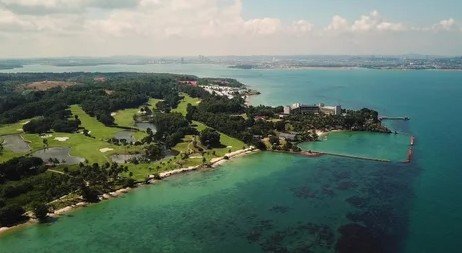
Nongsa Digital Park — a 166-hectare technology and creative estate northeast of the island — has become the face of this transformation.
Its anchor tenant Infinite Studios actually arrived way back in 2005, long before the area became an official digital hub.
What started as a three-person media outfit is now almost 400 employees strong.
The shift has been steady, but the last few years saw an acceleration.
Young Indonesians, especially from Java and Sumatra, have moved to Batam for better tech roles.
Studios there worked on parts of several blockbuster films, giving the local talent real global exposure.
A short one-liner: that’s no small feat for a town once known mainly for factories and ferry terminals.
At the centre of it all is a swelling cluster of data centres.
Thirteen are already live, and more are being built to keep up with the compute-heavy demands of AI training.
Apple, Infineon and several Singapore tech players use the park as an offshore base to train workers and execute lower-cost digital tasks.
Manufacturing gains, cost advantage and where Singapore fits in
Manufacturing is still Batam’s backbone.
Companies operating parks with strong Singapore ownership say labour and land cost advantages remain huge, even as the island gets more global attention.
For electronics producers and contract manufacturers, the proximity to Singapore makes quality control and logistics easier.
Another point: Singapore firms still enjoy a familiarity advantage — decades of cross-border business makes deals faster.
But competition is creeping in.
Analysts warn that neighbouring Malaysian and Vietnamese industrial zones are courting the same companies.
They’re offering tax breaks, bigger incentives and simpler paperwork.
-
In short, Batam can’t rely purely on location anymore; it needs smoother permits and stronger skills pipelines.
This small paragraph stands alone: investors love speed, and bureaucracy slows everything down.
To illustrate what’s attracting firms, here’s a short comparison:
| Factor | Why Firms Choose Batam | Singapore Tie-In |
|---|---|---|
| Costs | Lower wages, cheaper land | Enables near-shore expansion |
| Talent | Young and adaptable workforce | Shared training frameworks |
| Proximity | 40–60 mins from Singapore | Easy oversight, supply chain link |
| Tech Infrastructure | Growing data centre base | Supports cross-border AI development |
The data-centre race and Batam’s AI ambitions
What makes Batam intriguing for the next five years is its sudden relevance to AI computing.
Building massive data centres in Singapore is tough because of land and energy limits.
That pushed some firms to look outside the city-state, and Batam — close enough for quick access but big enough for new facilities — stepped in.
Data-centre operators in Nongsa say the industry is now a major employment driver on the island.
Roles range from security technicians to network engineers, many of them trained on-site.
One-sentence interlude: for Batam’s youth, this sector has become a ladder.
But scalability is still the question.
Power supply, cooling efficiency and renewable-energy sourcing matter a lot to these operators, and Batam can’t afford to fall behind.
Some projects are already exploring solar-plus-battery setups to make energy more predictable.
Experts say that if Batam locks in reliable energy and keeps the data-centre pipeline running, it could grab a decisive slice of Southeast Asia’s AI infrastructure future.
The pressure points: talent shortages, red tape and regional rivalry
This wave of growth doesn’t mean the island can relax.
Executives at several Batam parks say talent gaps are growing — especially mid-level engineers and senior technicians.
While the entry-level talent pool is large, the “job-ready” segment is smaller.
One sentence here: companies want fast onboarding, and that’s where some workers struggle.
Regulation is another thorn.
Permits can take unpredictable amounts of time, and overlapping jurisdictions in Batam’s special zones sometimes confuse operators.
Tax rules shift, and the appeals process is rarely quick.
Vietnam and Johor are smelling opportunity.
Both regions have doubled down on investor aftercare — a small thing, but one that multinational firms notice.
If Batam doesn’t cut red tape and scale training programmes, it could lose part of this new momentum.
What comes next for Batam’s growth arc
For now, the outlook remains bright.
Singapore firms show no signs of pulling back, and Indonesia’s central government has repeatedly stressed Batam’s strategic value.
Investors, however, want assurances — consistent policy, faster approvals, and stronger digital-skills education.
If those pieces fall into place, the Singapore–Batam economic link could become one of ASEAN’s most important cross-border engines over the next decade.
And Batam, long seen as an industrial satellite, may finally be stepping into a regional leadership role in tech and manufacturing.
A single closing line: the island is standing at a rare moment — and what it does next could define its next twenty years.