Kelly Langley did not know the crowd that gathered on the X-ray floor at SSM Health St. Mary’s Hospital on Friday had come for her. Langley, a radiology technician with 26 years in diagnostic imaging, was named Clinical Instructor of the Year by the Medical Radiologic Technology program at State Technical College of Missouri in a surprise presentation, an honor that students themselves nominate and select.
Behind the applause sits a workforce problem that recognition ceremonies rarely name out loud. Hospitals across the country still cannot hire enough imaging technologists, and the instructors who train each new class have become the quiet constraint on how quickly that gap can close.
A Surprise Award on the X-Ray Floor
Faculty and students from State Technical College of Missouri’s radiologic technology program walked onto the hospital floor on Friday and handed Langley the award without warning. It recognizes “excellence in clinical education, mentorship and patient care,” according to a news release from the program.
The nomination comes from the students, not the faculty. Melissa Hart, department chair and program director for State Tech’s medical radiologic technology program, said her students pick the instructor who shaped them most during clinical rotations.
“Students select or nominate a clinical instructor based on outstanding educational support in the clinical setting,” Hart said, describing someone “who is inspiring to students, somebody who serves as a mentor, somebody who ensures that the clinical environment supports learning.”
Langley has spent her career in the diagnostic X-ray field and splits her time between the hospital and Jefferson City Medical Group, where she also takes on students. Hart described her as the connector between the lecture hall and the patient. She helps students “take what they learn in our classroom and lab at State Tech and apply that in the clinical setting to patients with direct patient care,” Hart said.
Why Clinical Instructors Are the Pipeline’s Choke Point
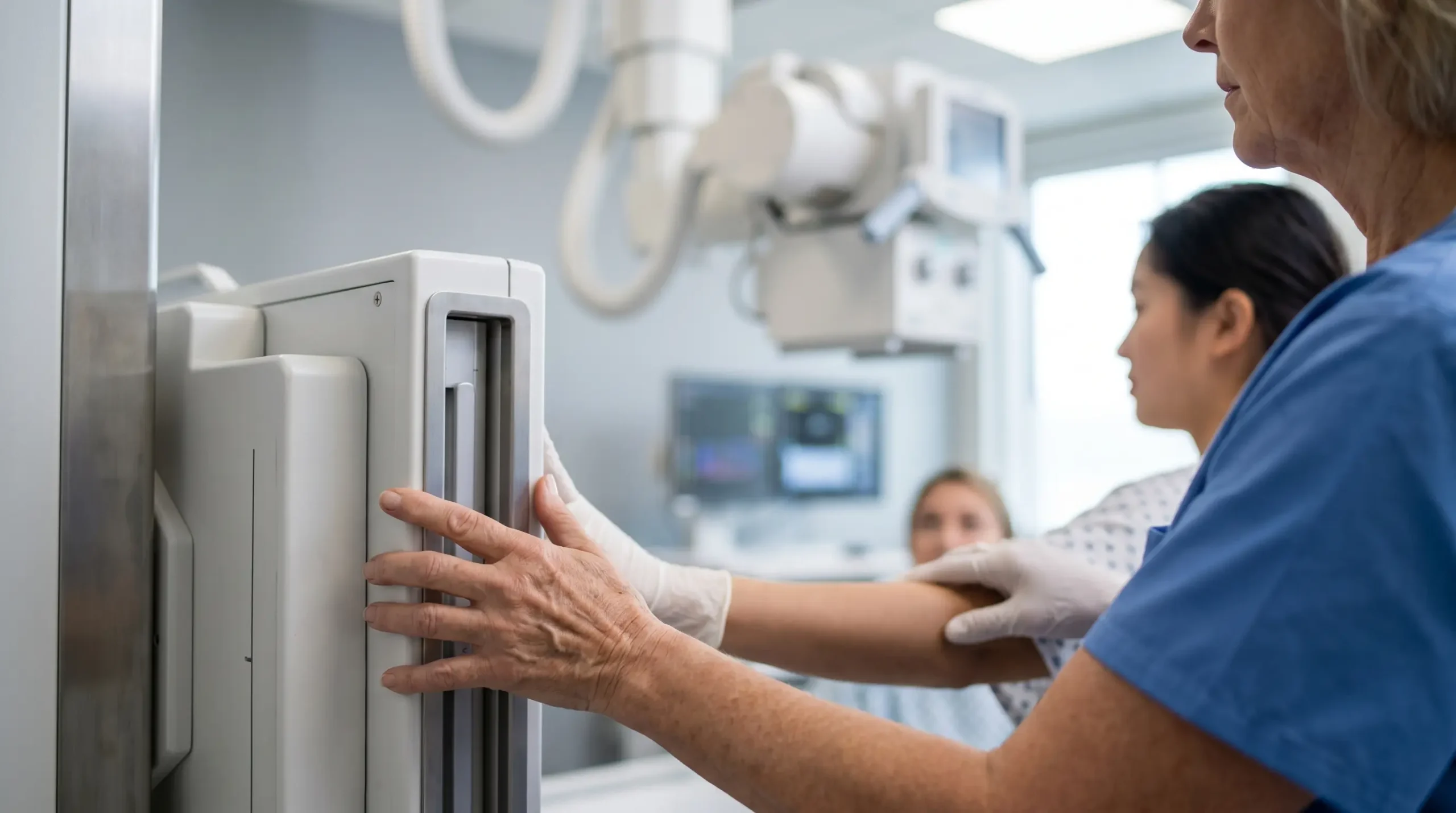
A radiography student cannot graduate on classroom hours alone. State licensing and accreditation require supervised time with real patients and real machines, and that time only exists where a working technologist agrees to teach while still doing the day job. No clinical site, no new graduates.
That is where the math gets tight. Community college imaging programs routinely carry multi-year waitlists, and the limit is rarely the number of seats in the lecture hall. It is the number of clinical placement slots that hospitals and clinics can supervise at once. Healthcare educators describe the same squeeze across nearly every clinical field, the kind of structural barrier that healthcare leaders weighing the industry’s barriers have flagged as a drag on workforce growth.
The nursing field shows the scale of the problem in plain numbers. The American Association of Colleges of Nursing reported that more than 65,000 qualified applicants were turned away in 2023, largely because there were not enough faculty, preceptors, or clinical sites to train them. Radiography runs on the same engine, just with fewer headlines.
A handful of factors keep clinical capacity capped:
- Supervising students slows a technologist’s patient throughput, so busy departments can only host a few at a time.
- Veteran techs willing and qualified to teach are themselves in short supply and close to retirement.
- Clinical instruction is often added on top of a full caseload rather than paid as a separate role.
- A single departure can shut a clinical site to students until a replacement preceptor steps up.
Put together, an instructor who stays for decades and keeps taking students is worth more to the supply of new technologists than almost any recruiting campaign.
The Vacancy Numbers Behind a Local Ceremony
The demand side is not subtle. The most recent staffing data from the American Society of Radiologic Technologists (ASRT, the profession’s national membership body) shows imaging vacancies sitting at or near record levels across most modalities.
Computed tomography reached an all-time high vacancy rate of 19.4% in the 2025 reading, up from 17.7% two years earlier. Magnetic resonance imaging climbed to 17.4%. General radiography, the X-ray work Langley trains students to do, eased to 15.6% from 18.1% in 2023, an improvement that still leaves roughly one in six positions open.
| Imaging modality | 2023 vacancy | 2025 vacancy |
|---|---|---|
| Computed tomography | 17.7% | 19.4% |
| Magnetic resonance imaging | 16.2% | 17.4% |
| Radiography (X-ray) | 18.1% | 15.6% |
| Mammography | 13.6% | 11.4% |
“ASRT is taking a multipronged approach to increase recruitment and retention into the profession,” said Melissa Culp, the society’s executive vice president of member engagement, in the survey release. The federal outlook points the same direction. The U.S. Bureau of Labor Statistics projects about 15,400 openings a year for radiologic and MRI technologists through 2034 and reports a median wage near $77,660, figures laid out in its radiologic technologist wage and outlook data. You can read the full modality breakdown in the 2025 ASRT staffing and workplace survey.
Inside State Tech’s Radiography Pipeline
Programs like the one honoring Langley are where that demand gets answered, one cohort at a time. State Tech’s degree is a five-semester Associate of Applied Science built around classroom work, lab time, and the clinical rotations that put students next to instructors like her.
The outcomes are why the clinical side matters so much. According to the program’s accreditation file, graduates clear the certification exam and land jobs at rates most degrees would envy:
- 92.7% five-year credentialing exam pass rate, per the program’s accreditation record.
- 100% five-year job placement rate for graduates.
- 78 credit hours across five semesters to earn the degree.
Graduates who meet the standards of the American Registry of Radiologic Technologists (ARRT, the field’s main credentialing organization) can sit for the exam to become registered. The numbers are published through the program’s JRCERT accreditation record, and the curriculum is detailed on State Tech’s medical radiologic technology program page. None of those outcomes happen without working technologists willing to supervise the clinical hours.
A Mentorship Chain Spanning 27 Years
The full-circle moment came from who else was standing on the floor. Vicki Johnson, clinical coordinator and didactic instructor for State Tech’s program, taught Langley 27 years ago when the course ran through Nichols Career Center. The student she once trained is now the instructor her current students vote for.
One of those students is Malorie Reasor, who just finished her first year. Reasor worked with Langley during a clinical rotation at Jefferson City Medical Group and saw the hands-on style that earns the nominations.
“She’s very helpful whenever it comes to positioning the patients,” Reasor said. “She also has a lot more experience than a lot of other techs I’ve worked with, and so she’s very knowledgeable about different procedures.”
For Langley, the payoff is the people, not the plaque.
It’s just wonderful to help shape them and just see the future of our department.
That line, from Langley after the ceremony, is also the workforce story in miniature. Every technologist she sends into a hospital is one more position filled in a field that keeps reporting empty ones, and one more person who might one day stand on a floor and train the next.
Frequently Asked Questions
How Long Is State Tech’s Radiologic Technology Program?
State Technical College of Missouri’s Medical Radiologic Technology degree is a five-semester Associate of Applied Science requiring 78 credit hours. It blends classroom instruction, lab practice, and supervised clinical rotations in hospitals and imaging centers.
What Does a Clinical Instructor in Radiography Do?
A clinical instructor is a working technologist who supervises students during their hospital and clinic rotations, helping them apply classroom theory to real patients. They guide positioning, equipment use, and patient care, and their availability sets how many students a program can train at once.
How Severe Is the Radiologic Technologist Shortage in 2026?
Vacancy rates remain near record highs. The 2025 ASRT survey put computed tomography at a 19.4% vacancy rate, MRI at 17.4%, and general radiography at 15.6%, meaning roughly one in six to one in five imaging positions sat open across major modalities.
How Much Do Radiologic Technologists Earn?
The U.S. Bureau of Labor Statistics reported a median annual wage of $77,660 for radiologic technologists as of May 2024. The lowest 10 percent earned under $52,360, while the top 10 percent earned more than $106,990.
What Certification Do Radiologic Technologists Need?
Most states require certification through the American Registry of Radiologic Technologists. Graduates of an accredited program who meet ARRT requirements are eligible to sit for the exam to become a Registered Radiologic Technologist, which qualifies them to work in hospitals, clinics, and imaging centers.