
Italy’s preparations for the 2026 Winter Olympics are colliding with delays, tight timelines, and the country’s famously loose relationship with precision—yet optimism and charm still hold the stage.
Rising Pressure as Deadlines Creep Closer
Italy’s reputation for warmth, beauty, and a certain shrugging relationship with rules feels both magical and maddening. That contradiction is now front and center as Milan and Cortina d’Ampezzo inch toward hosting the 2026 Winter Olympics, with one of the Games’ most visible venues still unfinished.
Construction delays at the Santa Giulia Arena—home to Olympic hockey—have raised alarms across the global sports community.
And yet, somehow, officials keep smiling.
Andrea Francisi, the executive overseeing the arena, insists things are fine “for the moment.”
That phrase has become an uncomfortable headline.
The test event meant to happen now? Canceled.
The first Olympic game? Scheduled for February 5. That’s… very soon.
A Venue Caught Between Vision and Reality
The Santa Giulia Arena was pitched as a landmark project, a gleaming justification for awarding Italy a second Winter Games this century. But progress hasn’t matched the promise. Construction setbacks, contractor changes, and local bureaucratic bottlenecks have stretched tempers thin.
One official joked privately that the building is “on Italian time,” which locals understand as both a compliment and an apology.
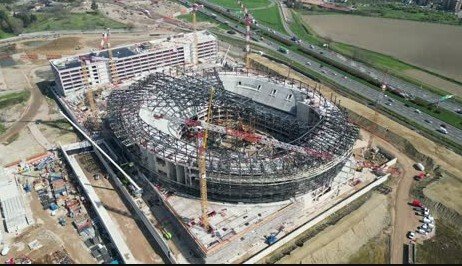
The arena is supposed to seat thousands, welcome NHL stars returning to Olympic play, and represent Milan’s modern, confident stride into the international spotlight.
Instead, it has become a symbol of Italy’s balancing act: ambition on paper, delays in concrete.
Short walks through the site, insiders say, reveal crews working intensely—just not always in sync with one another.
A foreman summed it up with a shrug: “It will be beautiful.”
He didn’t specify when.
Why This Matters
A last-minute scramble isn’t unheard of before Olympics. Still, the timing here feels razor-thin.
The absence of a Plan B didn’t calm things either. Francisi said it plainly: “There is no plan B.”
For anyone in logistics, that’s a heart-stopping sentence.
A small moment of unease always follows hearing those four words.
It’s a quiet silence filled with emails, crossed fingers, and maybe a prayer or two.
Where Planning Meets Italian Culture
Anyone who has spent time in Italy knows the dual truths that make the country what it is: breathtaking artistry and hair-pulling unpredictability.
Visitors often joke about “is extra” or “is not possible,” two phrases that capture daily contradictions.
One minute, you’re told something absolutely cannot be done.
The next, you’re standing right in front of the thing you were told doesn’t exist.
A traveler in Salerno once asked a café full of people where to find gas. The consensus, arrived at loudly, was that it wasn’t possible.
Two hundred yards later, there it was.
Perfectly open.
Perfectly ordinary.
That same mix of charm and disorder now colors Olympic preparations.
A Broader Pattern in Olympic Hosting
Italy isn’t alone. Recent Olympics—from Rio to Sochi to Tokyo—faced crunch-time drama.
But Italy’s situation has its own flavor.
Here’s why:
-
The Milan–Cortina Games rely heavily on existing venues scattered across mountainous regions.
-
New builds like Santa Giulia were fewer, meaning expectations were higher.
-
Italy’s construction bureaucracy is known for delays born from paperwork, politics, and a tendency to debate everything loudly and publicly.
Meanwhile, the clock keeps ticking.
A look at recent Olympic venue delivery timelines helps illustrate the trend:
| Olympic Host City | Year | % of New Venues Completed by December Before Games |
|---|---|---|
| Tokyo | 2020 | 92% |
| Beijing | 2022 | 100% |
| Milan–Cortina | 2026 | 67% (estimated) |
The gap alarms experts but doesn’t surprise Italian locals, who view such numbers with a kind of philosophical shrug.
And yet, this is Italy—where the improbable often becomes reality at the last possible moment.
International Eyes Turning Toward Milan
The global hockey community is watching closely. NHL stars are returning to the Olympics after years away, and many expected Milan to serve as a celebratory backdrop.
Instead, questions linger.
Officials say teams will have full access to the arena by late January, leaving just enough time to test the ice, complete inspections, and breathe deeply.
There’s also concern in other sports, though less dramatic. Some alpine venues are secure. Others are wrestling with logistical bottlenecks like transportation or snow readiness.
One Italian organizer put it plainly over espresso: “We are working. Everything is… okay.”
The pause before “okay” spoke volumes.
Still, There’s Magic in the Air
For all the problems, Italy knows how to host big events with flair.
The Torino 2006 Winter Olympics were widely loved.
The nation treats sport with passion and pageantry.
Olympic fans adore the scenery, the food, the sensory overload that comes from attending anything in Italy.
And Italy is betting big that charm, culture, and atmosphere will gloss over the rough edges.
A longtime Italian sports commentator said something that feels both poetic and true:
“This country may run late, but when it arrives, it arrives beautifully.”
Maybe that’s the unofficial motto of the Milan Cortina Games.
A Tense but Hopeful Countdown
Whether the final product dazzles or disappoints, one thing already feels certain:
Italy will bring emotion, noise, color, food, and contradictions to the 2026 Olympics.