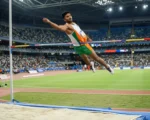
Bangladesh remains the most populous country never to win an Olympic medal, with roughly 170 million people and a clean 0-0-0 record through Paris 2024. Captain A M Maqsood Ahmed, former general secretary of the Bangladesh Table Tennis Federation, wrote this week that the country still hunts talent after athletes already enter competitive sport instead of building the physical base in early childhood.
His piece lands against a fresh budget that finally treats sport as an industry yet still opens its flagship talent scheme at ages 12 to 14. The second-order cost is already visible in classrooms and clinics long before any podium.
The longest medal drought among large nations
Bangladesh has sent athletes to every Summer Games since 1984. Most berths arrived via wildcards. Direct qualifiers remain rare; golfer Siddikur Rahman and archer Ruman Shana stand out as exceptions who earned spots on ranking rather than invitation.
| Games | Athletes | Gold | Silver | Bronze |
|---|---|---|---|---|
| 1984 Los Angeles | 1 | 0 | 0 | 0 |
| 2016 Rio | 7 | 0 | 0 | 0 |
| 2020 Tokyo | 6 | 0 | 0 | 0 |
| 2024 Paris | 5 | 0 | 0 | 0 |
| Total | – | 0 | 0 | 0 |
Cricket supplies the only consistent international identity. Football, archery, shooting, table tennis and athletics produce occasional bright results that fade without a pipeline. The Bangladesh Olympic Association structure and role lists 27 affiliated federations and talks of long-term athlete development, yet the medal table has not moved.
Why the three-to-six window still sits empty
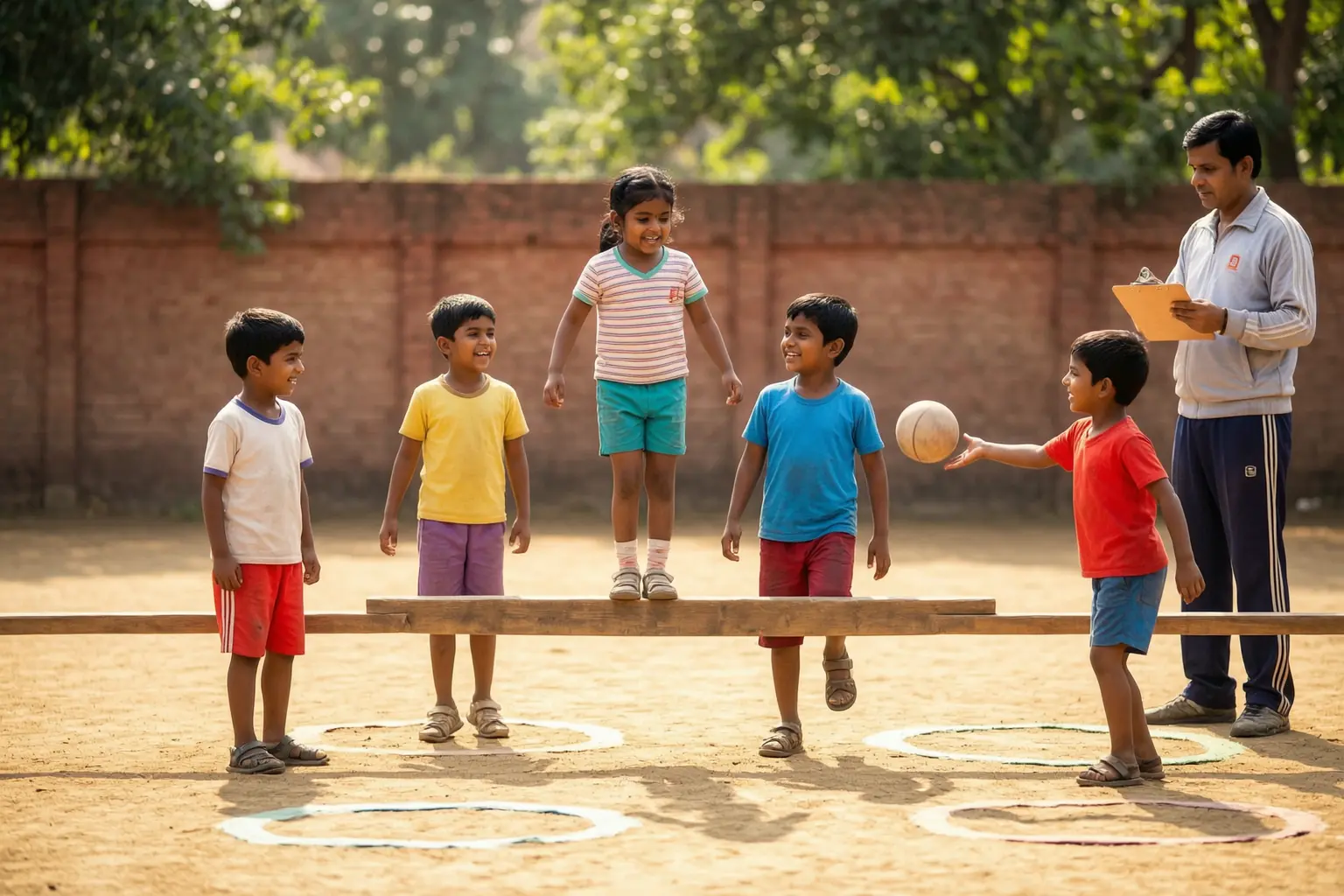
Maqsood’s core claim is simple. Children aged three to six hold peak capacity for motor learning. Balance, coordination, agility, flexibility, spatial awareness and confidence form then. Neglect them and later technical coaching hits a lower ceiling.
He is not calling for early specialisation. He wants an environment of play and guided movement that successful nations treat as infrastructure. Canadian long-term development stages before puberty put Active Start (roughly 0-6) and FUNdamentals first, then Learn to Train, so physical literacy exists before any sport demands specialisation after age 12.
- Balance and postural control through simple beams, single-leg stands and uneven surfaces
- Locomotor patterns: running, hopping, skipping, galloping, jumping for height and distance
- Object control: throwing, catching, striking, kicking with soft equipment
- Body awareness and rhythm via dance, gymnastics shapes and obstacle courses
- Confidence and enjoyment so children keep moving rather than drop out
Bangladeshi schools and clubs still treat these years as free play or nothing. Structured physical education remains thin. Coaches often meet athletes only after they have already chosen a sport and developed compensatory habits.
Notun Kuri starts at twelve
The 2026-27 budget for the Ministry of Youth and Sports reaches a record Tk 2,586.06 crore, up Tk 782 crore from the prior revised figure. Development spending takes Tk 1,577.30 crore. The government frames sport as a future economic sector with events, media and tourism.
Tk 200 crore backs the prime minister’s Notun Kuri Sports programme. It offers scholarships to promising athletes aged 12 to 14 across eight disciplines: cricket, football, kabaddi, athletics, badminton, chess, swimming and martial arts. Registrations hit 168,622 (121,492 boys, 47,130 girls). Another Tk 60 crore funds monthly stipends of Tk 1 lakh for 500 athletes. Sports Villages are planned for all 64 districts, with designs ready for the first ten.
- Budget total: Tk 2,586.06 crore for Youth and Sports
- Notun Kuri age band: 12-14 only
- Registrations: 168,622 children already signed
- Athlete stipends: 500 at Tk 1 lakh per month
These steps mark real progress on career viability and infrastructure. They still begin after the motor window Maqsood flags has largely closed. A 12-year-old who never learned to move well arrives already limited. BKSP, the national sports institute, continues to face funding pressure relative to its mandate.
Cricket’s share leaves the rest thin
The Bangladesh Cricket Board sits in a different financial universe. Recent estimates put its annual revenue near $47-51 million, with ICC distributions often supplying 55-60 percent of income and past surpluses exceeding Tk 150 crore in a single year. That money funds academies, domestic structures and professional pathways other federations cannot match.
National passion follows the money. Young athletes and their parents see cricket as the viable route. Olympic sports receive residual attention, residual coaching quality and residual facilities. Maqsood notes that even within those sports the focus stays technical while physical conditioning lags, raising injury risk and capping performance.
Crowd conversation on X repeatedly returns to the same observation: cricket monopolises passion, funding and talent, leaving Olympic disciplines under-resourced and dependent on wildcards. India’s recent push for nationwide talent hunts from age five sits in contrast; Bangladesh’s largest new scheme opens seven years later.
Parents and schools hold the real levers
Federations and the ministry can write frameworks. Daily habits form at home and in the schoolyard. Maqsood places parents at the centre because they control sleep, nutrition, screen time and whether movement is treated as essential or optional recreation.
Many still view sport as leisure that can wait until exams ease. Urban schedules of long school days plus private tutoring squeeze physical time further. Schools that treat PE as an afterthought reinforce the message.
- Protect daily free play and guided movement for ages 3-6 before any sport badge
- Demand age-appropriate PE that builds the five fundamentals rather than only games
- Learn basic nutrition (protein, carbs, fats, micronutrients) so growth and recovery keep pace with training
- Reject the myth that children must avoid all resistance work; supervised body-weight, balance and gymnastics movements improve bone health and posture
- Model punctuality and consistency so discipline is normal, not a later shock
Coaches need the same upgrade. Personal experience and outdated methods still dominate many clubs. Modern standards emphasise technique, gradual loading and safety over early heavy weights or specialisation.
Strength, food and the fitness base
Maqsood lists the common errors clearly. Young athletes chase sport-specific skills while skipping speed, strength, endurance, flexibility, coordination and agility. Fitness is the platform; skill sits on top. Without the platform, performance stalls and injuries rise.
Without proper nutrition, even the best training programmes cannot produce elite performers.
Captain A M Maqsood Ahmed wrote that line while urging basic literacy on proteins, carbohydrates, healthy fats, vitamins and minerals. He separates evidence-based supplements (protein, creatine monohydrate, electrolytes, omega-3, vitamin D under guidance) from doping. The distinction remains poorly understood among parents and many administrators.
Every sports organisation, he argues, should run long-term athlete development programmes that keep fitness central while technical work progresses gradually. Discipline, punctuality, teamwork and accountability start early and never become optional.
Rising inactivity bills arrive first
The medal drought is the public scoreboard. The quieter ledger shows up in health data. Overweight prevalence among Bangladeshi children under five rose from 0.9 percent in 2000 to 2.4 percent in 2019. Among adolescents aged 5-19 the rate climbed past 9 percent. In urban Dhaka, urban child obesity rates above 14 percent appear in surveillance, driven by fast food, screen time, long academic days and scarce safe play space.
Sedentary children become adults with higher rates of metabolic disease. The same missing movement skills that limit future Olympians also raise the national health bill. A system that only scouts at 12 cannot reverse either problem.
Bangladesh now has record sports money, athlete stipends, district villages on the drawing board and 168,000 children registered for a 12-14 programme. Those tools will produce better juniors than the previous decade. They will not manufacture the foundation that should have been built between three and six. Countries that fill medal tables started that work a generation earlier and kept at it. The next budget cycle will show whether Bangladesh treats the early window as optional recreation or as the first, non-negotiable layer of the whole system.