Justine Silvers of Idaho thought she had landed a $2,600-a-month work-from-home role inspecting and reshipping packages for Deliver on Time. After weeks of daily deliveries, photo uploads and label printing, her login vanished on payday and the phone went dead. A second seeker in Hillsborough County, Florida, reported the same cut-off. The Better Business Bureau flagged the pattern, and a Palm Bay business owner discovered his dormant LLC name had been borrowed to make the offer look real.
Gerry Mendiburt of the BBB told WESH 2 that scammers increasingly lift legitimate business names and addresses. The real company is often a small, inactive entity; the consumer ends up unpaid and potentially tangled in stolen goods. The same public records that once signaled a future launch now supply the polish that keeps new applicants from walking away.
The Offer That Locked Victims Out After 30 Days
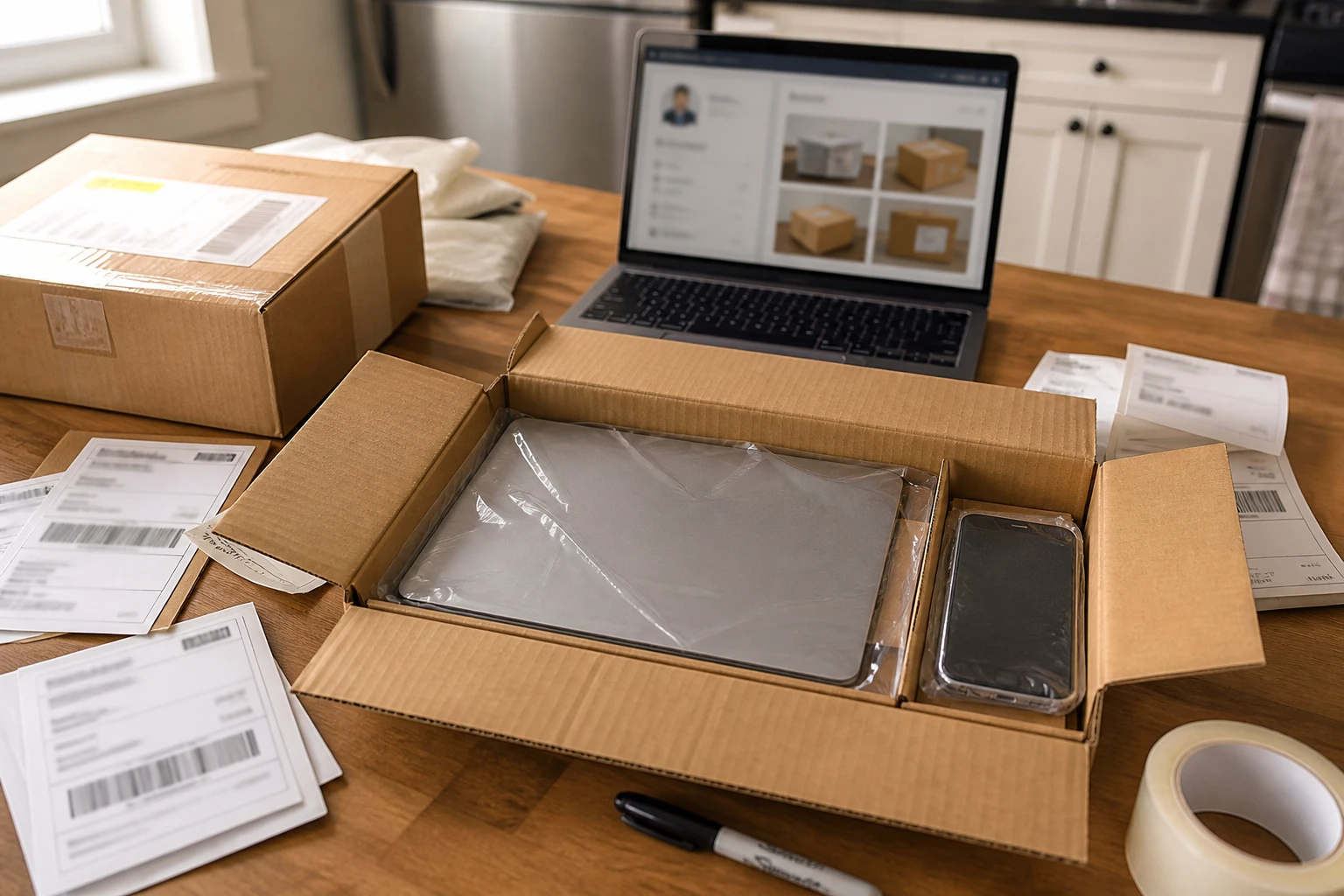
Silvers described a polished setup. Packages arrived at her house every day. A website login supplied shipping labels. Her instructions were clear: check contents, photograph them, upload the images, print a new label, reseal and send. She was told a 30-day probation explained the delayed first check.
The day that I was supposed to get my check, all of a sudden the interface, I can’t get in. I’m locked out. Then the phone number, you can’t get through.
Silvers said that to WESH 2. The Hillsborough County victim heard the same base pay plus $20 per shipment. Both women dug deeper only after the money failed to appear and found the Palm Bay link. Silvers summed up the aftermath: no job, and now her own situation felt jeopardized. She urged extreme caution.
The two accounts line up on every operational detail that mattered. Both received daily packages. Both used a portal for labels and photo uploads. Both waited through a probation story that pushed the first paycheck just past the point of heavy labor. Only the cut-off on payday forced them to compare notes with public records.
| Element | Justine Silvers (Idaho) | Hillsborough County Seeker |
|---|---|---|
| Stated pay | $2,600 a month | Same base plus $20 per shipment |
| Daily task | Inspect, photograph, relabel, reship | Identical photo-and-label routine |
| Timing of lockout | Payday after 30-day probation | Same payday cut-off |
| Aftermath | No pay; address now tied to packages | Same unpaid labor and Palm Bay link |
A Dormant Palm Bay LLC Supplied the Cover
Ankur Shah, listed with the company, told WESH the name on Sunbiz belongs to him and a partner but the business never launched. “There is a Delivery on Time company listed on Sunbiz. That company is owned by us, but there’s no activity. It was meant for a business that was never started,” Shah said. “I don’t want to be associated with them in any way, and I would caution everyone: if they get any calls like that, be careful.”
Public records confirm the details. The Florida Sunbiz filing for Deliver on Time LLC shows document L19000272132, organized November 1, 2019, status Active, principal address 930-2 Malabar Road SE, Palm Bay, FL 32907. Managers are listed as Ankur Shah and Rajesh Patel. Annual reports were filed through 2026 even though Shah describes zero operations.
| Detail | Sunbiz Record | Scam Presentation |
|---|---|---|
| Entity name | DELIVER ON TIME, LLC | “Deliver on Time” / deliverontimeusa.com |
| Address | 930-2 Malabar Rd SE, Palm Bay 32907 | Same Palm Bay tie used for legitimacy |
| Status / activity | Active filing, owner says never started | Active hiring for package agents |
| Managers | Ankur Shah, Rajesh Patel | Not involved; disavowed contact |
A July 1, 2026 entry on BBB Scam Tracker reports under “Deliver on time llc” describes high-end items sent to a Sturgis, Michigan address for re-labeling and onward shipping, with the same Palm Bay zip and a website matching the pattern. Another tracker entry days later used a near-identical name. The real owners become collateral: their filing history gives scammers a free veneer of legitimacy while they field angry calls or online association they never earned.
The gap between an Active filing and zero operations is what makes the cover cheap to steal. Scammers need only the name, the address and the managers already listed. Nothing on the public page signals that the entity never opened its doors.
How the Reshipping Pipeline Runs
The mechanics match a long-running pattern the BBB and FTC have documented for years. A 2020 BBB study found 65 percent of fake online job postings involved warehouse distribution coordinator titles or similar package roles. The current version still follows the same script.
- Unsolicited or lightly vetted offer of remote “delivery operations” or “quality control” work at solid monthly pay plus per-package bonuses.
- Quick onboarding that requests personal details, sometimes a driver’s license photo or bank info for “direct deposit.”
- Packages of high-value electronics or other goods arrive, bought with stolen cards or accounts.
- Worker photographs contents, discards original packaging and receipts, applies a new label (often international), and ships.
- Payday arrives, access is cut, contact ends. The goods have already moved beyond easy tracking.
The BBB alert on work-from-home reshipping mechanics walks through exactly this sequence and quotes a victim who never received the promised $3,000-plus salary after the same photo-and-label routine. Mendiburt stressed the dual harm: lost time and money plus likely involvement with stolen merchandise.
Each step is designed to feel ordinary. Photographing contents looks like quality control. Printing a fresh label looks like warehouse work. The international hop and the sudden lockout arrive only after the trail has already been scrubbed.
Employment Scams Doubled While Remote Work Stayed Attractive
This Palm Bay case sits inside a broader surge. BBB Scam Tracker data show employment scam reports roughly doubled in 2025, exceeding 23,000 that year and nearing 50,000 across the prior three years. Text messages became the dominant delivery channel for half of those 2025 reports. Task-based “like and subscribe” variants grew fastest, yet classic reshipping never left the toolkit.
- Nearly 50,000 employment scam reports to BBB over three years.
- More than 23,000 in 2025 alone after the doubling.
- 65 percent of fake job posts in a 2020 BBB sample were package/reshipping roles.
- Median task-scam losses hit $2,300 in 2025 BBB data; reshipping victims mainly lose labor and face legal exposure.
The full picture appears in the employment scam reports doubled in 2025 study. Remote-work norms lowered the barrier. Job seekers already navigating AI-driven job cuts and career pivots or watching large-scale tech layoffs reshaping the market are primed for flexible offers that require only a printer and a front door. Scammers exploit that hunger with polished portals and probation stories that delay the moment of truth.
Reshipping survives because it still converts. The 65 percent share recorded in 2020 shows how long the package role has dominated fake postings. The 2025 doubling simply enlarged the pool of people willing to try a home-based start.
The Criminal Exposure No One Mentions in the Job Ad
Mendiburt put the risk plainly: most of the time the goods are stolen or bought with stolen credit cards. The “employee” is told they are performing quality checks. In reality they are laundering the trail. The FTC warning that reshipping is never a real job states the same point. Scammers use stolen payment data to buy high-dollar items, then recruit people to strip the original packaging and forward the goods, often overseas where tracking dies. When the real cardholder disputes the charge, investigators can land at the reshipper’s door.
Even without knowledge, handling stolen merchandise can trigger police inquiries, frozen accounts or worse. Identity theft risk rises if a license copy or Social Security number was shared during onboarding. Crowds on X routinely call these package-mule operations and note that the “employer” never pays while the worker carries the legal heat. That is the hidden cost the $2,600 promise never lists.
The probation story buys the scammers time. By the day the login dies, the high-value items have already left the country. The unpaid worker is left holding an address history that investigators may later review.
Why Inactive Sunbiz Records Keep Working
The Palm Bay filing shows how little effort the cover requires. Organized in 2019, kept Active by routine annual reports through 2026, and never opened for business, the LLC still supplies a principal address, manager names and a document number any applicant can look up. Scammers copy those details onto job pages and websites. The public record does the rest of the convincing.
Shah and Patel never launched the company, yet their names remain attached to every complaint that uses the filing. Angry calls and online association land on people who had no part in the hiring pitch. The only immediate counter is a public disavowal like the one Shah gave WESH.
- November 1, 2019 – Deliver on Time LLC organized on Sunbiz under document L19000272132.
- Annual cycles through 2026 – Reports keep the status Active despite zero operations.
- Job offers surface – Applicants receive packages, upload photos and print new labels under the borrowed name.
- July 1, 2026 – BBB Scam Tracker logs a Sturgis, Michigan reshipping report using the same Palm Bay zip.
- Days later – A second tracker entry appears under a near-identical name.
Each step relies on the same public page. As long as the filing stays Active and unchallenged, the next polished portal can reuse the address and the managers without inventing a fresh company from scratch.
Practical Steps for Seekers and Name Holders
BBB and FTC guidance converges on simple checks that would have stopped both Florida-linked victims.
- Search the company name plus “scam,” “complaint” or “review” before accepting any package role.
- Call the real business at a number you find independently; do not use contact info supplied in the offer.
- Treat any job that requires receiving, photographing and re-labeling packages as illegitimate by default.
- Never pay fees, buy equipment with your own money, or send copies of ID for “onboarding.”
- Report to ReportFraud.ftc.gov and the U.S. Postal Inspection Service if packages already arrived.
Owners of dormant LLCs face a quieter burden. Easy annual-report filings keep entities Active on Sunbiz even when no revenue exists. That public record becomes free advertising for fraudsters. Shah’s public disavowal is the only immediate remedy once the association spreads. Monitoring Scam Tracker and filing a dispute when a report lands on the real name can limit further damage.
The same search that protects a job seeker can also alert an owner. A quick check of the company name plus “scam” would have surfaced the tracker entries that already link Palm Bay to unpaid reshipping work. Acting on that signal early keeps the association from spreading further.
What the Unpaid Weeks Leave Behind
Silvers and the Hillsborough victim lost weeks of unpaid labor and now carry the worry that their addresses and actions sit in shipping logs tied to stolen goods. The packages moved on. The login died. The phone went silent. What remains is the paper trail of labels, photos and front-door deliveries that no longer have an employer attached.
The $2,600 monthly figure and the $20-per-shipment bonus never arrived. The 30-day probation ended exactly when the money was due. That timing is the mechanism: labor first, disappearance second. The dual harm Mendiburt described (lost time plus possible stolen-goods exposure) is what both women now manage alone.
The Palm Bay filing that never became a real company still sits in public view, Active and available for the next round of polished job pages. That is the quiet tax dormant entities and desperate job seekers both pay when scammers need a believable name.