Chilean startup NoaConecta began national-scale operations on August 4, 2026, with cloud software that tracks student entries, authorized early pickups and school-bus handoffs in real time. Academic ERPs already handle grades and billing. The gate stayed on paper.
The SaaS sits as a parallel ops layer. Schools keep their existing systems. Inspectors and reception staff get one secure interface for the physical flow that still generates most daily friction.
The Gate That Stayed Analog
For a decade LatAm EdTech money poured into LMS platforms, classroom tools and full academic ERPs. Chile ranks among the region’s more digitally advanced education systems. Notes, attendance inside class, curriculum planning and invoices moved online.
The perimeter did not. Hundreds or thousands of students still arrive each morning. Staff still log late arrivals in notebooks. Authorized adults still prove identity for early exits by phone call or paper note. Last-minute transport changes still flood reception lines and WhatsApp groups.
That fragmentation slows answers to parents and leaves thin records when regulators or courts ask who left with whom and when. The Chile’s Plan Integral de Seguridad Escolar framework has long required schools to build integrated safety cultures and prevention routines. Digital logs make the audit trail automatic instead of reconstructed after the fact.
- Paper late books and isolated spreadsheets
- Phone queues for pickup verification
- WhatsApp threads for transport changes
- No single real-time view of who is on campus
Parents already voice the same anxiety on public channels: they want to know the moment a child boards the bus or clears the gate. Schools want the liability cover. Staff want the calls to stop.
What the Software Tracks
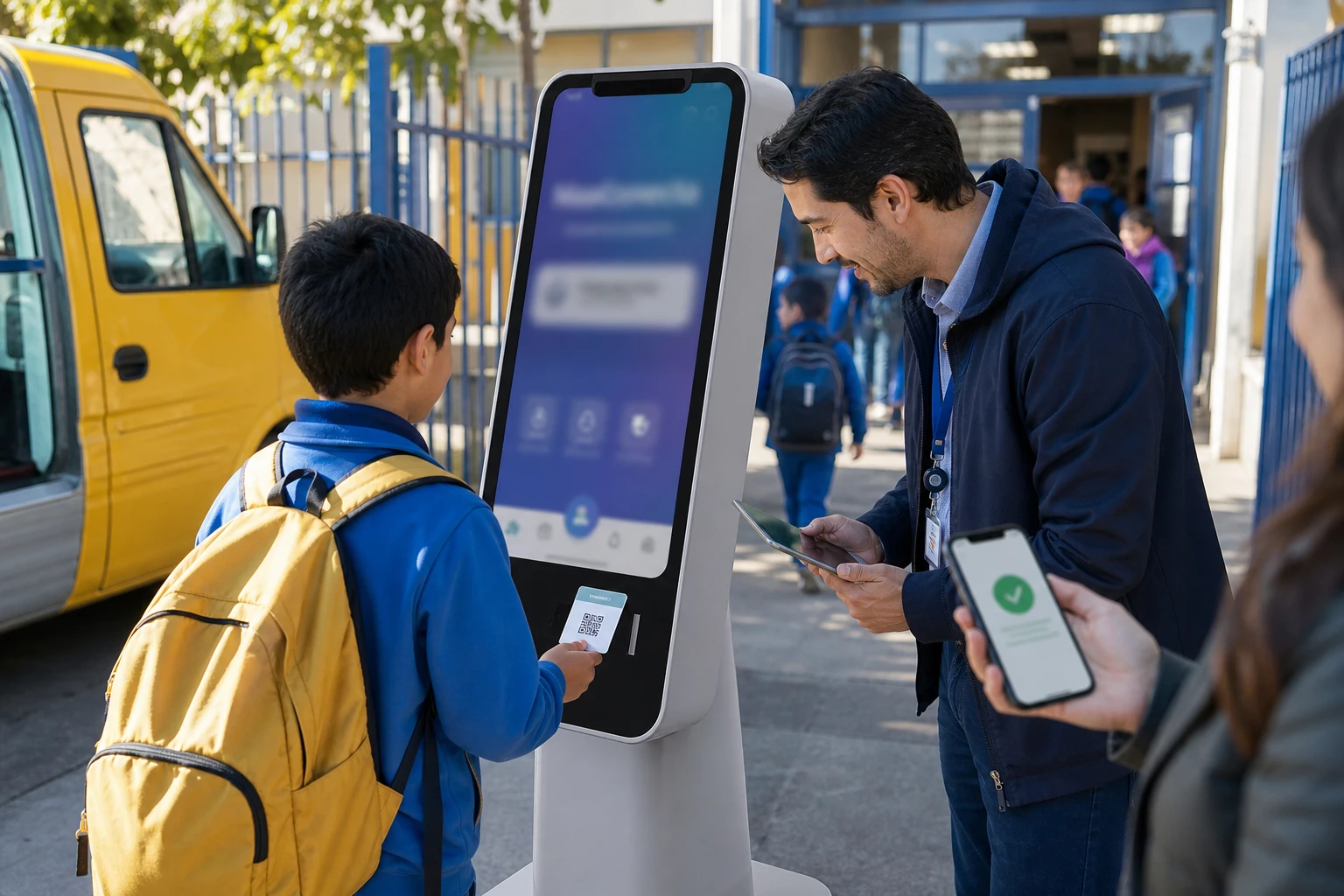
NoaConecta’s core is perimeter logistics. Students scan a QR or pass a totem on arrival. The system stamps the time, flags chronic lateness patterns and pushes a notification to the parent app. Early exits require digital authorization from a registered guardian. The inspector checks the adult against the live list before the child leaves. The parent gets the exit alert.
Transport modules record which students board which vehicle at dismissal. Responsibility hands off cleanly between school and driver. Route data can later feed fuel and utilization reports.
| Module | Core action | Claimed operational gain |
|---|---|---|
| Access control | QR or totem entry logging | Pattern detection for inspectors |
| Parent app | Push alerts + digital pickup OK | 90% fewer secretariat calls |
| Early exit validation | Authorized adult check | Zero unauthorized release incidents |
| Transport handoff | Boarding manifest | 30% fuel savings via real attendance |
| Digital Quíntuple | School accident form | Cloud backup linked to student file |
The company also lists 80% reduction in unjustified absences and more than 15 administrative hours saved per week once the paper shuffle ends. Those figures come from its own product materials. Independent audits are not yet public.
A separate transport fleet management tier targets the operators themselves: vehicle docs, driver pay, fuel, client payments and daily manifests for roughly 30,000 Chilean pesos a month for up to three vans, with a free trial week.
It Rides Beside the ERP, Not Over It
Developers built NoaConecta as specialized microservices. It does not try to replace the academic or finance systems schools already run. That choice lowers the adoption barrier. Directives avoid the risk of migrating grade books or rewriting academic workflows just to fix the front door.
The NoaConecta platform overview describes the product as a complementary operational layer focused solely on physical movement. Schools keep their ERP. They bolt on perimeter control and parent visibility.
This matches a broader maturation pattern. LatAm EdTech market size reached roughly 11.4 billion USD in 2025 on some tallies, with double-digit CAGRs projected through the early 2030s. HolonIQ’s recent regional lists still show heavy weight in K-12 systems and workforce tools. The next incremental dollars often go to the pain points the first wave left untouched.
Privacy Architecture and the Audit Trail
Student location and routine data are sensitive. NoaConecta runs each school on its own isolated database rather than a shared multi-tenant pool. Role-based access limits what a driver, inspector or parent can see. Traffic is encrypted. The company states it follows Chilean personal-data standards for minors.
The same immutable logs that calm parents also serve regulators. Exact exit time, reason and verified adult identity create a ready file for any contingency, emergency or legal review. That directly supports the documentation expectations inside national school-safety policy.
- Isolated databases per school, not shared tenancy
- Role controls so drivers see only their routes
- Encrypted transport of minor-related records
- Exportable history if a school later leaves the service
Setup carries a one-time implementation fee that covers database creation, initial data load and staff training. Ongoing cost is a per-school subscription that includes future modules. No per-user or premium-module upcharges are listed.
Who Notices First
Inspectors and reception teams regain hours previously spent answering “Has she arrived?” calls and hunting paper notes. Parents get push certainty instead of group-chat noise. Drivers stop empty runs when a guardian has already collected a child. Direction teams gain a live campus headcount and cleaner compliance files.
Similar parent-facing tools have appeared in other niches. A parent-facing health tracking app showed how quickly families adopt simple mobile alerts when the stake is a child’s status. NoaConecta applies the same reflex to the school day itself.
Transport operators form a second customer base. Many still run on notebooks and hope the monthly cash adds up. Digital manifests and cost dashboards turn that guesswork into visible unit economics.
The Wider Ops Layer Opening Across LatAm
Full academic platforms solved the classroom and the back office. The front door, the bus yard and the after-hours release desk remained manual. That gap is now visible enough for specialized SaaS to raise capital and sell national coverage.
Chile’s relatively high digital readiness makes it a logical first market. The same analog residue exists across the region wherever private and subsidized schools manage large daily student flows. Early movers that stay strictly complementary can ride existing ERP installs rather than fight them.
Regional deep-tech and vertical SaaS efforts keep surfacing in the same pattern: find the workflow the first digital wave skipped, then own it. Regional deep-tech startup pushes follow similar specialization logic even when the domain differs.
NoaConecta’s own materials stress the shift from “digitizing grades” to “solving critical operational areas the traditional software industry had not addressed.” The national launch is the test of whether enough schools feel the remaining pain to pay for a second system.
For now the product is live, the parent app is shipping alerts, and the totems are logging arrivals. The notebooks are optional.
Schools that still run the gate on paper will keep answering the same phone calls tomorrow morning.