Google’s Made by Google event lands in New York on August 12 at 6 p.m. ET, and the Pixel 11 Pro Fold is expected to headline the foldable slot at a leaked starting price of $1,899 for the 256GB model. That is a $100 jump from the prior generation and a direct challenge to Samsung’s freshly refreshed Z Fold line.
The bet is clear: pair the industry’s first smartphone 2nm chip with deeper Gemini Intelligence and hope buyers overlook a still-conservative camera stack and battery. The same leak cycle that fixed the price also locked in the rest of the hardware brief, so the keynote has little room to surprise on paper. What remains open is whether the process lead and on-device AI can reframe a product that still trails rivals on raw camera hardware and cell size.
August 12 in New York Sets the Stage
Google confirmed the hardware event weeks ago through media invites. The keynote runs later than usual, 3 p.m. PT / 6 p.m. ET, from New York for the second straight year. Expect the full Pixel 11 family, Pixel Watch 5, and the Pro Fold.
Retail for the foldable itself is widely expected to trail the rest of the lineup into October, matching past patterns. Pre-orders should open the day of the show. That staggered cadence keeps the slab models in the spotlight first while the Fold builds pre-order momentum without competing for the same launch-week inventory.
- $1,899 US start for 256GB Pro Fold per detailed leak
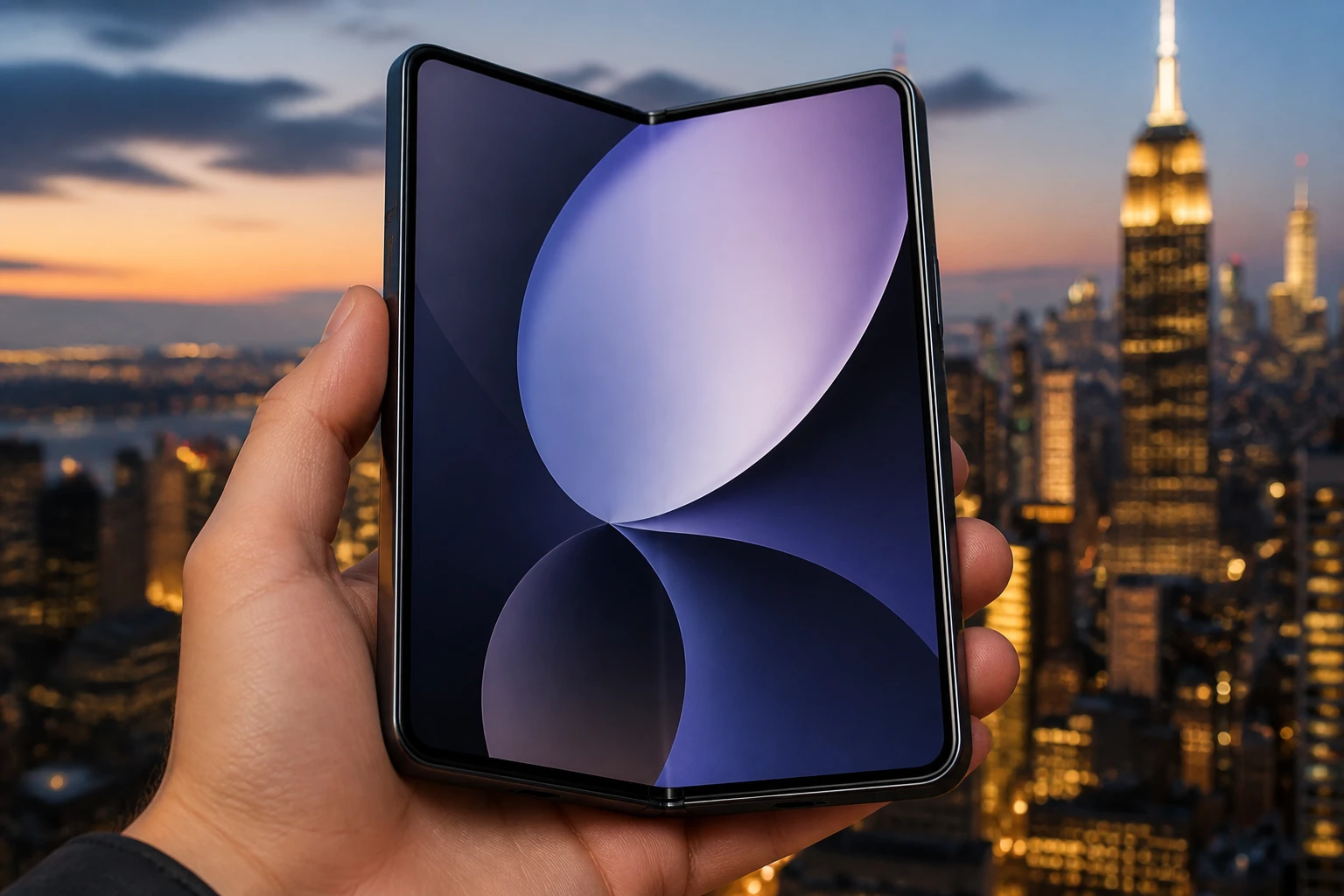
- 8-inch inner OLED and 6.4-inch cover, both 120Hz
- Tensor G6 on TSMC 2nm with Titan M3
- India estimates cluster near ₹1,81,999 for the base model
Colors in the rumor mill include Pine and Midnight Haze. Availability in India is expected through Flipkart pre-orders and later Google Store plus partner outlets. The India figure sits inside a wider chatter band that already stretches from the mid-₹1,60,000s to nearly ₹2 lakh, a range that will test how much local financing can soften the sticker.
Staging the show in New York for a second year also keeps the audience closer to US media and creator circuits that drive early foldable coverage. The later start time lines up with prime evening windows on the East Coast and still leaves afternoon slots open on the West Coast for live reaction.
What the Big Leak Lists
A comprehensive leak reported by Android Authority, drawing on Android Headlines and known leaker channels, left little to chance for the entire Pixel 11 series. For the Pro Fold the numbers look like this.
| Spec | Pixel 11 Pro Fold (rumored) | Notes |
|---|---|---|
| Inner display | 8-inch foldable OLED, 120Hz | Tablet-like canvas |
| Cover display | 6.4-inch OLED, 120Hz | Wider phone feel when closed |
| Chipset | Tensor G6 + Titan M3 | 2nm process claimed |
| RAM / Storage | 12GB or 16GB / 256GB-1TB | Same options as Pro XL |
| Battery / Charge | ~4,806 mAh / 30W wired + Qi2 | Modest capacity for the size |
| Rear cameras | 48MP main, 10.5MP ultrawide, 10.8MP 5x periscope | 30x Super Zoom via ML |
| Front cameras | 10MP cover + 10MP inner | Dual selfies |
| US price start | $1,899 (256GB) | $100 above prior Fold |
Software ships with Android 17 and Gemini Intelligence for on-device AI tasks. A side-mounted fingerprint reader sits in the power button. Facial unlock is also expected. Some reports conflict on whether the “Pixel Glow” notification light reaches the Fold.
The dual 10MP selfie setup keeps cover and inner shooting parity simple, while the rear trio leans on the 5x periscope and machine-learning Super Zoom to stretch reach. Storage parity with the Pro XL removes one common foldable penalty at the base tier. The ~4,806 mAh cell and 30W wired ceiling remain the clearest hardware compromises on the sheet.
The Real Wager Is the 2nm Node
Performance history has dogged every Tensor generation. Google is now positioned to ship the first phones on TSMC’s 2nm process, ahead of Apple’s iPhone 18 cycle and next-wave Snapdragon and Dimensity parts.
Reports from Taiwanese outlets, amplified by 9to5Google, say the Tensor G6 first on TSMC 2nm gives Pixel roughly a month of process exclusivity. That matters for thermals and sustained AI workloads more than peak synthetic scores.
Claimed architectural pieces include a 1+4+2 core layout with high-clock Arm cores and an improved but still PowerVR-based GPU. The practical test is whether everyday Gemini features, camera processing, and multitasking on the big inner screen stay cool and last longer than past Folds.
- First smartphone silicon on full 2nm
- Titan M3 security coprocessor carry-over
- Modem shift rumors toward better 5G stability
- On-device AI emphasis under Gemini branding
If the node delivers the efficiency jump, the Fold becomes a stronger daily driver. If it does not, the $1,899 tag looks steeper. Sustained loads on an 8-inch panel punish weak thermals faster than slab phones do, so the process lead has to show up in hour-two and hour-three behavior, not only in first-run benchmarks.
The Titan M3 carry-over keeps the security story continuous while the modem rumors, if they land, would address another recurring Tensor complaint. Together those pieces frame the G6 less as a peak-score chase and more as a durability play for AI features that stay on device.
How Earlier Pixel Folds Set the Pattern
Google entered foldables late and expensive. The original Pixel Fold launched at $1,799 with Tensor G2 and drew criticism for thickness, hinge feel, and performance relative to Samsung. The Pixel 9 Pro Fold improved the package and still opened near that mark.
- June 2023, Original Pixel Fold debuts at $1,799 with Tensor G2, 7.6-inch inner panel, mixed early reviews on bulk and chip.
- August 2024, Pixel 9 Pro Fold launch details bring a larger display and refined design while keeping premium pricing.
- 2025, Pixel 10 Pro Fold holds the $1,799 starting point and adds Tensor G5 efficiency gains plus better durability claims.
- August 2026, Pixel 11 Pro Fold leaks point to $1,899 and the 2nm jump, still trailing full retail into October.
Each cycle the hardware polished up while the chip lagged flagship Snapdragon rivals in raw multi-core and graphics. Buyers who stayed did so for camera software and clean Android. That loyalty is thinner at foldable prices.
The pattern is consistent: display and hinge work improve, starting price holds or creeps up, and the silicon story arrives a half-step behind the wider flagship field. The 2nm claim is the first clean break from that cadence on the process side. Whether buyers treat it as decisive will show in October sell-through more than in August reaction clips.
Samsung Already Reset the Foldable Shelf
Samsung’s Galaxy Z Fold 8 series is already in market. The standard wider Z Fold 8 starts around $1,899 and the Ultra higher. Early reports say the new form factor is selling faster than expected. Thinness and battery improvements remain Samsung’s strongest cards.
Google’s inner 8-inch panel and wider closed aspect ratio chase a more phone-like folded experience, the same direction Samsung is exploring. Camera hardware on the leaked Pro Fold looks closer to last year’s mid-tier than the multi-50MP setups on the Pixel 11 Pro and Pro XL. That gap is where the software bet must pay off.
Side-by-side, the two brands now price within a few dollars of each other at the entry foldable tier. Google’s differentiator is the process lead and the depth of Pixel exclusive software features that still arrive first on its own silicon.
| Model | Entry price signal | Notable lean |
|---|---|---|
| Pixel 11 Pro Fold (leaked) | $1,899 (256GB) | 2nm Tensor G6, Gemini depth |
| Pixel 10 Pro Fold (current) | $1,799 | Prior efficiency step, same base tier |
| Galaxy Z Fold 8 (standard) | Around $1,899 | Thinness, battery gains already shipping |
Matching the Samsung floor removes the old “cheaper Pixel foldable” talking point. The contest shifts to which software stack and which sustained performance profile feel worth the shared premium once both devices sit in the same store aisle.
Who This Phone Is For
The Pro Fold remains a niche product. At $1,899 it sits above most flagship slabs and demands buyers who want the big canvas for multitasking, reading, or light creative work more than pure pocketability or camera hardware supremacy.
India pricing chatter around ₹1,65,000 to ₹1,99,990 puts it in rarefied territory. Pre-orders via Flipkart on launch day and later Google Store channels will test demand quickly. Financing partners such as Bajaj outlets are expected once retail stock arrives in October.
For context on the broader lineup, the same leak cycle that detailed the Fold also set the Pixel 11 Pro XL against Galaxy S26 Ultra conversation in motion. Storage starts at 256GB across the board this year, another small but real shift for buyers watching value.
Crowd reaction on X already circles the same open questions. One widely noted take argued that software features alone no longer close sales when cameras, sustained performance, thermals, and battery trail the top of the market and pricing stays aggressive. That is the exact pressure the 2nm Tensor must relieve.
With Google Pixel 11 pro launching, Google has a lot to prove with the Tensor G6. Because software features alone won’t sell your phones anymore… Your cameras are no longer the best. You don’t have the best performance or thermals. You don’t even have the best battery… And not to mention your terrible pricing.
That post from @cosmologist123 captured a common thread running through early discussion of the whole series.
The target buyer already accepts foldable trade-offs on thickness and price. What that buyer will not accept is a repeat of past Tensor thermal walls while running split apps on the inner panel. Gemini features that stay responsive with the screen open become the daily proof point, not the keynote demo reel.
The Camera Gap Hands Work to Gemini
The leaked rear stack pairs a 48MP main with a 10.5MP ultrawide and a 10.8MP 5x periscope. That is a clear step below the multi-50MP arrangements expected on the Pixel 11 Pro and Pro XL. Zoom reach still stretches to 30x Super Zoom through machine learning, and the dual 10MP front cameras keep selfie duty covered on both sides of the hinge.
Hardware alone will not win a camera comparison against Samsung’s current Fold line or against Google’s own slab flagships. The path left open is computational. Gemini Intelligence shipping with Android 17 is positioned to own on-device tasks that used to hit the cloud or simply stall.
- 48MP main rather than a multi-50MP flagship trio
- 10.5MP ultrawide and 10.8MP 5x periscope as the supporting pair
- 30x Super Zoom framed as an ML feature, not glass
- Matching 10MP cameras on cover and inner displays
If those pipelines stay fast and cool on the 2nm chip, the Fold can still feel like a Pixel in the moments buyers care about. If processing lags or heats the hinge area under burst or zoom work, the hardware gap becomes the story again. The software bet and the process bet are therefore the same bet viewed from two sides.
October Retail Will Test the Pre-Order Wave
Pre-orders are expected to open on August 12 while full retail stock slips into October, the same stagger used on earlier Pixel Folds. That gap gives Google weeks of software polish and review-unit feedback before wide availability. It also leaves a long window in which Samsung’s already-shipping Z Fold 8 can keep collecting buyers who do not want to wait.
India channels follow a similar rhythm: Flipkart for the first wave, then Google Store and partner outlets, with Bajaj financing once units land. The ₹1,81,999 base estimate and the broader ₹1,65,000 to ₹1,99,990 chatter band will meet real cart behavior only when delivery dates firm up.
Storage starting at 256GB across the Pixel 11 family removes one historic complaint about base configurations. It does not change the Fold’s place as the premium outlier in the lineup. Buyers who configure 16GB RAM and higher storage tiers will push the out-the-door number well past the headline $1,899, tightening the value case further.
The staggered calendar therefore does double duty. It protects launch-week focus for the slabs and Watch, and it turns October into a second verdict after the August claims have had time to meet hands-on use.
The Numbers Google Must Hit
Compare the leaked Pro Fold with the still-current current Pixel 10 Pro Fold pricing and the new Samsung floor. A $100 increase buys a process-node leap and another year of Gemini polish. It does not buy a dramatically larger battery or a camera suite that matches the Pro slab models.
Recent industry chatter has also flagged higher foldable costs and storage shifts across brands. Those same pressures show up in recent foldable battery and storage trends that make every milliamp-hour and every gigabyte of base storage more visible to buyers.
If Tensor G6 delivers cooler sustained performance and longer real-world battery on the big screen, the $1,899 ask becomes defensible for the core Pixel audience. If the chip still throttles under heavy load or the cameras feel a generation behind, the Fold stays a beautiful niche device that sells mainly on brand loyalty and AI demos.
August 12 will settle the marketing claims. October retail will settle the rest.