Ford’s next electric vehicle will run Apple Maps as its built-in navigation system starting in 2027, and for the first time, no iPhone will need to be anywhere in the car. Apple and Ford confirmed the pairing this week, built on a new piece of software called MapKit for Automotive, with Ford as its first customer anywhere in the industry.
The deal was steered into production by Doug Field, the Ford executive who once ran engineering on Apple’s own car project before that project was scrapped and he left for Detroit. What Apple could not ship as a vehicle, it just shipped as software, through the door of the person who tried hardest to build the original.
A Map That Needs No Phone
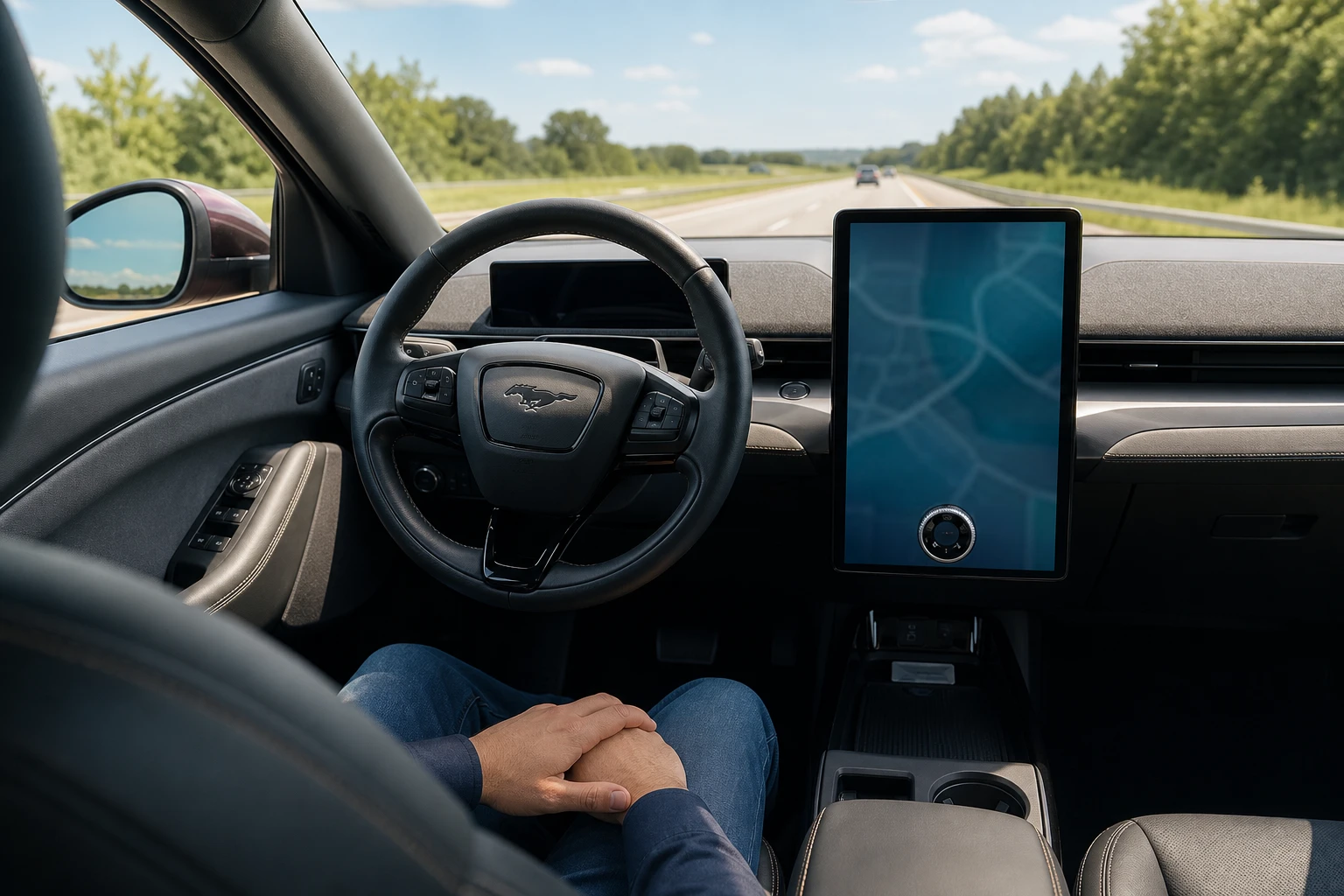
The change is independence. Apple Maps in cars has always run through CarPlay, mirroring an iPhone’s screen onto the dashboard. MapKit for Automotive, a new software development kit, drops that requirement: Ford’s engineers can build Apple’s map data straight into the car’s own displays, styled to match Ford’s own instrument cluster rather than an iPhone’s.
Drivers get natural language destination search, turn-by-turn directions, live traffic and incident data, and detailed place cards, all without pairing a phone. The EV-specific layer plans charging stops around the car’s battery level and automatically preconditions the pack, warming or cooling it, before a fast charger so it accepts a quicker charge.
Apple says the system will not tie location or activity data to individual identities inside the car, a privacy line the company has held on iPhone since Maps launched. Ford’s enthusiasm came straight from the top.
We’re proud to embed Apple Maps’ navigation and mapping technology directly into our Universal Electric Vehicle Platform.
Jim Farley, Ford’s chief executive, said that in a statement confirming Ford as MapKit for Automotive’s first customer. Ford’s own announcement laid out the full feature set arriving in 2027.
The Engineer Who Once Ran Apple’s Own Car Project
Doug Field ran engineering on Project Titan, Apple’s attempt to build its own car, before leaving the company. He joined Ford in September 2021 as chief advanced technology and embedded systems officer. Apple kept developing Titan without him for three more years, then canceled the project entirely in 2024, having never sold a single vehicle under its own name.
Ford has not issued a personal statement from Field about this specific deal. Apple’s mapping software is now heading into production on a dashboard, just not one wearing an Apple logo, under an executive who once tried to put that logo on the hood himself.
Two Ways Into the Dashboard
Google still leads inside the car today. Many brands run Android Automotive as their base operating system, bundling in Google Maps, the Play Store and Gemini voice support as a native experience rather than a mirrored phone screen. Ford itself has used Android Automotive as its base system for some time.
Neither company has said whether that continues once Apple Maps becomes Ford’s primary navigation display, or whether Apple Maps simply sits on the existing Android foundation. The distinction matters more than it looks. Android Automotive’s open-source base is free to any automaker. The part Google actually charges for is Google Automotive Services (GAS), the licensed bundle covering Maps, Play and Assistant, sold on top of that free layer. One market-research estimate values the Android Automotive market at $18.6 billion in 2025, growing toward $74.3 billion by 2034. If Ford or any other automaker keeps the free open-source base while swapping in Apple’s licensed maps instead of Google’s, the software Google gives away stays in the car and the software it sells does not.
| Detail | Apple MapKit for Automotive | Google Android Automotive (GAS layer) |
|---|---|---|
| Needs a paired phone | No, standalone in the car | No, native to the operating system |
| What automakers pay for | Terms undisclosed, bundled into Ford’s software deal | Google Automotive Services fees on top of a free base |
| Current footprint | One announced partner, Ford, from 2027 | Used across many existing brands today |
| Headline 2026 feature | EV routing with automatic battery preconditioning | Google Maps with built-in Gemini voice support |
Ford is, by every account so far, the first automaker to sign on to Apple’s new kit, which means the deal doubles as a template Apple can shop to anyone else.
Detroit Is Already Rethinking the Whole Model
Ford is not the only automaker questioning smartphone mirroring. General Motors announced in October 2025 that it would phase out Apple CarPlay and Android Auto entirely across its lineup by 2028, betting drivers will accept its own infotainment system, and its own subscription revenue, instead. Mercedes-Benz, Audi and BMW took the opposite route on Apple’s newer offer: they kept standard CarPlay but declined CarPlay Ultra, Apple’s deeper system that takes over the entire instrument cluster, unwilling to hand over that much control of their own screens.
- General Motors: dropping CarPlay and Android Auto entirely by 2028, in favor of its own paid infotainment stack.
- Mercedes, Audi and BMW: keeping standard CarPlay, rejecting Apple’s fuller CarPlay Ultra takeover of the instrument cluster.
- Ford: adding standalone Apple Maps natively while still supporting CarPlay, and likely Android Auto too.
That wariness about depending on a phone at all shows up beyond cars, too. Tesla’s own brief rollout of CarPlay ran into trouble this year when it paused the feature over a critical iOS bug, a reminder that phone-tethered systems inherit phone-side problems. Google Maps has its own defectors, too: Ola, the Indian ride-hailing company, walked away to build its own navigation stack, choosing full control over a licensed dependency, the same trade-off automakers are now weighing with their own dashboards.
BlueCruise Gets a New Set of Eyes
Ford plans to use the road-level detail inside Apple Maps for more than turn-by-turn directions. Latitude AI, Ford’s autonomous-driving unit, will fold that mapping data into an upgraded version of BlueCruise, the hands-free highway system Ford already sells.
BlueCruise carries real regulatory weight in Britain. Britain’s Department for Transport (DfT) approved it as the first hands-off, eyes-on system legally cleared for UK motorways, and it remains the only such system approved there.
- 2,300 miles of UK motorway are designated BlueCruise Blue Zones, where drivers can legally take their hands off the wheel.
- 64 million hands-free miles have been logged on BlueCruise in the US and Canada.
- 17.99 British pounds (roughly $23) a month is the current UK subscription price for BlueCruise on the Mustang Mach-E.
Feeding Apple’s mapping data into a government-approved hands-free system raises the stakes on accuracy well past finding the nearest coffee shop. It is also unclear who handles the voice side of that natural language search. Bundling in Siri seems unlikely; Ford already has its own AI assistant, unveiled earlier this year, as the likelier candidate. Siri itself has stayed deliberately cautious about chasing constant engagement, a stance Apple has kept even as rival assistants lean harder into it.
Does Ford Still Support Apple CarPlay?
Yes. Ford confirmed it will keep supporting standard Apple CarPlay in vehicles built on the new platform, and it is expected to keep Android Auto available too. Apple Maps’ standalone mode adds to the dashboard; it does not force drivers to give up a mirrored iPhone if that is what they prefer.
What changes is the experience once a phone disconnects. Drivers have long complained about the jolt of switching between a mirrored CarPlay screen and a car’s own native software, two different visual languages sharing one display. A built-in Apple Maps mode native to Ford’s own interface removes that seam, without forcing anyone to give up CarPlay altogether.
Ford’s new EV, built on its Universal Electric Vehicle Platform, is due in 2027 with a sticker price near $30,000. It will carry the distinction of being the first production vehicle anywhere running Apple’s mapping software without a phone in sight, a distinction that will not last long if other automakers follow the template Ford just signed.
Frequently Asked Questions
Is Apple Maps Replacing CarPlay Ultra in Ford’s New EV?
No, and the two are not the same thing. Ford has not said whether it will support Apple’s deeper CarPlay Ultra system, the version Mercedes, Audi and BMW turned down. The new Apple Maps integration is a separate, native layer built with MapKit for Automotive, not CarPlay Ultra wearing a Ford skin.
Will Ford Drop Android Automotive Now That It Has Apple Maps?
Neither company has confirmed that either way. It is possible the vehicles keep Android Automotive’s free open-source base as the underlying operating system while running Apple’s maps as the primary navigation app on top, similar to how a device can run non-default apps on an open platform.
Could Other Car Brands Get Apple’s MapKit for Automotive Next?
Ford is the first named partner, but MapKit for Automotive is built as a software kit Apple can license industry-wide, not a Ford exclusive. Coverage of the announcement has already flagged Ford’s deal as a template other brands could copy if it proves popular with drivers.
What Will Ford’s New Electric Vehicle Cost?
Around $30,000, positioning it as one of Ford’s most affordable EVs when it arrives in 2027 on the Universal Electric Vehicle Platform, undercutting the Mustang Mach-E, where BlueCruise itself currently costs 17.99 pounds, or roughly $23, a month as an add-on subscription.