A proposed NZ$3.5 billion computing plant on a paddock outside Invercargill would become New Zealand’s second-biggest electricity user, a rank the country has handed to only one facility for six decades. Datagrid, a Singapore-based data centre developer, wants to draw 280 megawatts of power for a 78,000-square-metre plant at Makarewa, enough to place it directly behind the Tiwai Point aluminium smelter in the national pecking order.
Resource consent for the project is already granted. Whether the public ever really had a say in that decision is the question now driving a national argument over trust, power and who benefits from New Zealand’s push into artificial intelligence. That gap between legal consent and public confidence is what Dr Kerry McInerney, a University of Auckland lecturer in AI who is of Ngāti Ruanui descent, is trying to measure, according to reporting by Waatea News, the Māori radio station that first detailed her research.
Makarewa Would Overtake Every User but One
Datagrid’s plant would sit second only to the Tiwai Point smelter on New Zealand’s list of single-site power users, consuming an estimated 6 percent of the country’s total annual electricity demand. Tiwai Point, run by New Zealand Aluminium Smelters and majority owned by Rio Tinto, draws about 12 to 13 percent on its own.
| Measure | Datagrid’s Makarewa Plant | Tiwai Point Smelter |
|---|---|---|
| Power draw | 280 megawatts | 572 megawatts |
| Share of NZ electricity demand | About 6 percent | About 12 to 13 percent |
| Owner | Datagrid (Singapore) | New Zealand Aluminium Smelters, majority owned by Rio Tinto |
| Annual economic contribution | About $60 million to GDP, by Datagrid’s own estimate | About $400 million to the Southland economy |
| Status | Consented; construction due to start this year | Operating, tied to demand-response contracts with the national grid |
Datagrid says the plant will generate hundreds of millions of dollars a year in data-service exports once fully built, with construction beginning in 2026, initial operations targeted for 2028 and full buildout stretching into the next decade.
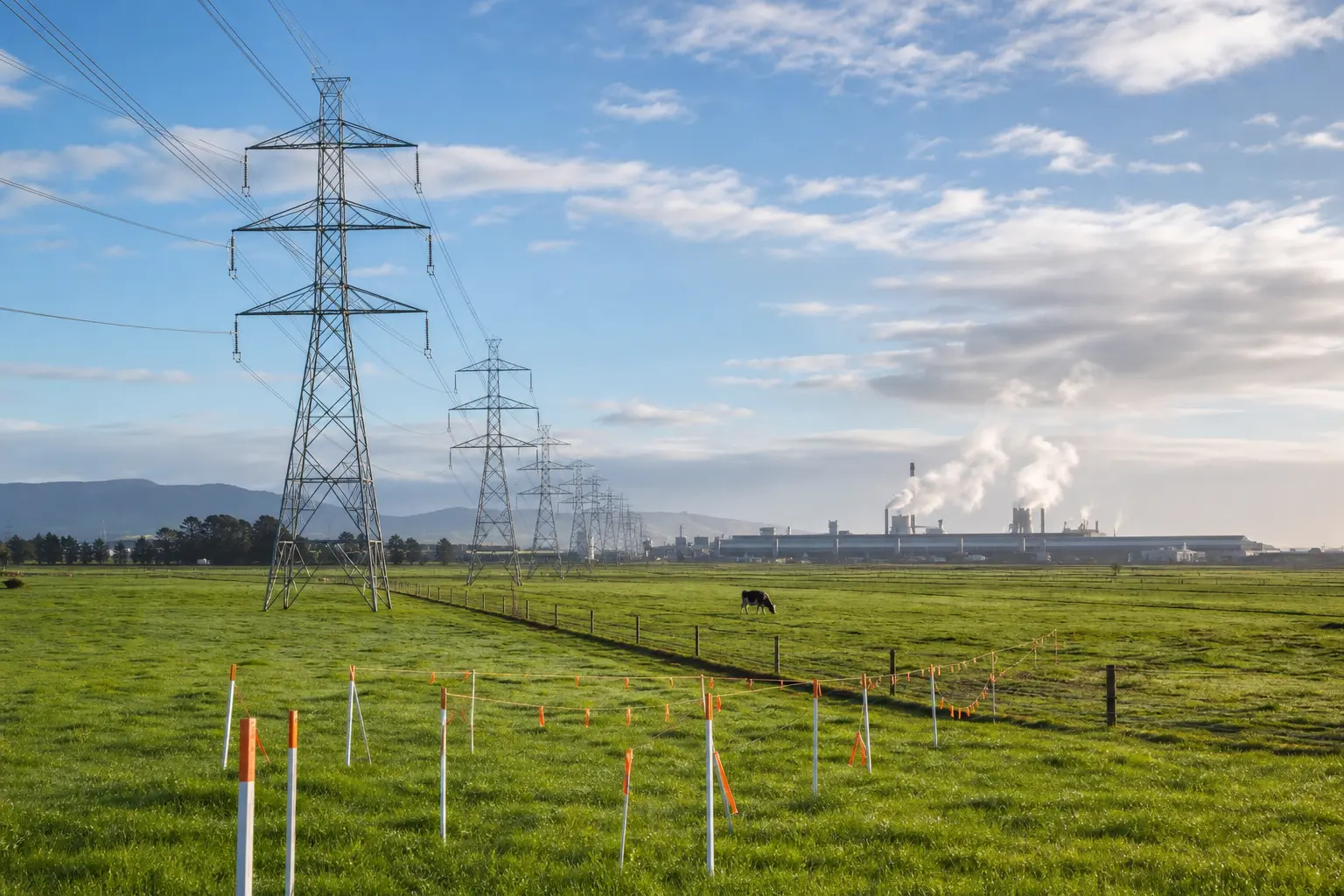
The Smelter That Already Taught Southland This Lesson
Six Decades of On-Again, Off-Again Threats
Tiwai Point has spent years as the subject of closure threats, renegotiated power contracts and public subsidy fights. A NZ$2 billion certainty deal aimed at keeping the smelter running drew relief from some quarters and sharp criticism over the subsidy’s size from others, according to RNZ.
The smelter has also become what the NZ Herald called the country’s biggest battery: under demand-response contracts, NZAS can free up to 185 megawatts for the national grid during shortages by cutting its own production. That arrangement now shapes how Transpower manages winter power crunches nationwide.
A Battery Now, but at What Price
None of that leverage came free. Rio Tinto’s smelter contributes about NZD 400 million a year to the Southland economy and 6.5 percent of regional GDP, a figure regularly cited to justify its power deals even as households elsewhere absorb price pressure tied to the same negotiations. Datagrid is proposing to become Southland’s second such anchor tenant, with a fraction of the jobs and a much shorter track record.
Who Gets to Say Yes to a Hyperscale Plant?
The Makarewa application moved through the government’s Fast-Track Approvals process, filed in official records under the name Datagrid Sustainable Data Centre Park. Because the proposed activities were assessed as having no more than minor environmental effects, the general public did not receive standard submission rights, reporting by Te Ao Māori News shows.
The application was still notified to, and approved by, a specific set of Murihiku iwi bodies with kaitiaki status, the principle of guardianship over land and water. Those notified included:
- Te Ao Mārama Inc, representing Murihiku’s southern rūnanga on resource management matters
- Te Rūnaka o Waihōpai
- Te Rūnanga o Ōraka-Aparima
- Te Rūnanga o Awarua
- Te Rūnanga o Hokonui
- The Tangata Tiaki of the Ōreti Mātaitai
- Te Rūnanga o Ngāi Tahu
Datagrid has held in-person meetings with those rūnanga and with Te Ao Mārama Inc over resource management issues. It did not send anyone to the public meeting at Invercargill’s Workingmen’s Club, where hundreds of Southlanders crowded in and some were left standing in the hallway, 1News reported.
Swarbrick’s Pause Meets Luxon’s Pitch
That gap between iwi-level engagement and public silence is now feeding a national fight. The Green Party has called for a one-year moratorium on consenting new large-scale AI data centres, announced by co-leader Chlöe Swarbrick after the Southland meeting.
Right now, AI data centres can be consented behind closed doors, with no community input.
Swarbrick made the comment while framing the proposed freeze as breathing room rather than a ban. “A one-year pause gives us time to get this right,” she said, part of the Green Party’s platform unveiled at its Auckland conference this month.
Prime Minister Christopher Luxon dismissed the idea as “alarmist,” warning it would deter investment before it arrived. Data centres, he said, “will need to bring additionality to our energy system and electricity system,” arguing that a one-year pause on consenting new data centres would cost the country a natural advantage: “a high renewables mix, with plenty of land, access to water, temperate climate.”
Social Licence Needs More Than a Permit
Dr McInerney’s research, done through the University of Auckland’s School of Computer Science and her role as an associate fellow at Cambridge’s Leverhulme Centre for the Future of Intelligence, focuses on what conditions let AI infrastructure operate without ongoing public resistance. She previously worked at University College London and the AI Now Institute, and her published work on AI ethics and inequality centers on how governance decisions affect who bears the cost of new technology.
Social licence describes the ongoing public acceptance a project needs beyond its formal permits. Researchers in the field increasingly argue that acceptance depends on early engagement, transparency, accountability and evidence that a host community shares the long-term benefit rather than just the environmental bill. Makarewa is testing whether a fast-track consent that satisfied statutory notification rules can still earn that broader confidence.
For Māori specifically, the stakes reach further than one plant. Large-scale developments touch kaitiakitanga, Treaty relationships and decisions about freshwater and whenua that will outlast any single resource consent, raising questions about data sovereignty alongside the more familiar arguments over power and water.
What Southland Still Wants Answered
Some of the project’s numbers remain contested even now.
- 1,200 construction jobs are estimated during the build, dropping to about 50 permanent roles once the plant is operating.
- $60 million a year is Datagrid’s own estimate of the plant’s addition to GDP, on top of what it calls hundreds of millions in annual data-service exports.
- 220 million litres of water a year is what resource consents allow the site to draw, according to BusinessDesk’s review of the consent file, a volume not addressed in the company’s public cooling claims.
Datagrid maintains the plant needs no groundwater at all, arguing that Southland’s cool climate, averaging 9 to 10 degrees Celsius annually, lets it rely on free air cooling instead of water-hungry systems used elsewhere. The long industrial history at Tiwai Point suggests those technical assurances rarely end a region’s argument over a mega power user once the plant is running.
A redacted public submission on the fast-track file shows at least some Southlanders tried to weigh in through the only channel the process allowed. Construction, if it holds to schedule, starts this year. The consent for those 280 megawatts is already signed. Southland’s trust in the deal is still being negotiated.