Two former rubbish tips in Warrington will spend the next thirty years generating income as registered nature habitat banks, the borough council announced this month. Bewsey Tip and Gatewarth Tip, both capped sites already designated Local Wildlife Sites, now sit on Natural England’s Biodiversity Gain Site Register, the first such listings anywhere in the borough.
The launch lands days before a nationwide exemption strips the biodiversity net gain requirement from an estimated half of England’s residential planning permissions, shrinking the very pool of developers Warrington just started selling to.
Two Former Tips Join Natural England’s National Register
Warrington Borough Council confirmed the registration of Bewsey Tip and Gatewarth Tip as habitat banks, the council’s own announcement shows. Spanning more than 12 hectares between them, the two sites will now generate Biodiversity Net Gain (BNG, a policy requiring most developments to leave measurably more habitat than they found) units that developers can buy to offset habitat loss elsewhere.
Councillor Una Gillham, the council’s cabinet member for climate change, sustainability and the environment, called the listing a milestone.
For the first time, developers can invest in biodiversity projects right here in the borough, helping to create and improve habitats that will benefit wildlife for decades to come.
Gillham made the comment in the council’s statement announcing the registration. Money raised from unit sales will be ringfenced for thirty years of ecologist-led enhancement, management and monitoring at both sites, aimed at maximising what wildlife the land can support.
Why a Rubbish Tip Qualifies as a Wildlife Site
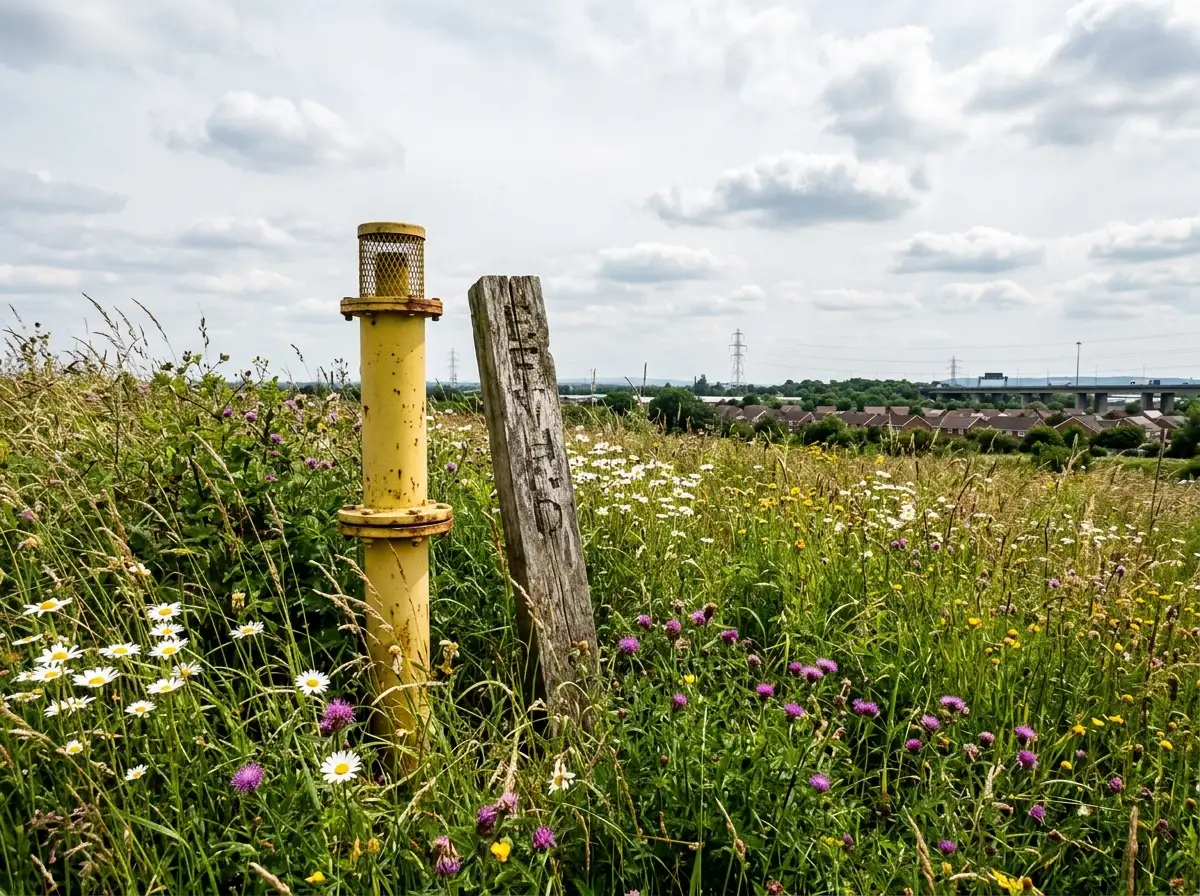
Bewsey and Gatewarth sit between Liverpool and Manchester in Cheshire, on land the council has owned for years as closed tips. Capped landfill in England is typically left undisturbed for decades because methane venting and ground settlement rule out most redevelopment. Left alone that long, rough ground reverts to unmanaged grassland, exactly the kind of habitat that earns a Local Wildlife Site tag from the local record centre.
The units now on sale at both sites are classified as Neutral Grassland, a category for rough, unimproved or semi-improved grassland that lacks the rarity of ancient woodland or wetland but still carries real ecological value. It is also, by national data, the most heavily traded category on the entire BNG market.
What The Council Owned Before This
Before this registration, Warrington had no public or private habitat banks of any kind. Developers building in the borough who could not create enough habitat on their own sites had to buy units from banks elsewhere in England. The council says that meant both biodiversity gains and long-term investment were lost to other areas, money that never touched Warrington ground.
How a Ten Percent Rule Created a New Market
The Environment Act 2021 set the underlying rule. Most new developments in England must now deliver a minimum 10 percent increase in biodiversity value, measured on a standardised metric before and after building. Government guidance on the requirement lays out a strict order of preference: gains on-site first, then off-site within the same local area, and only then units bought from a registered habitat bank anywhere in England.
That order of preference is what turned old grassland into a tradeable commodity. Prices vary sharply by habitat type, and Warrington’s Neutral Grassland units sit at the cheaper, high-volume end of the market.
| Habitat Distinctiveness | Example Habitat | Typical Unit Price (2026) |
|---|---|---|
| Low to medium | Neutral or other grassland | £17,000 to £35,000 (roughly $22,000 to $45,000) |
| Medium to high | Hedgerow | £30,000 to £45,000-plus |
| High | Woodland or traditional orchard | £40,000 to £90,000-plus |
| Very high | Watercourse | £100,000-plus |
Industry pricing trackers also show a regional split. The North of England, where Warrington sits, has averaged around £125,013 a unit against roughly £144,866 in the South as of a February 2026 pricing survey, a gap of about 16 percent.
The Money That Used to Leave Warrington
Warrington is a late entrant to a market one private operator has come to dominate. Environment Bank, which describes itself as England’s leading biodiversity gains specialist, says it now runs 18 registered habitat banks covering more than 2,000 acres and generating over 5,000 units nationwide.
Other councils have already moved to keep some of that money local rather than watch it flow to private operators or neighbouring boroughs:
- Warwickshire County Council opened a habitat bank at Wood End, Atherstone, adding its own supply of local units for developers building in the county.
- Devon County Council registered its first habitat bank earlier in the rollout, aiming to keep offset spending tied to Devon habitats rather than sites further afield.
- Greater Manchester’s constituent authorities now share a joint verification and auditing framework so habitat banks across the combined authority meet a common standard.
Warrington’s two sites give it the same option other local authorities have already taken: a way to compete for developer money that previously had nowhere local to land.
Does a New Exemption Undercut Warrington’s Timing?
A government exemption due within days will remove the biodiversity net gain requirement from smaller residential sites, cutting the pool of developments legally required to buy units like Warrington’s, even as the borough’s own habitat banks just start selling credits.
The change introduces a 0.2 hectare area-based exemption, removing the statutory 10 percent requirement from development sites at or below that size, across both residential and commercial schemes. The Department for Environment, Food and Rural Affairs says the change is meant to cut costs and delays that fell hardest on small developments. Sites holding priority habitats stay covered regardless of size.
Not everyone in the conservation sector welcomes the change. Commenting on the wider exemption plans, Wildlife and Countryside Link’s chief executive said the narrower final version was still “damage limitation, not positive leadership for nature,” and pressed the government to strengthen green economy rules rather than shrink them.
- What is confirmed: the exemption removes mandatory biodiversity net gain from development sites of 0.2 hectares or less, and government estimates suggest that could clear roughly half of England’s residential planning permissions from the duty, while sites with priority habitats remain covered.
- What is unconfirmed: the exact start date, with guidance pointing to 31 July 2026 while at least one industry tracker lists 6 August 2026, and neither Warrington council nor Natural England has said how many prospective buyers of the borough’s new units fall into the newly exempt category.
Thirty Years of Ecologists, Bought One Credit at a Time
Whatever the exemption does to national demand, the contract at Bewsey and Gatewarth already runs on its own thirty-year clock. Funds from unit sales pay for ecologist-led habitat enhancement, ongoing management and monitoring at both sites, work the council says is designed to maximise the biodiversity outcome rather than simply meet the legal minimum.
Developers who want to check availability or discuss a purchase can email the council’s biodiversity net gain team directly at bng@warrington.gov.uk.
Frequently Asked Questions
What Is a Biodiversity Net Gain Unit?
A biodiversity net gain unit is the standardised figure produced by Natural England’s metric once it multiplies a habitat’s size by its type and condition, then adjusts for strategic significance. The calculation turns a stretch of grassland, hedgerow or woodland into one tradeable number a developer can buy against a shortfall on their own site.
How Long Must a Registered Habitat Bank Keep Its Land Managed?
Thirty years is the legal floor for every registered habitat bank in England, not an extra commitment specific to Warrington. The regulations governing the national register require that minimum management period before land can be sold as an offset asset.
How Does a Developer Buy Units From Bewsey or Gatewarth?
Interested developers contact Warrington Borough Council directly by emailing bng@warrington.gov.uk to check current availability and pricing for the Neutral Grassland units on offer at either site.
Does Biodiversity Net Gain Cover More Than Wildlife Habitat?
No. The Environment Act 2021 requirement applies only to habitat and species impacts measured on the biodiversity metric. Carbon emissions, air quality and flood risk are assessed separately through other parts of the planning process.
Why Are Bewsey and Gatewarth Rated as Neutral Grassland Rather Than a Rarer Habitat?
Neutral Grassland describes unimproved or semi-improved grassland that has developed naturally over years without intensive management, which is exactly what took hold once both tips were capped and left alone. Councillor Gillham has called it a locally scarce habitat type within Warrington’s largely developed borough, even though nationally it is the most commonly traded BNG category.