Stephanie Jester spent nineteen years climbing from teller to branch manager at West Plains Bank and Trust Company in Mountain View, Missouri. This June, she added a new credential to that climb, graduating alongside 21 other bankers from the Missouri Bankers Association’s Banking Leadership Missouri program at its 136th Annual Convention in Branson.
The credential looks routine on paper. Jester’s class graduated into an industry that has spent four decades shedding banks by the thousand. The leadership training she just finished is turning into one of the few tools left for keeping a bank like hers independent.
From Teller Line to the Branch Manager’s Office
Jester has worked at West Plains Bank and Trust Company since 2007. She moved up through the retail banking team over nearly two decades before reaching her current post as vice president and branch manager of the bank’s Liberty Branch, which serves Mountain View and the surrounding Howell County area.
Banking Leadership Missouri is a 12-month program built for mid- to upper-level bankers the association considers ready for bigger roles. Coursework covers emerging bank issues, government relations, ethics, leadership styles, workplace culture and communications. The goal, according to the Missouri Bankers Association (MBA), is a standing network of future bank leaders who can respond to state and national issues as they land on local communities.
“Through Banking Leadership Missouri, Stephanie developed a deeper understanding of the issues affecting the banking industry,” said Jackson Hataway, MBA’s president and chief executive. “Stephanie is a leader in her community, and she is among the next leaders in her bank and our association.”
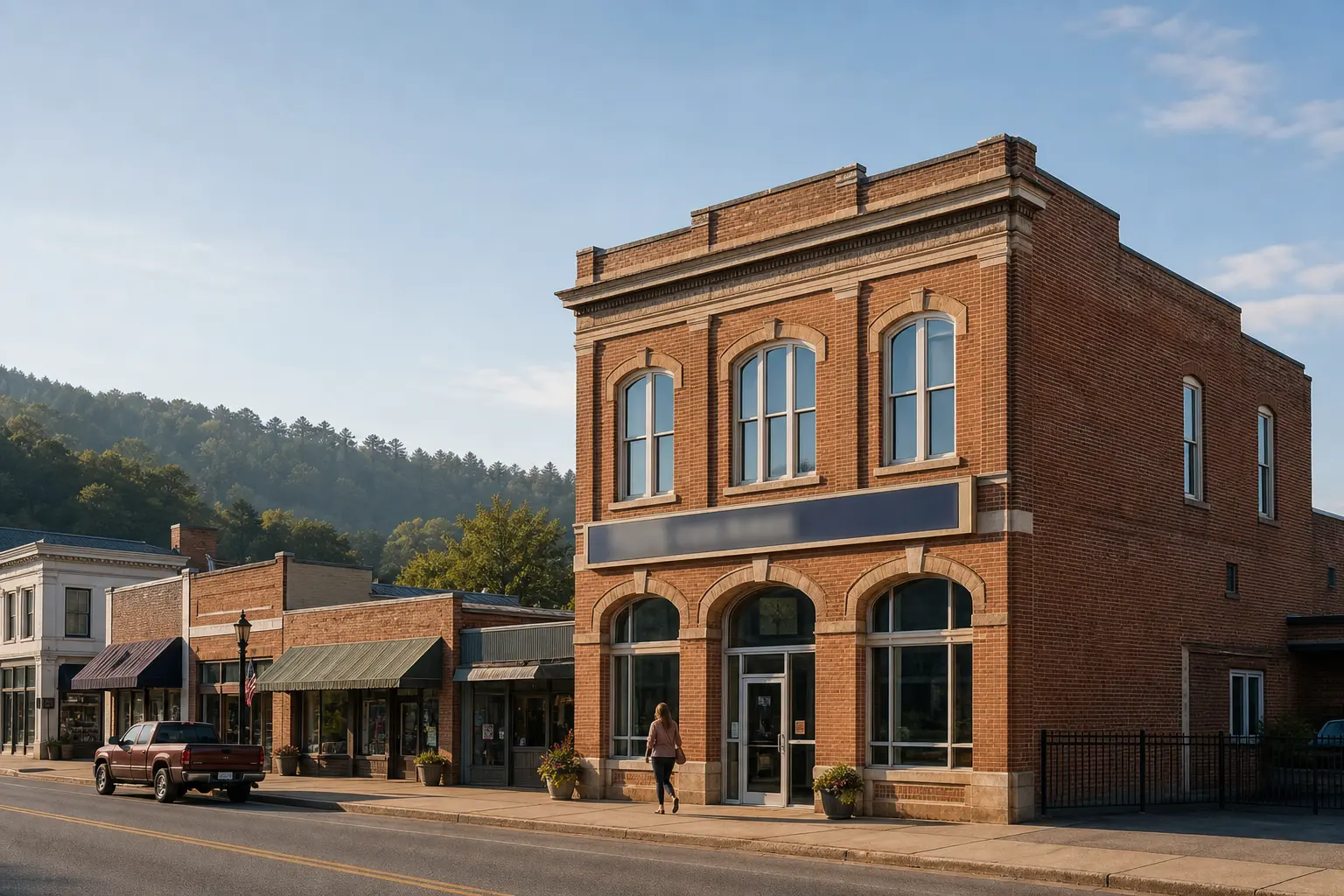
Missouri’s Own Bank Count Is Quietly Shrinking
The same press materials announcing Jester’s graduation describe MBA as representing nearly 210 banks, savings and loans and trust companies across Missouri. A year earlier, when two other bankers graduated from the same program at the association’s 135th convention, MBA’s own release put that figure at nearly 220. In twelve months, the trade group’s self-reported membership fell by roughly ten institutions.
That is a small, local version of a much larger pattern. Nationally, the commercial bank count fell nearly 70% since 1984, dropping from more than 14,000 institutions to about 4,400 by 2020, according to a Federal Reserve Bank of Kansas City review of community banking’s role in the economy. The same review found community banks’ share of total U.S. banking assets slid from 28.3% in 2000 to 13.5% in 2020, even as they still make up 97% of all bank charters.
Merger activity has picked back up recently, not slowed down. Community bank sellers completed 127 mergers in 2025, the most since 2021, after a quieter stretch when higher interest rates cut into bond values and made deals harder to price, the Kansas City Fed found.
- 4,400 banks remained nationally by 2020, down from more than 14,000 in 1984, per the Kansas City Fed.
- Fewer than six new bank charters were issued per year on average from 2010 through 2023, versus 181 in 2007 alone, according to Sen. Cindy Hyde-Smith’s office.
- Over 40% of rural counties lost at least one bank branch between 2012 and 2017, University of Illinois researchers found.
- About 210 member banks now show up in MBA’s own 2026 announcements, down from about 220 a year earlier.
These numbers describe consolidation more than collapse. Smaller banks are selling to bigger ones. Fewer new charters replace the ones that vanish. Branch networks are thinning fastest in the counties that can least afford it.
Succession Gaps Worry Bank Regulators Too
Federal regulators have studied this exact vulnerability. A Federal Deposit Insurance Corporation (FDIC) study of banks headquartered in depopulating rural counties found that many family owned, closely held institutions lacked a clear succession plan and kept leadership tied to a single senior executive. Researchers flagged those setups as carrying the highest risk that an executive’s retirement would force a bank’s sale rather than a smooth handoff.
Jester’s own trajectory looks like the opposite case. She spent nineteen years rising through one bank’s ranks before West Plains Bank and Trust sent her through formal leadership coursework on top of that experience, the kind of internal bench building the FDIC’s rural banking research suggests too few small banks have in place.
What Would Mountain View Lose Without a Community Bank?
Community banks hold just a sliver of U.S. banking assets, yet they supply roughly a third of small-business loans and about four out of five agricultural loans nationwide. In a farm-heavy county like Howell County, a local bank’s lending decisions can matter more than its balance sheet size suggests.
Community banks provide about 36% of all small-business loans and hold around 80% of all agricultural loans nationally, according to estimates cited by Sen. Cindy Hyde-Smith’s office, part of her push to ease barriers to forming new banks. West Plains Bank and Trust fits that description closely. Its own marketing points to a rural, agriculture-driven customer base and lending decisions made by local loan officers rather than a distant head office.
Stephanie has dedicated the entirety of her banking career to serving the Mountain View community. She has long understood our commitment as a community bank to giving back to the people and the towns that we serve.
David M. Gohn, president and chief executive of West Plains Bank and Trust Company, said that in crediting Jester’s rise. He added that she is “among the first to raise her hand when she sees an opportunity to put her talent to work for the betterment of the bank, her community, and the banking industry.”
Two Dozen Bankers a Year, Give or Take
Jester’s class of 22 fits a pattern the program has kept for years. Daniel McKinney, a commercial lender at the separate Community First Banking Company in West Plains, graduated in a class of 20 back in 2020, when the program still ran 18 months. By 2022, an OMB Bank marketing director graduated alongside 33 classmates. Twenty-one bankers graduated together at the 2025 convention.
| Convention | Graduating Class | Program Length |
|---|---|---|
| 132nd Annual Convention (2022) | 33 bankers | 12 months |
| 135th Annual Convention (2025) | 21 bankers | 12 months |
| 136th Annual Convention (2026) | 22 bankers | 12 months |
Missouri’s bank count keeps falling. The leadership pipeline meant to staff whatever banks remain has not shrunk with it.
A 143-Year-Old Bank Still Hiring From Within
West Plains Bank and Trust Company traces back to April 1883 in West Plains, Missouri, making it one of the oldest continually operated businesses in the area by its own account. It now runs seven branches across Missouri and a loan production office in Mountain Home, Arkansas, with total assets of $786 million. It operates under a holding company, West Plains Bancshares Inc., and remains state chartered and FDIC insured rather than folded into a larger multi-state banking group.
The Liberty Branch in Mountain View opened in 1993 as the bank’s first full-service location outside West Plains itself. The current building at 607 N. Elm St. held its grand opening in 2008. Jester has spent nearly her entire career at that one branch.
Outside the bank, Jester has built a visible record of civic work around Mountain View:
- Mountain View Chamber of Commerce, where she previously served as vice president of the board.
- Pioneer Days, the town’s annual celebration, where she has volunteered for years.
- Laundry of Love Mountain View, a weekly effort that pays for and runs local residents’ laundry loads at the laundromat.
- Connexion Church, where she serves on the Praise Team and as treasurer.
That record is part of what Gohn pointed to in praising Jester’s rise, and it lines up with how MBA frames the entire leadership program: developing bankers who already show up for their towns, then giving them formal training to match.
Pioneer Days returns to Mountain View every year, and Jester’s volunteer shift has become part of that same small-town rhythm, the one she kept long before her name appeared on a convention program in Branson.
Frequently Asked Questions
What Happens After Bankers Graduate From Banking Leadership Missouri?
Graduates can apply for a stipend from the Max and Cindy Endowment for Advocacy and Leadership Training to attend the American Bankers Association’s Washington Summit and Emerging Leaders Forum in Washington, D.C. The trip is optional, and the program’s final session is a graduation ceremony and reception rather than another exam.
What Officially Makes a Bank a Community Bank?
Federal Reserve researchers generally classify community banking organizations as those holding under $10 billion in assets and focused on traditional deposit and lending relationships rather than national-scale operations. West Plains Bank and Trust Company, with $786 million in assets, falls well within that range, like most of Missouri’s banks.
Is West Plains Bank and Trust Company Independently Owned?
Yes. The bank operates under a holding company, West Plains Bancshares Inc., and is not part of a larger multi-state banking chain. It is a state chartered, FDIC insured institution supervised as a Fed nonmember bank, with all seven of its branches located inside Missouri.
How Do Bankers Get Into the Banking Leadership Missouri Program?
Candidates typically apply through their employing bank rather than as individuals, with nominations coordinated through MBA’s Jefferson City office alongside its other education offerings, including its School of Banking and IRA School.