Italian shipbuilder Fincantieri said on Monday it has agreed to four underwater acquisitions worth approximately €600 million. The targets, Next Geosolutions, WSense, Graal Tech and Defcomm, span subsea cables, marine survey, autonomous underwater vehicles and unmanned surface drones. Fincantieri is folding them into an eight-company underwater hub it positions as the first of its kind in the sector.
The spend is being financed mainly through a €500 million capital increase Fincantieri completed in February 2026. On a 2026 pro-forma basis, the underwater segment is set to generate more than €1.1 billion in revenue and €220 million in EBITDA, hitting targets set for 2030 four years ahead of schedule. The acquisitions are also projected to add more than €60 million to group net profit in 2026.
A €600 Million Push Into the Subsea Stack
Fincantieri has been building an underwater hub since 2024, layering in Remazel’s launch and recovery systems that year and WASS submarine systems in 2025. The next layer adds four Italian companies: Next Geosolutions, WSense, Graal Tech and Defcomm. Between them they cover marine survey and offshore construction, underwater communications, robotic platforms and unmanned surface vehicles. The combined platform is intended to run as a single integrated operator across the underwater value chain.
Fincantieri adds its own submarines business and IDS unit to complete an underwater stack that runs from hulls to sensors. The new hub is meant to coordinate “product and commercial synergies, also thanks to the development of solutions for the unconventional underwater domain,” the group’s statement said. Approximately 1,500 professionals across Italy, the United Kingdom, the Netherlands, Norway and the United Arab Emirates will fall under the platform.
| Hub unit | Capability in the underwater chain | Origin |
|---|---|---|
| Submarines business | Builds undersea platforms | Fincantieri unit |
| Remazel | Launch and recovery systems for subsea equipment | Acquired by Fincantieri |
| WASS | Submarine systems | Acquired by Fincantieri |
| IDS | Integrated detection systems | Fincantieri unit |
| Next Geosolutions | Marine survey, geoscience, offshore construction support | Public company; listed on Euronext Growth Milan |
| WSense | Underwater communications; Internet of Underwater Things | Spin-off of La Sapienza, Rome |
| Graal Tech | AUV and ROV robotic platforms | Spin-off of University of Genoa |
| Defcomm | Unmanned surface vehicles with autonomous navigation | Italian start-up |
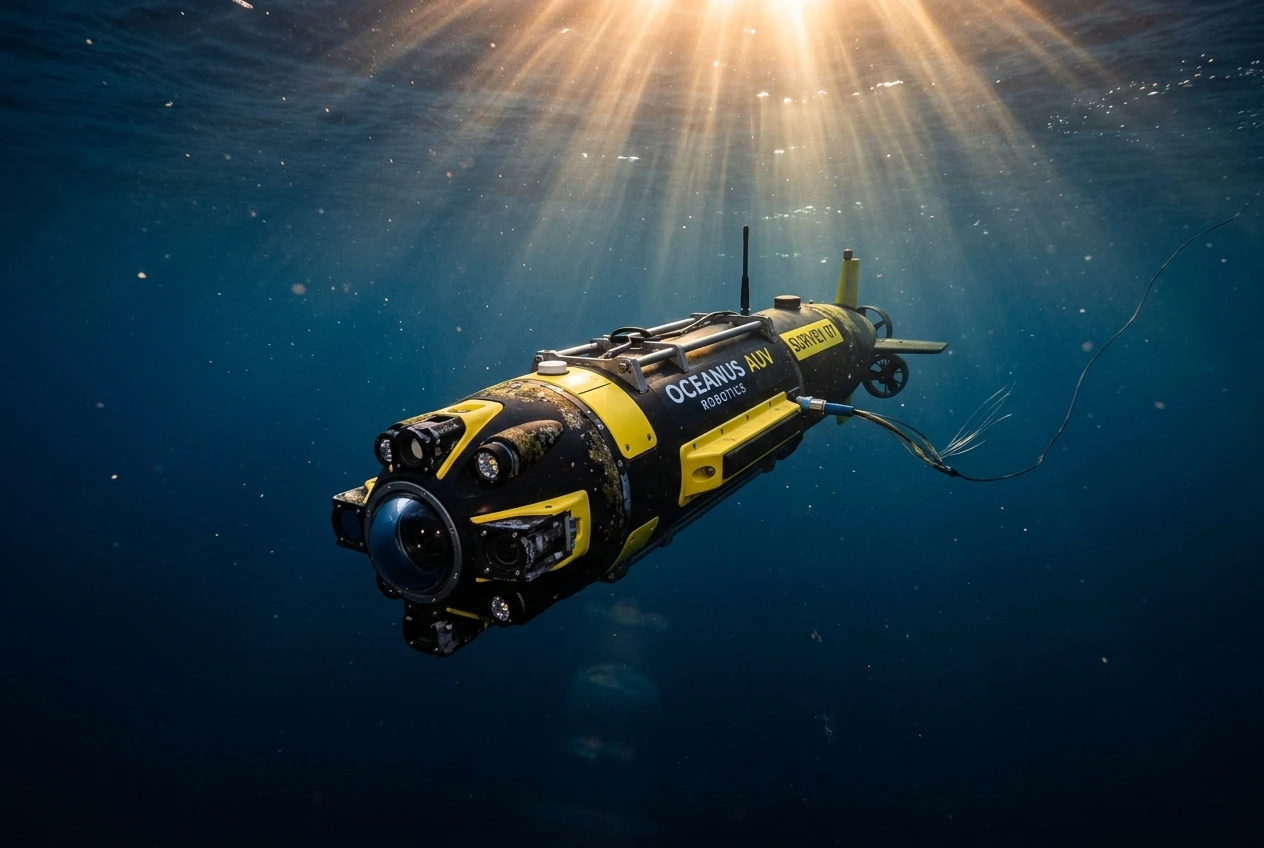
Four Deals, Four Different Shapes
The four transactions are not interchangeable. Each carries its own percentage today, its own price where one is set, and its own trigger that could move Fincantieri higher over the next 24 months. The headline figure, roughly €600 million in initial expenditure, sits in front of them all.
Next Geosolutions, the only listed target, carries a public-tender wrinkle. Fincantieri is buying shipping company Marnavi’s 52.60% stake at €16.25 per share, a price that values 100% of NextGeo at €780 million. Fincantieri will then launch a tender offer for the remaining share capital. WSense is being acquired through a special-purpose vehicle in which Fincantieri initially holds 61.95%, rising to as much as 75% within 24 months; that vehicle will hold approximately 95% of WSense.
Defcomm comes in below 50%: 49% via capital increase and share purchase, with a call option for an additional 2% within two years of closing that would lift the stake to 51%. Graal Tech has already changed hands: a 51% stake from founding shareholders is conditional on Golden Power clearance, with the remaining 49% subject to put and call options whose exercise price is tied to 2026-2031 performance.
- Next Geosolutions: Marnavi’s 52.60% stake at €16.25 per share; values 100% of NextGeo at €780 million; mandatory tender offer to follow.
- WSense: 61.95% initially via a new vehicle, up to 75% within 24 months; vehicle to hold approximately 95% of WSense.
- Defcomm: 49% initially via capital increase and share purchase; option to lift to 51% within two years of closing.
- Graal Tech: 51% from founding shareholders, conditional on Golden Power clearance; remaining 49% via put and call options tied to 2026-2031 performance.
From Supplier to Operator
Beyond the line items, Fincantieri is repositioning itself. The press release calls the new hub the “first-of-its-kind industrial operator” in the underwater domain, designed for integrated end-to-end services. The commercial framing is “Underwater as a Service,” a package spanning marine survey, construction support, hardware, software and telecommunications. Existing management teams across the four targets are being asked to reinvest in their own businesses.
The shift overlaps with both defense procurement and civilian infrastructure priorities. Critical subsea assets, pipelines, subsea cables, regasification terminals and offshore wind connections, sit on both lists. Mediterranean geography concentrates three continents and dense infrastructure inside a single sea, intensifying demand for intelligence, surveillance, defense and deterrence activities that require dedicated industrial focus.
Chief Executive Pierroberto Folgiero framed the deal in those terms.
The acquisitions announced today mark a historic transformation for Fincantieri, that creates an international champion in the Underwater domain, enabled by full integration across the value chain of technologies, capabilities and operational expertise. We are also securing the industrial continuity of the acquired companies by retaining their existing management teams, as we believe that expertise and execution are essential drivers of the Group’s growth.
So said Folgiero, per Fincantieri’s July 6 statement. His Pierroberto Folgiero corporate biography on the company site documents his executive record.
The Numbers Behind a Four-Year Head Start
The underwater segment is small relative to the group, but scaling quickly. It generated €667 million in revenue in 2025, equal to 6.7% of the group’s total, the press release says. On a 2026 pro-forma basis, that figure is expected to exceed €1.1 billion, with EBITDA reaching approximately €220 million.
The acceleration is what brought forward the targets set in the 2026-2030 Business Plan, presented in February, by four years ahead of schedule. The acquisitions are expected to contribute more than €60 million to Fincantieri’s 2026 pro-forma net profit. By 2030 that contribution rises to approximately €130 million.
Margin and per-share metrics keep stretching on the same base. The underwater EBITDA margin is forecast to hit 19.2% in 2026, 21% in 2028 and 23% in 2030. Earnings per share are expected to rise approximately 30% by 2028 and 20% by 2030 on an accretive basis. Group-level 2026 pro-forma EBITDA is set to climb 13%, with 2026 pro-forma net profit up 40%. The deals leave the 2026 Net Debt to EBITDA guidance unchanged and improve the 2028 and 2030 targets in the business plan.
- €1.1 billion: 2026 pro-forma underwater revenue.
- €220 million: 2026 pro-forma underwater EBITDA.
- €60+ million: 2026 pro-forma net-profit contribution from the four acquisitions.
- ~30% / ~20%: projected EPS accretion by 2028 / 2030.
- 19.2% / 21% / 23%: pro-forma underwater EBITDA margin in 2026 / 2028 / 2030.
What Is Driving the Subsea Build-Out
Fincantieri is buying into a domain European governments and NATO planners now treat as critical infrastructure. According to the group’s statement, 80% of the seabed and 98% of the ocean depths remain unexplored. Subsea fibre-optic cables carry 99% of global internet traffic across 1.5 million kilometres of cable.
Energy and freight hang on the same network. The press release cites oil and gas regasification terminals, offshore wind links, port facilities and pipelines as priorities. Mediterranean geography puts three continents and dense critical infrastructure inside one sea. The region is driving demand for intelligence, surveillance, defense and deterrence activities that require dedicated industrial focus.
Defense customers want unmanned systems and mission-specific platforms tied to a mothership through resilient communications and integrated command and control. The dual-use segment responds to hybrid threats against critical commercial infrastructure such as ports. In commercial business, customers are moving toward a “servitization” model, with topside and underwater assets converging into intelligent, connected digital platforms.
Each of the four targets maps to one of those pressure points: NextGeo to survey work, WSense to communications, Graal Tech to robotic intervention and Defcomm to unmanned surface patrol. Together they let Fincantieri speak to defense ministries and offshore operators from one industrial seat.
Financing and the Market’s Verdict
The bill for the four transactions is being covered mainly through an accelerated bookbuilding capital increase Fincantieri completed in February 2026, which raised €500 million, with “other Group resources” filling the gap. The structure leaves the company’s 2026 Net Debt to EBITDA guidance unchanged. It improves the 2028 and 2030 Net Debt to EBITDA targets set out in the 2026-2030 Business Plan.
Fincantieri’s share price rose more than 11% on Monday as the deal was announced. Shares in Next Geosolutions slipped more than 2% on the same morning, after the deal price came in slightly below the previous close.
The NextGeo move reflects the price Fincantieri agreed to pay Marnavi, the listed company’s controlling shareholder, for its 52.60% stake: €16.25 per share, against NextGeo’s previous close of €16.45. That figure values 100% of NextGeo at €780 million ahead of the public tender offer for the rest. Group shares moved up 11% while the target slipped on price; that split captures the small-cap reality of a strategic-premium bid that came in just shy of the last close.
Frequently Asked Questions
What companies is Fincantieri acquiring?
The targets are Next Geosolutions (marine survey and offshore construction support, listed on Euronext Growth Milan), WSense (underwater communications and the Internet of Underwater Things, spun out of Rome’s La Sapienza), Graal Tech (autonomous underwater vehicles and remotely operated robotic systems, a University of Genoa spin-off) and Defcomm (unmanned surface vehicles designed for high speeds and extended endurance, an Italian start-up).
How much is Fincantieri paying?
The initial expenditure across the four deals is approximately €600 million. Within that envelope, Marnavi’s 52.60% stake in Next Geosolutions is being bought at €16.25 per share, valuing 100% of NextGeo at €780 million ahead of the upcoming tender offer for the rest of the listed company.
What is the eight-company underwater hub?
It will combine Fincantieri’s own submarines business and IDS unit with Remazel (acquired in 2024), WASS (acquired in 2025) and the four new additions. The eight units span hulls, sensors, AUV and ROV robots, communication systems and survey services across the underwater value chain.
When will the acquisitions show up in earnings?
Fincantieri expects the four transactions to add more than €60 million to net profit on a pro-forma 2026 basis, with the deals counted as lifting the year’s pro-forma net profit by 40% and pro-forma EBITDA by 13%. EPS is forecast to rise approximately 30% by 2028 and 20% by 2030.
What is an “Underwater as a Service” model?
It is the commercial framing Fincantieri uses in its press release to describe a package of survey, deployment, inspection, maintenance and decommissioning services delivered on contract, rather than as discrete sales of platforms, sensors or vehicles.
Disclaimer: This article is for informational purposes only and does not constitute investment advice. Forecast figures are drawn from Fincantieri’s July 6, 2026 press release and remain subject to integration, regulatory and market risks. Consult a qualified financial professional before making investment decisions, and verify current data independently, as figures are accurate as of publication.