Tyra Banks sued Netflix, the production companies behind “Reality Check: Inside America’s Next Top Model,” and the documentary’s directors, over her portrayal in the three-part docuseries, according to a federal complaint filed in California on Saturday, June 13, 2026. The suit, obtained by BuzzFeed, Variety, and People, accuses the streamer of reassembling a fraction of her 3.5-hour interview into a “false and defamatory narrative” about her role in a sexual assault allegation on the show.
Banks’s lawyers say only 16 minutes of the interview made it onto the screen, with the moments in which she took accountability for the show’s most criticized decisions removed. The complaint singles out an exchange with director Mor Loushy about Cycle 2 contestant Shandi Sullivan, whose on-camera account in the docuseries describes a 2003 Milan night as a sexual assault the show’s producers framed as a cheating scandal. Banks’s team argues the cut of the scene made her appear unable to remember the story, when in the uncut footage she nods and says, “I do remember her story.”
Banks Sues Netflix in California Federal Court
The lawsuit was filed on June 13, 2026, in federal court in California, according to Deadline, ABC News, and People. Defendants named in the complaint are Netflix, Netflix Music, 89 Blocks Holdings, EverWonder Studio (the parent of 89 Blocks), and the documentary’s co-directors Mor Loushy and Daniel Sivan. The complaint asserts four claims: false light, defamation by implication, breach of contract, and false endorsement.
Variety, Yahoo Entertainment, and Deadline confirmed the four causes of action. Banks is 52, according to the Independent. She is asking for a jury trial and damages in an amount to be determined at trial, and she is also seeking an injunction barring the use of her image in connection with the docuseries’ soundtrack album, according to CBC News. People, Variety, Deadline, ABC News, and CBC have all reported that Netflix declined to comment.
What Banks Says Was Cut from a 3.5-Hour Interview
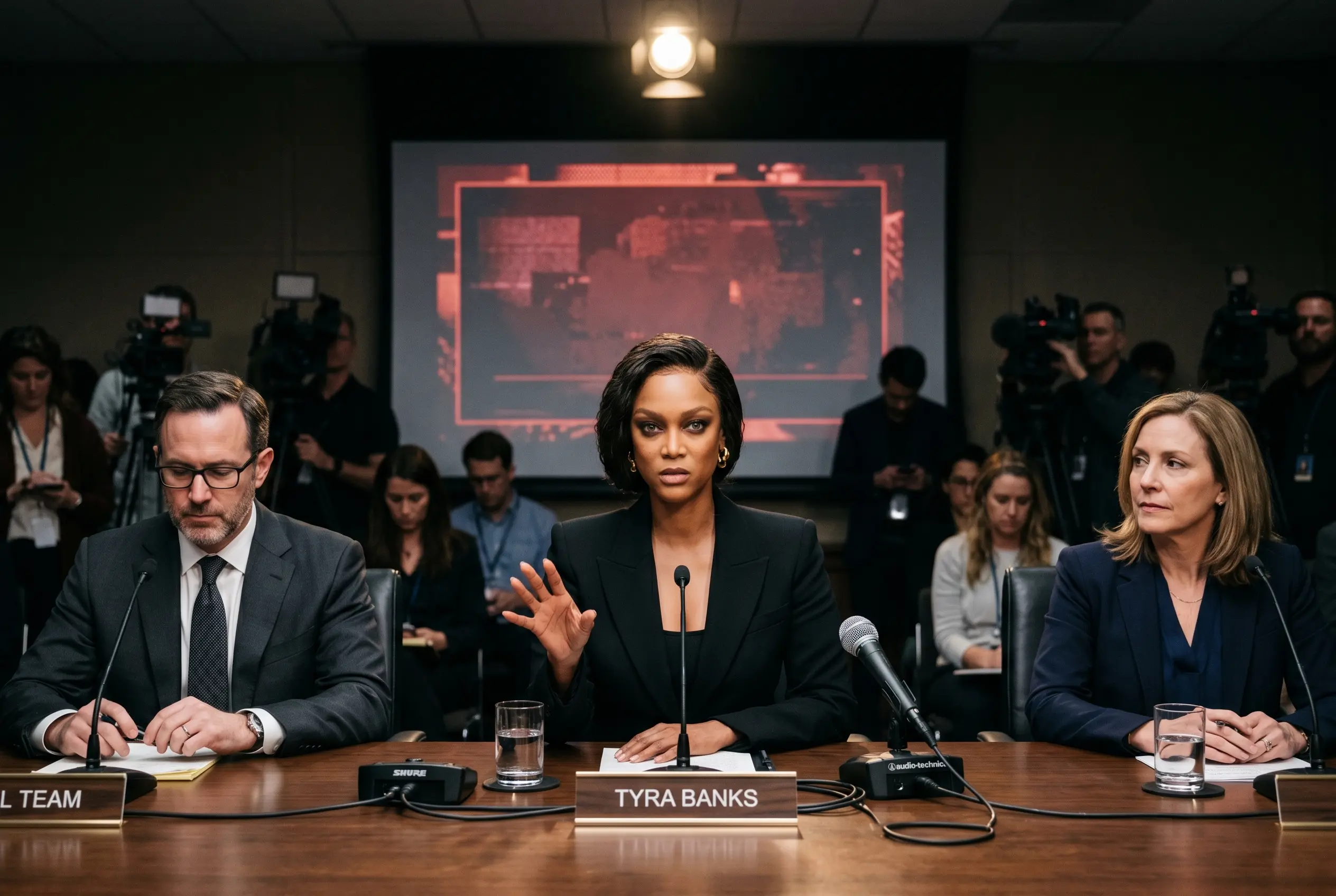
The suit’s central claim is that Banks sat for an interview that ran three and a half hours, only to have 16 minutes of it air, and that the 16 minutes were “stripped of context and reassembled to support a false and defamatory narrative unrelated to what she actually expressed.” That language appears in the complaint as quoted by Variety, People, BuzzFeed, and HuffPost. Banks “did not limit the ‘ANTM’ topics the interviewer could ask,” the suit reads, and “the accountability Ms. Banks took ended up on the cutting-room floor.” These passages carry the spine of the suit: Banks sat down, did not restrict the questions, and the accountability she gave was removed.
Co-director Mor Loushy told Vanity Fair: “She had no say, no influence, no anything.” The Guardian reported the quote, and the suit adopts the line to argue that Banks’s lack of editorial control was the very condition that allowed the filmmakers to construct the narrative she disputes. The complaint also asks the court to bar the use of Banks’s image in the docuseries’ soundtrack, which CBC News reports was released as an album earlier this year.
For more on the project, see Netflix’s account of the documentary and Banks’s involvement, and for context on Banks’s recent life off-screen, Banks’s recent personal disclosures about her family ran on Mind Cron last year. The third-party Vanity Fair quote, the lawsuit argues, is documentary evidence that the production team knew Banks had no path to review the edit.
The Shandi Sullivan Edit, in the Lawsuit’s Own Words
Shandi Sullivan appeared on Cycle 2 of America’s Next Top Model in 2003 and in the original episode was shown drinking wine in Milan, getting into bed with a male model, and calling her then-boyfriend to confess infidelity, a sequence the show’s producers framed as a cheating scandal.
In “Reality Check,” Sullivan says she was “blacked out” and accuses the production team of misclassifying what she now considers a sexual assault. The complaint dissects a single beat from Banks’s interview. In the docuseries, Loushy asks Banks, “You remember the story with Shandi?” The episode shows Banks glance upward, say “um,” and cut to black.
Worse, the false narrative the producers constructed, through selective editing, deliberate omission, and surgical manipulation of continuous footage, included that Ms. Banks knowingly allowed a contestant to be sexually assaulted on her show, exploited that contestant’s trauma for ratings, and then could not even remember it when asked. That narrative about Ms. Banks is a complete fabrication, one that Netflix streamed to a global audience of millions.
The uncut interview, the suit says, contains Banks nodding “affirmatively, unmistakably” and saying, “I do remember her story,” before the pause. People, Variety, and BuzzFeed all reproduce that line from the complaint.
The complaint argues the producers withheld Sullivan’s characterization of the night as a sexual assault from Banks during her interview, and had already gathered those accusations from other participants before Banks sat down. Loushy’s question, the suit says, was the only prompt Banks received, and she was not told that Sullivan had recharacterized the night. Banks’s lawyers say the cut made her appear unable to remember a story the full footage shows she remembered. The complaint is unambiguous: Banks did remember Sullivan, did not know Sullivan had recharacterized the night, and was never given the chance to say so on camera.
The Miss J. Alexander Dispute
J. Alexander, the runway coach known on the show as Miss J, suffered a stroke in December 2022, spent five weeks in a coma, and had to relearn to talk and walk, according to the Guardian. In “Reality Check,” he is asked whether Banks has visited. “No, not yet,” he says. “She just sent me a text, she wants to come to visit me. But no, not yet.” Three days after the docuseries premiered, on Feb. 19, 2026, he told Sherri Shepherd’s daytime talk show that Banks had “reached out” but had still not visited.
The lawsuit disputes that portrayal in detail: Banks has been “living in Australia for 2 1/2 years,” the complaint says, and the producers never told her the docuseries would include Miss J saying she had not visited. The suit adds that Banks tried to reach Miss J personally after his stroke, exchanged texts, voice notes, and phone calls with him over a three-year stretch, and that on Christmas Day 2025 the two exchanged holiday messages, with Miss J updating her on his improved health. Her reply, per the complaint: “Yesssssss Can we speak this week?” They never spoke, and weeks later the docuseries streamed to a worldwide audience.
What Banks Says She Has Lost
The complaint itemizes the categories of harm Banks alleges. She is seeking “damages, including loss of future business opportunities, loss of business income, other compounding losses as will be shown at trial,” and is also claiming “severe reputational harm” and “significant mental anguish.” People, the Independent, and Deadline each reproduce that language from the filing.
The Independent reports that the complaint cites damage to Banks’s ice cream brand SMiZE & DREAM, with online ratings for the Australian business “plummeted” since the docuseries’ February release. The Guardian reports Banks opened a parlour for her Smize and Dream business in Sydney in September 2025, and the lawsuit argues that the docuseries has caused measurable harm to that business. No specific dollar figure for damages is listed in the complaint. The suit frames the harm as ongoing, tied to the doc’s continued availability on Netflix and the soundtrack album’s continued circulation.
Banks is also seeking the soundtrack-album injunction, an unusual ask in a defamation case that could carry implications for other documentaries built around image rights. The docuseries totals 165 minutes, according to Wikipedia, and the suit says only 16 minutes of Banks’s interview made it into that total. The math is the suit’s quiet argument: a documentary that used less than a tenth of a 3.5-hour interview built its central claims about Banks on the narrowest slice of what she said.
The Documentary That Drew 14.2 Million Views
“Reality Check: Inside America’s Next Top Model” was directed by Mor Loushy and Daniel Sivan and released on Netflix on Feb. 16, 2026. The series drew 14.2 million views in its first seven days, Variety reported, and has remained on Netflix since its February premiere. It is now at the center of a federal lawsuit. The series’ own trailer, posted on Netflix, is viewable at the official Reality Check trailer on Netflix.
The docuseries, marketed by Netflix as “the definitive, must-watch chronicle of America’s Next Top Model,” used an editorial approach the lawsuit calls “selective editing, deliberate omission, and surgical manipulation of continuous footage.” Critics found the series generally favorable on the major review aggregators; Banks’s lawyers found it actionable. The trailer is now the most-watched artifact of a project that, in court filings, Banks’s team is trying to dismantle. The doc, the suit, and the soundtrack album are the three artifacts now in play, and the case will likely turn on what the uncut 3.5 hours of interview actually shows.
- 3 episodes released simultaneously on Feb. 16, 2026
- #1 on Netflix’s English-language Top 10 for the week of Feb. 16 to 22, 2026
- 87% on Rotten Tomatoes, 68 on Metacritic
Defenders, Critics, and the Directors’ Own Words
The directors’ own statements appear repeatedly in the complaint. Co-director Mor Loushy told The Wrap, per Deadline and ABC News, that the docuseries would have happened “regardless” of Banks’s participation. She agreed to the interview, Loushy added, “to give her side of the story.”
Loushy’s Vanity Fair line, “She had no say, no influence, no anything,” appears in the Guardian and is cited inside the complaint. Defenders of Banks have also spoken up. Cycle 8 winner Jaslene González told People: “My feeling with America’s Next Top Model has not changed since day one. I continue to be a fan of the show and of Tyra and the legacy that it’s left behind.”
Cycle 1 winner Adrianne Curry posted on Instagram, per the Guardian: “People act like what Tyra did is worse than Bill Gates and Epstein. It isn’t. Being a dickhead isn’t illegal, people.” Other former contestants, including Lisa D’Amato and Brittany Corinne Hatch, have rejected Banks’s framing in the docuseries, with D’Amato calling the series “tame and sugarcoated” and Hatch describing the original show as a “systemic labor violation and a psychological experiment.” For more on how Banks has presented herself in public since the original show ended, see Banks’s return to the Victoria’s Secret runway in 2024.
The Legal Landscape Ahead
What Banks has asked the court for, in plain terms, is a jury trial and an unspecified damages award, plus an injunction barring the use of her image in the docuseries’ soundtrack. People, Variety, Deadline, ABC News, and CBC each report that Netflix, EverWonder Studio, the production companies, and the directors named in the suit did not respond to their requests for comment. The case sits in federal court in California, filed June 13, 2026.
The docuseries’ credited producers include Ryan Miller, Jason Beekman, Vanessa Golembewski, Jon Adler, Amanda Spain, Ian Orefice, and Jonna McLaughlin; the editors are Austin Flack, Mimi Wilcox, and Stefanie Maridueña, per Wikipedia. Loushy told The Wrap that the doc would have been made without Banks; Banks’s lawyers say the doc as aired could not have been made without her 3.5 hours of testimony. Of that testimony, 16 minutes aired, and the rest, in the suit’s telling, was reshaped into a story she did not consent to.
Frequently Asked Questions
What did Tyra Banks sue Netflix for?
Banks’s complaint, filed in federal court in California on June 13, 2026, asserts four claims: false light, defamation by implication, breach of contract, and false endorsement, against Netflix, Netflix Music, 89 Blocks Holdings, EverWonder Studio, and the documentary’s co-directors Mor Loushy and Daniel Sivan.
When did Tyra Banks file the lawsuit?
The suit was filed on Saturday, June 13, 2026, in federal court in California. Multiple outlets, including Deadline, ABC News, and People, have confirmed the date.
What does Banks say was cut from the documentary?
The complaint says Banks gave the project a 3.5-hour interview, of which 16 minutes aired, and that those 16 minutes were “stripped of context and reassembled to support a false and defamatory narrative unrelated to what she actually expressed.”
Has Netflix responded to the lawsuit?
As of the most recent reporting from People, Variety, Deadline, ABC News, and CBC, Netflix had declined to comment on the suit.
What is Banks asking the court for?
Banks is asking for a jury trial and damages in an amount to be determined at trial, plus an injunction barring the use of her image in connection with the docuseries’ soundtrack album.