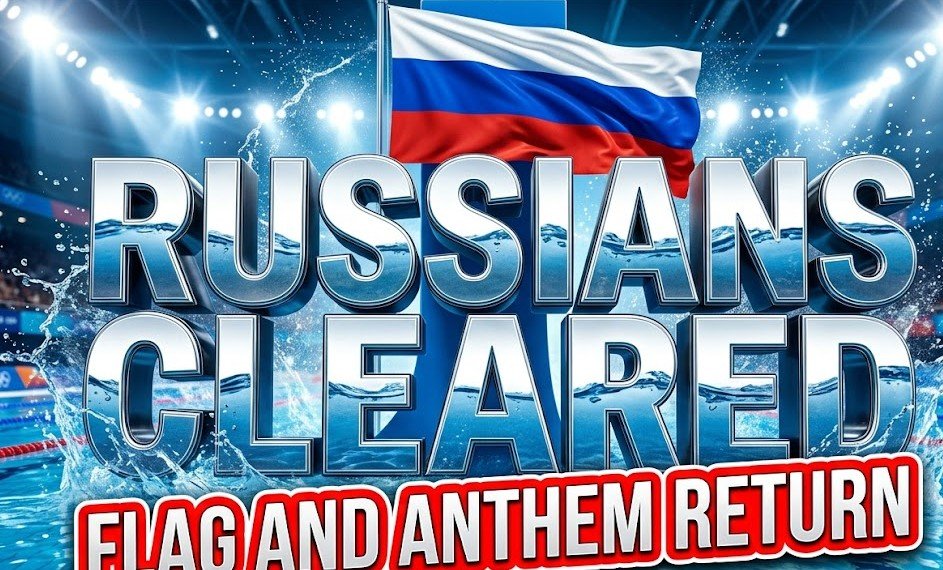
World Aquatics has lifted all restrictions on senior Russian and Belarusian athletes. They can now compete using their national flags, anthems and uniforms in international events. The decision announced on April 13 marks a major policy shift in a key Olympic sport less than two years before the 2028 Los Angeles Games.
Landmark Ruling Ends Years of Neutral Status
World Aquatics made the call after a bureau meeting and talks with its integrity unit and athletes committee. Senior athletes from Russia and Belarus will now take part exactly like everyone else. This ends the neutral status rules put in place after the 2022 invasion of Ukraine.
The governing body said pools and open water should stay places where athletes from all nations meet in peaceful competition. President Husain Al Musallam stressed that the sport has worked hard to keep conflict away from venues over the past three years.
Athletes must still meet strict conditions before they can line up. They need to pass at least four successive anti doping tests done with the International Testing Agency. Background checks through the Aquatics Integrity Unit are also required. World Aquatics noted that more than 700 screenings have already taken place on athletes from these countries.
Russia and Belarus will also regain full membership rights under the organization’s constitution. The change builds on an earlier step that let junior athletes compete under their flags.
Strong Reactions Split the Sporting World
Russian officials welcomed the news warmly. Sports Minister Mikhail Degtyarev thanked Al Musallam for his firm stance and said the move shows international sporting ties can be restored in an orderly way.
Ukraine reacted with anger and disappointment. The country’s men’s water polo team forfeited a scheduled World Cup match in Malta against a Russian side. Officials described the decision as unacceptable while the war continues.
Ukraine’s Minister of Youth and Sports Matvii Bidnyi called the ruling a wake up call for the sports world. He said returning the flag to a nation that disregards basic rules feels shameful when Ukrainian athletes train under fire.
Other Ukrainian voices echoed the frustration. Some athletes described the move as providing a platform for propaganda at a time when their country continues to suffer.
The split highlights the deep tensions that remain in global sport. Many wonder if full reintegration is possible while conflict rages on.
Path to the 2028 Olympics Gets Clearer
Swimming stands as one of the most prominent Olympic sports with huge medal counts and worldwide attention. This decision positions it as the first major federation to drop all restrictions on Russian and Belarusian participation.
The change applies directly to World Aquatics events such as world championships. It does not automatically cover the Olympics themselves since the International Olympic Committee sets those rules. Still the move adds pressure and momentum toward fuller returns ahead of Los Angeles 2028.
Observers note that successful participation in aquatics events could encourage other federations to follow similar paths. The IOC has taken a more cautious approach for senior competitions while easing rules for youth events.
Talented Russian swimmers have a long history of strong performances in backstroke, breaststroke and relays. Their return could intensify competition in the pool and reshape qualification battles for major meets.
For athletes on all sides the stakes feel personal. Years of training and dreams hang in the balance as governing bodies navigate politics and principles.
How the Sanctions Began and Evolved
The restrictions started in March 2022 shortly after Russian forces invaded Ukraine. World Aquatics first banned athletes from both Russia and Belarus from its events. Later it allowed limited neutral participation as individuals and then teams.
The gradual easing reflected wider discussions across Olympic sports. Juniors gained full national representation earlier this year. Now seniors follow the same path.
Throughout the period the focus stayed on keeping competitions fair and safe. Anti doping measures and integrity checks formed the core of the guidelines even as rules relaxed step by step.
This latest ruling completes the return for aquatics while maintaining some safeguards. It reflects a belief that sport should bring people together rather than divide them further.
Yet the human cost of the ongoing war adds layers of complexity. Ukrainian athletes have lost teammates and seen their training disrupted. Many feel the decision overlooks their daily reality.
As flags wave again in aquatic arenas the sporting world faces familiar questions about unity and accountability. The pools may offer peaceful competition but the broader conversation about war and sport is far from over. What are your thoughts on letting Russian and Belarusian athletes compete with full national symbols? Drop your opinions in the comments below.