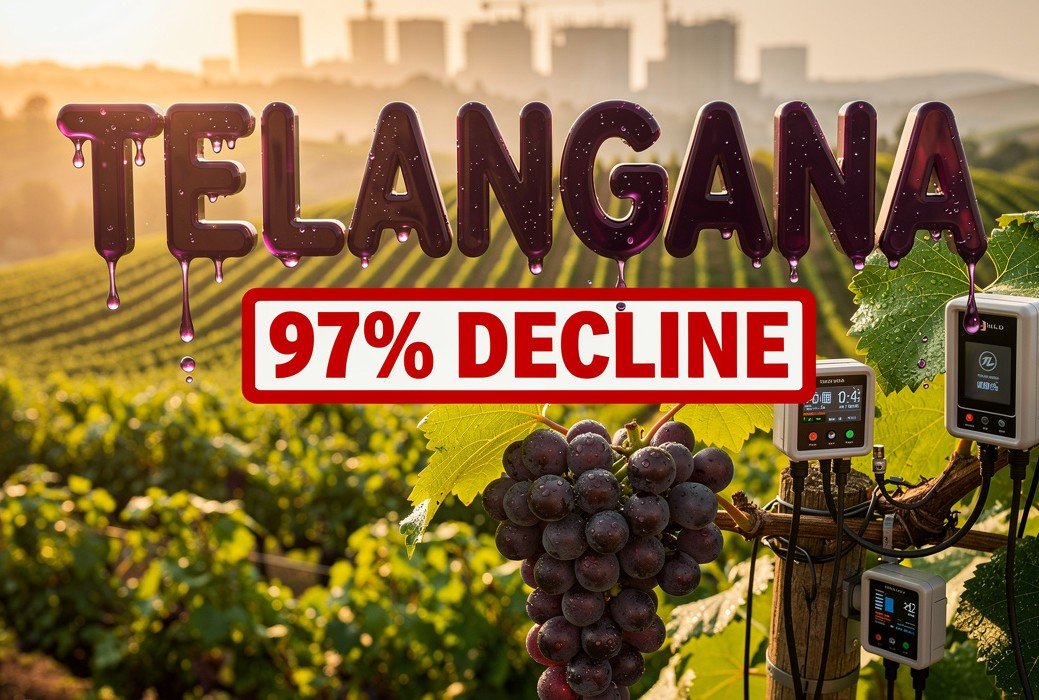
Grape cultivation around Hyderabad has collapsed from 15,000 acres to just 400 acres. Now, horticultural scientists are racing to reverse this dramatic decline with precision farming and government support.
Five Day Grape Festival Kicks Off in Rajendranagar
A major grape festival began at the Grape Research Centre in Rajendranagar on Saturday, March 8, 2025. The event runs until March 12 under Sri Konda Laxman Telangana Horticultural University.
Farmers, scientists, and agriculture enthusiasts gathered to discuss the future of grape farming in the state. The festival showcases new grape varieties, cultivation techniques, and research breakthroughs developed at the centre.
Dr D Rajireddy, Vice Chancellor of SKLTGHU, used the platform to announce critical initiatives. He revealed plans for experimental grape cultivation at two new locations.
The Fruit Research Station in Sangareddy will test new varieties. The Horticultural Research Station in Mallepally will assess which grapes suit local conditions best.
Real Estate Boom Crushes Traditional Vineyards
The numbers tell a painful story. Hyderabad once stood as a thriving grape hub with 15,000 acres under cultivation. Today, farmers work just 400 acres.
What caused this 97% collapse?
- Land prices skyrocketed as real estate developers bought farmland
- Labour costs climbed beyond what farmers could afford
- Input expenses doubled over the past decade
- Young farmers left for better paying urban jobs
Dr Rajireddy pointed directly at the construction boom surrounding Hyderabad. Fertile grape lands turned into apartment complexes and commercial zones.
Many farming families sold their vineyards when property prices peaked. They chose quick profits over generational farming traditions.
Scientists Call for Precision Farming Solutions
Experts at the festival outlined a clear path forward. They believe technology can make grape farming profitable again.
Precision farming topped their list of recommendations. This approach uses sensors, data analysis, and automated systems to optimize every aspect of cultivation.
Dr Rajireddy emphasized that low cost technology holds the key. Farmers need affordable tools, not expensive imports that drain their budgets.
His specific recommendations include:
| Challenge | Proposed Solution |
|---|---|
| High water costs | Drip irrigation with soil moisture sensors |
| Pest damage | Subsoil research to reduce insect attacks |
| Excessive pesticide use | Targeted application based on actual need |
| Fertilizer waste | Precision nutrient delivery systems |
The Vice Chancellor issued a strong warning against indiscriminate pesticide spraying. He urged farmers to test soil conditions before applying chemicals.
“Apply water and fertilizers only as required,” he told the gathering. This simple shift could cut costs by 30% while improving grape quality.
Young Farmers Show Fresh Interest in Vineyards
Dr Anitha Kumari heads the Grape Research Centre. She shared an unexpected bright spot amid the grim statistics.
Younger farmers are returning to grape cultivation. They see potential where their parents saw only struggle.
These new generation growers bring different skills. Many studied agriculture science or worked in tech industries before turning to farming.
They embrace apps for weather monitoring. They use drones to survey their fields. They connect with buyers directly through online platforms.
The research centre now provides specialized training for these young farmers. Courses cover everything from soil preparation to post harvest handling.
Dr Kumari noted that grape farming can generate strong returns when done right. Premium table grapes fetch excellent prices in urban markets. Wine grapes attract buyers from across South India.
Government Support Could Add 100 Acres Quickly
Dr Rajireddy expressed confidence that local demand alone could support expansion. He believes an additional 100 acres of vineyards is achievable in the near term.
Hyderabad’s growing population wants fresh, locally grown grapes. Consumers prefer regional produce over imports from Maharashtra or Karnataka.
The Vice Chancellor called for direct government incentives to attract new farmers. Subsidies for drip irrigation systems would help. Low interest loans for vineyard establishment would encourage risk taking.
Telangana’s climate actually favors grape cultivation. The region receives adequate sunshine. Soil conditions in several districts support healthy vine growth.
The key obstacles remain economic, not agricultural. When input costs drop and selling prices hold steady, farmers will return to grapes.
Research stations across the state are preparing variety recommendations. Once scientists identify the best performing grapes for each district, extension workers will spread the knowledge to farming communities.
The grape festival continues through March 12 with daily demonstrations and expert sessions. Farmers interested in starting vineyards can visit the Rajendranagar centre for free consultations.
Telangana’s grape story reflects a challenge facing agriculture nationwide. Urban expansion swallows farmland while remaining farmers struggle with rising costs. Yet scientists and young farmers refuse to give up on this once flourishing crop. Their combined efforts may yet bring vineyards back to the lands surrounding Hyderabad. Share your thoughts on reviving traditional farming in your region.