
National banks in the United States can now legally intermediate cryptocurrency transactions using a riskless principal structure, according to new guidance issued by the Office of the Comptroller of the Currency (OCC). The policy move marks a significant milestone in how regulated financial institutions may participate in digital asset markets without violating supervisory expectations.
The guidance — released on December 9 under Interpretive Letter 1188 — allows banks to execute fully offsetting crypto trades between customers without holding inventory or assuming price exposure.
OCC Clears Path for Regulated Crypto Intermediation
The OCC said national banks may facilitate cryptocurrency buying and selling through a brokerage-style model in which a bank briefly purchases a digital asset from one customer and instantly sells an equivalent amount to another. The two steps are paired so no market exposure remains.
One sentence: The bank never owns risk.
This riskless principal structure has long existed in traditional securities markets and is considered low-risk because trading inventory is not warehoused on the balance sheet. Applying that same approach to digital assets brings crypto transactions into a familiar regulatory environment without forcing banks to redesign governance frameworks.
-
The OCC emphasized that activities should be assessed based on risk level, not the underlying technology.
The bullet point clarifies the agency’s technology-neutral stance.
A one-sentence paragraph: Crypto trades are treated like brokerage intermediation, not speculative bets.
Banks must still meet strong risk management standards. The OCC said customers must be protected, operational safeguards must be in place, and compliance programs must be clear and auditable. Institutions will be examined under traditional supervisory reviews already used for securities intermediation and payment activities.
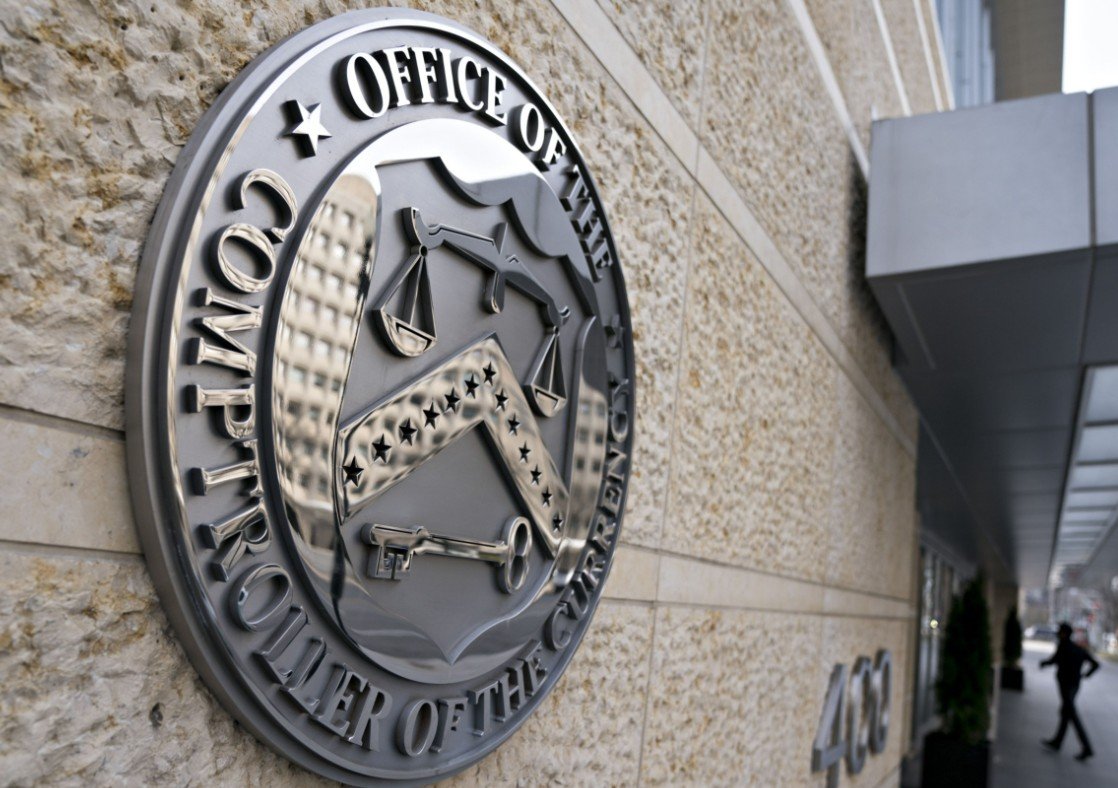
A Major Policy Shift After Earlier Restrictions
The 2025 shift comes after several years of conservative posture from U.S. regulators who discouraged banks from handling digital asset activity without explicit approval. Earlier guidance from the OCC, Federal Deposit Insurance Corporation (FDIC), and Federal Reserve made banks hesitant to intermediate trades because risk assessments were unclear and supervisory expectations were uncertain.
One sentence: Banks avoided crypto to eliminate regulatory ambiguity.
Those earlier statements have now been rolled back. Regulators are replacing blanket caution with activity-based criteria — meaning digital asset operations are approved when risk, supervision, and customer protection are well defined. That evolution signals a maturing approach rather than a reversal.
The OCC’s letter said that riskless principal trades do not materially expose banks to speculative loss and therefore can be treated as a low-risk financial service rather than a proprietary trading activity.
A small paragraph with one sentence: The key is that banks never hold crypto inventory.
Why Banks Care About This Model
Banks have watched crypto brokerage firms grow market share by offering instant buying, selling, and conversion between customers. Yet most banks could not participate directly because digital asset exposures triggered risk classification issues, capital treatment uncertainty, or supervisory objections.
One short sentence: The new model solves that barrier.
Riskless principal activity gives banks a compliant way to intermediate trades the same way they already intermediate securities, foreign exchange, or commodities with matched orders. The bank earns a spread or fee for execution without taking directional risk, just as it would in traditional brokerage.
Here is a compact reference table explaining why this matters:
| Question | Before New Guidance | After New Guidance |
|---|---|---|
| Can banks execute crypto trades? | Ambiguous or discouraged | Yes, as riskless principal |
| Must banks warehouse crypto? | Risk concerns | No inventory required |
| Supervisory model | Unclear | Same as securities brokerage |
| Risk classification | Treated as speculative | Treated as low-risk intermediation |
This table shows how the change removes operational uncertainty.
A one-sentence paragraph: Crypto becomes a service, not a balance-sheet gamble.
Technology Neutrality and Regulatory Consistency
The OCC said repeatedly that regulation should focus on risk rather than the technology used to deliver financial services. That principle has now been extended to digital assets. If a bank can intermediately match crypto orders without exposure, regulators see no reason the service should be treated differently from established products.
One sentence: Financial activity should be regulated by behavior, not buzzwords.
The OCC also clarified that digital asset execution must incorporate standard customer protections, dispute resolution, cybersecurity protocols, and compliance controls consistent with bank-level expectations. Institutions must demonstrate that they can operationalize controls before engaging at scale.
A short one-sentence paragraph: Traditional safety expectations apply regardless of asset class.
Banks integrating the new model may still need internal approval from compliance, internal audit, treasury, and risk committees. Supervisors will want assurance that controls — including transaction monitoring, AML frameworks, vendor oversight, and digital custody arrangements — meet normal banking standards.
A Turning Point in U.S. Crypto Integration
This approval arrives as regulators move toward normalized treatment of digital assets inside the banking system. Rather than treating crypto activity as exotic or inherently unsafe, institutions can now offer brokerage-style services with transparent supervision.
One sentence alone: The policy expands legitimacy without expanding risk.
It could also accelerate mainstream adoption. Banks are positioned to reach traditional customers who prefer regulated environments over non-bank exchanges. The model offers clarity for revenue generation through execution fees, spreads, and transactional volume rather than speculative trading.
Short paragraph: The service can scale without balance-sheet stress.
The decision fits into a broader U.S. trend where regulatory agencies seek predictable pathways for innovation rather than categorical prohibition. Crypto brokerage is now part of conventional financial architecture, and banks have a green light to participate under riskless principal conditions.