
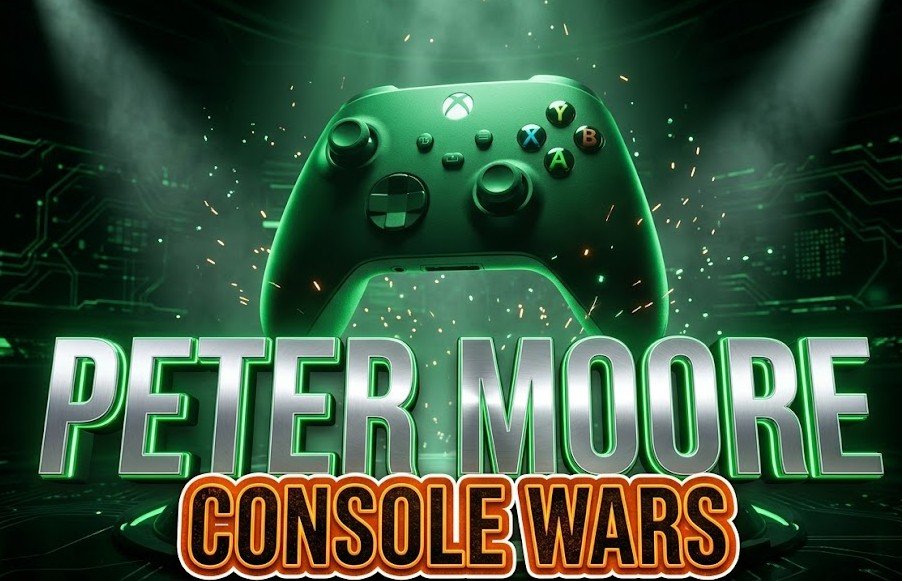
Former Xbox vice president Peter Moore just pulled back the curtain on one of gaming’s most important origin stories. In a new interview with The Game Business, the man who helped shape the Xbox 360 and turn Xbox into a global powerhouse opened up about picking fights with Sony, keeping Microsoft’s “nerdy” image far from the console, and why Bill Gates gave him the green light to do it all.
Steve Ballmer Wanted Someone to “Throw Punches”
Before Peter Moore ever set foot at Microsoft, he was already known for his sharp marketing instincts. He held senior roles at Reebok and served as president of Sega of America, overseeing the Xbox and Xbox 360 game consoles.
Ballmer had lunch with Moore and told him plainly: “We don’t have people like you.” He had seen Moore on stage at Sega, throwing punches, challenging Sony with irreverent abuse.
Ballmer’s exact words, according to Moore: “I need somebody to throw punches. We’re a bunch of nerds.
That blunt recruitment pitch set the tone for everything Moore would do at Xbox. In Moore, executives like CEO Steve Ballmer and chief software architect Bill Gates saw a fiery spirit that wouldn’t be afraid to get aggressive and take the fight to Xbox’s competition.
Distancing Xbox From Windows and Microsoft
One of Moore’s boldest moves had nothing to do with game exclusives or hardware specs. It was about branding.
Moore wanted to build Xbox into something that did not bring to mind Microsoft, Windows, or the Office suite. In a key meeting with Bill Gates, Moore said: “You’re going to see the Xbox 360 packaging. You’re not going to see Microsoft anywhere near. We’re going to create a brand that is Xbox.” He told Gates they needed to “segment ourselves away from Excel, PowerPoint, Windows, NT Server.” And Gates, to his credit, said “Absolutely.
This was not just a creative decision. It was a strategic one. Microsoft wanted to ensure the brand was very distinct from the rest of the company, both to make it more attractive to consumers and to distance it from antitrust challenges the firm was facing at the time.
Moore later confirmed: “When I was at Microsoft we were operating under consent decree as a monopoly from the Department of Justice, who wanted to break us up. Keeping Xbox separate was not optional. It was necessary for survival.
The result? Xbox now “sits today as one of the top 100 brands in the world,” and Moore says he is “very proud our team was able to do that in those early days.
“Maybe the Console Wars Were My Fault”
Moore did not shy away from taking some credit for one of gaming’s most passionate rivalries.
He openly wondered: “Maybe it’s all my fault, developing the console wars and getting in each other’s faces.” But he added, “Gamers loved it. These are the lessons I learned from the sneaker wars of Reebok vs Nike vs Adidas vs Puma. You create this sense of competition, and the consumer loves it because they think they’re soldiers in a battle.
He borrowed directly from the playbook he used selling sneakers and brought it into gaming. Here is how Moore’s career arc fueled the console wars:
- Reebok (1990s): Learned the power of brand rivalry against Nike and Adidas
- Sega of America (1999-2003): Ran aggressive campaigns against Sony during the PS2 era
- Xbox (2003-2007): Applied those lessons to make Xbox a challenger brand against PlayStation
- EA Sports (2007-2017): Later pushed through FIFA Ultimate Team, transforming sports gaming
Moore was notorious for appearing at shows like E3 with game tattoos, including his Halo 2 tattoo and his Grand Theft Auto IV tattoo. He says these PR stunts were necessary for helping to grow the industry.
Bill Gates Feared Sony Would “Own the Living Room”
Beyond branding and marketing battles, Moore revealed why Microsoft entered gaming in the first place.
Gates told Moore directly: “I am concerned that Sony is going to own the living room, and that we will be forever relegated to being a computer on a desk in an office. As broadband starts to democratize your access to the internet and entertainment will start flowing through there, we need to be in the living room. And the best way to be in the living room I see is video games.
That single fear reshaped Microsoft’s entire strategy. Gates envisioned what the Xbox 360 eventually became: “not just a game machine, but an entertainment machine.
Moore said the experience at Xbox was completely different from his time at Sega. “There was nobody at Microsoft other than us that were making decisions. Bill Gates and Steve Ballmer allowed us to get on with it. They both had a great interest, Bill in particular, in what we were doing. But they also allowed us to be off-campus. We were not part of what’s known as the Borg.
That freedom let Moore’s team move fast, take risks, and build a brand from scratch with very little corporate interference.
Where Xbox Stands Today Under New Leadership
Moore’s reflections come at a pivotal moment for the brand he helped create.
Microsoft CEO Satya Nadella recently announced that Asha Sharma will become Executive Vice President and CEO of Microsoft Gaming, reporting directly to him. Phil Spencer, who led Xbox for 12 years, retired from the company.
Moore has shared his thoughts on the transition. He acknowledged that “imposter syndrome is real” and said that if Sharma “isn’t lying awake at 3 a.m. wondering what the hell did I get myself into, and what do I need to do to win over gamers,” then something would be off.
In a separate interview with GamesBeat, Moore said: “I loved the sense of competition, the console wars. I’ve been very front about saying I loved pitching Xbox versus PlayStation versus Nintendo. I felt it was good for the industry.
But today, the landscape has shifted. Moore acknowledged the changing reality: “You’re no longer a first party once you start making the acquisitions that they did, because you can’t spend that kind of money and keep everything as an exclusive on your console.
| Xbox Then (Moore Era) | Xbox Now (2026) |
|---|---|
| Hardware-first strategy | Multiplatform game releases |
| Exclusive titles drove sales | Game Pass subscriptions as focus |
| Console wars at full intensity | Brand identity under question |
| Xbox separate from Microsoft | Xbox tightly integrated with Microsoft AI goals |
| Peter Moore, Steve Ballmer led charge | Asha Sharma, Matt Booty as new leadership |
Peter Moore’s story is a reminder of what happens when bold leadership meets a clear vision. He did not just sell a gaming console. He built an identity that millions of people still feel deeply connected to, two decades later. Sharma herself seems to understand this, saying in her opening letter: “I want to return to the renegade spirit that built Xbox in the first place. Whether Xbox can recapture that fire under new leadership is the question every gamer is asking right now. Drop your thoughts in the comments below and let us know which Xbox era was your favorite.