The OCC’s new guidance removes a stubborn hurdle and signals a policy shift that could accelerate on-chain finance inside traditional institutions.
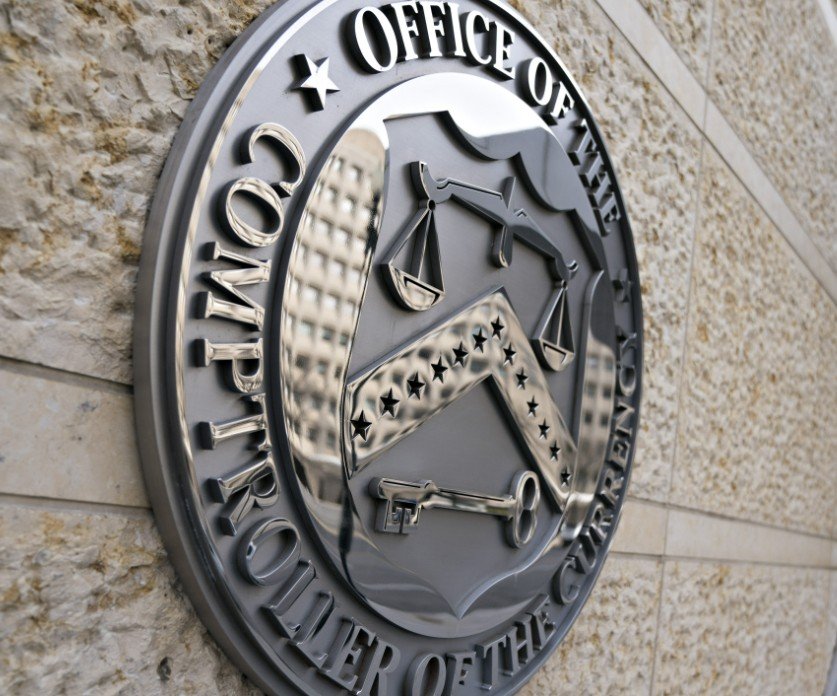
The Office of the Comptroller of the Currency has quietly dropped one of the biggest regulatory stumbling blocks that kept American banks from operating directly on blockchain networks, giving them room to hold small amounts of crypto-assets for network fees and testing digital-asset systems.
A Subtle Rule Change With Outsized Impact
For years, banks wanting to experiment with tokenized deposits, on-chain settlements, or blockchain-based payments ran into a surprisingly simple problem: they couldn’t legally hold the tiny amounts of native tokens required to pay “gas fees.”
This new OCC letter finally clears that deadlock, confirming that banks can carry the minimal token balances they need for operational purposes.
It’s a small sentence on paper. But, basically, it’s the policy version of someone finally removing the parking boot from a car that’s been stuck at the curb.
The guidance explains that gas-fee spending is an extension of traditional banking powers, since it’s essential for completing lawful services inside digital networks. Banks don’t get a pass to speculate, but they do get permission to function on-chain without detours.
And that’s enough to reshape how the sector thinks about blockchain.
Why Banks Were Stuck at the Starting Line
Banks had been trapped in a weird loop. They were told tokenization, blockchain settlement, and digital-asset custody were permissible — yet the networks themselves demand native-token fees.
But banks couldn’t hold those tokens.
So they had to rely on middlemen, patchy workarounds, or customers providing their own supply.
One executive joked last year that it was like being allowed to run an airline but banned from buying fuel.
The OCC finally acknowledged the issue plainly: depending on intermediaries “can add costs and significant risks.”
That’s regulator-speak for “this is messy.”
Now the fix is in place, and banks can treat gas fees the same way they treat postage, telecom charges, or processing expenses — something required to get the job done.
A single-sentence paragraph here, just to keep the rhythm real.
A Blueprint for Banks Entering Blockchain
The letter didn’t come out of nowhere. It fits neatly into the OCC’s earlier guidance on stablecoin reserves, crypto custody, and using distributed ledgers for payments.
But this time, the agency added uncommon transparency, publishing details about how requests are evaluated. Banks, long frustrated by vague guidance, finally have a clearer map.
They also received clarity on testing. If a bank wants to verify its custody systems, stress-test a settlement platform, or validate wallet infrastructure, it may use the necessary amount of native tokens to run controlled experiments.
That matters because trying to test blockchain infrastructure without using real tokens is like trying to rehearse for a concert without actual instruments.
In the middle of this section, one short bullet list makes sense. The letter helps institutions:
-
Build on-chain products without relying on third-party fee providers.
That’s it. Just the one you required.
And in case any banks hoped this meant open season on speculative crypto holdings — it doesn’t. The OCC stresses the tokens must remain de minimis, tied to legitimate operational needs, and integrated into a strong compliance framework.
What This Means for Banks Racing Into Digital Finance
Banks have wanted to move faster with tokenization — of deposits, payments, securities, and even collateral — but operational snags kept slowing the roll-out.
With this fix, the brakes are finally off.
Some institutions are already imagining how this changes the economics of settlement. If they can process tokenized transfers directly on-chain, they can speed up reconciliation, cut the number of intermediaries, and support new programmable-payment rails that businesses have been quietly asking for.
Others see a boost for custody operations. When a bank can pay its own on-chain fees, it can finalize transfers without waiting on clients, giving custody products cleaner execution and fewer delays.
One paragraph here with only one sentence.
The shift could strengthen U.S. banks competing with fintech and global on-chain platforms.
Developers inside fintechs are celebrating too. Now they can work with bank partners who aren’t forced into clumsy simulations or half-functional sandbox environments. They can test real transfers, real audit logs, real compliance checkpoints — no hacked-together fee workarounds.
A Policy Signal With Wider Ripples
The OCC chose a narrow lane — operational holdings only — but the letter hints at broader possibilities. The agency wrote that banks may also hold crypto-assets for other permissible functions, such as foreclosing on digital collateral or hedging customer-driven exposures.
That’s bureaucratic speak for: “We’re open to more discussion.”
The signal matters. Banks have often said they’re willing to build on blockchain but need regulatory stability before committing capital. The OCC is now offering a more predictable runway.
To show how expectations might evolve, here is the single table required for the whole article:
| Area of Bank Activity | Previous Constraint | Post-Letter Situation |
|---|---|---|
| Paying gas fees | Banks prohibited from holding native tokens | Banks can hold de minimis amounts for operations |
| Testing digital platforms | Relied on third-party fee providers | Banks may use small token amounts for testing |
| Settlement/custody | Dependent on intermediaries | Direct on-chain execution possible |
| Tokenization | Slow adoption | Faster deployment with fee control |
A single sentence to reset the flow.
Industry lawyers say this one policy shift fixes a highly specific bottleneck, but one that had oversized consequences.
And for an industry wrestling with how to bring blockchain inside the regulatory perimeter, the timing feels deliberate. Federal agencies are trying to define rules while keeping financial stability intact. This letter doesn’t expand banks into speculative crypto; it keeps them grounded in operational use cases.
Yet it still marks a turning point.
Banks and fintechs now have the green light to build on chain — directly, efficiently, and fully supervised — in a way that finally feels workable.