Southfield’s Lawrence Technological University has teamed up with Michigan State University to develop driverless race cars that hit nearly 200 miles per hour. The partnership brings LTU into the Indy Autonomous Challenge, a global competition that tests the limits of artificial intelligence in motorsport. This move places Michigan students and researchers at the center of technology that could transform everyday driving safety and performance.
Universities Team Up for Indy Autonomous Challenge
Lawrence Technological University announced its entry into the Indy Autonomous Challenge in March 2026. The school joined forces with Michigan State University and the established PoliMOVE-MSU racing team. This global group already includes experts from Politecnico di Milano in Italy.
The collaboration formed over eight months of planning. Patrick Nelson, dean of LTU’s College of Arts and Sciences, and Judson Herzer from MSU’s Office of Mobility led the discussions. Their work integrates LTU’s robotics strengths with the team’s proven track record in high-speed autonomy.
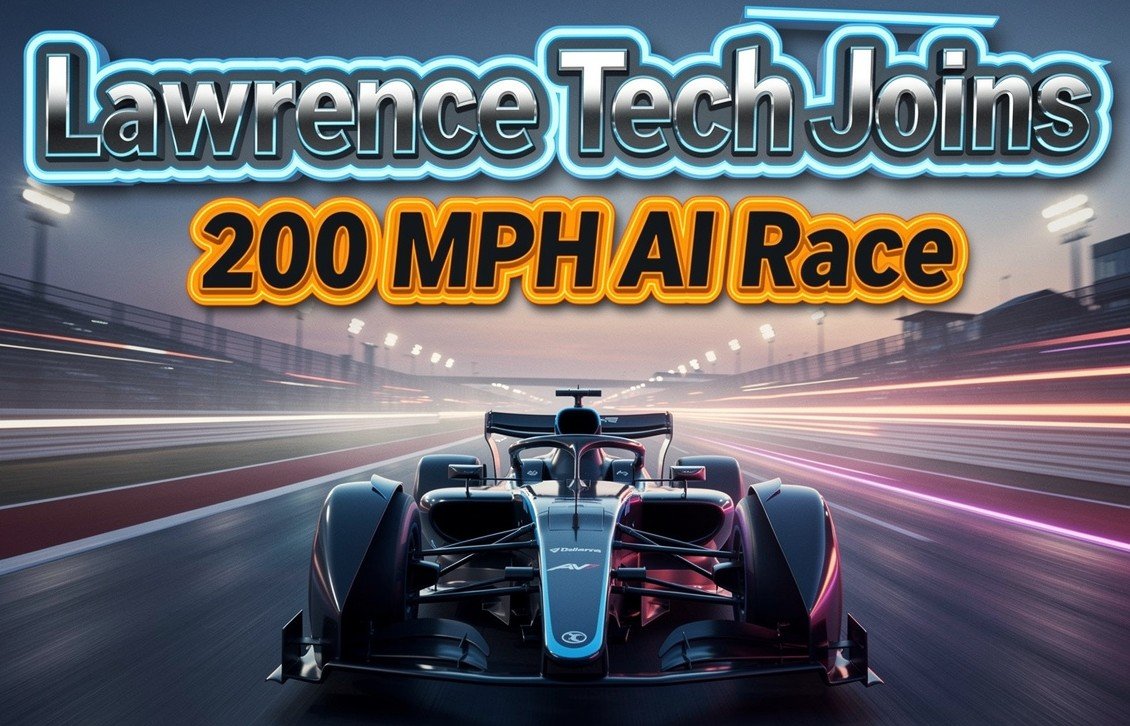
The shared vehicle is a modified Dallara AV-24 race car built for fully autonomous operation. It connects directly to events in the NTT IndyCar Series. The first race of the season is set for this summer. Nashville appears likely as an early stop on the calendar.
LTU Experts Focus on Perception and Decision Technology
CJ Chung, a computer science professor at Lawrence Tech and founder of the Robofest program, plays a key role. He brings years of experience in robotics and student competitions to the project. Chung and his colleagues will help refine the systems that let the car see and react to the track at blazing speeds.
Devson Butani, the Robotics Research Lab manager and a 2025 graduate with a Master of Science in Computer Science from LTU, contributes hands-on expertise. He joins Chung along with associate professor Vijay John and department chair Eric Martinson. Their work centers on perception systems that process data from sensors in real time.
Bold decisions happen in fractions of a second at these speeds. The LTU team helps develop algorithms that interpret sensor input, predict other vehicles’ movements, and choose the safest path forward. This focus builds on Butani’s graduate research into lightweight models for autonomous steering.
A recent photo shows Chung and Butani standing with MSU’s Sparty mascot beside one of the autonomous race cars. The image captures the excitement of two Michigan schools working together on future technology.
Inside the Indy Autonomous Challenge and Its Demanding Tests
The Indy Autonomous Challenge brings university teams from around the world together to advance autonomous vehicle technology. Competitors program AI systems to pilot modified IndyCar-style vehicles without any human driver. These cars reach speeds approaching 200 miles per hour while navigating complex tracks.
The PoliMOVE-MSU team has already delivered strong results. In 2025, they took first place in a time trial at WeatherTech Raceway Laguna Seca in California. That event kicked off an IndyCar weekend and showed how close these AI drivers have come to matching skilled human racers.
The cars use advanced sensor suites including LiDAR, radar, and multiple cameras. Onboard computers run sophisticated artificial intelligence that handles everything from lane detection to obstacle avoidance under extreme conditions.
Teams compete in formats that include solo time trials and, in some cases, side-by-side racing. These challenges create some of the toughest possible tests for autonomous systems. The data and lessons learned transfer directly to improving safety features in consumer vehicles.
What This Means for Michigan Innovation and Future Mobility
This partnership strengthens Michigan’s position as a leader in autonomous technology. The state already serves as the heart of the American auto industry. Adding university research in high-speed AI racing creates new pathways for students and potential industry collaborations.
Autonomous racing forces engineers to solve problems that everyday self-driving cars will face one day. Split-second decisions in wet weather, heavy traffic, or emergency situations become training grounds for better systems. The technology developed here could eventually help reduce accidents on public roads.
Students at both schools gain rare access to real-world testing of cutting-edge equipment. They work alongside international partners and apply classroom concepts to actual competition vehicles. This experience proves valuable for careers in robotics, artificial intelligence, and automotive engineering.
Lawrence Tech’s long history with robotics competitions like Robofest gives it a strong foundation. The university has consistently prepared young people for hands-on technical challenges. Now those skills move to one of the most exciting frontiers in transportation.
Students Build Skills That Shape Tomorrow’s Roads
The opportunity excites participants across both campuses. Young researchers learn to handle massive amounts of sensor data while keeping the car stable at race speeds. They also practice teamwork across institutions and time zones.
These projects highlight the importance of STEM education in a changing world. As vehicles become smarter, the need grows for talented people who understand both the hardware and the software that make autonomy possible.
Michigan benefits when its universities produce graduates ready for these roles. The auto industry continues to evolve toward electric, connected, and self-driving vehicles. Programs like this keep local talent engaged and employed close to home.
The Indy Autonomous Challenge shows how competition can drive meaningful progress. Universities push boundaries in a controlled environment that still feels very real. The results benefit everyone who cares about safer, more efficient transportation.
Lawrence Tech’s entry into this elite competition marks a proud moment for Southfield and the entire region. It demonstrates what happens when strong institutions work together toward ambitious goals. The coming races will reveal how far these autonomous systems have come and how much further they can go.
This story reminds us that innovation often starts with bold partnerships and dedicated people willing to tackle tough problems. The cars may race without drivers, but the future of mobility depends on the bright minds building the technology behind them. What do you think about autonomous vehicles racing at these speeds? Share your thoughts in the comments below.