
A coalition of Kenyan lenders has dropped Pesalink interbank transfer charges to a flat Sh20 and waived fees entirely on transactions below Sh1,000, the most aggressive coordinated industry move yet to underprice mobile money on routine peer-to-peer payments. The new tariff replaces an older tiered schedule that climbed as high as Sh250 per transaction depending on size.
KCB Bank, Diamond Trust Bank (DTB), SBM Bank Kenya, Ecobank, GT Bank, Prime Bank, Paramount Bank, Bank of Baroda, and Credit Bank have adopted the unified pricing under an industry initiative branded ‘Tuma Direct na Mbao,’ Swahili shorthand for ‘Send Direct for Twenty.’ The campaign runs through Integrated Payment Services Limited (IPSL), the Kenya Bankers Association subsidiary that operates Pesalink and now connects more than 195 banks, savings cooperatives and fintech wallets nationwide.
The New Pesalink Tariff at a Glance
The pricing change is structural, not a promotional window. Under the harmonised tariff at participating lenders, every transfer below Sh1,000 is free, and every transfer from Sh1,001 to Sh999,999 costs a single Sh20 fee. That is true whether the customer is moving Sh1,200 or Sh750,000.
Before the switch, the same transactions priced in seven or eight tiers at most banks, with the upper bands running between Sh100 and Sh250. The new schedule turns the bank rail from a cost-recovery service into a deliberate land-grab tool, and it does so across nearly the full retail transaction range that mobile wallets currently serve.
| Transfer Amount | Old Pesalink Tier (typical) | New Tariff Under Tuma Direct na Mbao |
|---|---|---|
| Sh1 to Sh1,000 | Sh30 to Sh60 | Free |
| Sh1,001 to Sh5,000 | Sh60 to Sh100 | Sh20 |
| Sh5,001 to Sh20,000 | Sh100 to Sh150 | Sh20 |
| Sh20,001 to Sh100,000 | Sh150 to Sh200 | Sh20 |
| Sh100,001 to Sh999,999 | Sh200 to Sh250 | Sh20 |
For a customer moving Sh50,000 to a relative banked elsewhere, the cost falls from roughly Sh150 to Sh20, a reduction of about 87 percent. Choice MFB and Caritas MFB are among the microfinance institutions that have also joined the coalition, broadening the rail’s reach beyond the tier-one lenders.
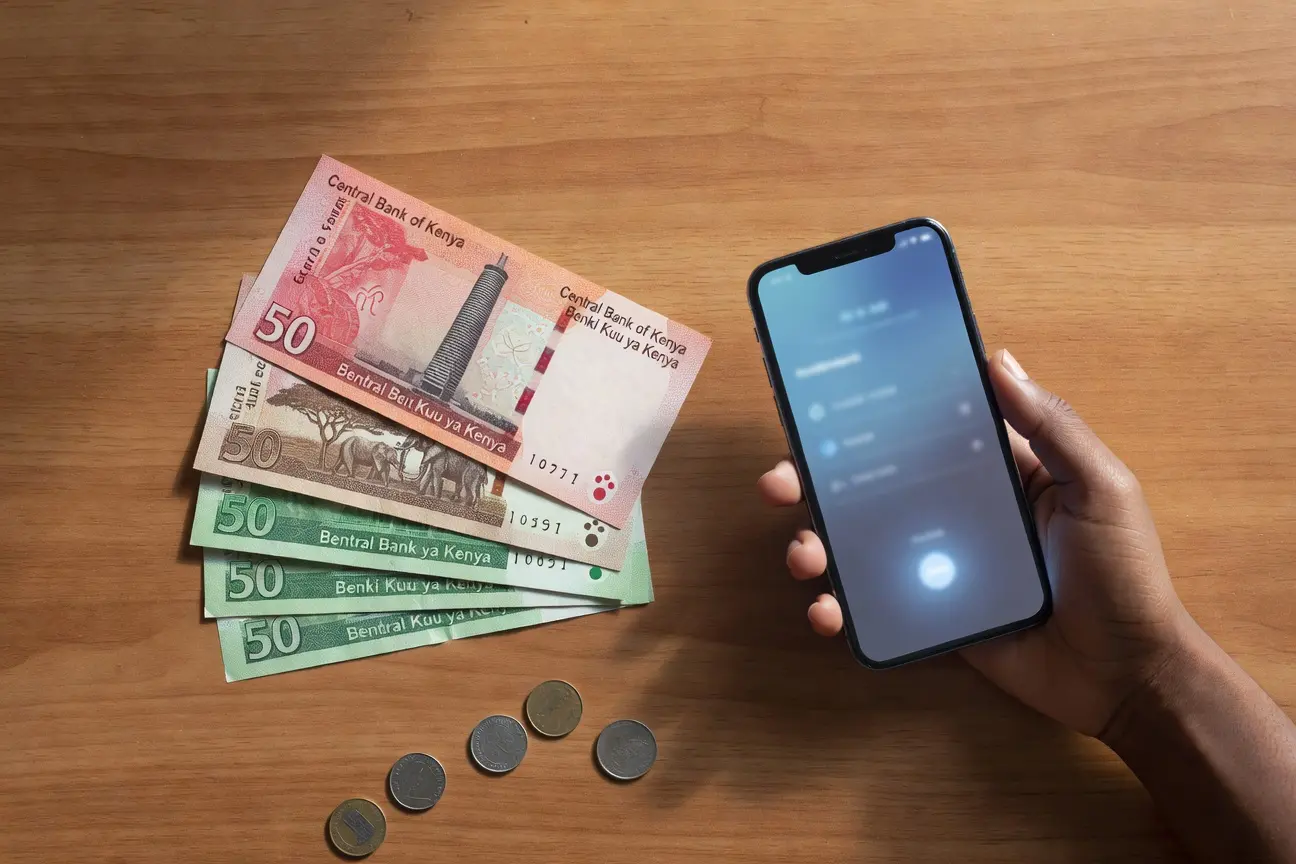
Seventeen Years of Mobile Money Setting the Floor
To understand why the banking industry is moving now, rewind to March 2007. That is when Safaricom launched M-Pesa, the telco-operated wallet that turned a phone number into a stand-in for a bank account and a rural shopkeeper into a cash teller. Within five years the platform had buried Kenya’s nascent card and account-to-account ecosystem for everyday payments.
The banks watched it happen. By 2017 the Kenya Bankers Association had finally responded with Pesalink, an instant rail built specifically to give account holders a round-the-clock interbank transfer option that did not require leaving a branch counter. The technology worked. The pricing did not. Customers comparing a Sh250 cap on a large bank-to-bank send with the mobile wallet’s tiered tariff often stayed on M-Pesa for any transfer above the Sh100 kadogo (low-value) band.
That kept the bank rail underutilised for nearly a decade. According to Safaricom’s full-year results for fiscal 2026, the wallet generated Sh183 billion (about $1.4 billion) in revenue for the year to March 2026, equivalent to 45.6 percent of the telco’s Kenya service revenue, with kadogo person-to-person transactions accounting for 17.1 billion individual sends.
The bank rail, meanwhile, processed over a million transactions a month at a daily value range of Sh5 billion to Sh6 billion, weighted toward large-ticket transfers rather than the routine sends that built the wallet’s volume. Cheap or free routine sends were the missing piece in the bank-side proposition. The industry has finally moved to add them.
Where the Bank Rail Now Undercuts M-Pesa
The mathematics of the new tariff finally puts account-to-account transfers below the mobile wallet on most routine sends above a few thousand shillings.
The wallet’s send-money table still climbs with transaction size. Sending between Sh4,001 and Sh7,500 costs roughly Sh39. Between Sh10,001 and Sh15,000 the fee climbs to about Sh57. At the top of the regulated tariff, sending Sh70,001 to Sh150,000 costs Sh112 per transaction. Each of those figures already includes the 20 percent excise duty that the National Treasury added to mobile money fees in 2018.
Pesalink under the new pricing collapses that entire ladder into Sh20 flat.
The implication is straightforward. For any transfer above roughly Sh2,000 to a recipient who already banks somewhere, account-to-account is now the cheaper option by a wide margin. Salary cycles, rent payments, supplier settlements, school fees, and routine intra-family transfers above a few thousand shillings have all flipped on price for the first time since the telco rail came to dominate.
The sub-Sh1,000 band is where the gap is most visible. Every transfer below that threshold is now zero-rated on the bank rail for participating institutions. The mobile wallet’s kadogo waiver applies only below Sh101. Between Sh101 and Sh1,000, the wallet still charges, putting account-to-account at an unambiguous edge for that tier as well.
Banks Are Buying Volume Their Way Back into Daily Payments
The pricing strategy borrows from a familiar telco playbook: surrender per-transaction margin to capture engagement, then monetise the engagement somewhere else. For lenders that have watched their customers leak everyday transactions onto external wallets for the better part of a generation, the something-else is deposit stickiness, cross-sell pipelines, and richer behavioural data on how customers actually move money.
Gituku Kirika, chief executive of IPSL, framed the logic openly at the rollout.
Today we see banks charging as high as Sh250 for a Pesalink transaction depending on the amount. So, coming down to a flat fee of Sh20 is a drastic reduction.
Kirika has been blunt that price is the lever the industry was ignoring. He noted in the same announcement that when fees on the rail were zero-rated during earlier promotional windows, volumes increased significantly, suggesting demand elasticity for interbank transfers is far higher than the banking sector had assumed.
What that buys participating lenders is several things at once:
- Active-account hygiene. Dormant accounts cost capital and produce no fee income. A customer who runs daily transfers through a bank account becomes a far better candidate for an overdraft, a personal loan, or a payroll mandate.
- Float retention. Money that moves between bank accounts stays inside the banking system as deposits, rather than sitting on a telco’s escrow at the Central Bank of Kenya (CBK).
- Data depth. Bank-rail transactions carry richer remitter and beneficiary metadata than agent-based withdrawals, which sharpens credit scoring for the same customer.
- Standardisation. A flat Sh20 fee is far easier to advertise than a seven-tier table, and easier to compare against a mobile-wallet alternative.
It is the same margin-compression bet now pressuring profitability across Indian lenders facing structural net-interest pressure: accept lower per-unit economics now in return for a defensible volume base later.
The Agent Network Safaricom Still Owns
The price gap is real. The cash-handling gap is not closing.
By design, the bank rail only moves money between accounts. To turn an account balance into physical notes, a customer in a rural town typically needs an ATM, a branch, or a bank agent. Kenya’s banks operate roughly 1,500 to 2,000 branches and a modest agent footprint scattered unevenly across the country.
Safaricom, by contrast, sits on the largest cash-distribution network on the continent. Its agent base is publicly reported at around 250,000 outlets, from corner shops in Eastleigh to kiosks deep into Turkana County. For the user who needs to send money home and have a relative withdraw it at the nearest duka the same evening, the bank rail still does not solve the last-mile problem.
That is why the industry’s pricing move is necessary but probably not sufficient. Banks can compete on the wire. They cannot, on current footprint, compete on the cash-out. The two systems are also asymmetric in behaviour: wallet users default to the wallet, while bank customers are still trained to think of their bank app as a bill-pay and salary-receipt tool, not a peer-to-peer cash channel.
IPSL is signalling that the next phase will attack the friction problem from a different angle. Kirika has said the platform will soon let users initiate transfers with a phone number or national ID number rather than a long account string, removing one of the most-cited reasons customers default to the mobile wallet for casual sends. The architecture echoes the proxy-addressing systems already running on the CBK’s national payments framework and on regional rails such as Tanzania’s TIPS and South Africa’s PayShap.
Pesalink can move money below Sh1,000 for free; turning that money into actual notes in a Kibera kiosk still routes through Safaricom.
Frequently Asked Questions
Which Kenyan Banks Have Joined the Sh20 Pesalink Tariff?
Confirmed participants so far include KCB Bank, Diamond Trust Bank, SBM Bank Kenya, Ecobank, GT Bank, Prime Bank, Paramount Bank, Bank of Baroda, and Credit Bank, alongside microfinance institutions Choice MFB and Caritas MFB. IPSL has said negotiations are ongoing with additional lenders to widen the coalition.
Is the Sh20 Pesalink Fee the Same for Every Transfer Size?
Yes, above Sh1,000. The new tariff at participating banks is a flat Sh20 for every transaction between Sh1,001 and Sh999,999, regardless of amount. Transfers of Sh1,000 or less are free, replacing the older tiered schedule that could climb to Sh250 on the largest sends.
How Does the New Pesalink Pricing Compare With M-Pesa?
For any send above roughly Sh2,000 to a recipient who already banks somewhere, Pesalink is now cheaper. M-Pesa charges scale with transaction size up to about Sh112 at the top regulated band, while the new bank-rail tariff is flat Sh20. For sub-Sh1,000 transfers, Pesalink is free at participating banks; the mobile wallet zero-rates only below Sh101.
How Long Does a Pesalink Transfer Take to Settle?
Transfers settle in real time, with the operator citing under 45 seconds end-to-end. The rail runs 24 hours a day, seven days a week, including public holidays, so the money lands in the recipient’s account immediately rather than waiting for a clearing window. Details are documented on the official IPSL platform page.
Can I Send Pesalink Money Using Just a Phone Number?
Not yet at every bank, but it is on the roadmap. IPSL has signalled that future releases will let customers initiate transfers using a recipient’s mobile phone number or national ID number rather than requiring full bank account details, mirroring the look-up experience customers already get on mobile wallets.
Are There Daily or Monthly Limits on Pesalink Transfers?
The per-transaction ceiling is Sh999,999, so anything up to one shilling below one million can move on the rail in a single send. Individual banks set their own daily aggregate limits within that ceiling, so customers should check with their bank for cumulative caps.