
Holcim UK has moved to expand its hold on London’s construction recycling landscape with the takeover of Thames Materials, a long-established west London waste specialist. The deal adds fresh scale to Holcim’s ambitions to grow its circular construction business across the capital.
A Growing Bet on Recycling Capacity
Holcim’s decision lands at a moment when pressure is piling up on builders in London to cut waste and reuse more materials. The Swiss-owned group, which has been stepping up its UK activity over the past few years, clearly sees an opening.
The company said the acquisition gives it a stronger foothold in the construction demolition materials market across the capital. That’s a big space right now, you know, with infrastructure works ticking forward and developers under constant scrutiny to clean up their environmental impact.
Thames Materials arrives with real scale. The business, founded back in 1995, employs around 90 people and controls 62 vehicles. Its base in Uxbridge supports a 12-acre recycling hub in Harefield that can now process up to 750,000 tonnes a year after a recent capacity lift. That’s a meaningful jump in London’s ability to handle construction waste locally rather than shipping it off elsewhere.
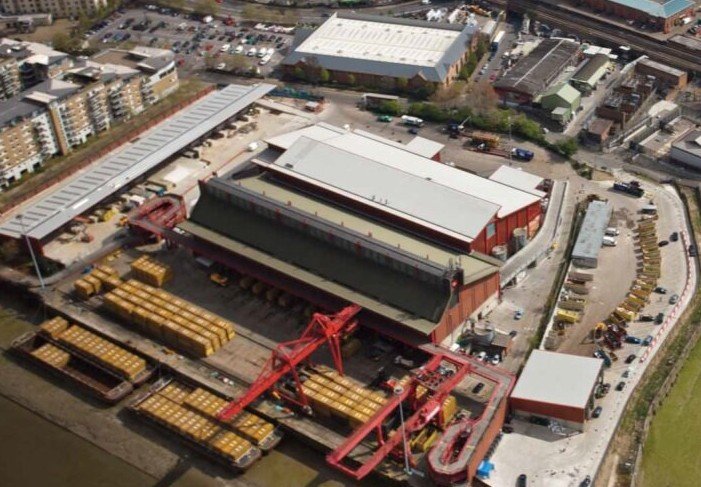
And its financials underline why Holcim took interest.
| Year Ending Oct 2024 | Performance |
|---|---|
| Turnover | £30m |
| Pre-tax Profit | £3.5m |
| Net Assets | £34m+ |
| Materials Received | 400,000 tonnes |
| Recovered for Sale | 340,000 tonnes |
A tidy set of numbers, especially the recovery rate, which shows how embedded Thames already is in the secondary aggregates market.
What Holcim Gains From the Deal
Holcim UK chief executive Lee Sleight framed the takeover as a strategic lift for the group’s push into sustainable construction, especially in London. His comments came across with an obvious enthusiasm that the company now has more muscle in a fast-changing market.
He said the deal “strengthens our footprint in the London construction market” and fits with Holcim’s ambition to be the country’s top supplier of sustainable building solutions. That’s corporate-speak, sure, but underneath there’s a clear message: Holcim wants to control more of the recycling chain.
The interesting part is the synergy he pointed out with Holcim’s existing east London recycling operations. It hints at a bigger integrated network stretching across the capital, from the western counties right through to the Thames Gateway.
One sentence he said stood out.
Holcim plans to process 6.5 million tonnes of construction and demolition material annually by 2030.
That’s a huge target. And the Thames acquisition gives them a stronger platform to even attempt it.
How Thames Materials Fits Into Holcim’s Strategy
Thames Materials brings something Holcim badly needs: established relationships with London builders, haulage capacity and a proven recycling operation. These aren’t easy to build from scratch, especially in a region where industrial land is tight and planning rules can be a headache.
The company specialises in collecting, moving and recycling waste from construction sites across London and surrounding counties. Simple enough, but the volume they handle – more than 400,000 tonnes last year – shows they’re a major cog in London’s waste system.
It also gives Holcim direct access to a large steady stream of materials that can be turned into secondary aggregates. With infrastructure costs rising, recycled aggregates are suddenly more interesting to builders looking to keep budgets under control.
And sometimes a deal is also about the people. Thames has 90 employees with decades of cumulative experience in the trade. Holcim won’t say it out loud, but skilled operators who know London’s construction landscape are as valuable as the physical site itself.
A small but meaningful detail: Thames operates from a large 12-acre facility in Harefield, at a time when space is disappearing across the city.
The Voices Behind the Deal
Martin Clarke, managing director at Thames Materials, spoke warmly about the acquisition. His comments revealed a sense of relief but also excitement about plugging into a bigger network.
He said the business looks forward to moving ahead with Holcim’s backing. Clarke acknowledged that Holcim’s scale gives Thames access to expertise and markets they couldn’t reach on their own.
One line he delivered felt almost personal: “This move allows us to continue on our growth trajectory.” It sounded like a leader who had kept the company steady through tough years and now wants to see it jump to the next level.
Holcim, of course, brings the global credibility and capital to expand processing capacity even further. And Clarke seemed keen to align with Holcim’s vision for circular construction – not just in words but in how the company actually works on the ground.
The fit between both firms feels natural. One brings reach and investment; the other offers the local know-how and operational backbone.
Why This Matters for London’s Construction Scene
London’s builders are under pressure from every angle: environmental rules, labour shortages, rising material prices and government targets for waste reduction. A shake-up in the waste handling sector affects them all.
This deal won’t magically solve London’s waste challenges. But it does add more capacity, more certainty and possibly better pricing for recycled aggregates. Construction companies often complain that recycling is still patchy across the city; with Holcim stepping in, the market could see a more organised system.
Some local contractors might be quietly pleased. More processing capacity means fewer delays on big digs, fewer logistical bottlenecks, and perhaps smoother compliance with sustainability standards.
There’s also the broader policy context. London’s councils have been tightening recycling requirements for new builds, pushing contractors to show where their waste goes and how much is reused. Having a major operator like Holcim involved gives regulators a clearer, traceable chain of custody.
As one industry analyst put it recently, the construction recycling sector is becoming “a serious battleground.” And Holcim’s move shows it wants to control the high ground.