
The race to control the Arctic’s vast untouched resources has officially hit a speed bump. Local business leaders in Greenland are pushing back against the narrative that their icy territory is simply “open for business” to the highest bidder.
This comes as global superpowers scramble to secure supply chains for the next generation of technology. The message from Nuuk is clear and it changes everything about how foreign nations must approach the island.
Seeking Value Beyond Raw Extraction
Christian Keldsen serves as the head of the Greenland Business Association. He is raising a red flag regarding how the territory markets itself to the world. Keldsen believes the government must stop using the phrase “open for business” loosely. He argues that this slogan paints a false picture of easy access when the reality involves complex negotiations.
The primary fear is that foreign entities will extract raw materials without leaving any lasting wealth for the local population.
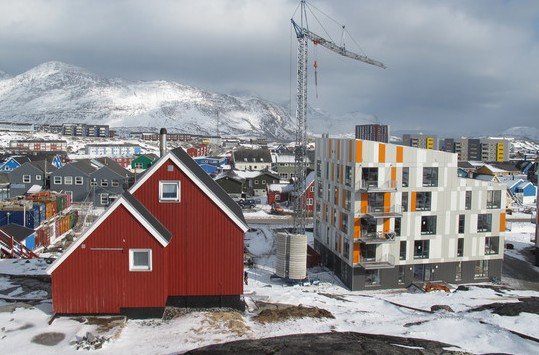
Keldsen operates out of a modest wooden house in the capital city of Nuuk. From this headquarters he warns that bad deals could leave Greenland empty-handed. He emphasizes that if they open the floodgates too wide then companies will come in and take everything out.
He notes that revenue would leave the country alongside the resources. This scenario is known economically as the “resource curse” and it is exactly what Greenland hopes to avoid.
The goal is to find a balance. The territory needs to be attractive to investors and major projects. However it must also create local value and wealth that stays within the community. This specific balance is proving difficult to master as pressure mounts from the United States and Europe.
Geopolitical Tensions and Security Concerns
The spotlight on Greenland has intensified significantly following renewed interest from top US political figures. Former President Donald Trump previously suggested that the United States should purchase Greenland. He cited security reasons and strategic positioning as the primary drivers for this idea.
This proposition alarmed Denmark and other European nations. The tension escalated when the idea of using force was not immediately ruled out in political discourse.
Greenland is no longer just a remote island but a chessboard for global security strategy.
As the ice sheet melts due to climate change it exposes land that was previously inaccessible. This melting ice reveals massive deposits of rare earth minerals. These elements are critical for modern defense systems and green energy technology.
The United States sees Greenland as a potential solution to reduce reliance on Chinese mineral supply chains. This makes the island a prime target for aggressive foreign policy and investment strategies.
Local officials know that security concerns drive much of this interest. They are wary of becoming a pawn in a larger game between Washington, Beijing and European capitals.
The Economic Fight for Independence
Greenland currently holds a unique status as an autonomous territory within the Kingdom of Denmark. This political arrangement comes with significant financial strings attached. The island survives largely on subsidies provided by the Danish government.
These subsidies are known as the “block grant.” This grant accounts for roughly 20 percent of Greenland’s entire economy. It is the lifeline that keeps schools, hospitals and infrastructure running.
Breaking free from this financial dependence requires massive influxes of new capital.
Political leaders in Greenland have long dreamed of full independence from Denmark. They know that mining revenues are the only realistic path to achieving this goal.
However the transition is risky. The government must secure investments that are massive enough to replace the Danish subsidies. Yet they must do so without selling off their sovereignty to mining conglomerates.
Key Minerals Found in Greenland
- Neodymium: Essential for creating powerful magnets used in electric vehicles.
- Praseodymium: Used alongside neodymium in wind turbine motors.
- Terbium: Critical for solid-state devices and sonar systems.
- Dysprosium: Vital for nuclear reactor control rods and data storage.
This list proves why the world is watching. The ground beneath the ice holds the keys to the future of energy and technology.
Infrastructure and Future Development
The push for development is not limited to digging holes in the ground. Greenland is currently expanding its physical connectivity to the rest of the world. New international airports are under construction in Nuuk and Ilulissat to facilitate direct flights.
These projects aim to boost tourism and make business travel easier. Currently most travel requires a stopover in Denmark which acts as a bottleneck for direct foreign investment.
Better infrastructure means Greenland can dictate its own terms more effectively.
Christian Keldsen and his association support these developments but urge caution. They want to ensure that new airports bring partners who are willing to invest in the community. They do not want transient operators who extract value and leave.
The business community in Nuuk is small but vocal. They are demanding that every contract signed includes provisions for local job creation and skills training. They want to ensure that the “Greenlandic gold rush” builds schools and roads rather than just padding foreign bank accounts.
Other countries may become frustrated with the slow pace of negotiations. Keldsen acknowledges this risk but insists it is necessary. He calls for a balanced development strategy that respects the environment and the people.
The world sees a treasure chest waiting to be opened. The people of Greenland see their home. The coming years will determine if they can turn this global interest into a sustainable future or if they will repeat the history of other resource-rich nations that lost control of their own wealth.