The FIFA Museum’s “Soccer & Technology” exhibition has opened in Vancouver, drawing hundreds of fans to Science World ahead of the 2026 World Cup. The show, in its North American debut, runs at the museum through September 7, 2026, with five themed zones and host-nation artefacts aimed at deepening Canadian ties to a sport still fighting for room in an ice hockey-first country.
It sits at the eastern end of False Creek, steps from BC Place, the city’s World Cup venue, and it is built as much for the curious Canadian as for the travelling fan. Organisers say the exhibition’s job is to show the work behind the goals: the broadcasts, the data, the referees, the pitch itself, and the ideas still in the lab.
Five Zones, One Host City
“Soccer & Technology from the FIFA Museum” makes its North American debut in Vancouver, a city that will host matches at BC Place during the 2026 World Cup. The travelling exhibition opened at Science World on May 15 and runs through September 7, 2026, with the FIFA Museum presenting the show in partnership with the Province of British Columbia.
The exhibition lays out modern soccer through five themed zones. They cover Broadcasting and Media, Intelligent Data, Refereeing and Fair Play, Staging the Game, and Innovation Lab. Each zone is built around a single question: how does the technology behind the sport actually work?
The Intelligent Data zone, for instance, walks visitors through the official match ball for the 2026 World Cup, the adidas Trionda. The ball carries a motion sensor designed to link the action on the pitch with data collection. The Refereeing and Fair Play zone puts visitors at a field-side monitor used in the Referee Review Area at the FIFA Club World Cup 2025, asking them to make the call on a contested play. That zone is one of five where visitors handle, judge, or submit something.
Anchored Steps from BC Place
Science World sits at the eastern end of False Creek, a short walk across the inlet from BC Place, the city’s stadium that will host all of Vancouver’s World Cup matches. The geography is part of the point: the same fans who take in a World Cup match can cross the creek and study the technology behind it the next day. Reuters reports the exhibition has already drawn hundreds of visitors in its first weeks. The five zones split up the modern game, and each invites visitors to handle, judge, or submit something.
The Science World’s exhibition page with the full zone descriptions lists each interactive moment in detail, and the table below summarises the show’s structure.
| Zone | Focus | Interactive Moment |
|---|---|---|
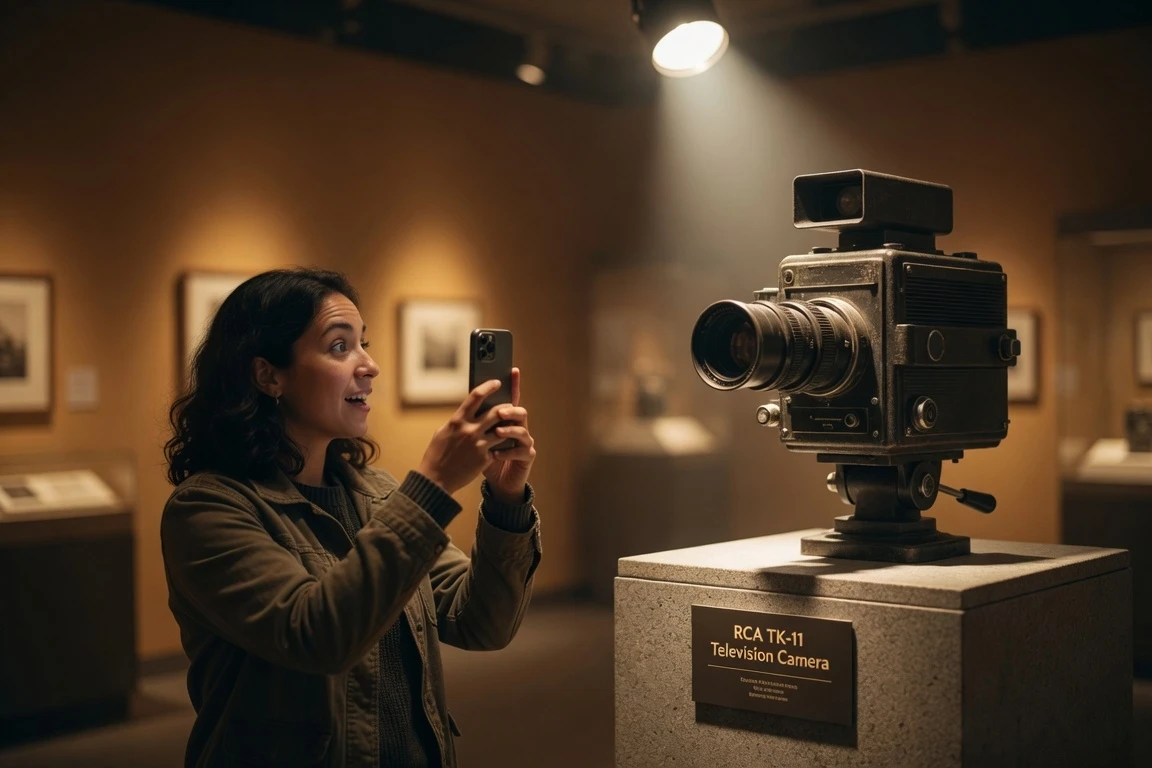
| Broadcasting and Media | High-speed cameras and wearable sensors since the first televised 1954 World Cup | Selfie next to the 1954 FIFA World Cup television camera |
| Intelligent Data | Millions of data points per match, plus the adidas Trionda’s motion sensor | Handle the Connected Ball Technology inside the Trionda |
| Refereeing and Fair Play | VAR, goal-line technology, and referee communication systems | Make the call at the FIFA Club World Cup 2025 Referee Review Area monitor |
| Staging the Game | Turfgrass, floodlights, and the unseen infrastructure of match day | Compare different playing surfaces against each other |
| Innovation Lab | How FIFA develops new tech from concept to deployment | Submit your own ideas to FIFA |
Built for Three Host Nations, Not One
The exhibition’s organisers did not want a generic, passport-stamped show. “We really tried to localise the content to Vancouver and to the three nations that are hosting the World Cup,” Sebastian Munoz, Senior Exhibition Design Manager at Science World, told Reuters. The three host nations are Canada, Mexico, and the United States.
Three Canadian artefacts anchor the show. Christine Sinclair’s jersey from Canada’s first Olympic gold-medal-winning game against Sweden at the Tokyo 2020 Olympics sits in one case. The match ball from Canada’s clash with Croatia at the FIFA World Cup 2022, in which Alphonso Davies netted the country’s first-ever men’s World Cup goal, sits in another. The jersey for captain Atiba Hutchinson, for Canada’s opening match against Belgium at the FIFA World Cup 2022, sits beside it.
For a country that watched Davies’ goal at the 2022 World Cup, those are touchable objects. They sit alongside content from Mexico and the United States, the other two host nations. The exhibition’s structure is built around Munoz’s argument: every zone maps to a profession cluster, and every interactive moment puts visitors inside a job task. That pattern runs from the 1954 television camera in Broadcasting and Media to the Innovation Lab at the far end of the show. Munoz’s argument is that soccer’s growth in Canada will come through the engineers, broadcasters, data analysts, turfgrass specialists, and referees who surround the sport.
Munoz’s framing is unusually direct for a museum show. He pitches the sport as a set of jobs around the players. The FIFA Museum’s Vancouver stop page lists the same host-nation artefacts and zone list as the show itself. The Reuters dispatch that covered the exhibition’s opening called the topic “a great fit” for a science museum.
Munoz on the Jobs Beyond the Pitch
Munoz argues soccer’s growth in Canada will come through the engineers, broadcasters, data analysts, turfgrass specialists, and referees who surround the sport. The exhibition’s structure is built around that argument: every zone corresponds to a profession cluster. Every interactive moment puts visitors inside a job task. The framing is more vocational than athletic.
You don’t have to just be a soccer player to be involved in the FIFA World Cup. You can be any of the professions that surround it and that you’re applying this technology to the game.
Munoz called the topic a natural fit for Science World, a museum built on physical science. “We found it a great fit for us, especially with the topic of this exhibition being about technology and all the professions that surround the game,” he told Reuters. The zones are meant to map onto the careers a Canadian teenager could pursue if they never make a national team roster.
The Intelligent Data zone invites visitors to handle the adidas Trionda, the official match ball for the 2026 World Cup. Broadcasting and Media traces the leap from the first televised World Cup, in Switzerland in 1954, to the high-speed cameras and wearable sensors used today. Staging the Game asks visitors to compare different playing surfaces, from natural turf to hybrid pitches. Refereeing and Fair Play puts them at the field-side monitor used in the Referee Review Area at the FIFA Club World Cup 2025.
What Visitors Walked Out Saying
The early reactions, captured by Reuters inside the gallery, lean on the same theme. Visitor Rob Rose, a self-described soccer fan, called the show “phenomenal.” “I wasn’t sure what to expect, but to see the combination of the actual real-life soccer with the technology is fascinating,” Rose said.
Another visitor, Denise Chang-Yen, focused on the historical spread of the technology. “I really liked seeing soccer over the different stages, the new technology and looking inside the soccer ball,” Chang-Yen said. She also singled out the inclusion of the women’s side of the game as something she had not expected. Both reactions echo Munoz’s argument that the show’s job is to make the sport’s infrastructure visible to people who do not yet follow the matches.
Soccer in Hockey-Mad Canada
The exhibition lands in a country where soccer competes with hockey, lacrosse, and curling for winter attention. The Reuters dispatch that broke the exhibition story stated the goal plainly: organisers “aim to accelerate soccer’s growth in ice hockey-mad Canada.” The Science World show is one answer to that.
Its run through September 7 covers the entire Vancouver portion of the World Cup. The city’s first match falls on June 13, and the Vancouver’s full slate of seven BC Place matches is listed as running through July 19 on Destination Vancouver. All seven matches Vancouver is hosting are scheduled at the same stadium that sits across False Creek from the museum. Fans booked into World Cup games can spend the morning at the exhibition.
Vancouver is one of sixteen host cities across Canada, Mexico, and the United States, per the Vancouver 2026 World Cup host city site. The exhibition treats that status as content. Visitors walk past Christine Sinclair’s jersey and Atiba Hutchinson’s jersey within an hour, and exit toward a window facing BC Place. The show’s North American debut is timed to the tournament Vancouver is hosting. Munoz’s framing of the show treats both as parts of the same story.
The Exhibition Closes September 7
The exhibition is open daily at Science World through September 7, 2026, with tickets sold through the museum’s website. The Province of British Columbia is the presenting partner, and the FIFA Museum owns the underlying collection, which has toured Europe before its Vancouver stop. Organisers have not announced a North American tour after Vancouver. For fans already booked into BC Place matches, Science World is a short walk south along the False Creek seawall.
For locals who have never watched a World Cup match, the show is a self-contained pitch for the careers around the sport. The exhibition runs during the same window as the Vancouver-hosted tournament. Both wrap up the same September 7 deadline, with the museum’s run ending the day after the city’s last scheduled match.
Frequently Asked Questions
When does the FIFA Museum’s Soccer & Technology exhibition close in Vancouver?
The exhibition runs at Science World through September 7, 2026. Science World opened the show on May 15, 2026, and the FIFA Museum presents it in partnership with the Province of British Columbia.
What are the five zones inside the exhibition?
The five zones are Broadcasting and Media, Intelligent Data, Refereeing and Fair Play, Staging the Game, and Innovation Lab. Each zone pairs a slice of soccer’s modern technology with a hands-on moment for visitors.
How close is Science World to BC Place?
Science World sits at the eastern end of False Creek, a short walk from BC Place, the stadium hosting all of Vancouver’s 2026 World Cup matches. The two landmarks face each other across the inlet.
Which Canadian artefacts are on display?
The exhibition includes Christine Sinclair’s jersey from Canada’s gold-medal soccer win over Sweden at the Tokyo 2020 Olympics, the match ball from Canada’s 2022 World Cup match against Croatia, and Atiba Hutchinson’s jersey from Canada’s 2022 World Cup opener against Belgium.
When does Vancouver host its first World Cup match?
Vancouver’s first match is scheduled for June 13, and Destination Vancouver lists the city’s full slate of seven BC Place matches as running through July 19.