The launch of ChatGPT in late 2022 set off more than a cultural shockwave — it triggered one of the strongest technology-driven market shifts in modern finance, rewriting valuations, reshuffling investor priorities, and lifting a handful of companies to unprecedented heights.
A Market Driven by AI Fever, Not Spec Sheets
ChatGPT didn’t just change how people work or search or write.
It changed what investors believe the future looks like.
Its explosive adoption pushed companies tied to AI infrastructure, cloud scale, and foundational model development into the market’s center.
That reshuffling has created a new hierarchy on the S&P 500 that feels more concentrated than at any point since the dot-com era.
Some analysts say the shift feels surreal.
Others say it feels overdue.
The numbers tell the story loudly: the companies rallying hardest are the ones building or enabling AI systems that didn’t exist at scale just a few years ago.
Nvidia’s Soaring Climb Redefines Market Leadership
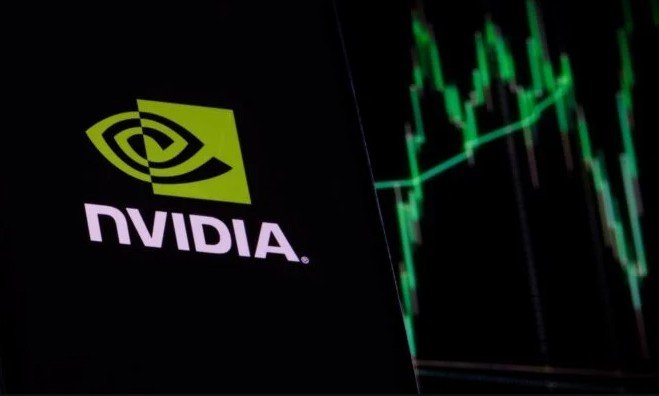
No company symbolizes the shift more than Nvidia.
Its stock has rocketed roughly 979% since ChatGPT debuted.
That kind of surge would normally spark caution, but investors see it as the physical backbone of the AI movement.
Without Nvidia’s chips, AI development slows to a crawl — a fact markets have priced in aggressively.
The company has become such a heavy influence on indexes that fund managers track its every move.
Some even refer to Nvidia as the “new oil” of computing, an idea that feels bold but strangely accurate given the last two years.
Other giants have followed the same direction.
Microsoft, Apple, Alphabet, Amazon, Meta and Broadcom now sit as the seven biggest players on the S&P 500.
Together, they drive nearly half of the index’s 64% rise since ChatGPT arrived.
A quick, one-line paragraph here.
Their combined share of the S&P 500 weighting has jumped from about 20% to 35% in just three years.
Investors say this level of concentration feels unusual — and risky.
Tech Titans Pull the S&P 500 Into a New Shape
The top seven companies have grown so large that the S&P 500 now resembles a barbell with most of its weight on one side.
Some call it efficient. Others say it’s a warning.
The story is straightforward:
• The growth is real, but the leadership is extremely narrow.
Smaller companies tied to AI haven’t matched the giants.
However, industries tied to chips, data centers, and cloud infrastructure have seen notable boosts.
One fund manager in New York said the market “looks like it’s being pulled upward by a handful of skyscrapers while everything else stays at two stories.”
Many investors wonder how long the rally can keep lifting that handful of firms without broader participation.
Leaders Warn That AI-Driven Wealth Won’t Come Without Trouble
Some of the most vocal warnings come from inside the AI sector itself.
Sam Altman, OpenAI’s CEO, says colossal financial losses are unavoidable.
He suggested publicly that someone — or several someones — will lose staggering amounts of money trying to compete in AI.
His tone wasn’t pessimistic; it was realistic.
Bret Taylor, CEO of Sierra and chair of the OpenAI board, also acknowledged bubble-like signals.
Still, he believes the long-term economic impact will rival the internet boom.
But the tension is clear:
A bubble can pop while a technology still transforms the world.
That duality has sparked anxious conversations across generations.
Younger workers worry about roles being automated faster than they can adapt.
Older professionals wonder whether their skills will lose relevance in a market moving with AI speed.
Even economists say AI-driven productivity gains could take years to materialize, and the interim period may feel uneven or chaotic.
Are We Watching a True Transformation or Something More Fragile?
The AI rally feels powerful, but also delicate.
Markets thrive on belief, and right now that belief is strong.
But the question at the center of global finance is simple and sharp:
Is this a sustainable shift — or a speculative rush with an expiration date?
Some analysts see uncanny similarities to the late 1990s.
Others argue that the difference lies in the technology’s obvious utility, which already touches industries from healthcare to retail.
A small one-line paragraph here.
Underlying all the debates is an undeniable fact: the winners are pulling far ahead.
For now, the surge continues, and investors keep betting that AI will rewrite the economy.
But the suspicion lingers that the road to that future may get far messier before it stabilizes.