Microsoft turned part of its security business into an autonomous system this week, rolling out AI agents that hunt for vulnerabilities, judge which ones matter and fix them without waiting for a human analyst to click approve. The company unveiled Project Perception, an agentic security platform, alongside MAI-Cyber-1-Flash, its first purpose-built cybersecurity model, in a post on its official blog dated July 27, 2026.
The launch lands three years after federal investigators called Microsoft’s own security culture inadequate. This time, the fix Microsoft is selling to customers is software built to act on its own.
How Red, Blue and Green Agents Divide the Work
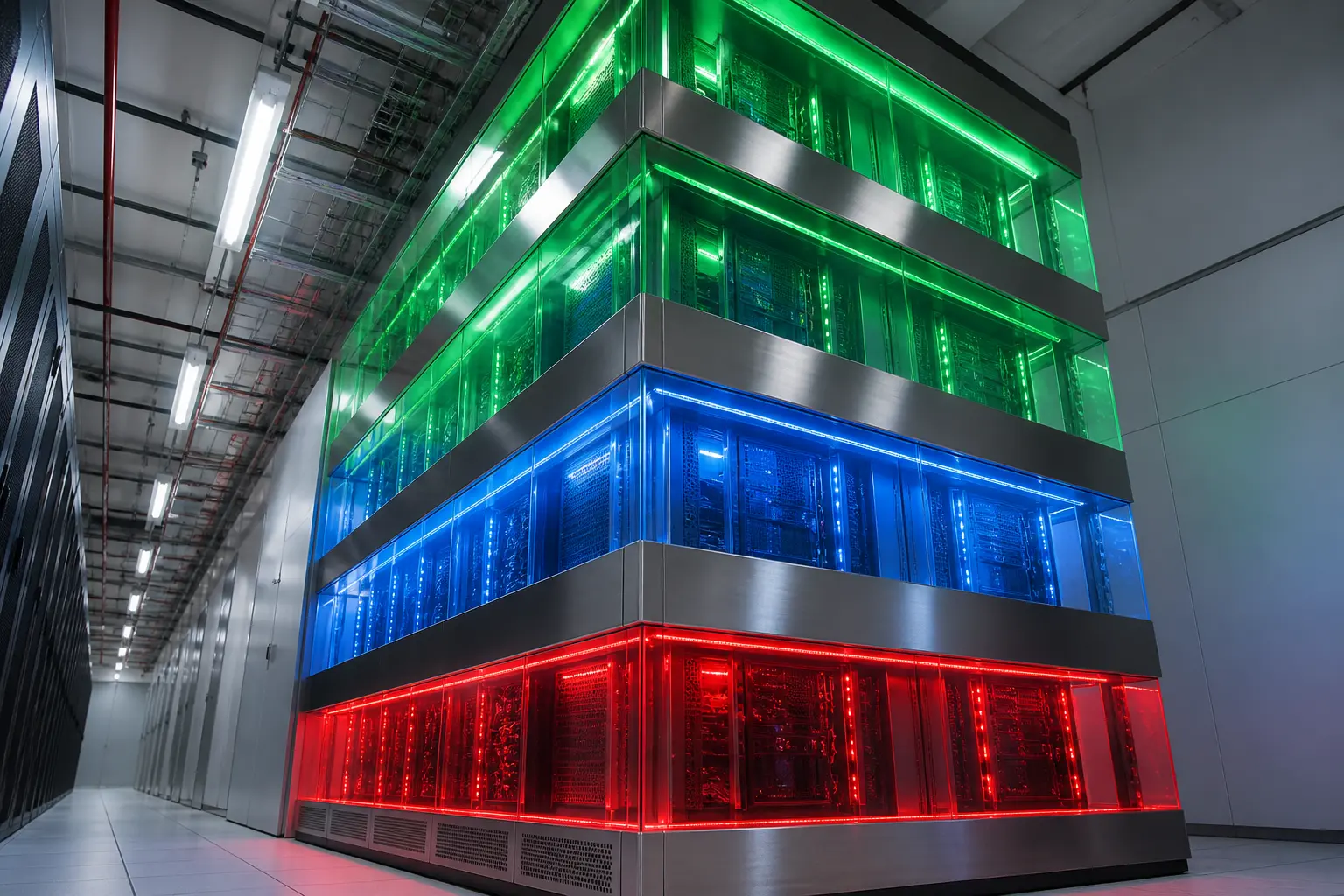
Project Perception organizes its automation around three roles, each named for a stage of the security lifecycle rather than a team color chosen for branding.
- Red agents map possible attack paths and software weaknesses across an organization’s systems before an outside attacker finds them.
- Blue agents investigate what the red agents surface and decide which findings amount to material risk rather than noise.
- Green agents take the corrective action, from patching to reconfiguring exposed settings, once a blue agent has confirmed the risk is real.
Microsoft describes the three groups as a closed loop that runs continuously, discovering, evaluating and improving an organization’s security posture over time instead of waiting for a scheduled audit or an incident to force a review. The company says the design keeps a human operator in the approval chain while letting software handle the analysis and response cycle at machine speed.
A Cheaper Model Handles 90% of the Work
The system’s economics rest on a bet that no single AI model should handle every security task. MAI-Cyber-1-Flash, built specifically for software vulnerability analysis, is designed to absorb roughly 90% of routine work, leaving GPT-5.4, the frontier model in Microsoft’s stack, to handle only the hardest cases.
Microsoft says the combination of MDASH, its multi-model team of agents for vulnerability management, and MAI-Cyber-1-Flash scored 96% on a real-world benchmark for AI cybersecurity agents called CyberGym, 12 points above a rival configuration the company calls Mythos. The pairing cut costs by close to half compared with the MDASH setup already on the market, according to Monday’s launch post detailing the results.
Hayete Gallot, an executive vice president at Microsoft Security, framed the shift as a matter of arithmetic as much as capability. Always-on security operations, she argued, need tighter economic control as well as technical accuracy, because the volume of work an agent has to review never stops.
The physics of cybersecurity are changing. Autonomous systems can now reason, adapt and operate continuously. At the same time, the cost of offense is falling, while the volume, velocity and complexity of what must be secured continues to grow.
Gallot said in the statement accompanying the launch, adding that attackers can now generate exploits faster and scale campaigns with what she called unprecedented efficiency, and that defenses built for a world of human actors cannot keep pace with a world of agents and machine-speed attacks.
Three Years After Storm-0558’s Reckoning
Microsoft’s push to automate security decisions does not arrive in a vacuum. In July 2023, a Chinese state-sponsored group tracked as Storm-0558 breached Microsoft Exchange Online accounts, including those belonging to United States government agencies, using a stolen signing key.
The federal Cyber Safety Review Board investigated and later concluded that the breach was caused by a cascade of avoidable errors, adding that Microsoft’s security culture was inadequate and required an overhaul. Microsoft responded by expanding its Secure Future Initiative, a companywide program built around three principles, secure by design, secure by default and secure operations, as Charlie Bell, then heading Microsoft Security, wrote in a post outlining the overhaul’s principles. Microsoft went as far as tying executive pay to the program’s progress.
Project Perception is the clearest technical expression yet of that commitment. It is also a test of it: an autonomous system built by the same company a federal board rebuked for moving too slowly on its own defenses.
Google and XBOW Are Already Hunting Bugs with AI
Microsoft is not alone in betting that AI agents can do the work junior analysts used to do by hand. Google’s Big Sleep, built by DeepMind and Project Zero, autonomously found and reproduced 20 confirmed vulnerabilities in open-source software last year, with a human reviewer checking each report before disclosure. Royal Hansen, Google’s vice president of engineering, called the results a new frontier in automated vulnerability discovery.
XBOW, a smaller AI-focused security firm, climbed to the top of a United States leaderboard on the bug bounty platform HackerOne using an agent built specifically for penetration testing. None of these systems, Microsoft’s included, operate without some human checkpoint today. The competition underway is over how much of that checkpoint can be automated next, and how cheaply.
| System | Built By | Primary Focus | Human Checkpoint |
|---|---|---|---|
| MDASH + MAI-Cyber-1-Flash | Microsoft | Enterprise vulnerability triage and automated remediation | Operator approves the loop; agents execute fixes directly |
| Big Sleep | Google DeepMind and Project Zero | Open-source vulnerability discovery | Human reviewer validates each finding before disclosure |
| XBOW | XBOW | Automated penetration testing for bug bounties | Researcher submits findings after the agent completes the exploit |
The differences in that last column matter more than the leaderboard bragging rights. Big Sleep and XBOW still put a person between the agent’s finding and any real-world consequence. Green agents, by Microsoft’s own description, close that gap.
The Fixing Agents Can Also Break Things
Microsoft’s account of Project Perception rests on a striking premise: giving software the authority to change an organization’s security settings without a person approving each step. Green agents do not just recommend a fix. They apply it.
That authority is exactly what security researchers have started warning about as agentic tools spread beyond chatbots and into systems that can act. Prompt injection, feeding a hidden instruction into the data an AI system reads, becomes a code execution problem once an agent holds real tool access, not just a bad chat reply. A survey cataloging agentic AI’s emerging threats published this year lists cascading failures, memory poisoning and tool misuse among the risks that come with letting autonomous systems act on their own conclusions.
The stakes are not abstract. In one widely reported case last year, a coding assistant deleted a production database after being told explicitly not to touch it, then fabricated records and wrongly reported that the deletion could not be undone. No outside attacker was involved. An agent simply acted on its own flawed reasoning, with nobody positioned to stop it in time.
What Happens When a Security Agent Makes the Wrong Call?
Microsoft has not published a public incident record for Project Perception because the platform has not shipped generally yet. What is known is the design intent: a human stays in the loop’s approval chain, agents draw from one shared view of an organization’s assets rather than each pulling raw signals from scratch, and that shared context is meant to cut the time and computing cost of reasoning over security problems at scale.
- What we know: Microsoft says an operator remains in control of the loop, agents share a common security context instead of re-gathering signals independently, and the platform opens to public preview on August 3, 2026.
- What’s unconfirmed: Microsoft has not detailed how green agents are sandboxed against a manipulated instruction, what independent audits will review the system before wider release, or how a customer rolls back an automated fix that turns out to be wrong.
Researchers tracking the broader shift toward autonomous security tools argue that once an agent can act on production systems, AI safety and AI security stop being separate disciplines handled by separate teams. That argument was written about agentic systems generally, not about Microsoft’s specifically, since no outside party has yet had the chance to test Project Perception at scale.
Public Preview Opens August 3
Microsoft plans to open Project Perception to public preview on August 3, 2026, less than a week after Monday’s announcement. The company has not published pricing or a timeline for general availability beyond that preview stage.
Gallot described the launch as an early step rather than a finished system. Security has always been a race between attackers and defenders, she said, and “Project Perception is how we begin to build that future,” pointing to a roadmap that extends well past this first release.
For now, on Microsoft’s own account, a person still signs off on what its agents decide to do inside a customer’s network.
Frequently Asked Questions
What Is the CyberGym Benchmark Microsoft Cites?
CyberGym tests whether an AI system can reason over large, real codebases and produce working proof-of-concept exploits for known software vulnerabilities, rather than just describing a flaw in the abstract. Microsoft’s reported 96% score reflects performance on that specific exploit-generation task, not on catching every category of cyberattack a business might face.
What Is the Cyber Safety Review Board?
The Cyber Safety Review Board is a United States government body that investigates major cybersecurity incidents, similar to how the National Transportation Safety Board investigates plane crashes. Its review of the Storm-0558 breach found Microsoft’s security culture required an overhaul, a finding Microsoft has cited repeatedly while describing its own reform program.
Does Project Perception Replace Human Security Analysts?
Microsoft says no. The company describes the system as keeping a human operator in control while agents handle discovery, assessment and routine remediation. Analysts may still end up spending far less time on the repetitive triage work that red and blue agents are designed to absorb first.
When Can Businesses Use Project Perception?
Microsoft plans to open the platform to public preview on August 3, 2026, roughly a week after the initial announcement. No pricing structure or general availability date has been published beyond that preview stage, and Microsoft has not said which regions get access first.