Apple began leasing iPhones, Macs, iPads and Apple Watches to United States customers on Tuesday, replacing a decade of bank financing with a single subscription-style plan run by Klarna. The new Apple Upgrade program starts at $17.99 a month for iPhones and tops out at $24.99 for Macs, and it fully retires both the old iPhone Upgrade Program and Apple’s standard installment financing at checkout.
Behind that lower monthly price sits a new lender. Apple handed the credit risk on every lease to Klarna, a fintech still fighting a securities lawsuit over how aggressively it extends credit to financially stretched borrowers.
What Apple Upgrade Charges by Device
Apple Upgrade replaces two things at once: the old iPhone Upgrade Program and Apple’s standard installment financing at checkout. Customers apply through a soft credit check run by Klarna, which does not require a hard inquiry on a credit report. Anyone trading in an eligible device can apply trade-in credit to lower monthly payments during that first lease term.
| Device | Lease Terms | Starting Price | Excluded Model |
|---|---|---|---|
| iPhone | 12 or 24 months | $17.99 a month | iPhone 16 (base model) |
| Apple Watch | 12 or 24 months | $11.99 a month | Apple Watch SE |
| Mac | 24 or 36 months | $24.99 a month | MacBook Neo |
| iPad | 24 or 36 months | $11.99 a month | iPad (base model) |
Every listed price applies to the base storage configuration. Higher-capacity models and Pro-tier hardware push the monthly payment above that starting figure, the same way they would at retail.
You Never Own the Hardware
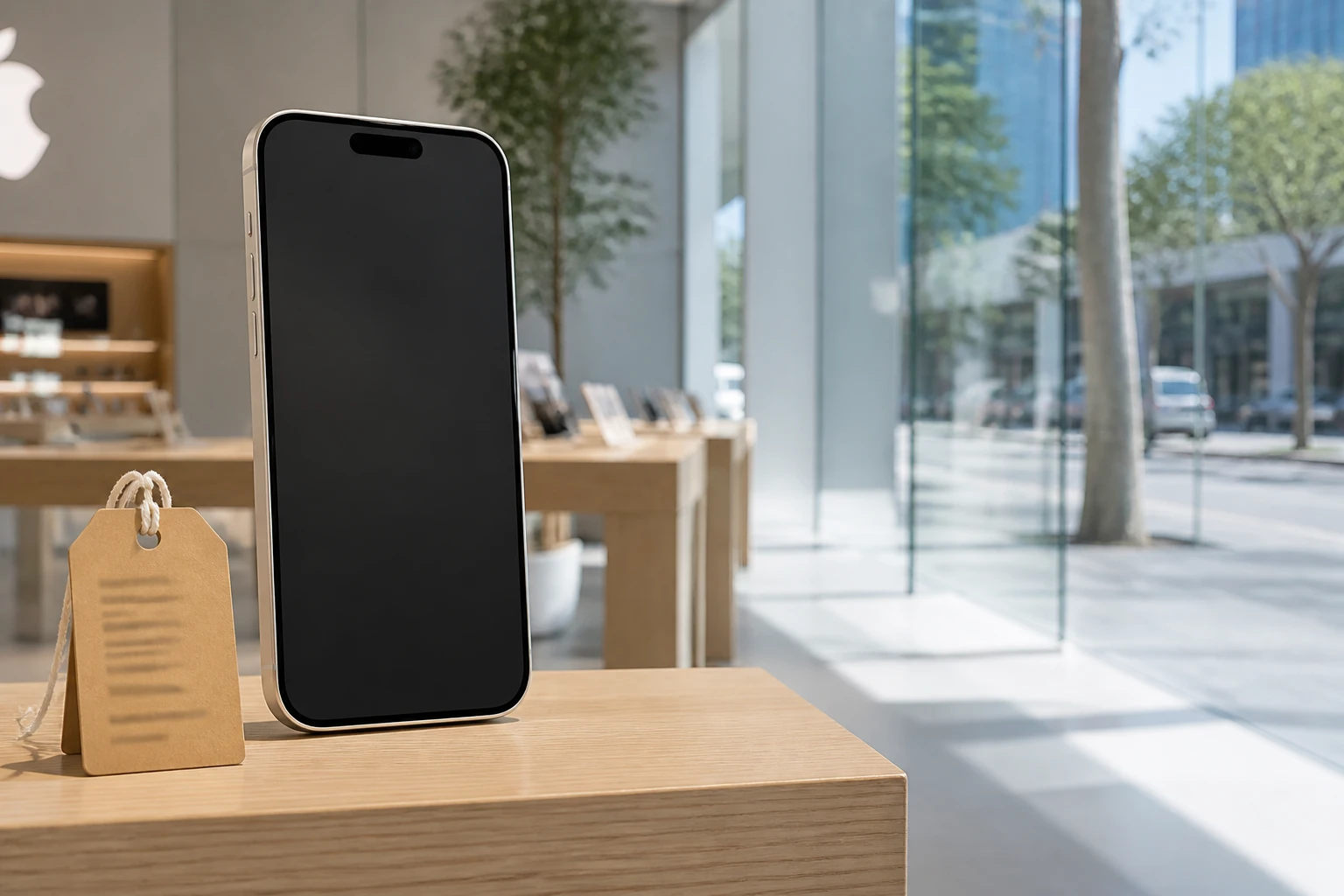
The clearest break from the old iPhone Upgrade Program sits in the fine print. That program worked like a loan: pay it off, or trade in early, and the device eventually belonged to the customer. Apple Upgrade is a lease. Ownership never transfers automatically, no matter how many payments someone makes.
When a lease term ends, Apple gives customers three paths:
- Return it – hand back the device and exit the program, owing nothing further.
- Buy it outright – pay a one-time purchase fee and keep the device, the only route to actual ownership.
- Upgrade again – trade in the current device and start a fresh lease on the next model.
Skip all three and nothing happens automatically. There is no grace period that quietly closes the account. Apple converts the lease into a month-to-month agreement for up to six months, with monthly payments that can increase during that stretch. After six months, the customer is charged a separate purchase fee for a device they have already been paying to use.
Apple’s Second Run at Buy Now, Pay Later
Apple is not the only company dressing up consumer credit this way. Walmart’s OnePay app rolled out an Upgrade-branded lending product built on personal loans earlier this year, part of a broader pattern of retailers marketing borrowing as a loyalty perk. Apple’s own route to this point took two failed experiments first.
- 2015: Apple launches the original iPhone Upgrade Program, financed through a 24-month, zero-interest installment loan from Citizens Bank, doing business as Citizens One.
- 2023: Apple Pay Later debuts, splitting Apple Pay purchases into four payments over six weeks, backed by Goldman Sachs.
- June 2024: Apple shuts down Apple Pay Later after barely a year, citing limited merchant reach next to established buy now, pay later (BNPL) rivals.
- September to October 2024: Affirm, then Klarna, go live as installment lenders inside Apple Pay and Wallet across the U.S. and U.K.
- July 28, 2026: Apple Upgrade launches nationwide, with Klarna as the sole leasing partner across iPhone, Mac, iPad and Apple Watch.
Two failed or narrowed experiments in three years is not a company that found its financing partner on the first try. Klarna is now the fourth name to touch Apple’s consumer lending in a decade.
Why Klarna Needed This Win
Klarna’s stock still trades under pressure. The company confirmed its role as Apple’s exclusive leasing provider less than a year after going public at $40 a share, then watching shares slide well below that mark once it disclosed a 102% year-over-year jump in provisions for credit losses. Winning Apple’s entire hardware leasing book, across four product lines and an entire country, is the kind of marquee validation a bruised fintech needs.
- $40 IPO price: Klarna’s September 2025 Wall Street debut, before shares fell well below that mark.
- 102% jump: the year-over-year increase in provisions for credit losses that Klarna disclosed shortly after going public.
- $495 million: Klarna’s consumer credit losses in 2024, up from $353 million in 2023, equal to 17.6% of revenue.
- Securities class action: investors allege Klarna’s IPO paperwork understated how aggressively it extended credit to financially vulnerable borrowers.
As a share of lending volume, Klarna’s realized losses actually eased slightly over the past year, from 0.48% to 0.44%, which suggests the dollar totals track loan book growth more than a sudden collapse in underwriting. Klarna’s own filing disclosing $495 million in 2024 credit losses lands alongside a securities class action, filed after the IPO, accusing the company of downplaying how aggressively it lent to financially stretched borrowers, including for small purchases like fast food delivery, while marketing its underwriting as disciplined. Klarna says delinquency trends are improving overall, especially in the United States. But loss rates in the U.S. are climbing faster than in Europe, the exact market where Apple just handed the company a national retail partnership.
The Bank Apple Left Behind
For a decade, the financing behind Apple’s device upgrades sat with a conventional, regulated lender. Citizens Bank, operating as Citizens One, became Apple’s designated financing partner for the iPhone Upgrade Program in 2015, structuring it as a 24-month, interest-free installment loan, according to American Banker. That relationship, along with the standard installment plans Apple offered through bank partners at checkout, is now gone.
Regional banks built real, if modest, business volume on Apple’s retail traffic. Losing it will not sink Citizens, a $107 billion-asset institution with plenty of other lending lines. Apple’s device financing now runs through a Swedish-founded fintech that only recently went public and is still explaining its credit losses to shareholders, rather than an FDIC-insured bank answering to federal regulators.
Android Makers Face the Same Memory Math
Apple’s timing traces back to a supply chain problem it does not control. TrendForce, a Taiwan-based research firm, warned that smartphone production is at risk of a sharp 2026 decline as memory chip shortages push bill-of-materials costs higher across the industry. Contract prices for DRAM, the memory chips used in nearly every modern device, were on pace to climb more than 75% year over year heading into the most recent quarter. Memory typically makes up 10 to 15% of a phone’s total cost, and TrendForce estimates that alone pushed unit costs up 8 to 10% in 2025, with another 5 to 7% increase forecast for 2026.
Google is already testing how much extra cost its own users will tolerate. Google’s AI Ultra upgrade tier costs some Pixel owners $240 a year, evidence that Android’s biggest players are also hunting for ways to spread costs into recurring payments instead of sticker prices. Samsung and Google would each need their own Klarna, a lender willing to hold credit risk on millions of leased phones at once. TrendForce now projects global smartphone output will fall 2% this year, reversing an earlier forecast of slight growth, the first downward revision since the memory squeeze began.
Frequently Asked Questions
How Is Apple Upgrade Different From the Old iPhone Upgrade Program?
The biggest difference is ownership. The iPhone Upgrade Program was a 24-month loan through Citizens Bank, and paying it off in full meant the phone belonged to the customer. Apple Upgrade is a lease running through Klarna, so a customer who lets the term run out without buying, returning or upgrading never owns the device outright and instead rolls onto a month-to-month lease.
Why Are the iPhone 16 and Other Entry-Level Devices Excluded?
Apple has not given a public reason for excluding the iPhone 16, Apple Watch SE, the base iPad and the MacBook Neo. The pattern lines up with Apple’s cheapest hardware, the models with the thinnest margins to begin with, at the same moment memory costs are squeezing the low end of the entire phone market the hardest.
Does Apple Upgrade’s Soft Credit Check Affect My Credit Score?
No. Apple Upgrade applications go through a soft credit check run by Klarna rather than a hard inquiry, the same type of check used for pre-qualification offers, and it generally does not appear on a credit report the way a hard pull for a traditional loan would.
Is Apple Upgrade Available Outside the United States?
Not yet. Apple Upgrade launched exclusively through the Apple Store online, the Apple Store app and physical Apple Store locations in the United States, with no international rollout date announced.
Does Leasing Through Apple Upgrade Still Earn Apple Card Daily Cash?
Yes. Apple Card holders earn 3% Daily Cash on Apple Upgrade payments, the same rate Apple Card pays on purchases made directly from Apple, stacking on top of any trade-in credit already applied to the lease.