Five Android phones now ship with software support guarantees of seven years or more. The Fairphone Gen 6 quietly tops them with eight years of security patches on top of seven years of Android updates, the longest software support promise in the Android market as of mid-2026. Around it sit four flagship-class devices that match its seven-year Android commitment, from a $499 Pixel to a $1,299.99 Samsung Ultra.
Android’s reputation for short update windows was once its loudest weakness against the iPhone. Google’s seven-year Pixel promise and Samsung’s matching Galaxy commitment changed that, and the new wave of vendors, Motorola and Honor, have followed with the same ceiling. Mid-range phones are catching up too: some entry-level Android handsets now reach six years of updates, per BGR’s comparison. The catch is that a long support promise does not guarantee a fast phone, and the chipset inside each device sets the real ceiling.
Seven Years Has Become the Android Baseline
Google and Samsung now promise seven years of Android releases and seven years of security updates for their flagship Pixel and Galaxy devices. Samsung has carried the same window through the Galaxy S25 series, the Galaxy S25 FE, the Z Flip 7, and the Z Fold 7. Apple’s iPhones have never carried a written guarantee of that length, though the 2019 iPhone 11 will run iOS 27 when it ships to the public in mid-September 2026, around the handset’s seventh birthday.
Honor was the next major vendor to commit, announcing in March 2025 that its flagship Magic series would ship with seven years of Android OS and security updates starting in Europe. The first device to carry that promise was the Honor Magic 7 Pro, with the company extending it to the Honor Magic V5, Magic 8 Pro, and most recently the Honor Magic V6. Motorola launched the Signature at CES 2026 with the same seven-year ceiling and brought the Razr Fold along for the ride. The Motorola Signature’s seven-year window ends in early 2033, per BGR’s comparison.
Mid-range Android buyers are no longer locked out of long support. Google’s Pixel 10a, announced in February 2026 and released in March with Android 16 preloaded, ships with the same seven-year commitment as the company’s flagships. Vendors including Fairphone are stretching the support promise further still, with the modular Gen 6 adding an extra year of security patches on top of seven years of Android updates. That makes the Fairphone the longest-supporting mainstream Android phone available as of mid-2026, even if it does not match the chips inside the more expensive flagships. For a wider comparison that includes the iPhone 17 and additional models, see the parallel roundup of long-support Android phones.
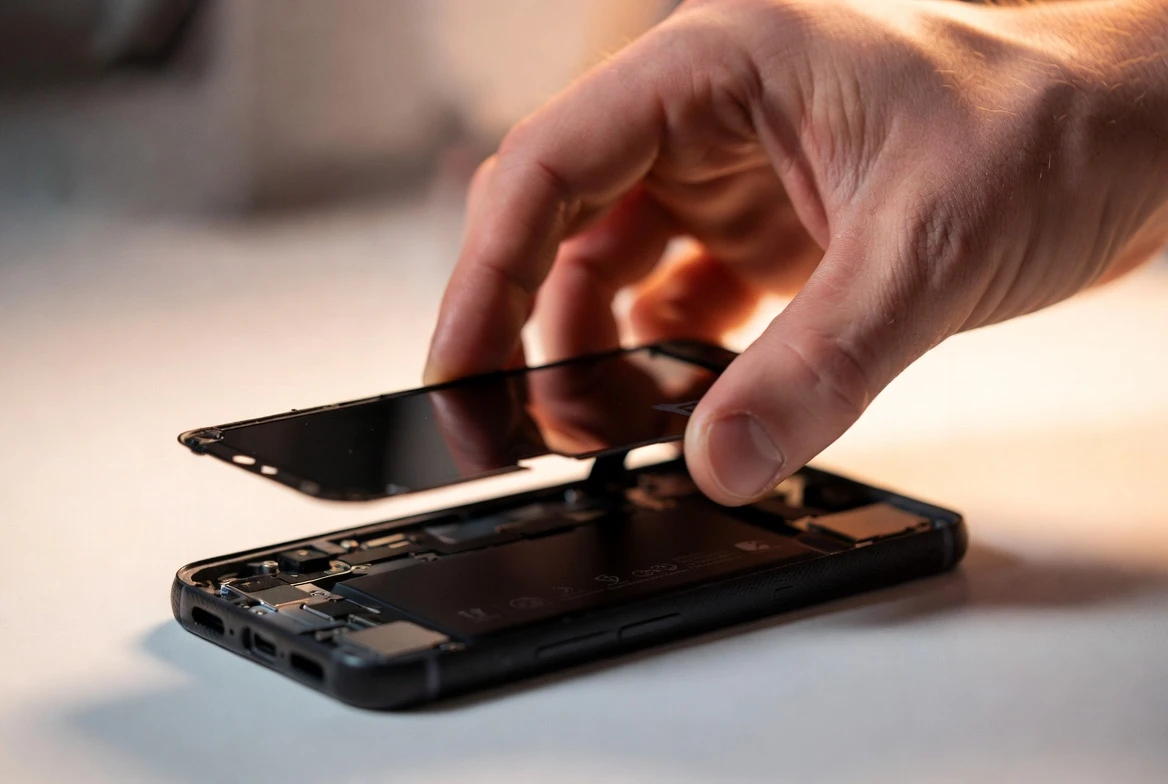
Fairphone Gen 6 Pushes the Android Support Window to Eight Years
Fairphone built the Gen 6 around a simple bet: a modular phone only earns its keep if it lasts. Buyers can pop off the back cover to swap the 4,415 mAh battery or replace a broken display without sending the device to a service center, and the company increased the Gen 6’s Android version promise to seven years from the five it offered on the Gen 5. The extra year of security patches, eight in total, has gone largely under the radar, and the Fairphone Gen 6 product page lists it as “at least eight years.”
The phone launched in Europe in the summer of 2025 at €599 and the company has not announced a direct US channel. American buyers have to import through Murena, which BGR reports was charging $899 at launch. That price puts the Fairphone in the same range as mid-range Android phones from Samsung and Google, even though its Snapdragon 7s Gen 3 chip is a clear step below the Snapdragon 8 Gen 5 inside Motorola’s Signature and the Snapdragon 8 Elite Gen 5 inside the Galaxy S26 Ultra and Honor Magic V6. The display is a 6.31-inch OLED with a 10-120 Hz dynamic refresh rate, 1,400 nits of peak brightness, and a 2,484 by 1,116 resolution.
The Snapdragon 7s Gen 3 inside the Fairphone posts 1,149 and 3,313 points in Geekbench 6 single-core and multi-core tests, well below the flagships it shares a support promise with. Storage is fixed at 256 GB and RAM is fixed at 8 GB, the same RAM count as the Pixel 10a. The main camera is a 50-megapixel sensor paired with a 13-megapixel ultra-wide, and the selfie camera is 32 megapixels. Charging tops out at 30 W wired over the removable battery. None of these specs feel out of place for a phone at this price, but the chipset, not the update promise, is the part most likely to feel slow in 2031.
The trade Fairphone offers is straightforward: a phone whose hardware the user can fix, on a software timeline that no other Android vendor has matched. Replace the battery when it degrades, swap a broken display at home, and the modular design gives the support promise a chance to actually run its full length. The mid-range chip caps the ceiling on how fast Android will feel by the end of the window. Buyers who want both the eight-year promise and a flagship chip will have to wait, because no vendor currently pairs the two.
How the Motorola Signature Stays Slim Without Sacrificing Support
Motorola launched the Signature at CES 2026 and built it for buyers who want both a slim body and a seven-year support window. The Signature runs on the Snapdragon 8 Gen 5 chip, and BGR’s testing puts it at 2,847 and 9,289 points in Geekbench 6 single-core and multi-core, the highest score among the phones that match its support promise. Inside a 6.99 mm chassis the company fits a 6.8-inch display running at 165 Hz with 6,200 nits of peak brightness, IP68 and IP69 dust and water resistance, and MIL-STD-810H military-grade durability.
The most complete and sophisticated phone Motorola’s ever created.
Motorola used that language in the Signature launch materials, and the Signature launch announcement from Motorola makes the same point. The Signature carries three 50-megapixel rear cameras (wide, ultra-wide, and telephoto) and a 50-megapixel selfie sensor, with 12 GB or 16 GB of RAM and storage options from 256 GB to 1 TB. The 5,200 mAh silicon-carbon battery supports 90 W wired and 50 W wireless charging. Motorola has priced the Signature at €999 in Europe, and the phone has not gone on sale in the United States.
The Pixel 10a Brings Seven-Year Support Down to $499
The Pixel 10a is the cheapest way to get Google’s full seven-year update promise. The phone launched on March 5, 2026 at $499, with Android 16 preloaded and a guarantee of seven years of Android OS releases and seven years of security updates, and the official Pixel 10a listing restates the promise. As BGR notes, that should carry the Pixel 10a through Android 23 in 2033.
The catch is the silicon. Google put the Pixel 9 generation’s Tensor G4 chip inside the Pixel 10a, the same chip that scores 1,756 and 4,608 in Geekbench 6 single-core and multi-core tests. The more expensive Pixel 10 models use Google’s newer Tensor G5, which reaches 2,296 and 6,203 in the same benchmarks. The Pixel 10a’s older chip means a smaller jump in performance year over year, which is a real consideration for a phone meant to last through 2033.
Google’s Gemini Intelligence AI platform will ship with Android 17 to select devices, and BGR reports that the Pixel 10a’s 8 GB of RAM rules it out of that list. Google has been testing Gemini Intelligence on select Pixel 10 and Galaxy S26 models. The Pixel 10a still ships with Gemini built in for everyday tasks, but the more demanding on-device features are reserved for phones with more RAM.
For buyers who do not care about on-device AI, the rest of the Pixel 10a spec sheet holds up. The 6.3-inch Actua display runs at 120 Hz, the 5,100 mAh battery supports 30 W wired charging, and Google pairs a 48-megapixel main camera with a 13-megapixel ultra-wide on the back and a 13-megapixel selfie lens on the front. The phone carries an IP68 rating for dust and water resistance with Corning Gorilla Glass 7i over the display. Pixels also receive Android updates first, ahead of any other phone on this list, and at $499 the Pixel 10a is the least expensive way to lock in seven years of guaranteed software support.
Galaxy S26 Ultra Leads the Benchmark Chart With Seven-Year Support
The Galaxy S26 Ultra is the most expensive phone on this list, and its Snapdragon 8 Elite Gen 5 for Galaxy hits 3,619 single-core and 11,010 multi-core in Geekbench 6, the highest score in this comparison. Samsung unveiled the Galaxy S26 series in late February 2026 and put the Ultra on sale starting at $1,299.99 for the 12 GB of RAM and 256 GB of storage configuration. A 16 GB RAM version is also available, with storage options running up to 1 TB. The base 12 GB is enough to qualify the Ultra for the Gemini Intelligence platform that ships with Android 17.
The 6.9-inch display runs at 120 Hz with 2,600 nits of peak brightness and is protected by Corning Gorilla Armor 2 glass, with a Privacy Display feature that narrows the viewing angle of all or part of the screen. The camera system is the most ambitious on this list, with a 200-megapixel main sensor, a 50-megapixel ultra-wide, and two zoom lenses (50-megapixel and 10-megapixel). The 5,000 mAh battery supports 60 W wired and 25 W wireless charging, and the Ultra is the only phone in this comparison with a built-in stylus.
Honor Magic V6 Adds Seven-Year Support to a Thin Foldable
The Honor Magic V6 is the only foldable on this list and one of the thinnest phones sold anywhere. Honor announced in March 2025 that it would extend seven years of Android and security updates to its flagship Magic series, starting with the Magic 7 Pro in Europe. The Magic V6 launched in early March at MWC 2026 and began selling in Malaysia in June 2026 at around $1,900. The phone measures 4.0 mm unfolded and 8.75 mm folded, with two displays: a 7.95-inch inner panel and a 6.52-inch cover screen.
Inside the Magic V6 runs the same Snapdragon 8 Elite Gen 5 chip as the Galaxy S26 Ultra, paired with 12 GB or 16 GB of RAM and storage from 256 GB to 1 TB. The Geekbench 6 score of 3,707 single-core and 10,626 multi-core puts the V6 just behind the Samsung Ultra. The 6,660 mAh silicon-carbon battery supports 80 W wired and 66 W wireless charging, and the camera system combines two 50-megapixel rear sensors with a 64-megapixel telephoto lens. US buyers cannot buy the Magic V6 through Honor’s official channels.
Update Promises Don’t Outlast the Chip Inside
Software support and usable performance are not the same thing. A seven-year update promise only matters if the chip inside can run the final version of Android without choking. The Geekbench 6 multi-core scores across these five phones span from 3,313 on the Fairphone’s Snapdragon 7s Gen 3 to 11,010 on the Galaxy S26 Ultra’s Snapdragon 8 Elite Gen 5.
RAM is the second ceiling. Google’s Gemini Intelligence platform will ship with Android 17 to select devices, and Google has been testing it on the Pixel 10 Pro and the Galaxy S26. The Pixel 10a and Fairphone Gen 6 both ship with 8 GB of RAM, which BGR reports makes them unsuitable for the more demanding Gemini Intelligence features. Phones with 12 GB or more are positioned to receive the full feature set.
| Phone | Android updates | Security updates | Chip | Geekbench 6 multi |
|---|---|---|---|---|
| Fairphone Gen 6 | 7 years | 8 years | Snapdragon 7s Gen 3 | 3,313 |
| Motorola Signature | 7 years | 7 years | Snapdragon 8 Gen 5 | 9,289 |
| Pixel 10a | 7 years | 7 years | Tensor G4 | 4,608 |
| Galaxy S26 Ultra | 7 years | 7 years | Snapdragon 8 Elite Gen 5 | 11,010 |
| Honor Magic V6 | 7 years | 7 years | Snapdragon 8 Elite Gen 5 | 10,626 |
BGR notes that the Fairphone’s Snapdragon 7s Gen 3 may be the phone’s biggest problem long-term, and the 3,313 multi-core Geekbench 6 score backs that view. The Tensor G4 in the Pixel 10a sits in the middle of the pack at 4,608, fast enough today but not positioned to stay that way. The Snapdragon 8 Gen 5 (Motorola Signature) and the Snapdragon 8 Elite Gen 5 (Galaxy S26 Ultra, Honor Magic V6) all clear 9,000 in the same test, leaving them better positioned to stay smooth across the full seven-year window.
- Buy the Fairphone Gen 6 if hardware longevity matters most. The eight-year security promise is the longest in the Android market, and the modular back cover and removable battery give the software promise a chance to actually run its full length. The Snapdragon 7s Gen 3 is the trade.
- Buy the Motorola Signature or Galaxy S26 Ultra if smooth performance matters most. Both pair the seven-year promise with chips (Snapdragon 8 Gen 5 and Snapdragon 8 Elite Gen 5) that should stay fast through 2033.
- Buy the Pixel 10a if price and timely updates matter most. At $499 it is the cheapest entry point to seven-year support, and Pixels receive Android updates first.
- Buy the Honor Magic V6 only if a foldable is the priority. The seven-year promise is real and the Snapdragon 8 Elite Gen 5 will stay fast, but US buyers cannot get the phone through Honor’s official channels.
Storage and battery degrade over time, regardless of the chip. The Fairphone’s removable battery and modular back cover let users replace the part most likely to wear out before the support window ends. Phones with sealed batteries (the Galaxy S26 Ultra, the Pixel 10a, the Honor Magic V6) depend on the user trusting the vendor’s battery longevity claims. None of the four flagship-class devices on this list match the Fairphone’s eight-year security promise, so the support ceiling is still a real differentiator, even when the chip is not.
Frequently Asked Questions
Which Android phone currently has the longest software support?
The Fairphone Gen 6 pairs seven years of Android version upgrades with eight years of security patches, the longest single commitment in the Android market as of mid-2026. Every other phone on this list stops at seven years on both fronts.
Is the Fairphone Gen 6 sold in the United States?
Fairphone sells the Gen 6 directly only in Europe at a €599 launch price. US buyers have to import through Murena, which was charging $899 for the handset at launch.
Which mid-range Android phones now get seven years of updates?
Google’s Pixel 10a is the cheapest entry point, at $499 with Android 16 preloaded. Several other mid-range and entry-level Android handsets now reach six years of support, per BGR’s comparison.
Will the Pixel 10a support Gemini Intelligence?
BGR reports the Pixel 10a’s 8 GB of RAM rules it out of the Gemini Intelligence platform that ships with Android 17 to select devices. Google has been testing the platform on select Pixel 10 and Galaxy S26 models.
When does software support end for these phones?
BGR places the Motorola Signature’s seven-year promise at an early 2033 end date, and the Pixel 10a, launched with Android 16 in March 2026, is expected to reach Android 23 in 2033. The Fairphone Gen 6’s security promise stretches a year further, into 2034.
Does Honor sell phones in the US?
Honor does not officially sell the Magic V6 in the United States. The foldable launched at MWC 2026 and began selling in Malaysia in June 2026 at around $1,900.