
General Motors is building sodium-ion battery cells for the electricity grid in partnership with Denver-based startup Peak Energy, and it is treating its fleet of more than 250,000 bidirectional EVs on American roads as a distributed power source. The moves, announced June 9, 2026, push the automaker’s battery and software stack into stationary storage and vehicle-to-grid services, a sharp turn away from the all-electric growth story GM pitched for most of the last decade. They also put a new chemistry on American soil at a moment when grid operators, hyperscalers, and utilities are scrambling for storage to keep up with AI-driven electricity demand.
The pivot rests on a simple premise: a sodium-ion cell stores and releases energy much like a lithium-ion cell, but its raw material is one of the most abundant elements on Earth. The cells are purpose built for grid-scale storage, GM says, and are being developed at the company’s Wallace Battery Cell Innovation Center in Michigan. GM Ventures has made a strategic investment in Peak Energy as part of the deal.
The Peak Energy Deal and What Sodium-Ion Promises
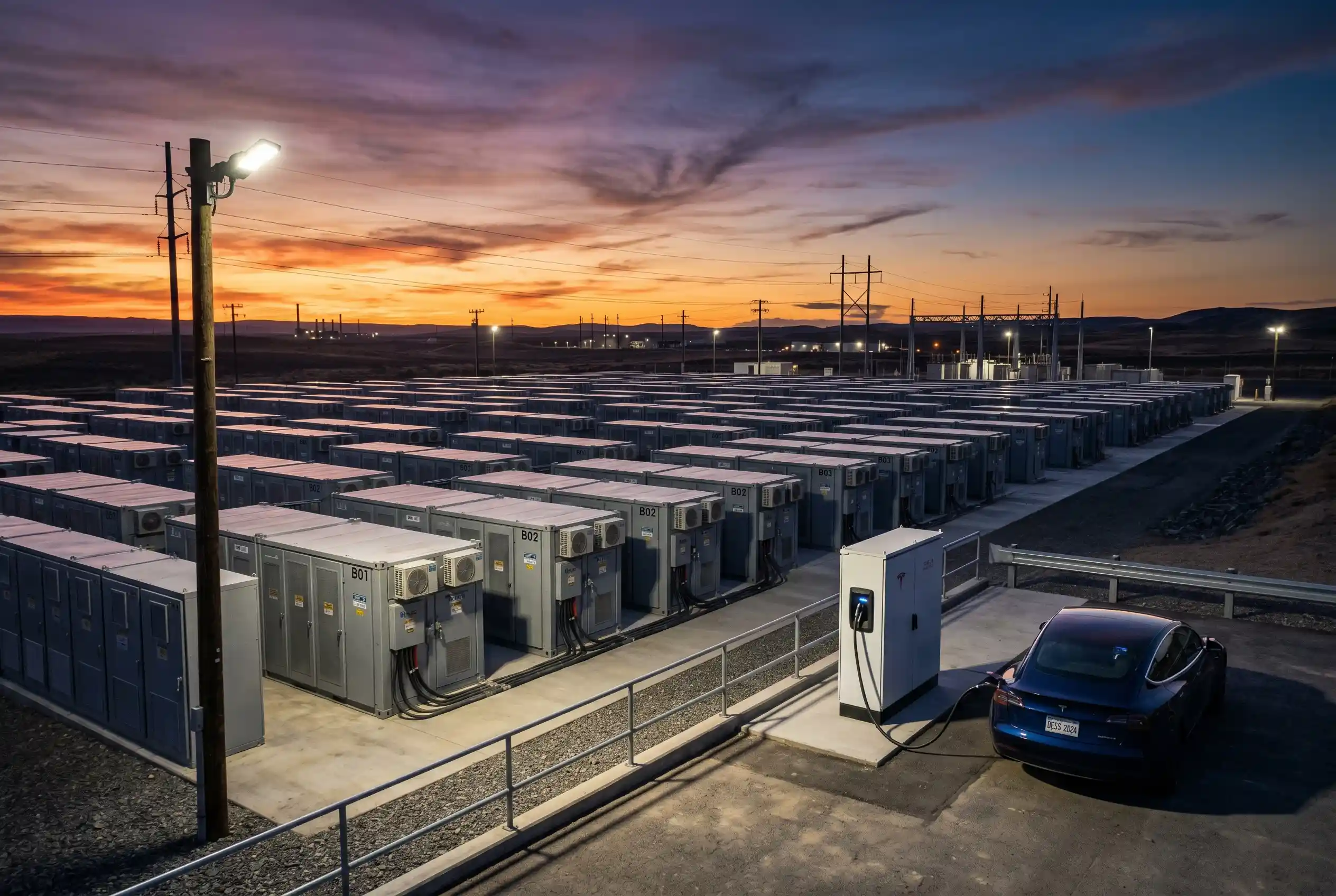
The partnership gives GM exclusive manufacturing rights for the sodium-ion cell, which it will develop in its Michigan battery labs. Peak will integrate the cell into its own stationary storage systems. Per the joint announcement from Peak Energy and GM, the sodium-ion system reduces energy storage costs by 20% compared to conventional systems and delivers more than 99% uptime, by cutting out the active cooling hardware that lithium-iron phosphate (LFP) installations need to keep cells in a safe temperature range.
According to Peak’s own analysis, the United States could reduce battery storage’s annual energy waste by up to 2 TWh a year by switching from LFP-based systems to its passively cooled system, “saving enough energy to power a midsized city for a year.” Landon Mossburg, Peak’s CEO and co-founder, framed the case in supply-chain terms: “We are proud to develop an energy storage system that is safer, cheaper, and faster to deploy than any other technology on the market.” GM’s Kurt Kelty, vice president of battery and sustainability, made the same case in a different register.
At GM, we know that the application should determine the battery, and for grid-scale stationary storage, sodium-ion is the right solution.
Kelty, GM’s vice president of battery and sustainability, wrote the same case in a post on GM’s newsroom: sodium-ion can perform across a wider range of temperatures and for more cycles, which means a storage system built around it could “operate without active cooling and with much less system complexity.” Active cooling, he wrote, “requires more hardware, more maintenance, more parasitic energy losses, more noise and more opportunities for failure, all of which can drive costs higher over time.”
CNBC reports that the automaker expects the GM-Peak tie-up to produce sodium-ion cells for customer use after 2028. A timeline for high-volume production has not been announced, and a GM spokesman declined to comment on details or the cost of the partnership. Peak, for its part, said in the same announcement that GM’s exclusive manufacturing rights will let the startup secure its supply chain “as its domestic manufacturing scales.” The companies framed the deal as a way to “strengthen American leadership and innovation in the rapidly growing energy storage market.” For GM, the work starts in Michigan; for Peak, it extends a string of US pilot projects that began with the first grid-scale sodium-ion system in the country.
From EV Dream to Grid Strategy
The pivot runs against the all-electric roadmap GM laid out a few years ago, when it spent billions of dollars on battery research and cell production capacity for a generational EV ramp that did not materialize. GM, through its Ultium Cells joint venture with LG Energy Solution, currently has about 90 gigawatt hours of production capacity at two plants, one in Ohio and one in Tennessee. That footprint was sized for an EV market that has come in softer than the industry’s earlier forecasts. Rather than let that capacity sit idle, GM is steering it toward storage.
Ultium Cells announced a $70 million investment in March to begin producing LFP batteries for energy storage systems at the Tennessee plant. Sodium-ion sits behind LFP in the queue, but it is the chemistry GM is investing in now to win the decade after that. LFP is the workhorse for the next two to three years; sodium-ion is the long bet. The strategy treats energy storage as a separate product line with its own cost curve, its own customers, and its own timeline, not a side project parked next to the EV business.
The Michigan Lab and the 90-Gigawatt-Hour Footprint
The work starts in Warren, Michigan, where GM has built a centralized battery R&D engine that has been advancing LMR (lithium manganese-rich) cells for EVs. That same lab is now prototyping sodium-ion cells purpose-built for stationary storage this year at the Wallace Battery Cell Innovation Center. Kelty said every improvement the lab makes on one chemistry strengthens the development stack for the others.
While the next-generation cell is being developed, GM is also moving near-term volume through Ultium Cells. The joint venture with LG Energy Solution will begin producing LFP batteries for LG’s commercial energy storage business, an opening move that uses an existing manufacturing footprint to ship storage products quickly. Repurposed EV batteries are already on the grid.
Together with Redwood Materials, GM is deploying roughly 10,000 GM batteries into energy infrastructure, including Crusoe’s AI data center in Sparks, Nevada. Starting next year, GM also plans to deploy second-life battery packs at one of its own Michigan plants, where roughly 100 packs are expected to provide 7.2 MWh of dispatchable energy and save more than $3 million in local electricity costs over the life of the installation.
The Michigan plant, the Crusoe data center, and the Ultium Cells LFP line are all running on a different clock than the sodium-ion prototypes. The next-generation sodium-ion cell is on a 2028-plus customer timeline. The repurposed packs and the LFP line are working in 2026. None of them depend on the others shipping, which is the point of running four parallel tracks instead of one.
- 90 GWh of Ultium Cells production capacity across Ohio and Tennessee
- $70 million Ultium Cells investment to start LFP for storage in Tennessee
- About 10,000 repurposed GM batteries deploying with Redwood Materials
- 7.2 MWh and $3M+ in savings from 100 second-life packs at a Michigan plant
Quarter-Million Bidirectional EVs as a Distributed Power Plant
The other half of the June 9 announcement is a play for the parked cars. GM said it now has more than 250,000 bidirectional capable vehicles on American roads and has committed to the technology for all planned EVs going forward. In an open letter to utility executives and energy policymakers, Wade Sheffer, vice president of GM Energy, said those quarter-million vehicles have the energy capacity to help power 120,000 homes for up to one week. That is a theoretical figure based on the total rated battery capacity of approximately 280,000 V2H-capable GM EVs and an average U.S. household electricity use of 28.8 kWh per day.
EVs with their sophisticated batteries sit largely untapped. GM wants to work collaboratively to make them the dynamic infrastructure assets we know they can be.
Sheffer, vice president of GM Energy, frames the rollout as a public-private collaboration. GM is testing the technology in California with Pacific Gas and Electric Company, with a projection that by 2030, over 52,000 GM EVs will be systematically participating in grid-balancing protocols. In Michigan, the automaker is testing with DTE Energy, using GM employee homes to grow reliable backup capacity in a way that is built around the preferences of real home and EV owners.
To participate today, owners need a V2H-capable GM EV, a properly equipped home, and the GM Energy V2H system, which includes a bidirectional charger and an enablement kit. The 120,000-home figure cited by GM is illustrative, not a current capability, and depends on weather, battery life, vehicle variation, and other factors. Sheffer’s letter, citing the International Energy Agency’s vehicle-to-grid technology report, noted that V2G was identified for its potential to help limit future grid investment by offering the largest hourly energy flexibility of evaluated technologies.
Why the Grid Wants This and What Could Go Wrong
The push comes as U.S. residential electricity prices have risen by nearly 48% since January 2020, from 12.76 cents per kilowatt-hour to 18.83 cents per kilowatt-hour in March 2026, and are forecast to climb to around 19 cents per kilowatt-hour starting in March 2027, according to a recent U.S. Energy Information Administration forecast cited by CNBC. That cost backdrop is the demand side. The supply side is the surge in electricity consumption from AI data centers, which Kelty says is “consuming a growing share of U.S. power.”
The risks sit on the customer and regulatory side. Sodium-ion cells currently have lower energy density than lithium-ion cells, which is why automakers are not yet putting them in long-range EVs. Sheffer’s letter concedes that “implementing new functionalities, from interconnection processes to safety protocols, to rate design isn’t something that can be done overnight.” V2G only pays off if utilities design tariffs that compensate owners for the energy they feed back, and if regulators approve bidirectional chargers for grid use. None of that is built yet, and the time it takes to build it is the open question for the rollout.
The Stacked Battery Portfolio
The sodium-ion push sits inside a four-track strategy that uses the same factory and lab infrastructure for very different products. Sodium-ion is the long-term bet for grid-scale storage. LFP is the near-term workhorse. LMR is the chemistry for GM’s next EVs. Repurposed EV packs handle the immediate demand from data centers and large customers. Each track ships on its own clock, and GM is treating them as one research and manufacturing engine that serves both cars and the grid.
| Asset | Primary application | Current state at GM |
|---|---|---|
| Sodium-ion with Peak Energy | Grid-scale stationary storage | Cell development under way |
| LFP via Ultium Cells joint venture | Commercial and grid storage | Production starting at Tennessee plant |
| Repurposed EV packs with Redwood Materials | Data center and industrial storage | Deployments under way at Crusoe and other sites |
| Bidirectional GM EVs | Distributed vehicle-to-grid | V2G pilots in California and Michigan |
Peak has already deployed what it calls the world’s first passively cooled grid-scale sodium-ion battery at a site in Colorado. GM’s Wallace lab is now prototyping the next generation of sodium-ion cells in Warren, with the work stretching into next year.
Kelty framed the case for keeping the work domestic. In a market shaped by cost pressure, energy demand growth, and geopolitical risk, he wrote, American-made storage built on a chemistry with abundant raw materials is “a real differentiator.” The bet is that matching the right chemistry to the right job, and doing it on US soil, will be the edge.
Frequently Asked Questions
When will GM’s sodium-ion battery cells be available for grid storage?
GM and Peak Energy have not set a public date. CNBC reports that the tie-up will produce sodium-ion cells for customer use after 2028, and a GM spokesman has declined to comment on the partnership’s cost or schedule. A timeline for high-volume production has not been announced.
What is vehicle-to-grid (V2G) and how does GM plan to use it?
Vehicle-to-grid is the technology that lets an electric vehicle both charge from the grid and feed stored energy back to it, the home, or another building. GM says it has more than 250,000 bidirectional capable EVs on US roads today. The pilot phase covers California, where GM and PG&E project that more than 52,000 GM EVs will be part of systematic grid-balancing by 2030, and Michigan, where GM is testing with DTE Energy at employee homes.
Does GM’s partnership with Peak Energy include manufacturing in the US?
Yes. GM will develop the sodium-ion cell at its Michigan battery labs and hold exclusive manufacturing rights, with Peak integrating the cell into its own storage systems. Peak separately announced in 2024 that it would build a giga-scale sodium-ion battery factory in the US, with production expected to begin in 2027.
How much will GM’s sodium-ion storage cost compared to lithium?
Peak Energy says its sodium-ion system is 20% cheaper than conventional systems and delivers more than 99% uptime, by removing the active cooling hardware that LFP installations require. A GM spokesman declined to comment on the cost of the partnership, and high-volume production costs hinge on a factory build-out that has not yet started.
Can any GM EV owner participate in V2G programs?
Not yet. GM’s V2G tests are running with utility partners PG&E in California and DTE Energy in Michigan, and the automaker is using GM employee homes in Michigan. To participate, an owner needs a V2H-capable GM EV, a properly equipped home, and the GM Energy V2H system, which includes a bidirectional charger and an enablement kit. The 120,000-home backup figure GM cited is a theoretical estimate based on the rated capacity of its V2H-capable fleet, not a current capability.