Autobooks, the Detroit-based embedded banking platform, has made Pay by Card a standard feature across its bill pay solution for every bank and credit union on its roster, in partnership with Worldpay, now Global Payments. The capability, announced on June 10, 2026, is available to bills owed to billers that do not accept card payments directly. Autobooks’ financial institution clients receive the new path to pay as a standard product enhancement, with no platform migration or upgrade required.
The new path turns a bill pay category that has historically run on ACH into one that includes a card rail. That, in turn, hands community banks and credit unions a new interchange revenue line on transactions that used to clear bank-to-bank. The change lands in a market where small businesses have grown used to settling expenses with a card, and where billers that refuse card payments have been a friction point for years. Autobooks has positioned itself as a Business Payment Service Provider, a payment-rail designation that lets it process card transactions on behalf of a bank. The shift, the company says, lets a bank offer the feature immediately to every consumer and small business customer on its bill pay.
What Autobooks Just Shipped to Its Bank Clients
Autobooks’ June 10, 2026 release describes a feature with a tight scope. Bill pay customers of Autobooks can now choose to pay any bill from their bank account or from a credit card, in a single experience that combines both options on every bill they manage from their primary bank. The capability is built in partnership with Worldpay, now Global Payments, after Global Payments’ Worldpay deal close with FIS and GTCR. Autobooks has become a Business Payment Service Provider, a role that lets the company process card transactions on a bank’s behalf.
The release is explicit about who is covered. The capability is available across Autobooks’ bill pay financial institution base, including bills owed to billers that do not accept card payments directly. Banks and credit unions already on Autobooks bill pay receive the capability as a standard product enhancement, with no platform migration or upgrade required.
For a community bank or credit union, the practical question is operational, not strategic. The card-funded path runs through the same Autobooks bill pay tab a customer already uses. Funding source is the variable; the bill is the constant. The press release frames the move as a way for financial institutions to differentiate their digital banking offering, and explicitly cites generating additional card issuer income. That phrase names the new line item: a percentage of every card-funded bill pay that the issuing bank now collects. The card rail also extends to bills that have never accepted cards directly, removing a constraint that has dogged consumer bill pay for years.
Our work has always been about helping financial institutions lead in their markets, by bringing innovative solutions to our banking and technology partners. Pay by card on every bill is the latest. Our partners can offer it to their customers immediately, with no platform migration or upgrade. Adding yet another market leading solution to the Autobooks product suite to help financial institutions stay at the center of how their customers manage and move money.
Steve Robert, CEO of Autobooks, in the Autobooks pay-by-card announcement.
Bank Account and Card, On the Same Bill Pay Tab
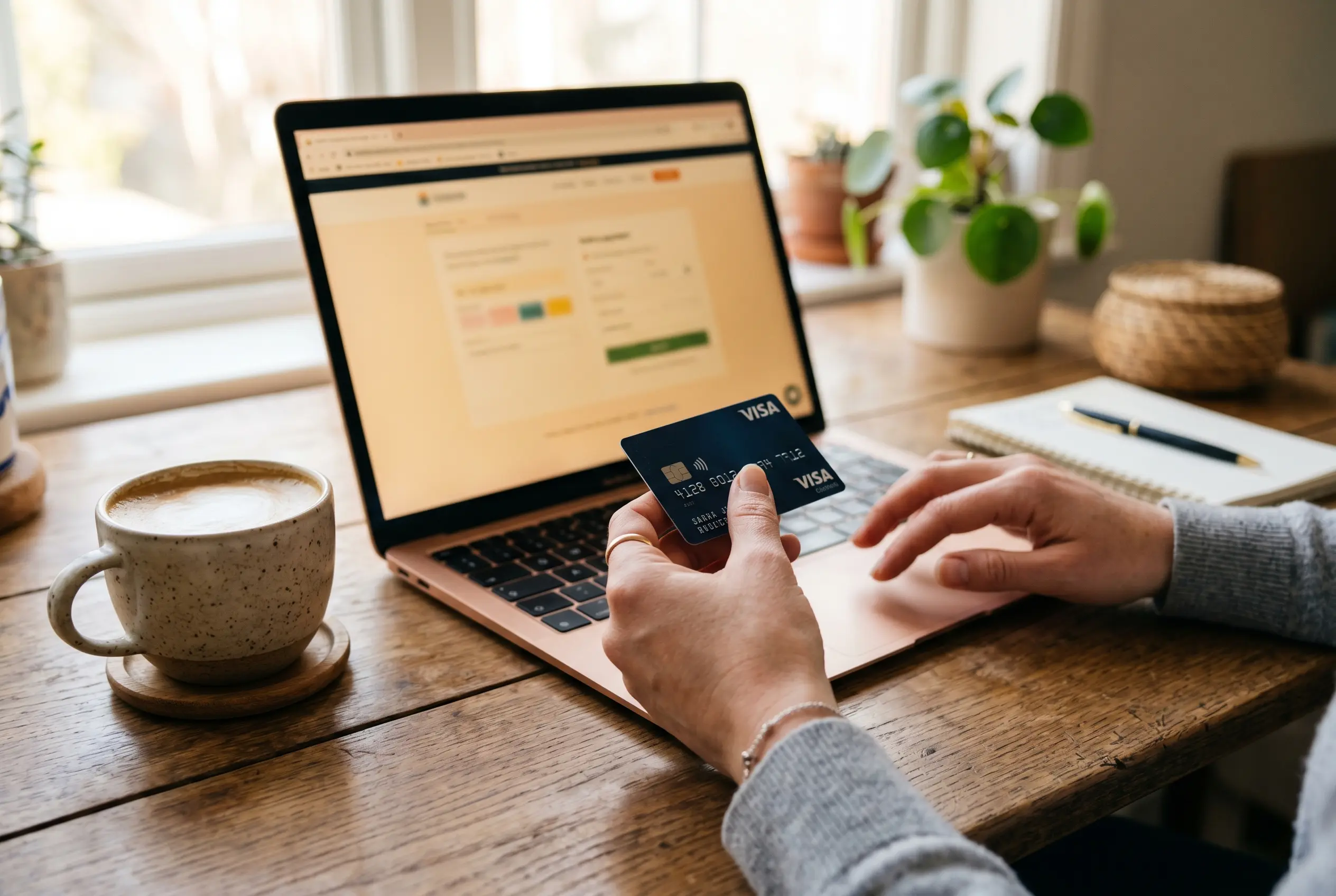
The user-facing experience is a single bill pay screen inside the customer’s existing online and mobile banking. Autobooks bill pay customers now see both options on every bill: pay from the bank account, or pay with a credit card. The two options sit on the same tab rather than on a separate workflow. The release describes a single experience that combines both options, so the funding choice is the variable and the bill is not. The customer’s primary bank stays the relationship; the credit card is just a payment source, not a separate account.
On the bank side, the experience rides on Autobooks’ existing integrations. The press release notes that each Autobooks capability is available to financial institutions in two ways: through a direct integration with Autobooks, or through pre-built integrations with leading digital banking platforms. The card-funded path runs through Global Payments, the same processor that has handled receivables for Autobooks’ small business customers for years, described in Autobooks’ company and product overview. Routing the new path through the existing processor keeps the rollout in a single vendor relationship.
Where Does the Revenue Land for the Issuing Bank?
The clearest second-order effect sits on the issuing bank’s income statement. Card-funded bill payment routes interchange to the issuer of the credit card, and in this configuration the issuer is typically the customer’s own bank or credit union. That is the new line item the press release names as additional card issuer income, and it is the revenue that would have been a zero-revenue ACH debit on the same transaction.
The revenue comes with a cost. Interchange is paid by the merchant accepting the card, and in this case the merchant is the biller. Billers that already accept cards absorb the cost as a normal expense, while billers that do not accept cards now face a choice: absorb the new interchange charge, decline card-funded payments, or pass the cost on to their customers. Autobooks’ release sidesteps the question of who pays, focusing on the user-facing capability. For the issuing bank, the upside is interchange; the offset is the user experience.
Autobooks’ release states the differentiator directly: the result is a feature that helps financial institutions differentiate their digital banking offering, the company says, while generating additional card issuer income. For a community bank or credit union competing with a national bank’s app, a card-funded bill pay tab is a tangible difference in the customer’s hand. The card rail also gives the bank a position in a payment flow that has historically run on competitors’ rails. The new tab is a customer experience upgrade that doubles as a revenue lever.
The shift also changes the small business side of the payment. A small business that floats its vendor payments on a credit card earns roughly a month of float, plus any rewards its card pays. A consumer that pays a utility bill with a rewards card turns a non-rewarding ACH payment into one that earns points. The release doesn’t name these mechanics, but they are the obvious extensions of a card-funded bill pay tab. The biller that doesn’t accept cards can still receive a card-funded payment, and the issuing bank still earns interchange. The shift moves bill pay closer to the way small businesses already pay for everything else.
How the Connected Stack Got Payables in 2025 and Lending in 2026
Pay by Card closes out a 24-month buildout of the Autobooks connected stack. The foundation was the May 6, 2025 acquisition of Allied Payment Network, a bill pay solutions provider, detailed on the Allied Payment Network acquisition page. The deal extended Autobooks’ coverage from receivables to the payables side of a small business’s ledger, and gave Autobooks a bill pay product to extend with new funding options.
The press release lays out the cadence in two sentences. Autobooks added payables in 2025 and lending in 2026, building on its leading receivables, accounting, and financial reporting product lines. The card-funded bill pay path is the latest layer on the same connected stack. The pattern is the same: an existing experience gets a new line on the same screen. Each new addition is a layer on the same connected stack, available through the same digital banking experience.
- 2025: Autobooks added payables to its connected stack via the Allied Payment Network acquisition, the source of the bill pay product the card option now extends.
- 2026: Autobooks added lending to the same stack, completing the receivables, payables, accounting, and financial reporting core.
- 2026: Autobooks added credit card bill payment, the third layer on the bill pay experience inside digital banking.
The release is clear about the deployment model. Each Autobooks capability is available to financial institutions in two ways: through a direct integration with Autobooks, or through Autobooks’ pre-built integrations with the leading digital banking platforms. For a bank, the practical effect is that the new feature shows up inside an existing experience, not a parallel one. The card-funded path inherits the same deployment model as the rest of the Autobooks product suite, and the rollout ships as a standard product enhancement.
The Global Payments Move, From Receivables to Payables
Global Payments has been Autobooks’ processor for years, but only on the receivables side. The release states that Global Payments has been Autobooks’ partner for years, processing payments for small businesses that use Autobooks to invoice and accept payments across thousands of financial institutions. The new bill pay capability extends that partnership from receivables to payables. Global Payments is now a Business Payment Service Provider for Autobooks, a designation that lets the processor handle the card side of an outbound payment. The shift is also a footprint extension for Global Payments into a payment category that has historically been bank-owned rails.
The combined Global Payments and Worldpay entity now operates a global merchant footprint, processing transactions across more than 175 countries. The full scale of that footprint sits in a different category from the embedded bill pay use case, but the processor’s scale is part of what Autobooks is now plugging its bank clients into.
The revolution in payments has made it so that customers expect to be able to pay in their preferred ways, whether by bank account or card. As the technology service provider behind Autobooks’ new capability, we are helping deliver a unified bill pay experience that gives consumers and small businesses the flexibility they want from the institutions they trust.
Jason Pavona, head of enterprise, North America, Global Payments, in Autobooks’ June 10, 2026 release.
What Banks, Credit Unions, and Billers Should Plan For
The deployment is built to be low-friction. Banks and credit unions on Autobooks bill pay get the new path as a standard product enhancement. The release repeats the framing: no platform migration, no separate vendor, no upgrade required. The card-funded tab is the same bill pay tab the customer already uses, so the operational checklist matches any other Autobooks enhancement.
For the issuing bank, the revenue mechanics follow the standard card flow. A card-funded bill payment is processed by Global Payments as the technology service provider, with interchange routed back to the issuing bank. The release does not break out the interchange rate, leaving each bank to negotiate that with its card network and the biller. For a community bank, the upside is a measurable but modest new income line tied to customer behavior. The card rail also gives the bank a position in a payment flow that has historically run on competitors’ rails.
For a biller that does not accept cards, the new path is the harder question. A card-funded payment from a customer now arrives at the biller through a processor, with the biller absorbing interchange. The biller’s response, and the rate, will play out over the next several billing cycles.
- Financial institutions on Autobooks: thousands across the United States
- Small businesses enabled by Autobooks: hundreds of thousands
- Global Payments combined merchant locations: more than 6 million
- Global Payments combined annual transactions: approximately 94 billion
- Global Payments combined annual payment volume: $3.7 trillion
Frequently Asked Questions
What is Autobooks’ Pay by Card feature?
Pay by Card is a credit-card-funded bill pay option that Autobooks added to its bill pay solution, announced on June 10, 2026, in partnership with Worldpay, now Global Payments. The option lives on the same bill pay tab where customers already pay from a bank account, so a customer can switch the funding source without leaving the bill pay workflow.
Which banks and credit unions get the feature?
Every financial institution on the Autobooks bill pay solution receives the new path as a standard product enhancement. Autobooks says the capability is available across its bill pay financial institution base, with no platform migration or upgrade required, and is rolled out to consumers and small business customers on the same institution’s roster.
How does the partnership with Global Payments work?
Autobooks became a Business Payment Service Provider through the partnership, with Global Payments as the technology service provider processing the card side of the bill payment. The BPSP designation is what enables Autobooks to route card transactions on a bank’s behalf, rather than only the bank’s own card program. The two companies have worked together for years on the receivables side, processing payments for small businesses that use Autobooks to invoice and accept payments across thousands of financial institutions.
Does paying a bill by card add a fee?
The June 10, 2026 release does not break out the fee mechanics. Card payments typically carry interchange, which the biller pays and the issuing bank receives a share of. The release does not state whether the biller, the small business, or the consumer absorbs the cost in this configuration, so the practical fee to the end user depends on the biller’s policy.
Can a bill be paid by card if the biller does not accept cards?
Yes. The release states explicitly that the capability is available for bills owed to billers who do not accept card payments directly. The card-funded payment is processed through Global Payments and routed to the biller, even when the biller does not have a card acceptance setup of its own, which is a structural change to how consumer and small business bill pay has historically worked.