Xiaomi is said to be working on a Privacy Display of its own, but the version described in recent leaks would run entirely in software through a HyperOS 4 update due later this year, not through the custom display hardware Samsung uses on the Galaxy S26 Ultra. The tip comes from leaker Yogesh Brar, who says Xiaomi is chasing a feature “like” Samsung’s through an operating system update rather than a new panel.
On its face that sounds like a straightforward catch-up move. But software and hardware solve the privacy problem in fundamentally different ways, and the gap between them decides whether Xiaomi’s feature becomes a real rival to Samsung’s or a more familiar dimming trick wearing a new name.
What Samsung Built Into the Galaxy S26 Ultra
Samsung’s Privacy Display arrived as a marquee feature on the Galaxy S26 Ultra, and it is the first of its kind on a mainstream flagship. It does not lean on an app or a plastic filter you stick over the glass. The privacy effect lives inside the panel itself.
The technology is called Flex Magic Pixel, an OLED (organic light-emitting diode, the self-lit screen tech in modern phones) design that splits the display into narrow and wide subpixels that can be controlled individually. Switch privacy mode on and the panel illuminates only the narrow pixels, then uses a black matrix layer to push light straight forward. The screen stays sharp for whoever is holding the phone and washes out for anyone leaning in from the side.
Privacy display ensures your sensitive content remains visible only to you by limiting the viewing angles, using Flex Magic Pixel to control light emission, making your screen nearly unreadable from the side while maintaining clarity for you.
That description comes straight from Samsung’s official guide to the Privacy Display, which also notes the mode can switch on by itself for password fields, banking apps, or notification pop-ups. The catch is that it is exclusive to the Galaxy S26 Ultra, because it needs that bespoke panel. We walked through the engineering when Samsung’s display chief explained the hardware-level privacy approach earlier this year.
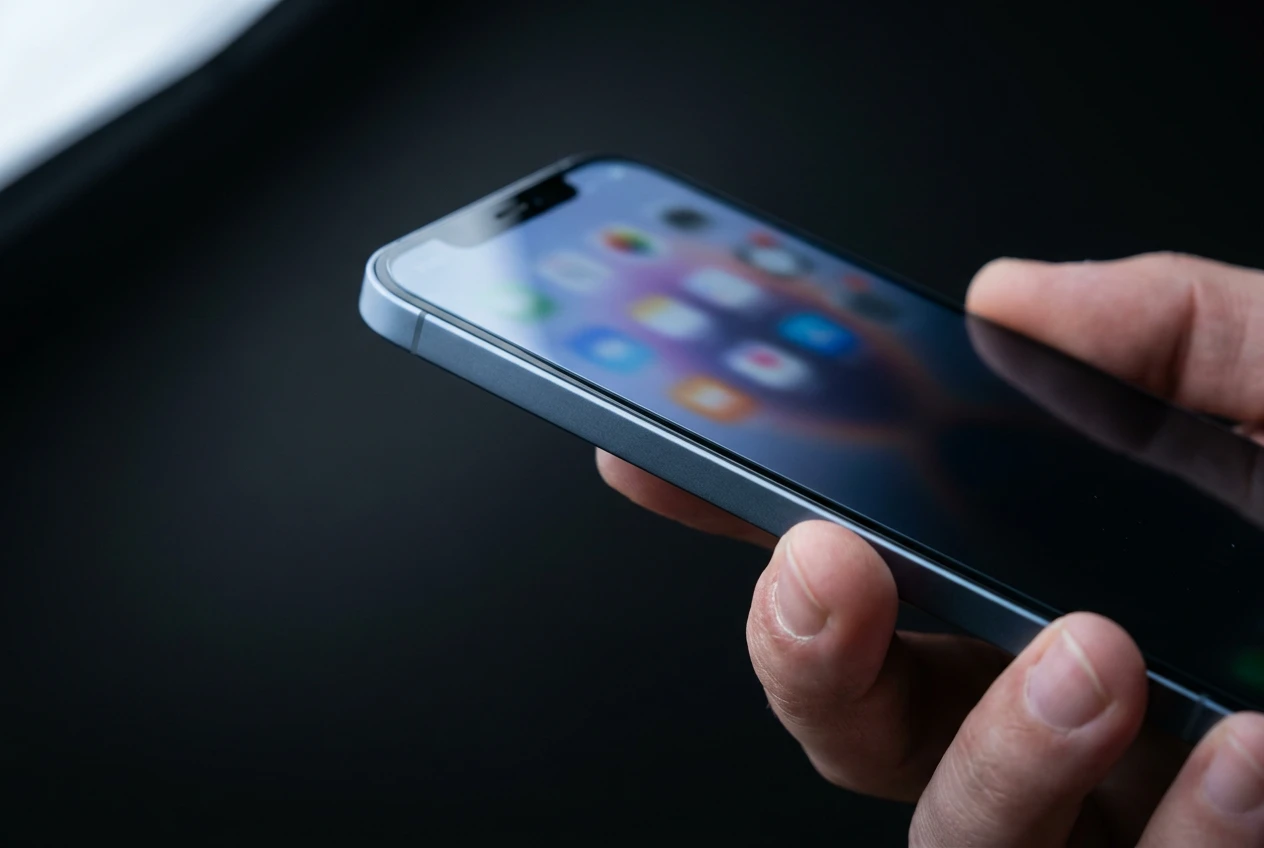
Why a Software Privacy Display Is a Different Animal
Xiaomi’s rumored version, per the original tip about a HyperOS Privacy Display, would not touch the hardware at all. It would ship as part of a HyperOS 4 update, which means it is solved in code rather than glass. That distinction is everything.
What the Overlay Approach Can Do
A software privacy screen works by drawing a masking layer over the interface. Early descriptions point to an adjustable overlay that darkens or blurs the whole screen while leaving a smaller, draggable window clear over whatever you are actively using, a text box, a banking balance, a password line. The idea echoes the privacy modes BlackBerry shipped years ago.
The big upside is reach. Because nothing physical has to change, the same code can roll out to phones already in pockets. It also gives Xiaomi room to tune the effect per app and per situation, the same kind of flexibility Samsung offers, without redesigning a single component.
Where It Falls Short
A software layer can only dim or blur the pixels a screen already has. It cannot change the physical direction the light travels. Anyone with a clear sightline from the side still sees whatever the panel emits, so the protection is really about obscuring content, not steering light away from prying eyes.
That makes the rumored feature closer to the stick-on privacy filters and dimming tricks phone owners have used for a decade than to what the Galaxy S26 Ultra does at the subpixel level. It is privacy by camouflage rather than privacy by physics. For a shoulder-surfer two seats over on a train, the difference is not academic.
Hardware Versus Software at a Glance
The two approaches share a name and a goal, but almost nothing else. Laying them side by side shows why the label “Privacy Display” will mean two very different things depending on which phone you pick up.
| Attribute | Samsung (Galaxy S26 Ultra) | Xiaomi (rumored, HyperOS 4) |
|---|---|---|
| Mechanism | Flex Magic Pixel OLED, subpixel light steering | Software masking and overlay layer |
| Off-angle protection | Physically narrows the viewing angle | Dims or blurs content, no light steering |
| Brightness impact | Measurable drop when active | Tied to the overlay, not baked into the panel |
| Device reach | Galaxy S26 Ultra only | Potentially many Xiaomi, Redmi, and POCO models |
| Availability | Shipping now | Rumored, tied to HyperOS 4 later this year |
Put simply, Samsung sells a better effect on one phone, and Xiaomi may offer a weaker effect on many. Whether that trade leans for or against shoppers depends entirely on what they expect the feature to actually stop.
The Brightness Penalty Xiaomi Avoids
Samsung’s panel solves the angle problem, but it does not come free. Independent lab testing by LTT Labs’ display measurements of the Galaxy S26 Ultra found the brightness cost is real and, in the harshest mode, severe.
- 1,806 nits of peak brightness measured on the S26 Ultra, slightly under the 1,860 nits recorded on last year’s Galaxy S25 Ultra.
- 1,209 nits baseline for standard content with adaptive brightness on, before privacy is switched in.
- 586 nits once Privacy Display and Maximum Privacy Protection are both active, roughly half the normal output.
- 248 nits in the same protected mode with adaptive brightness turned off entirely.
Samsung has acknowledged the variation and called it negligible, though 586 nits gets genuinely hard to read outdoors in direct sun. It is the price of bending light at the pixel level.
This is exactly where Xiaomi’s software route turns its weakness into a selling point. An overlay only dims the screen while it is switched on, and it does not require a panel engineered around privacy, so it imposes no permanent brightness tax on everyday use. A Xiaomi owner who never enables the feature would see no penalty at all. That is a cleaner default than a panel that runs a little dimmer for everyone, all the time.
HyperOS 4 and the Phones in Line for It
Timing is the other reason scale could tilt in Xiaomi’s favor. The feature is tied to HyperOS 4, the company’s next major software release built on Android 17, and that update is expected to reach a wide spread of devices rather than a single halo model.
Xiaomi president Lu Weibing has signaled the platform could be unveiled as early as July or August, with the broader rollout running through late this year and into early next. Brar’s claim that the privacy feature lands “later this year” lines up with that window. Based on the leaked rollout order, the queue looks roughly like this:
- The Xiaomi 17 flagship line first, most likely in the third quarter of 2026.
- Redmi flagship models in phased waves between September and December.
- Mid-range and budget devices trailing into the first quarter of 2027.
Reporting around the leak suggests the feature could ultimately touch 14 or more devices across the Xiaomi, Redmi, and POCO brands. Compare that with one phone for Samsung, and the spread is the whole argument. Xiaomi’s flagship hardware, meanwhile, has been on its own tear; the Xiaomi 17 Ultra camera flagship that launched just after the Galaxy S26 Ultra shows how closely the two firms now shadow each other’s releases.
Where Scale Could Beat Fidelity
Honor has been floated as another contender eyeing the same feature, and the earliest rumors after the S26 Ultra launch even suggested rivals would copy Samsung at the hardware level. Xiaomi’s reported pivot to software is the surprise, and it reframes the contest. The question stops being who builds the best privacy panel and becomes who can put a usable privacy mode in the most hands.
None of this is confirmed by Xiaomi, and the mechanics of the software version remain unclear until HyperOS 4 actually ships. A tipster’s post is a starting point, not a spec sheet.
If Xiaomi delivers the feature to a dozen phones through one update, a privacy screen stops being a flagship-only luxury and becomes a setting most of its users already own. If the software version turns out to merely dim the display rather than hide it from a curious seatmate, it will be a checkbox that markets well and protects little. HyperOS 4 should settle which one it is, probably before the year is out.