
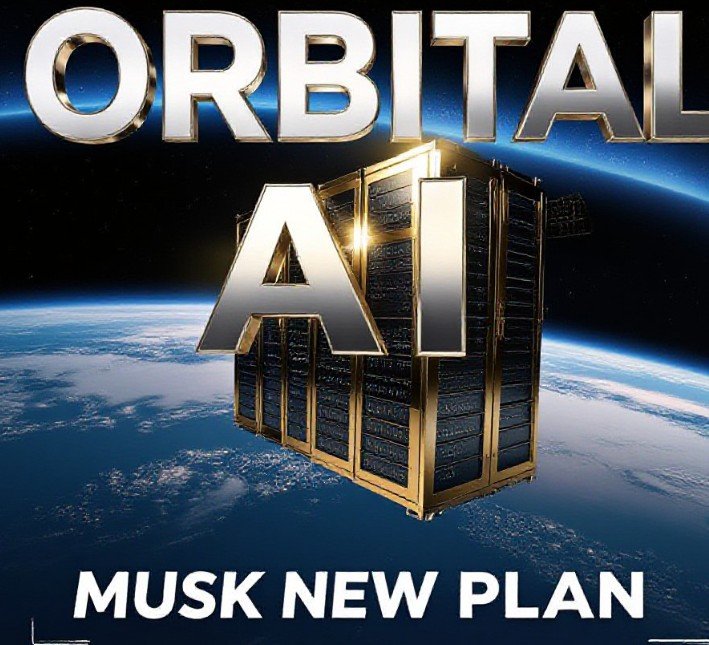
Elon Musk has revealed a plan that sounds like it was ripped from a science fiction novel. The tech mogul aims to merge the capabilities of SpaceX and xAI to lift the internet physically into space. This ambitious project involves launching a constellation of one million orbital data centers to power the future of artificial intelligence.
This bold move seeks to solve the massive energy and cooling crisis currently threatening the growth of the AI industry.
Solving the Power Hungry AI Problem
Artificial intelligence models are becoming incredibly smart. But they are also becoming incredibly hungry for electricity. Training a single large language model can consume as much energy as thousands of homes use in a year.
Musk believes the solution lies in the stars. On Earth, solar power is limited by night cycles, clouds, and weather. In space, the sun never sets.
By placing data centers in Low Earth Orbit, these flying servers can tap into unfiltered solar energy 24 hours a day. This ensures a constant and clean power supply without stressing national power grids.
Current estimates suggest that AI power demand could double within two years.
- Continuous Power: Satellites receive solar energy 99 percent of the time.
- Grid Relief: Removing AI processing from Earth saves local electricity for homes and hospitals.
- Zero Emissions: Solar power in space generates no carbon footprint during operation.
“We are bypassing the constraints of Earth to unlock the true potential of AI,” sources close to the project suggest. This aligns with Musk’s history of tackling existential risks through engineering.
The Ultimate Cooling Solution
Heat is the enemy of electronics. Data centers on Earth generate massive amounts of heat. Keeping them cool requires millions of gallons of water and giant air conditioning units. This is expensive and bad for the environment.
Space offers a unique advantage. It is naturally cold.
Musk plans to utilize the vacuum of space to manage thermal temperatures without using a single drop of fresh water.
While space is a vacuum and acts like a thermos, engineers can use large radiators to vent heat directly away from the servers. This method of radiative cooling is highly efficient in the dark environment of orbit. It eliminates the need for the massive water infrastructure that terrestrial data centers rely on.
| Feature | Earth Data Center | Orbital Data Center |
|---|---|---|
| Power Source | Grid / Intermittent Solar | Continuous Solar |
| Cooling Method | Water / AC Fans | Radiative Cooling |
| Uptime | Risk of Grid Failure | Independent Power |
| Maintenance | Human Technicians | Robotics / Disposable |
This shift could save billions of liters of water annually. It addresses one of the biggest environmental criticisms faced by tech giants today.
Starship Makes It Possible
A plan of this magnitude was impossible just a few years ago. It simply cost too much to send heavy servers into orbit.
The game changer is SpaceX’s Starship. This massive rocket is designed to carry over 100 tons of cargo to orbit at a fraction of traditional costs. It acts as a freight train to the stars.
Musk intends to use Starship to deploy these data centers in clusters. Unlike the small Starlink satellites currently in orbit, these new units would be larger and packed with heavy computing hardware. They would communicate with Earth and each other using laser links.
This creates a mesh network in the sky.
The proposal suggests that xAI will design the custom chips and software. SpaceX will handle the build and launch. This vertical integration allows them to move faster than competitors like Amazon or Microsoft.
Challenges in the Vacuum
Moving infrastructure to space is not without serious risks. The environment is harsh and unforgiving.
Radiation is a major concern. Cosmic rays can flip bits in computer processors, causing errors or system crashes. Hardware in space needs heavy shielding or special “hardened” chips to survive.
Latency is another hurdle. Light travels fast, but distance adds delay. For real time gaming or financial trading, milliseconds matter. However, for training AI models or storing cold data, slight delays are acceptable.
There is also the issue of space junk.
Adding one million new objects to orbit raises fears of collisions.
Astronomers and safety experts are already worried about the crowded sky. A collision could create debris fields that destroy other satellites. Musk’s team argues that these servers will operate in very low orbits. If they fail, gravity will pull them down to burn up in the atmosphere safely.
This self cleaning mechanism is vital for regulatory approval.
A New Economic Frontier
The space economy is set to explode. Analysts predict this move could create a new trillion dollar market.
Companies could rent “space servers” for their heavy processing tasks. It turns the vacuum of space into a commercial zone. This aligns with the broader vision of making humanity multi planetary.
If successful, this project does more than just help AI. It proves that heavy industry can be moved off the planet. It opens the door for manufacturing and energy generation to leave Earth, preserving our biosphere.
We are witnessing the first steps of the industrial revolution extending beyond the atmosphere.
As with all Musk timelines, skepticism is healthy. But the engineering logic holds water. The convergence of cheap launch costs and high AI demand makes this the perfect time to try.
The internet is no longer just a cloud concept. It is about to become a physical constellation.