
The clock is ticking on America’s long-held supremacy in the skies as China accelerates its military aircraft development and mass production. Fighter jets remain a centerpiece of national security and geopolitical power, and propulsion technology sits at the heart of that race. With the United States facing growing strategic competition from Beijing in advanced fighter capabilities, experts warn that without renewed focus on propulsion and innovation, America’s aerial dominance could erode in the coming decade.
The heart of this challenge comes down to one thing: who controls the skies first in a future high-stakes conflict.
China’s Rapid Fighter Jet Production and Upgrade Pace
In recent years China has dramatically increased its pace of building advanced combat aircraft. Updated analysis shows Beijing is projected to scale its fleet of J-20 “Mighty Dragon” stealth fighters toward potentially hundreds of units by 2030. These jets, already flying enhanced variants with indigenous engines optimized for sustained supersonic performance, are central to China’s bid to challenge U.S. air power.
Simultaneously, Beijing has rolled out the newer J-35A stealth fighter, equipped with domestically built engines and improved combat systems, which Chinese military spokesmen say enhances both air superiority and strike missions.
That combination of scale and capability shows how China is staking its military future on a robust and continuously evolving fighter fleet.
Why Propulsion Technology Is the Linchpin of Air Superiority
Experts have long pointed out that jet engines are the core enabler of advanced combat aircraft performance. The United States led the world for decades because of robust investment in propulsion, turbofan engines, and reliability that other nations struggled to replicate. Modern fighter performance — including speed, endurance, agility, and range — depends heavily on engines that strike a balance between thrust and fuel efficiency.
China has made strides in engine development, yet analysts acknowledge the quality and reliability of Chinese engines do not yet match U.S. standards. Remarks from senior executives at major American aerospace firms suggest Chinese propulsion is closing the gap but still trails Western counterparts in key performance areas.
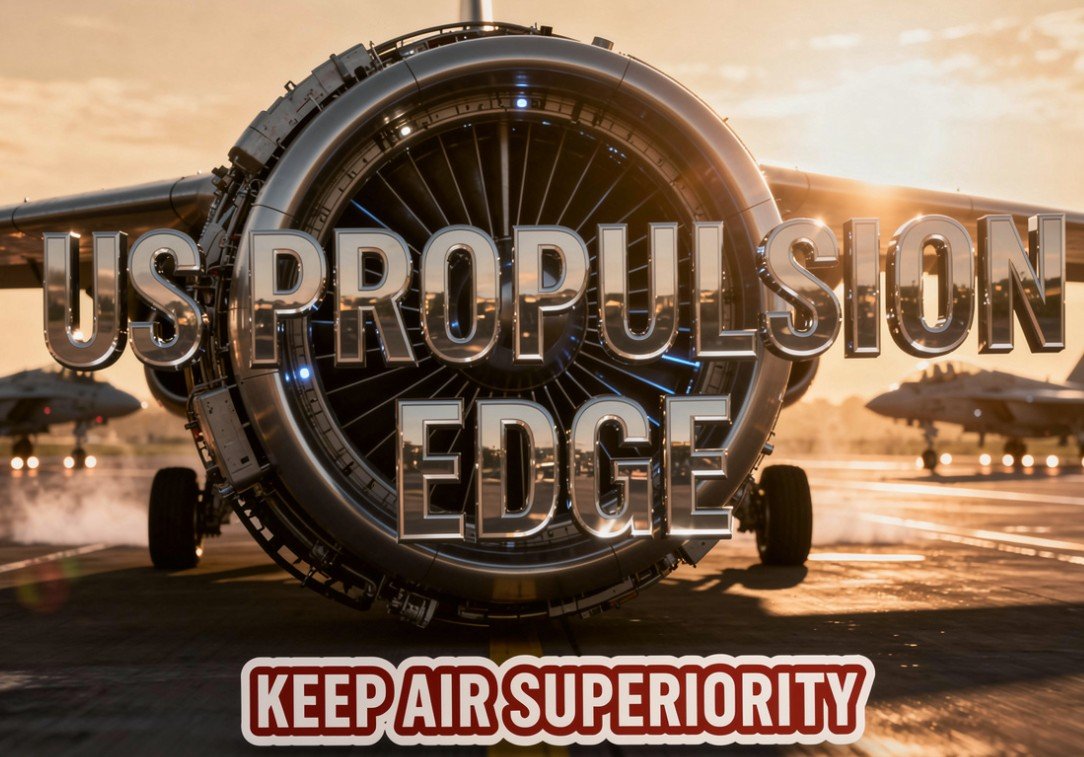
Where the U.S. Air Force is focused now is on next-generation adaptive propulsion, technology that can dynamically shift between optimal cruising and high-thrust modes. Such engines could give America’s sixth-generation fighters not just speed but unprecedented operational flexibility.
U.S. Furthest-Generation Programs Face Pressure
The next leap in U.S. air power is the Next Generation Air Dominance (NGAD) program — often identified as the F-47 — which aims to field a sixth-generation fighter with advanced sensors, adaptive propulsion, and superior connectivity.
Yet the path to fielding this capability has encountered delays and public skepticism about its timeline and technological hurdles, even as Chinese prototypes in the same generation space have taken flight sooner.
The performance edge provided by adaptive cycle engines — designed to switch between high thrust and fuel-efficient modes mid-flight — is expected to be a defining factor in any future aerial contest. Without propulsion breakthroughs, even superior avionics and weapons will struggle to compensate for limitations in speed, endurance, and maneuverability.
Propulsion Power Matters
Developing these advanced engines is not just a technological challenge but a policy and national security imperative. Analysts argue that Congress and the Pentagon must increase funding, streamline development, and rebuild a robust domestic propulsion industrial base if the U.S. is to maintain its lead. Already, aerospace supply chains are brittle, and reliance on foreign or dual-use components can weaken readiness.
China’s Challenge Is More Than Numbers
Though China’s fighter production numbers are striking, Beijing still faces hurdles. Some analysts note that China’s air force has not seen combat in modern air war conditions equivalent to U.S. operational experience, which counts heavily in real combat scenarios.
Moreover, while engine technology is progressing, long-term reliability and overhaul cycles remain key weaknesses relative to U.S. systems, according to defense industry observers.
Yet the pace of China’s fighter development and upgrades — combined with its massive defense budget — means the U.S. cannot rely on experience or past superiority alone.
Strategic Implications for Global Security
The growing capabilities of Chinese fighters have profound implications for potential conflicts in regions like the Indo-Pacific. Beijing’s projected dominance in fighter numbers and range, coupled with a growing advanced missile arsenal that could threaten forward airbases, could reshape strategies the United States uses for power projection and deterrence.
In this environment, air superiority is no longer a given for U.S. forces. It must be actively won through investment, innovation, and industrial strength.
Key Issues in the Propulsion Race
Here is why propulsion is central to the broader strategic competition:
-
Thrust and range determine reach and endurance in contested airspace.
-
Adaptive engines enable operational flexibility across missions.
-
Domestic manufacturing boosts resilience and reduces vulnerability.
-
Investment in propulsion underpins future unmanned and hypersonic systems.
What Must Change
To reassure allies and deter adversaries, defense leaders argue that the United States must:
-
Prioritize funding for next-generation propulsion research.
-
Strengthen the domestic aerospace supply chain.
-
Forge partnerships with industry to accelerate innovation.
-
Ensure training and doctrine align with emerging threats.
Without such focus, analysts warn that a technological imbalance could emerge, eroding the U.S. advantage that has relied for decades on unmatched airpower.
The future of air superiority hinges on engines as much as jets. If propulsion slips, so too might national security. Readers are invited to share their views on how nations should approach this emerging global competition and what strategic choices policymakers must make in the years ahead.